Ligaments: What They Are, Anatomy & Function
Understanding ligaments: The connective tissues that stabilize your joints and support movement.
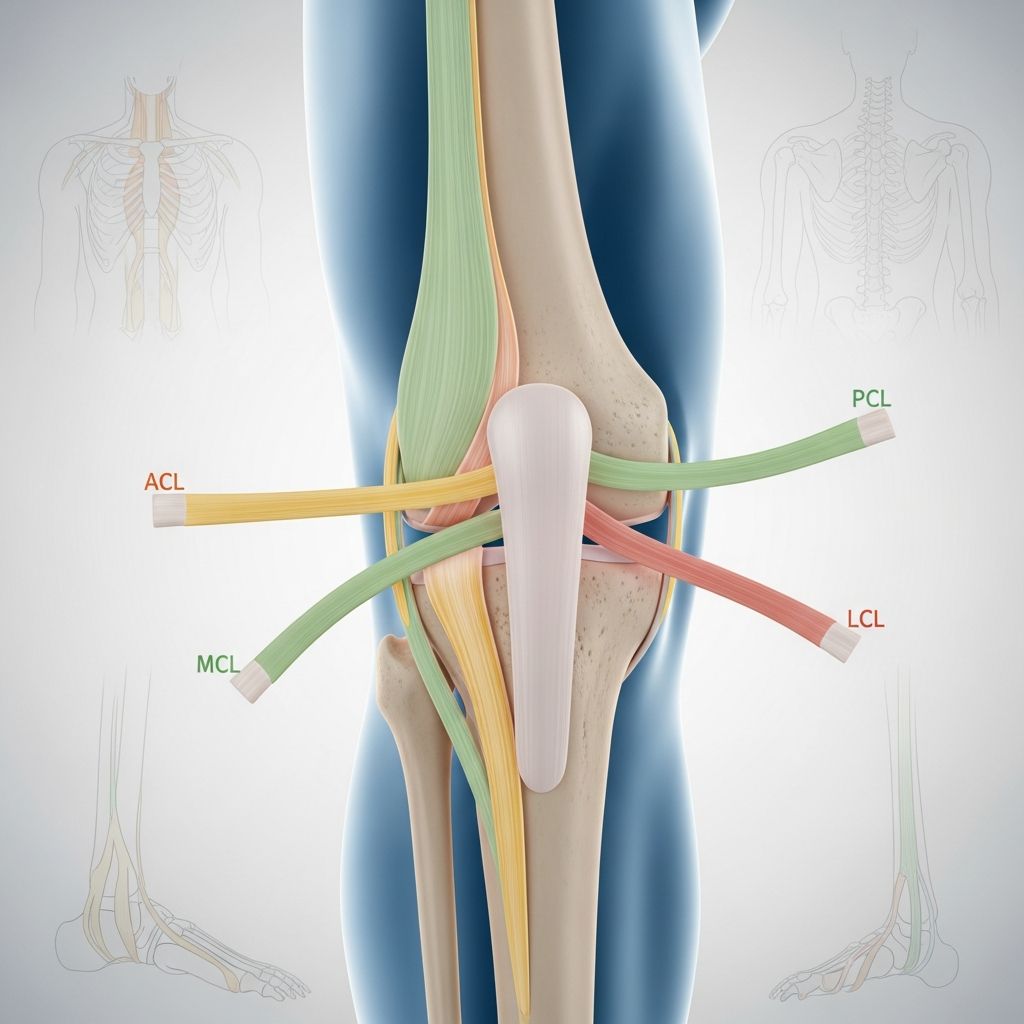
Understanding Ligaments: Essential Connective Tissues
Ligaments are tough, fibrous bands of connective tissue that serve as critical structural components throughout your body. These specialized tissues connect bone to bone and play an indispensable role in maintaining the stability and integrity of your joints. Unlike muscles, which are active tissues that contract and relax, ligaments are passive structures that work continuously to hold important body structures in place and prevent excessive movement that could lead to injury.
The human body contains hundreds of ligaments distributed across various joints, each designed to provide specific stabilization and support. From your neck to your ankles, ligaments work silently in the background, enabling you to perform everyday activities with confidence and maintaining the structural integrity of your skeletal system.
The Anatomy of Ligaments
To understand how ligaments function, it’s important to examine their structural composition. Ligaments are composed primarily of collagen, a strong protein that binds tissue throughout the body, and elastic fibers that provide slight stretchability. This combination of materials gives ligaments their characteristic strength while allowing them a limited degree of flexibility to accommodate normal joint movement.
The collagen fibers in ligaments are arranged in organized bundles that run parallel to each other, creating a highly efficient structure for withstanding tensile forces. This architectural design allows ligaments to resist the pulling and twisting forces that joints experience during physical activity. The elastic fibers interwoven throughout the ligament provide resilience, allowing the tissue to stretch slightly and then return to its original length without permanent deformation.
Under a microscope, ligament tissue appears as densely packed bundles of collagen fibers arranged in a specific pattern that optimizes their load-bearing capacity. This organized structure is what enables ligaments to perform their vital stabilizing functions without failing under normal use.
Key Functions of Ligaments
Ligaments serve several critical functions in maintaining bodily health and enabling movement:
Joint Stabilization
The primary function of ligaments is to stabilize joints by connecting adjacent bones and limiting excessive movement in directions that could cause harm. When you move your knee, for example, the ligaments surrounding that joint keep your thigh bone properly aligned with your shin bone, preventing the joint from shifting or dislocating.
Support and Protection
Ligaments work in concert with other tissues to support the structures around joints. They protect the soft tissues within joints, including cartilage and synovial membranes, by preventing abnormal positioning that could compress or damage these delicate structures.
Proprioceptive Feedback
Ligaments contain specialized nerve receptors that provide information about joint position and movement to your brain. This sensory input helps maintain balance and coordinates muscle activity to prevent injury.
Major Ligament Systems in Your Body
Knee Ligaments
Your knee contains several important ligaments that work together to maintain stability. The anterior cruciate ligament (ACL) and posterior cruciate ligament (PCL) are located inside your knee joint and cross each other, forming an “X” pattern. Your collateral ligaments are positioned on the sides of your knee—the medial collateral ligament (MCL) on the inner side and the lateral collateral ligament (LCL) on the outer side. Together, these ligaments prevent excessive forward, backward, and rotational movement of the knee joint.
Related Stories



Ankle Ligaments
Ankle ligaments are strong bands of soft tissue that connect your foot bones with your lower leg bones. They stabilize your ankle joint and prevent it from rolling or twisting inappropriately. The deltoid ligament, with its two layers of connective tissue, helps stabilize the ankle from the medial side.
Foot Ligaments
Your feet contain dozens of ligaments that connect your bones and help support the arch of your foot. These ligaments work together to maintain foot structure and enable the complex movements required for walking, running, and other activities.
Common Ligament Injuries
Sprains and Tears
Ligament injuries typically occur when a joint is forced beyond its normal range of motion. A ligament sprain involves stretching or partial tearing of the ligament fibers, while a complete ligament tear represents a full separation of the tissue. These injuries can range from mild to severe and may result from sudden traumatic events or cumulative stress over time.
Causes of Ligament Injuries
Common causes of ligament damage include:
- Sudden directional changes during sports or physical activity
- Falls or accidents that force a joint into an abnormal position
- Repetitive stress from overuse
- Motor vehicle accidents
- Direct blows to a joint
Symptoms of Ligament Injuries
When a ligament is injured, you may experience several characteristic symptoms:
- Pain at the site of injury
- Swelling around the affected joint
- Bruising or discoloration
- Instability or a feeling that the joint is “giving way”
- Reduced range of motion
- Tenderness when touching the injured area
- Difficulty bearing weight on the affected limb
The severity of symptoms typically corresponds to the extent of the injury. Minor sprains may cause mild discomfort, while complete tears can result in significant pain, swelling, and functional impairment.
Diagnosis of Ligament Injuries
A healthcare provider will typically diagnose a ligament injury through a combination of approaches. They will begin by taking a detailed history of how the injury occurred and asking about your symptoms. Physical examination often involves specific tests designed to assess ligament integrity and joint stability. Depending on the suspected injury, your provider may order imaging studies such as X-rays to rule out fractures, or magnetic resonance imaging (MRI) to visualize the ligament tissue directly and assess the extent of damage.
Treatment Options for Ligament Injuries
Treatment approaches depend on the severity of the injury and may vary based on individual factors.
Conservative Treatment
Many ligament injuries heal successfully with conservative management. If you think you may have pulled a ligament, call a healthcare provider who will assess the injury and make a plan to support the healing process. Conservative treatment typically includes:
- Rest to allow the ligament to begin healing
- Ice application to reduce swelling and pain
- Compression using elastic wraps or braces
- Elevation to minimize swelling
- Immobilization or bracing to protect the joint
- Nonsteroidal anti-inflammatory medications
Physical Therapy
As your ligament begins to heal, physical therapy becomes increasingly important. Therapeutic exercises help restore strength, flexibility, and proprioceptive function to the injured joint. Physical therapists design customized rehabilitation programs that gradually progress in intensity and complexity as healing advances.
Surgical Intervention
Some tears might need surgery, while others might need weeks or months of rest to heal. Surgery may be recommended when ligaments are severely torn, when multiple ligaments are injured, or when conservative treatment fails to restore adequate function. Surgical procedures may involve repair of the torn ligament, reconstruction using graft tissue, or other techniques depending on the specific injury.
Recovery and Rehabilitation
Recovery time varies depending on the severity of the ligament injury. Minor sprains may heal within a few days to two weeks, while more significant injuries can require several weeks to months of rehabilitation. After conservative treatment or surgery, physical therapy can help rehabilitate your ligament and restore normal function.
The rehabilitation process typically follows a structured progression:
- Phase 1: Initial healing with protection and rest
- Phase 2: Gradual restoration of range of motion
- Phase 3: Strengthening exercises and proprioceptive training
- Phase 4: Return to functional activities and sport-specific training
Preventing Ligament Injuries
While not all injuries can be prevented, several strategies can reduce your risk of ligament damage:
- Maintain good physical fitness with regular strength training
- Perform proper warm-up and cool-down routines before and after exercise
- Use appropriate safety equipment when participating in sports
- Practice proper body mechanics during daily activities
- Avoid sudden directional changes without proper preparation
- Gradually progress the intensity and duration of physical activity
- Maintain flexibility through regular stretching
- Strengthen muscles that support your joints
When to Seek Medical Attention
You should contact a healthcare provider if you experience persistent joint pain, significant swelling, instability, or difficulty bearing weight on an injured limb. Prompt medical evaluation allows for accurate diagnosis and appropriate treatment to prevent complications and optimize healing outcomes.
Frequently Asked Questions
Q: How long does it take for a ligament to heal?
A: Healing time varies depending on the severity of the injury. Minor sprains may heal within 2-4 weeks, while more significant tears can take several months. Complete recovery with rehabilitation may take 6-12 months or longer.
Q: Can ligaments heal on their own?
A: Many ligament injuries can heal with conservative treatment, rest, and physical therapy. However, some complete tears or severe injuries may require surgical intervention to restore full function.
Q: What’s the difference between a ligament sprain and a strain?
A: A ligament sprain involves injury to the ligament tissue itself, while a strain refers to injury of a muscle or muscle tendon. Both can cause similar symptoms but involve different anatomical structures.
Q: Is it safe to exercise with a ligament injury?
A: Appropriate exercise under guidance from a healthcare provider or physical therapist can facilitate healing. However, the type and intensity of exercise depend on the specific injury and recovery stage.
Q: Can I prevent all ligament injuries?
A: While you cannot prevent all injuries, maintaining fitness, using proper technique, and practicing injury prevention strategies can significantly reduce your risk of ligament damage.
The Importance of Professional Care
Ligament injuries require proper assessment and management to ensure optimal outcomes. Healthcare providers with expertise in orthopedic conditions can offer comprehensive evaluation, appropriate treatment options, and guidance through the recovery process. Early intervention and adherence to rehabilitation protocols improve healing outcomes and reduce the risk of chronic complications.
References
- Ankle Ligaments: What They Are, Anatomy & Function — Cleveland Clinic. 2024-12-02. https://my.clevelandclinic.org/health/body/21609-ankle-ligament
- Ligament: What It Is, Anatomy & Function — Cleveland Clinic. 2024. https://my.clevelandclinic.org/health/body/21604-ligament
- Knee Ligaments: What They Are, Anatomy & Function — Cleveland Clinic. 2024-12-03. https://my.clevelandclinic.org/health/body/21596-knee-ligaments
- Foot Ligaments: What They Are, Anatomy & Function — Cleveland Clinic. 2024-12-06. https://my.clevelandclinic.org/health/body/21597-foot-ligaments
- Medial Ankle Ligament, Deltoid Ligament Sprain — Cleveland Clinic. 2022-02-01. https://my.clevelandclinic.org/health/body/22407-deltoid-ligament
- Posterior Cruciate Ligament (PCL) Injury: Symptoms & Treatment — Cleveland Clinic. 2024. https://my.clevelandclinic.org/health/diseases/21793-pcl-posterior-cruciate-ligament-tears
- ACL Tear & Injury: Symptoms & Recovery — Cleveland Clinic. 2024. https://my.clevelandclinic.org/health/diseases/16576-acl-tear
Similar Articles








Read full bio of Sneha Tete