Limbic System: Emotions, Memory & Brain Function
Understand your limbic system: the brain's emotional center controlling feelings, memories, and behavior.
Understanding the Limbic System: Your Brain’s Emotional Hub
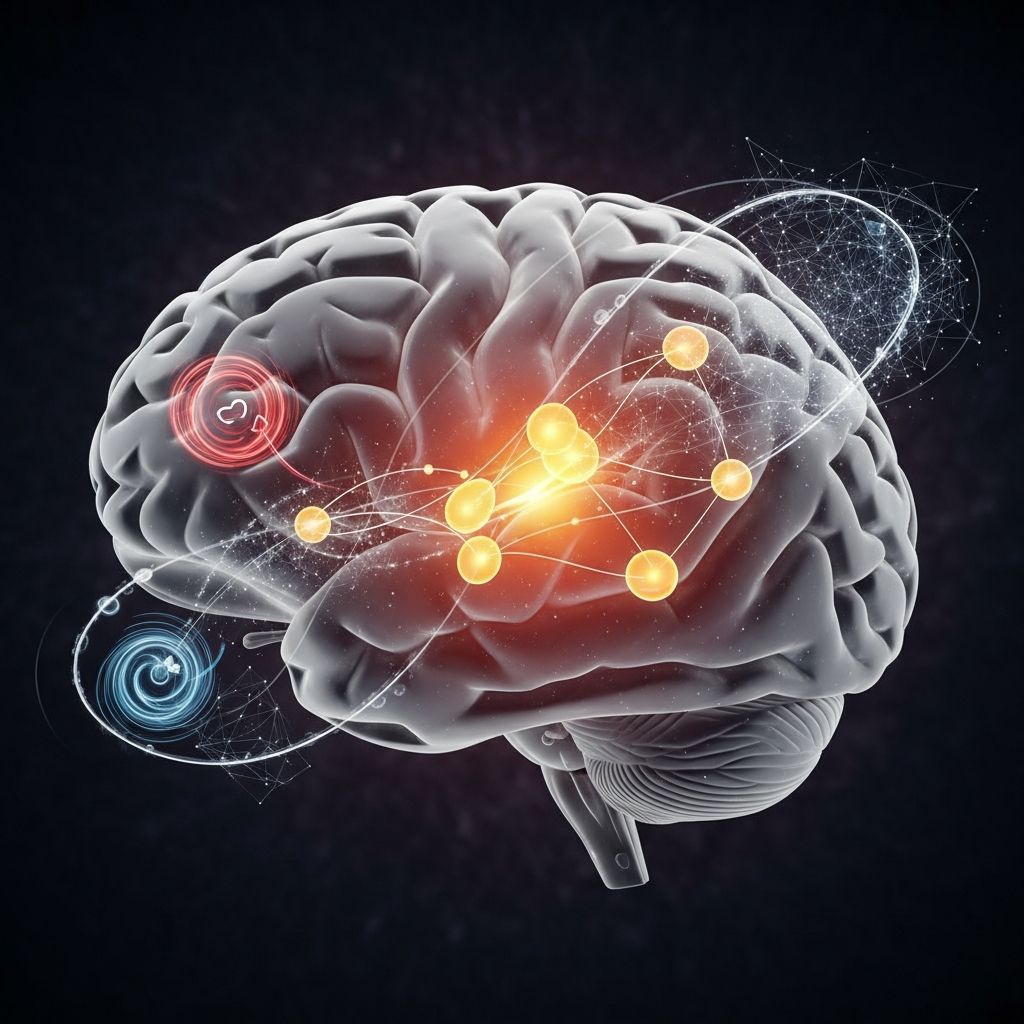
The limbic system is a complex network of brain structures that governs emotions, motivation, memory formation, and behavior. Often called the “emotional brain,” this remarkable system plays a crucial role in how you experience feelings, form memories, and respond to the world around you. Located deep within the brain, the limbic system acts as a bridge between your conscious thinking processes and your automatic emotional responses, making it essential for your overall psychological and physical well-being.
The term “limbic” comes from the Latin word “limbus,” meaning border, which perfectly describes its location at the intersection of the neocortex and the brainstem. While scientists have identified numerous structures within this system, there remains ongoing discussion about which specific brain regions should be classified as part of the limbic system due to its complex interconnectedness with other brain areas.
Location and Anatomical Position
The limbic system is situated deep inside the brain, positioned immediately below the temporal lobes and tucked beneath the cerebral cortex, just above the brainstem. This strategic location allows it to serve as a critical junction point between different brain regions. The structures of the limbic system are generally located lateral to the thalamus, forming a distinct region that encompasses both cortical and subcortical components.
The anatomical arrangement of the limbic system reflects its evolutionary importance. Being positioned between the thinking brain (neocortex) and the survival-oriented brainstem, it enables the seamless integration of rational thought with emotional and instinctive responses, allowing humans to make informed decisions while still responding to immediate emotional and physical needs.
Key Structures of the Limbic System
While no universal agreement exists on every component of the limbic system, the primary structures include:
- Hippocampus: Essential for memory formation, spatial memory, and memory consolidation
- Amygdala: Processes emotions, particularly fear, and associates emotions with memories
- Hypothalamus: Regulates hormonal responses and autonomic functions
- Thalamus: Acts as the relay station for sensory and motor information
- Cingulate Gyrus: Regulates emotions, behavior, and pain perception
- Mammillary Bodies: Important for episodic memory formation
- Entorhinal Cortex: Serves as the gateway between the hippocampus and neocortex
- Olfactory Bulbs: Process smell and transfer olfactory information to other limbic structures
The Thalamus: Your Brain’s Information Gateway
The thalamus serves as a paired structure located at the center of the limbic system and acts as the brain’s primary relay station. This critical hub receives sensory information from your eyes, ears, and skin, then routes this information to the appropriate areas of the cerebral cortex for processing. When you watch a horror film, for example, the visual information from your retina first travels to the thalamus, which then decides whether this information deserves your conscious attention or should be filtered out.
Beyond sensory processing, the thalamus connects extensively with other limbic structures, making it central to how emotions and sensations are integrated. It serves as the confluence of many neural pathways, ensuring that information flows efficiently between different brain regions.
Related Stories



The Amygdala: Emotional Processing Center
The amygdala, located in the temporal lobes, is one of the most well-studied limbic structures. This almond-shaped region serves as a major processing center for emotions, particularly fear and aggression. It links your emotional experiences to many other brain functions, especially memory formation, learning, and sensory perception.
The amygdala plays a vital role in associative learning. When you experience an emotional event—such as tasting something unpleasant while smelling a particular odor—the amygdala encodes these associations. Later, simply smelling that odor can trigger the original emotional response, even without the triggering event being present.
The Hippocampus: Memory’s Foundation
The hippocampus is crucial for converting short-term experiences into long-term memories. It’s particularly important for spatial memory—your ability to remember locations and navigate through space—as well as for declarative memories, which are facts and events you can consciously recall.
The hippocampus also plays a central role in fear conditioning. When you experience fear in a novel situation with no prior emotional associations, the hippocampus activates to process and remember this new experience. This structure receives input from the olfactory bulbs about smells and works in conjunction with the amygdala to create emotionally significant memories. Damage to the hippocampus, as famously illustrated by the case of patient “H.M.” who had his bilateral hippocampi partially removed to treat epilepsy, can result in an inability to form new long-term memories despite retaining older memories.
The Hypothalamus: Regulating Body Functions
The hypothalamus is a small but mighty structure that controls many of your body’s automatic functions. It regulates hormone production, body temperature, hunger, thirst, and sleep-wake cycles. This structure connects emotional experiences to physical responses, explaining why you might lose your appetite when anxious or feel energized when excited.
The Cingulate Gyrus: Emotion and Behavior Regulation
Part of the limbic cortex, the cingulate gyrus helps regulate emotions, behavior—particularly aggression—and pain perception. The frontal portion of this structure is particularly important as it links visual and olfactory information with memories of previous emotions, helping you anticipate emotional responses based on past experiences.
The Entorhinal Cortex and Memory Networks
Located in the medial temporal lobe, the entorhinal cortex serves as the main gateway between the hippocampus and the neocortex. This region is essential for declarative memories, spatial memory formation, and memory consolidation. Research has shown that in Alzheimer’s disease, the entorhinal cortex experiences significant volume loss, contributing to the memory impairment characteristic of the disease.
Primary Functions of the Limbic System
The limbic system orchestrates multiple critical functions that affect your daily life:
Emotional Processing and Regulation
The limbic system processes emotions including fear, anger, joy, sadness, and attraction. It helps regulate these emotional responses by coordinating activity among different brain regions. When functioning properly, it allows you to experience emotions appropriately and recover from emotional stress. The system involves a complex interplay between the hippocampus, amygdala, and prefrontal cortex that enables healthy emotional processing and prevents excessive emotional reactions.
Memory Formation and Consolidation
One of the most important functions of the limbic system is converting experiences into lasting memories. The hippocampus-entorhinal cortex network is responsible for transforming short-term memories into stable long-term memories through a process called consolidation. This system is particularly effective at encoding emotionally significant events, which is why you tend to remember traumatic or joyful experiences vividly.
Learning and Associative Memory
The limbic system enables you to learn associations between stimuli and outcomes. Through the amygdala’s processing of emotional significance and the hippocampus’s recording of context, you learn to associate certain cues with particular emotional or sensory outcomes. This type of learning is crucial for survival and adaptation to your environment.
Motivation and Behavior
The limbic system drives motivated behaviors such as eating, drinking, reproduction, and social interaction. The hypothalamus generates the drive states (hunger, thirst, sexual desire), while other limbic structures organize and direct these motivations toward specific goals and behaviors.
Olfaction and Sensory Integration
The olfactory bulbs, part of the limbic system, process smell and transfer olfactory information directly to the amygdala and hippocampus. This direct connection between smell and emotional memory centers explains why certain odors can trigger vivid emotional memories. Unlike other senses that relay information through the thalamus first, olfaction has a direct route to the emotional brain.
Understanding Limbic Networks
Rather than operating as isolated structures, the limbic system functions through three interconnected networks:
The Hippocampal-Diencephalic Network
This network, which includes the hippocampus and mammillary bodies, specializes in memory and spatial orientation. It’s responsible for encoding where things are and how to navigate through space.
The Temporo-Amygdala-Orbitofrontal Network
This network associates emotions with cognitive processing, allowing rational thought to be informed by emotional significance. It’s crucial for decision-making that takes both logic and emotional context into account.
The Default-Mode Network
This network is involved in autobiographical memory—remembering your own life story—and introspection. It becomes active when you’re not focused on external tasks and allows for self-reflection and personal meaning-making.
The Limbic-Motor Interface
One fascinating aspect of limbic system function is the “limbic-motor interface,” which describes how emotional experiences translate into physical actions. This model explains how emotions initiate behaviors and how the emotional brain (limbic system) and cognitive brain work together to produce responses to the world. When you feel afraid, the limbic system doesn’t just create the emotional sensation—it also prepares your body for action through the motor system.
Clinical Significance and Health Implications
A dysfunctional limbic system is associated with numerous neuropsychiatric conditions. Temporal lobe epilepsy, the most common type of epilepsy in adults, is often caused by hippocampal sclerosis. People with schizophrenia demonstrate smaller-sized limbic system components. Dysfunction in the anterior limbic network—involving the thalamus, amygdala, and prefrontal regions—may contribute to bipolar disorder. ADHD is associated with an enlarged hippocampus in children and adolescents.
Anxiety disorders can result from failure of the hippocampus to properly modulate amygdala activity, leading to excessive fear responses. Deep brain stimulation has emerged as a potential treatment for certain limbic impairments, offering hope for conditions resistant to traditional therapies.
Developmental and Embryological Origins
The limbic system develops from three different embryological regions: the mesencephalon, diencephalon, and telencephalon. This diverse embryological origin contributes to the complexity and diverse functions of the limbic system. The mesencephalic components process visual, auditory, and somatosensory inputs. The diencephalic components include the hypothalamus, anterior thalamic nuclei, and habenular commissure. The telencephalic components contain both cortical and subcortical regions, including the olfactory bulbs, hippocampus, and amygdala.
How Your Limbic System Affects Your Health and Well-being
Your limbic system profoundly influences your overall health and quality of life. Healthy limbic system function allows you to experience emotions appropriately, form lasting memories, learn from experiences, and maintain motivated, goal-directed behavior. It enables you to feel joy in response to positive events, experience appropriate fear that keeps you safe, and form meaningful social connections.
When the limbic system functions optimally, you can regulate your emotional responses, recover from stress, and adapt your behavior based on past experiences. This emotional resilience and flexibility are hallmarks of good mental and physical health. Conversely, limbic dysfunction can lead to emotional dysregulation, memory problems, and difficulty with motivation and social functioning.
Frequently Asked Questions
What is the main function of the limbic system?
The main functions of the limbic system include processing and regulating emotions, forming and consolidating memories, driving motivated behaviors, and integrating sensory information with emotional significance. It acts as the emotional center of the brain.
Where exactly is the limbic system located?
The limbic system is located deep inside the brain, below the temporal lobes and beneath the cerebral cortex, just above the brainstem. It sits lateral to the thalamus and forms a region at the border between the thinking brain and the survival-oriented brainstem.
Can limbic system damage be treated?
Treatment depends on the specific condition and type of damage. Options may include medication, psychotherapy, cognitive rehabilitation, and in some cases, deep brain stimulation. The brain’s neuroplasticity means some recovery and compensation is often possible.
How does the limbic system affect memory?
The limbic system, particularly the hippocampus and entorhinal cortex, converts short-term experiences into long-term memories. It’s especially effective at encoding emotionally significant events, which is why emotional memories tend to be vivid and long-lasting.
What happens when the limbic system malfunctions?
Limbic system dysfunction is associated with anxiety disorders, depression, PTSD, bipolar disorder, schizophrenia, epilepsy, and Alzheimer’s disease. Symptoms may include emotional dysregulation, memory problems, excessive fear responses, or inappropriate emotional reactions.
Does smell connect directly to emotions?
Yes, the olfactory bulbs in the limbic system process smell and send information directly to the amygdala and hippocampus, bypassing the thalamus. This direct connection explains why certain odors can immediately trigger powerful emotional and memory responses.
References
- Neuroanatomy, Limbic System — National Center for Biotechnology Information (NCBI) Bookshelf. 2024. https://www.ncbi.nlm.nih.gov/books/NBK538491/
- Limbic System: Description, Components, Function, History of Study — Britannica Encyclopedia. 2024. https://www.britannica.com/science/limbic-system
- Brain: Parts, Function, How It Works & Conditions — Cleveland Clinic. 2024. https://my.clevelandclinic.org/health/body/22638-brain
- Amygdala: What It Is and What It Controls — Cleveland Clinic. 2024. https://my.clevelandclinic.org/health/body/24894-amygdala
- Temporal Lobe: What It Is, Function, Location & Damage — Cleveland Clinic. 2024. https://my.clevelandclinic.org/health/body/16799-temporal-lobe
- Your Brain on Music: How Tunes Can Impact Your Mind — Cleveland Clinic Health. 2024. https://health.clevelandclinic.org/how-does-music-affect-the-brain
Similar Articles








Read full bio of medha deb