Linear IgA Bullous Disease: Diagnosis, Treatment, Prognosis
Rare autoimmune blistering skin disorder with linear IgA deposits at the basement membrane zone.
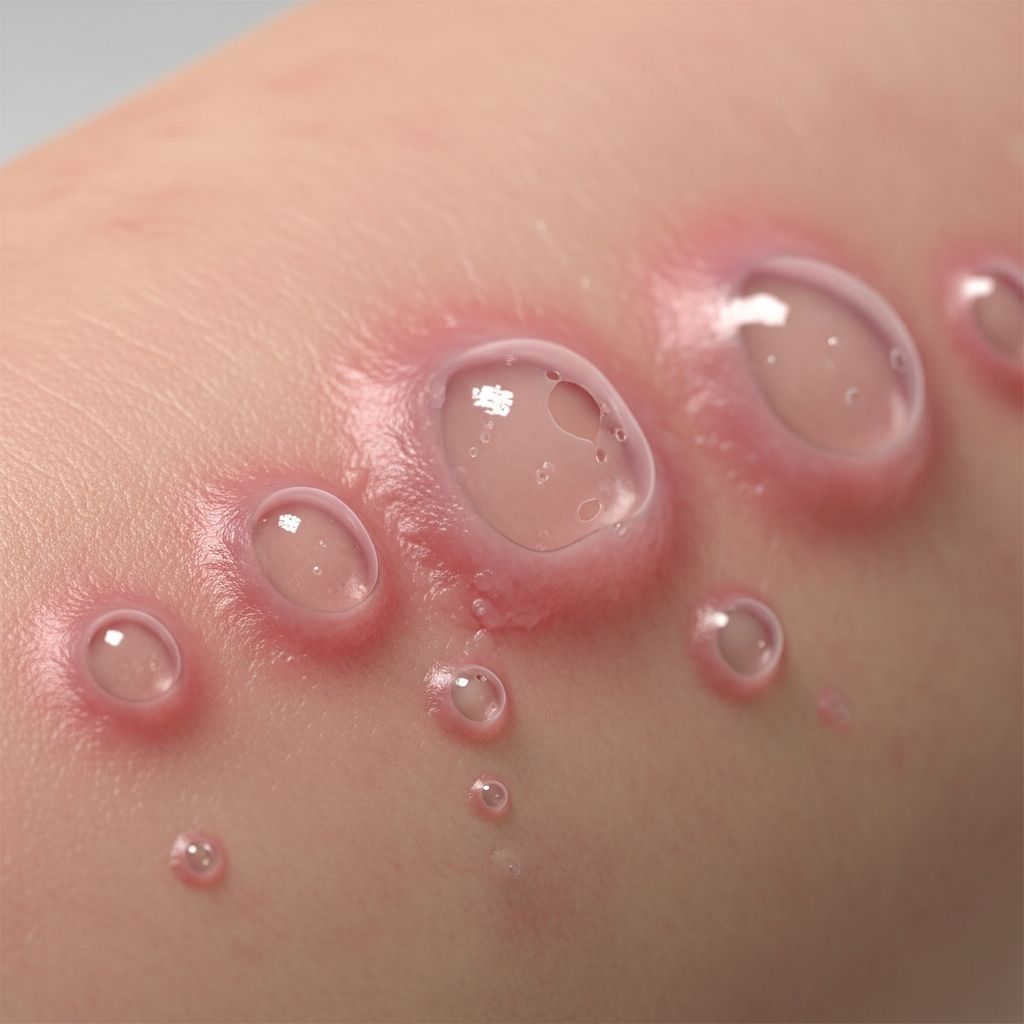
Linear IgA bullous disease (LABD), also known as linear IgA bullous dermatosis or chronic bullous disease of childhood, is a rare autoimmune subepidermal blistering disorder characterized by linear deposition of immunoglobulin A (IgA) at the dermo-epidermal junction (basement membrane zone, BMZ). This condition affects both children and adults, leading to tense vesicles and blisters on the skin and mucous membranes, often resembling other bullous diseases like bullous pemphigoid or dermatitis herpetiformis.
What is Linear IgA Bullous Disease?
Linear IgA bullous disease is an acquired, immunoglobulin-mediated vesiculobullous disease where circulating IgA autoantibodies target components of the BMZ, resulting in subepidermal blisters. The hallmark diagnostic feature is the linear IgA deposition along the BMZ observed via direct immunofluorescence (DIF) on perilesional skin biopsies. In children, it is frequently termed chronic bullous disease of childhood, presenting with characteristic annular or rosette-like lesions, while adult-onset LABD may mimic other autoimmune blistering disorders.
The disease arises from an autoimmune response where IgA antibodies bind to hemidesmosomal proteins such as BP180 (bullous pemphigoid antigen 180), its shed ectodomain LAD-1, or other BMZ components like laminin-332, type VII collagen, or BP230. This binding triggers neutrophil infiltration and degranulation via Fcα receptor (CD89) activation, leading to dermal-epidermal separation primarily in the lamina lucida.
Who Gets Linear IgA Bullous Disease?
LABD is rare, with an estimated incidence of 0.2–2.3 cases per million population annually. It occurs in both pediatric and adult populations without strong gender predilection, though some series report slight male predominance in children. Pediatric cases peak between ages 2–5 years, while adult onset is typically after 60 years.
Genetic factors may play a role, particularly in childhood LABD, where associations with human leukocyte antigen (HLA) alleles such as HLA-B8, DR3, and DQw2 have been noted. Familial cases are exceptional but reported.
What Causes Linear IgA Bullous Disease?
The exact etiology remains unclear, but LABD is triggered by a combination of genetic susceptibility and environmental factors. Key precipitants include:
- Medications: Up to 70% of adult LABD cases are drug-induced, resolving upon drug withdrawal. Common culprits are vancomycin (most frequent), followed by NSAIDs (e.g., diclofenac), antibiotics (penicillins, cephalosporins), ACE inhibitors, and others like furosemide or PCV13 vaccine.
- Infections and Vaccinations: Respiratory infections, gastroenteritis, or recent vaccinations (e.g., 2 weeks prior) have preceded onset in pediatric cases.
- Autoimmune Associations: Linked to ulcerative colitis, celiac disease, rheumatoid arthritis, lupus, autoimmune hepatitis, alopecia areata, or VACTERL association.
- Malignancies: Paraneoplastic LABD reported with lymphoproliferative disorders or solid tumors.
- Other: Rarely, trauma, UV exposure, or gluten sensitivity.
In idiopathic cases, molecular mimicry or loss of immune tolerance to BMZ antigens is postulated.
What are the Clinical Features of Linear IgA Bullous Disease?
Clinical presentation varies by age and subtype.
Childhood LABD (Chronic Bullous Disease of Childhood)
Intense pruritus or burning precedes crops of tense vesicles and blisters (2–20 mm) on erythematous or normal skin, predominantly on the lower abdomen, thighs, perineum, groin, and face (perioral/periorbital). Central crusting with peripheral new blisters forms the classic “string of pearls” or rosette/figure-of-eight pattern. Mucosal involvement (oral, genital) occurs in 50–70%. Lesions heal without scarring but may leave hyperpigmentation.
Adult LABD
Related Stories



Blisters favor trunk, extremities (extensor surfaces), buttocks, and face; string of pearls is less common. Severe pruritus or pain; mucosal sites affected in 50–80%, especially oral. Drug-induced forms may present acutely with widespread eruption mimicking toxic epidermal necrolysis (TEN).
Mucosal and Ocular Involvement
Oral: Ulcers, erosions, desquamative gingivitis. Ocular: Symblepharon, corneal scarring, vision loss in chronic cases (10–20%). Rarely, laryngeal or esophageal strictures.
Variants
- Drug-induced LABD: Resolves 2–6 weeks post-drug cessation.
- LAMPD (Linear IgA Mucous Membrane Pemphigoid): Predominantly mucosal with potential IgG co-deposits.
- LA(G)BD: Mixed IgA/IgG deposits targeting shared antigens.
Diagnosis of Linear IgA Bullous Disease
Diagnosis integrates clinical, histological, and immunofluorescence findings.
- Skin Biopsy (Histology): Subepidermal blisters with neutrophilic/eosinophilic papillary dermal infiltrate; variable fibrin/fibrinogen.
- Direct Immunofluorescence (DIF): Pathognomonic linear IgA at BMZ (salt-split skin: epidermal side for BP180/LAD-1, dermal for collagen VII).
- Indirect Immunofluorescence (IIF): Circulating IgA anti-BMZ antibodies (titer correlates with activity).
- Immunoblot/ELISA: Antibodies to LAD-1 (97-kDa), BP180 NC16A, BP230, laminin-332, collagen VII.
Differential includes bullous pemphigoid, EBA, MMP, DH, EBA.
Management of Linear IgA Bullous Disease
Treatment aims for remission with minimal toxicity; dapsone is first-line.
| Treatment | Indications/Dose | Notes |
|---|---|---|
| Dapsone | 0.5–2 mg/kg/day (children); 50–150 mg/day (adults) | 80–90% response; monitor G6PD, hemolysis. Taper post-remission. |
| Topical CS ± Calcipotriol | Mild/paediatric | Effective monotherapy in 50% childhood cases. |
| Sulphone alternatives (Sulfapyridine, Sulfamethoxypyridazine) | Dapsone intolerance | Similar efficacy. |
| Systemic CS | Severe/refractory | Prednisone 0.5–1 mg/kg; taper. |
| Immunosuppressants | Refractory: MTX, AZA, MMF, Rituximab, IVIG | Case reports; rituximab for anti-collagen VII. |
Drug-induced: Withdraw culprit drug first. Supportive: Wound care, emollients, ocular lubricants.
Prognosis and Complications
Childhood LABD remits spontaneously in 60–80% by puberty (1–4 years duration). Adult LABD chronic but controllable; 30–50% remit after 2–6 years. Complications: Milia, scarring rare; ocular morbidity in 10–20% (scarring, blindness). Monitor for dapsone side effects (hemolysis, methemoglobinemia, agranulocytosis).
Frequently Asked Questions
Is linear IgA bullous disease contagious?
No, it is an autoimmune condition, not infectious.
Can LABD be cured?
Many childhood cases self-resolve; adults achieve long-term remission with treatment.
What is the first-line treatment for LABD?
Dapsone, with screening for G6PD deficiency.
Does LABD cause scarring?
Rarely on skin; possible in mucosa/eyes if untreated.
Can medications trigger LABD?
Yes, especially vancomycin; resolves on discontinuation.
References
- Linear IgA bullous dermatosis–a fifty year experience of Warsaw — Frontiers in Immunology. 2024-10-17. https://www.frontiersin.org/journals/immunology/articles/10.3389/fimmu.2024.1478318/full
- Linear IgA Bullous Dermatosis: A Series of 17 Cases — Actas Dermo-Sifiliográficas. 2019-11-01. https://www.actasdermo.org/en-linear-iga-bullous-dermatosis-a-articulo-S1578219019302379
- Linear IgA Bullous Disease — DermNet NZ. 2023. https://dermnetnz.org/topics/linear-iga-bullous-disease
- Linear IgA Dermatosis — StatPearls, NCBI Bookshelf. 2023-07-17. https://www.ncbi.nlm.nih.gov/books/NBK526113/
- Linear IgA Disease — ARUP Consult. 2024. https://arupconsult.com/content/linear-iga-disease
- S2k guidelines on diagnosis and treatment of linear IgA dermatosis — Journal of the European Academy of Dermatology and Venereology. 2024. https://onlinelibrary.wiley.com/doi/10.1111/jdv.19880
Similar Articles








Read full bio of medha deb