Linear Porokeratosis: Guide To Risks, Diagnosis, And Treatment
Understanding linear porokeratosis: a rare skin disorder with linear lesions, malignancy risk, and management strategies.
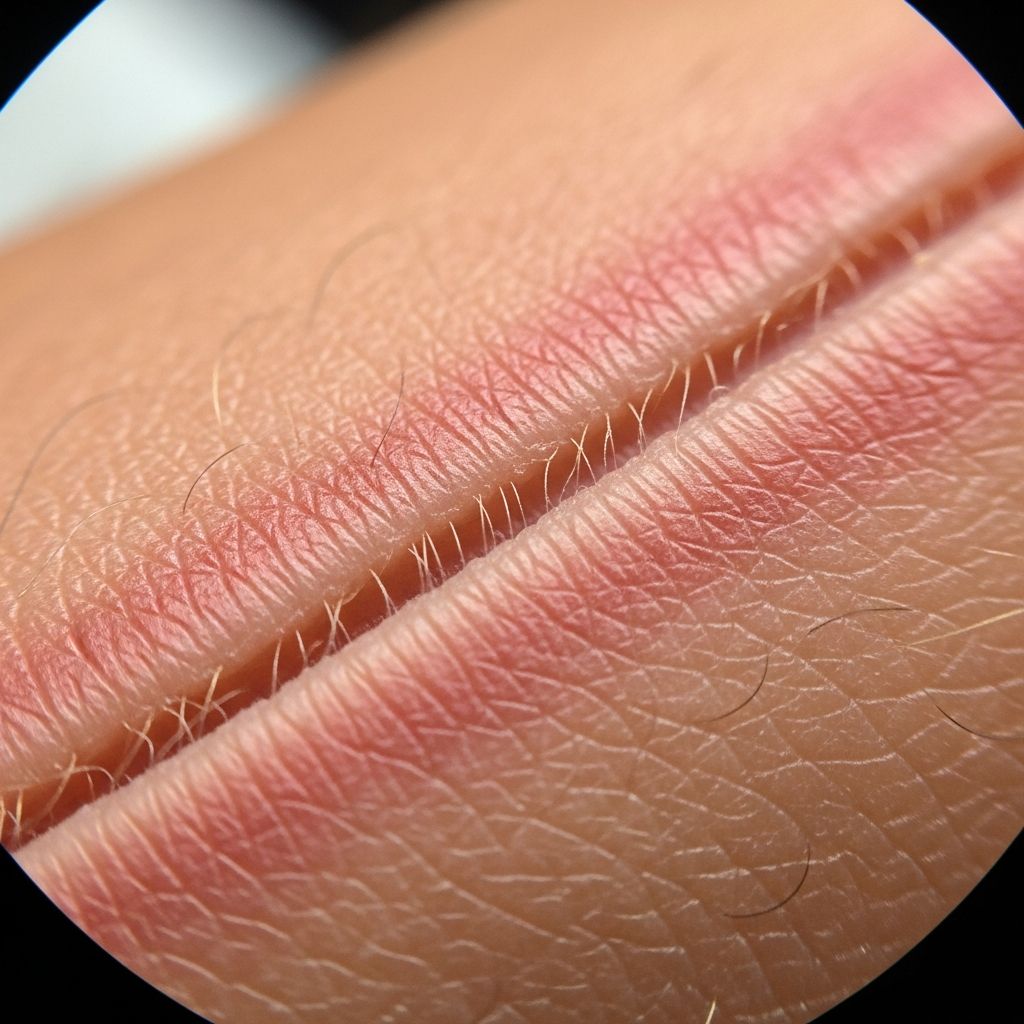
Porokeratosis encompasses a group of disorders marked by abnormal keratinization, resulting in annular or linear lesions featuring a distinctive ridge-like border known as the
cornoid lamella
. Linear porokeratosis specifically manifests as lesions arranged in linear configurations, often following Blaschko’s lines or dermatomes, and can appear from birth or later in life.Introduction
**Porokeratosis** refers to a spectrum of skin conditions characterized by faulty keratinocyte proliferation and differentiation, leading to the formation of reddish-brown patches or plaques encircled by a raised, thread-like border called the cornoid lamella. This hallmark histological feature distinguishes porokeratosis from other dermatoses.
In
linear porokeratosis
, these lesions align in a linear or streak-like pattern, typically unilateral and confined to a single limb, trunk segment, or following the pathways of embryonic cell migration known as Blaschko’s lines. Unlike disseminated forms like DSAP (disseminated superficial actinic porokeratosis), linear variants do not predominantly arise from sun exposure but from somatic mosaicism. The condition may be present at birth (congenital) or emerge during childhood or adulthood, progressing slowly along its linear trajectory.While generally benign, linear porokeratosis carries a notable risk of malignant transformation, underscoring the need for vigilant monitoring.
Demographics
Linear porokeratosis is a rare subtype of porokeratosis, with no strong predisposition to gender, race, or geography reported in the literature. It can manifest across all age groups but is frequently identified in early childhood, though adult-onset cases occur.
Incidence data is limited due to its rarity; however, it is considered less common than classic porokeratosis of Mibelli or DSAP. Familial clustering is uncommon, supporting a postzygotic somatic mutation etiology over germline inheritance. Population studies from dermatology registries indicate it comprises a small fraction of porokeratosis diagnoses, often underrecognized until biopsy confirmation.
Causes
The pathogenesis of linear porokeratosis stems from clonal expansion of mutated keratinocytes, manifesting as somatic mosaicism. This explains the linear distribution along Blaschko’s lines, which represent trajectories of embryonic ectodermal cell development.
Key genetic insights include mutations in genes regulating keratinocyte proliferation and terminal differentiation, such as PMVK, MVD, and MVKK, involved in the mevalonate pathway. These mutations impair cholesterol synthesis and isoprenoid production, disrupting cell signaling and leading to cornoid lamella formation.
Unlike actinic forms, linear porokeratosis is not primarily UV-induced, though sun exposure may exacerbate lesions or promote carcinogenesis. Environmental triggers are minimal; most cases arise de novo from postzygotic mutations during fetal development or early life. No consistent associations with immunosuppression or systemic diseases have been established, distinguishing it from punctate or eruptive variants.
Clinical Features
Lesions present as multiple reddish-brown papules or plaques arranged linearly, often on an extremity, trunk, or head/neck. Each lesion features a thin, raised keratotic rim—the cornoid lamella—surrounding a central atrophic, hypopigmented, or hyperkeratotic area.
Common distributions include:
- Unilateral limb involvement (e.g., arm or leg in a linear streak).
- Following dermatomes or Blaschko’s lines on the trunk.
- Rarely, generalized forms affecting multiple sites.
Skin changes within lesions may include anhidrosis (reduced sweating), atrophy, or hyperpigmentation over time. Lesions are typically asymptomatic but can itch, become painful if frictional, or ulcerate in chronic cases. Progression is slow, with new lesions extending along the linear path.
Related Stories



Complications
The primary concern with linear porokeratosis is
malignant transformation
, with a reported risk of approximately 19% for squamous cell carcinoma (SCC) or basal cell carcinoma (BCC) arising within lesions, particularly in older adults or sun-exposed areas.Other complications encompass:
- Chronic pruritus or pain from friction.
- Cosmetic disfigurement, especially on visible sites.
- Secondary bacterial infection in eroded lesions.
- Rare systemic associations in disseminated cases.
Regular dermatologic surveillance is essential, with biopsy recommended for any enlarging, ulcerated, or changing lesions.
Diagnosis
Diagnosis is primarily clinical, based on the characteristic linear arrangement of annular lesions with cornoid lamella borders. Dermoscopy reveals a white track-like rim surrounding central brown-gray dots or structureless areas.
Histopathology from a biopsy of the raised edge confirms the diagnosis, demonstrating the pathognomonic cornoid lamella: a column of parakeratotic cells overlying dyskeratotic keratinocytes, absent granular layer, and epidermal hyperplasia.
Genetic testing for mevalonate pathway mutations may support mosaic porokeratosis in research settings but is not routine.
Differential Diagnages
Linear morphology prompts consideration of other dermatoses. Key differentials include:
| Condition | Distinguishing Features |
|---|---|
| Linear lichen planus | Violaceous polygonal papules; Wickham striae on dermoscopy; pruritic. |
| Psoriasis guttata linearis | Scaly plaques without cornoid lamella; Auspitz sign positive. |
| Incontinentia pigmenti (adult Blaschko) | Vesicles evolving to hyperpigmentation; X-linked, females mainly. |
| Lichen striatus | Self-limited in children; flat-topped papules; resolves spontaneously. |
| ILVEN (inflammatory linear verrucous epidermal naevus) | Pruritic verrucous plaques from infancy; persistent. |
| Mycosis fungoides (linear) | Poikilodermatous patches; epidermal lymphocyte exocytosis on biopsy. |
Biopsy resolves most ambiguities.
Treatment
No curative therapy exists for linear porokeratosis; management focuses on symptom relief, lesion reduction, and cancer prevention. Sun protection (broad-spectrum SPF 50+, clothing) is paramount.
Treatment options, often disappointing in efficacy, include:
- Topical therapies: Retinoids (tazarotene, tretinoin), 5-fluorouracil, imiquimod, vitamin D analogs (calcipotriol), diclofenac gel.
- Cryotherapy: Liquid nitrogen for isolated lesions.
- Laser/Photodynamic therapy (PDT): CO2 laser, PDT with ALA for superficial ablation.
- Systemic retinoids: Acitretin or isotretinoin for extensive disease.
- Other: Curettage, dermabrasion, oral tofacitinib (case reports).
Response varies; combination approaches and maintenance therapy are common. Regular skin exams are critical.
Frequently Asked Questions (FAQs)
Q: Is linear porokeratosis curable?
A: No, there is no cure, but treatments can improve appearance and prevent complications with ongoing management.
Q: What causes the linear pattern?
A: Somatic mosaicism leads to mutated keratinocytes migrating along Blaschko’s lines during development.
Q: How is skin cancer risk managed?
A: Annual dermatologic exams, prompt biopsy of changing lesions, and rigorous sun protection.
Q: Does it affect children?
A: Yes, often presents in early childhood; congenital cases occur.
Q: Are treatments painful?
A: Topical therapies may irritate; cryotherapy/laser cause transient discomfort.
References
- Linear porokeratosis – DermNet — DermNet NZ. 2023. https://dermnetnz.org/topics/linear-porokeratosis
- Porokeratosis – StatPearls — NCBI Bookshelf / StatPearls Publishing. 2023-10-08. https://www.ncbi.nlm.nih.gov/books/NBK532290/
- Porokeratosis: Types, causes, treatments, and pictures — Medical News Today. 2023. https://www.medicalnewstoday.com/articles/porokeratosis
- Linear porokeratosis — National Organization for Rare Disorders. 2023. https://rarediseases.org/mondo-disease/linear-porokeratosis/
- Porokeratosis: What Is It And How Does It Impact My Health? — WebMD. 2023. https://www.webmd.com/skin-problems-and-treatments/what-is-porokeratosis
- Understanding Porokeratosis: Causes, Symptoms & Effective Treatments — MDCS Dermatology. 2023. https://www.mdcsnyc.com/post/understanding-porokeratosis-causes-symptoms-effective-treatments
Similar Articles








Read full bio of medha deb