Lip Licker’s Dermatitis: Causes, Symptoms, Expert Treatment
Understanding the causes, symptoms, and effective treatments for dermatitis caused by habitual lip licking.
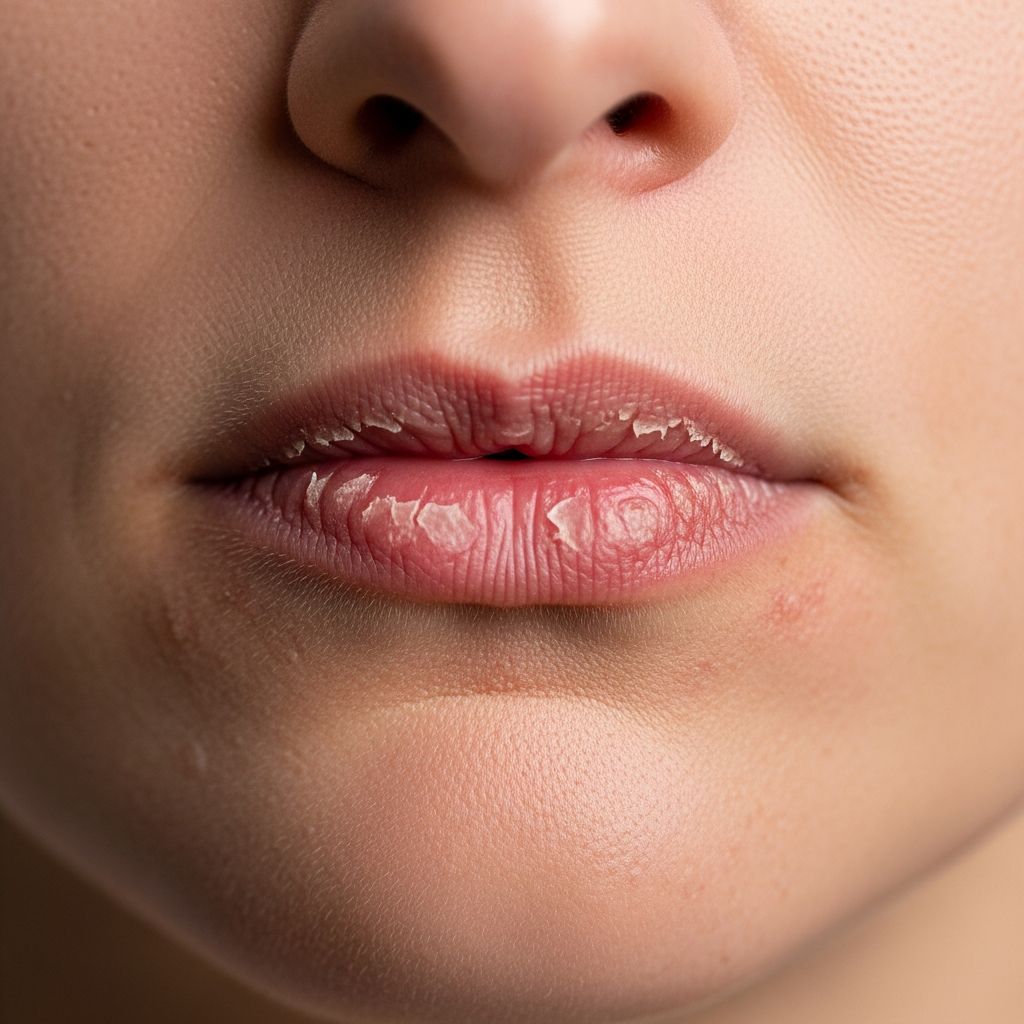
Lip licker’s dermatitis is a common form of irritant contact dermatitis and eczematous cheilitis affecting the lips and surrounding perioral skin, primarily caused by repeated exposure to saliva from habitual lip licking. This condition creates a distinctive pattern of chronic redness, dryness, and scaling that matches the reach of the tongue, often exacerbated by environmental factors like cold weather.
Demographics
Lip licker’s dermatitis affects individuals of all ages but is particularly prevalent in children due to their frequent lip-licking habits, which may stem from teething, anxiety, or simply dry lips. Adults can also develop it, especially those with chronic habits linked to stress, nervousness, or cognitive impairments that make impulse control challenging. It is more common during winter months when dry, cold air promotes lip chapping, initiating the licking cycle. People with a predisposition to eczema or atopic dermatitis are at higher risk, as their skin barrier is more susceptible to irritants like saliva.
Causes
The primary cause is repetitive lip licking, which introduces saliva containing digestive enzymes and moisture that disrupt the skin’s natural barrier. Saliva initially wets the lips, providing temporary relief from dryness, but as it evaporates, it strips away the protective oily layer, leading to increased transepidermal water loss and a vicious cycle of dryness, further licking, and inflammation. Contributing factors include:
- Dry or chapped lips: Often triggered by cold, dry weather, prompting instinctive licking.
- Environmental irritants: Low humidity, wind, or sun exposure damages the lip’s thin stratum corneum.
- Medications: Certain oral or topical drugs, like inhaled steroids, can chap lips, increasing licking tendency.
- Habits and psychology: Anxiety, stress, or unconscious habits perpetuate the behavior, especially in children or those with neurodevelopmental conditions.
This irritant mechanism differs from allergic reactions, as it involves direct chemical damage rather than immune hypersensitivity.
Clinical Features
The hallmark presentation is a well-defined ring of erythematous (red), dry, scaly skin encircling the lips, extending to the tongue’s reach but sparing the vermilion border and mouth corners. Key features include:
- Redness and scaling: Persistent erythema with fine white scales, worsening with continued licking.
- Dryness and chapping: Cracked, fissured skin, especially on the lower lip in severe cases.
- Itching or pain: Mild discomfort that prompts more licking.
- Seasonal variation: Often flares in winter but can be perennial in chronic lickers.
Observation of lip-licking behavior during examination supports the diagnosis. In chronic cases, the skin becomes hyperpermeable, releasing proinflammatory cytokines and amplifying inflammation.
Complications
Untreated lip licker’s dermatitis can lead to secondary issues, including:
- Fissures and cracks: Painful splits that risk bacterial superinfection.
- Chronic inflammation: Thickened, lichenified skin from prolonged irritation.
- Psychological reinforcement: The habit becomes ingrained, complicating resolution, particularly in children.
- Misdiagnosis and mistreatment: Confusion with perioral dermatitis may lead to inappropriate steroid use, worsening symptoms.
Rarely, digestive enzymes in saliva cause deeper tissue irritation, mimicking infection.
Diagnosis
Diagnosis is clinical, relying on history of lip licking and characteristic perioral distribution sparing the vermilion. No biopsy is typically needed, as the pattern is distinctive. Key diagnostic steps:
Related Stories



- History taking: Confirm habitual licking, seasonal triggers, or emollient use.
- Examination: Note scaling, redness, and absence of papules or pustules.
- Observation: Watch for unconscious licking.
If chronic (>6 weeks), assess for barrier recovery failure despite moisturizers. Patch testing may be warranted if allergy is suspected.
Differential Diagnoses
Several conditions mimic lip licker’s dermatitis; differentiation is crucial for proper management. The table below compares key features:
| Condition | Key Features | Sparing of Vermilion? | Response to Steroids |
|---|---|---|---|
| Lip Licker’s Dermatitis | Scaling, redness to tongue reach; history of licking | Yes | Good (short-term) |
| Perioral Dermatitis | Papules, pustules; often post-steroid | Yes | Worsens |
| Allergic Contact Cheilitis | Eczema from allergens (balms, metals); patch test positive | No | Variable |
| Atopic Cheilitis | Associated with eczema history; itchy | Variable | Good |
| Infection (Candida, Impetigo) | Pustules, crusting; positive culture | No | Antibiotics/antifungals |
Data synthesized from . Perioral dermatitis notably spares the vermilion and features papules, unlike the scaling of lip licking.
Treatment
Treatment focuses on breaking the lick-dryness cycle through prevention and barrier repair. Core strategies:
- Habit modification: Awareness training, reminders, or behavioral therapy; essential for resolution.
- Emollients: Frequent application of bland, fragrance-free balms (e.g., petroleum jelly, lanolin-free) with UV protection; avoid irritants like menthol, peppermint.
- Hydration: Drink plenty of water to maintain internal moisture.
- Topical steroids: Low-potency (e.g., hydrocortisone 1%) for 3-5 days in acute flares, under medical supervision; unlike perioral dermatitis.
For severe cases, occlusive ointments seal cracks. If unresponsive, patch test for allergens in balms or dental products. Children may need gentle redirection.
Outcome
With habit cessation and consistent emollient use, symptoms resolve within 1-2 weeks, though chronic cases may take longer. Relapse is common if licking resumes, emphasizing long-term prevention. Early intervention prevents complications and builds healthy habits.
Frequently Asked Questions (FAQs)
Is lip licker’s dermatitis contagious?
No, it is not infectious; it results from mechanical and chemical irritation by saliva.
Can I use lip balm with flavoring?
Avoid flavored or mentholated balms, as they may irritate or encourage licking.
How long does treatment take?
Resolution typically occurs in 1-2 weeks with adherence, but habits must stop for full recovery.
Does it only affect children?
No, adults with stress-related habits or dry climates are also susceptible.
When should I see a doctor?
If home treatments fail after 1-2 weeks, or if fissures/infection signs appear.
References
- Lip licker’s dermatitis – Wikipedia — Wikipedia. 2023-10-15. https://en.wikipedia.org/wiki/Lip_licker%27s_dermatitis
- Lip Licker’s Dermatitis Causes, Symptoms, and Treatment — Healthline. 2021-06-10. https://www.healthline.com/health/skin/lip-lickers-dermatitis
- Art of prevention: Practical interventions in lip-licking dermatitis — National Library of Medicine, PMC. 2021-04-01. https://pmc.ncbi.nlm.nih.gov/articles/PMC8060673/
- Lip licker’s dermatitis – DermNet — DermNet NZ. Accessed 2026. https://dermnetnz.org/topics/lip-lickers-dermatitis
- Factitious Dermatitis: Lip Licker’s Dermatitis — Consultant360. 2020-01-01. https://www.consultant360.com/photoclinic/factitious-dermatitis-lip-lickers-dermatitis
Similar Articles








Read full bio of Sneha Tete