Lipid Panel: Understanding Your Blood Test Results
Complete guide to lipid panel tests: what they measure, why you need them, and understanding your results.
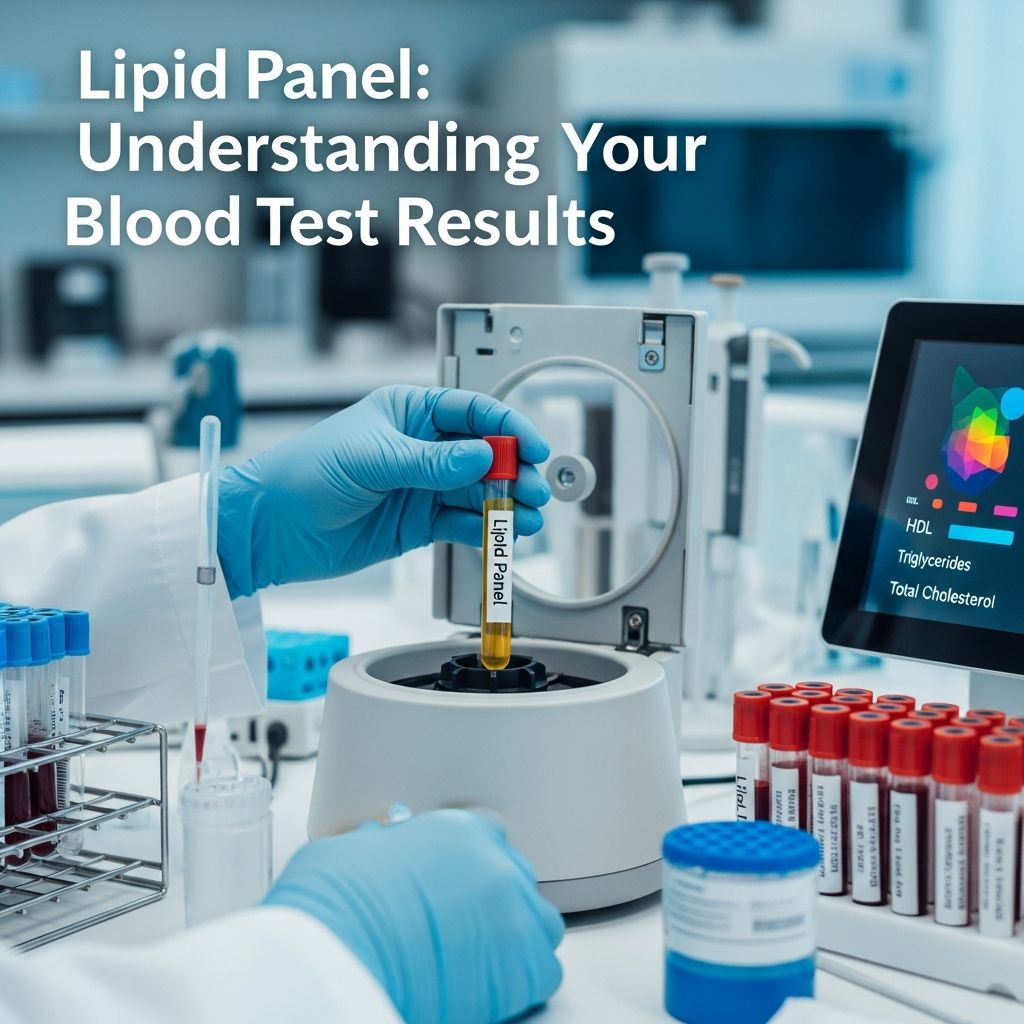
A lipid panel is a common blood test that healthcare providers use to monitor and screen for your risk of cardiovascular disease. This comprehensive diagnostic tool measures the amount of certain fat molecules called lipids in your blood, providing crucial information about your heart and blood vessel health. Understanding what a lipid panel measures and how to interpret the results can help you take proactive steps toward better cardiovascular health.
What is a Lipid Panel?
A lipid panel is a blood test that measures the amount of fat molecules called lipids in your blood. In most cases, the panel includes four different cholesterol measurements and a measurement of your triglycerides. The test provides a comprehensive picture of your lipid profile, which is essential for assessing your risk of heart disease, stroke, and other cardiovascular conditions.
A lipid panel measures five different types of lipids from a blood sample, including:
- Total cholesterol
- Low-density lipoprotein (LDL) cholesterol, also called “bad” cholesterol
- High-density lipoprotein (HDL) cholesterol, also called “good” cholesterol
- Very low-density lipoprotein (VLDL) cholesterol
- Triglycerides
While these are the main measurements in a standard lipid panel, some versions of the test may include other measurements such as cholesterol ratios or additional markers of cardiovascular risk.
Why Do You Need a Lipid Panel?
Healthcare providers use lipid panels to help assess your cardiovascular health by analyzing cholesterol in your blood. This helps them diagnose conditions that affect your heart and blood vessels and determine your risk for cardiovascular disease.
Screening for Cardiovascular Disease Risk
If you have one or more risk factors for cardiovascular disease, your provider may suggest frequent screening with a lipid panel to try to catch elevated cholesterol levels. Risk factors for cardiovascular disease include:
- Family history of heart disease or high cholesterol
- Smoking
- High blood pressure
- Diabetes
- Obesity or overweight
- Sedentary lifestyle
- Age (men 45 and older, women 55 and older)
Screening Children for High Cholesterol
Children may need a lipid panel blood test, too. Cholesterol levels in children are linked to three factors: heredity, obesity and the types of foods children eat. In most cases, kids with high cholesterol have a parent who also has elevated cholesterol. Even young children may need to have a lipid panel if they have one or more risk factors.
Diagnosing Lipid-Related Conditions
Providers sometimes use lipid panels to diagnose conditions that can affect your lipid levels, including:
- Hyperlipidemia (high cholesterol)
- Hypolipidemia (low cholesterol)
- Metabolic syndrome
- Kidney disease
- Liver disease
- Thyroid disorders
How to Prepare for a Lipid Panel Test
Related Stories



Proper preparation for your lipid panel is important to ensure accurate results. In most cases, you need to fast for 10 to 12 hours before your lipid panel blood test. Fasting means not eating or drinking anything except water. This fasting period helps ensure that your triglyceride levels are measured accurately, as food can temporarily elevate triglyceride values.
Before your test, inform your healthcare provider about:
- All medications you are currently taking
- Any supplements or herbal products
- Recent lifestyle changes
- Your family history of heart disease or high cholesterol
- Any current health conditions
In some cases, getting a lipid panel test without fasting is possible, though fasting lipid panels are generally preferred for more accurate measurements. Your healthcare provider can advise you on whether fasting is necessary for your specific situation.
What to Expect During the Test
You can expect to experience the following during a lipid blood test:
Your healthcare provider will draw blood from a vein in your arm using a small needle. The procedure is quick and relatively painless for most people. The entire procedure usually takes less than five minutes. The blood sample is then sent to a laboratory for analysis where technicians measure the various lipid components.
During the blood draw, you may experience:
- A brief pinch when the needle is inserted
- Mild discomfort or pressure at the collection site
- Light-headedness in rare cases
After the test, you can immediately return to your normal activities, including eating and drinking. There are no restrictions following a lipid panel test.
Understanding Your Lipid Panel Results
Test results for a lipid panel usually provide the following information: The ideal level (measured in milligrams per deciliter of blood — mg/dL) for each of the four standard tests in a lipid panel are as follows:
| Type of Cholesterol | Ideal Level |
|---|---|
| Total Cholesterol | Less than 200 mg/dL |
| Bad (LDL) Cholesterol | Less than 100 mg/dL |
| Good (HDL) Cholesterol | At least 60 mg/dL |
| Triglycerides | Less than 150 mg/dL |
Total Cholesterol
Total cholesterol is the sum of all cholesterol in your blood, including LDL, HDL, and VLDL cholesterol. Your goal should be to keep your total cholesterol below 200 mg/dL. A reading of 200-239 mg/dL is considered borderline high, while 240 mg/dL and above is considered high and increases your risk of heart disease.
LDL Cholesterol (Bad Cholesterol)
LDL cholesterol is often called “bad” cholesterol because high levels can lead to buildup of plaque in your arteries, a condition called atherosclerosis. This buildup can narrow your blood vessels and increase your risk of heart attack and stroke. Your LDL goal depends on your overall cardiovascular risk, but generally, lower is better. For most people, less than 100 mg/dL is optimal.
HDL Cholesterol (Good Cholesterol)
HDL cholesterol is often called “good” cholesterol because it helps remove other forms of cholesterol from your arteries and bloodstream. Higher HDL levels are associated with better cardiovascular health. For both men and women, an HDL level of 60 mg/dL or higher is considered protective against heart disease.
Triglycerides
Triglycerides are a type of fat in your blood. Your body uses triglycerides for energy, but high levels can increase your risk of heart disease. A fasting triglyceride level below 150 mg/dL is considered normal, while levels between 150-199 mg/dL are borderline high, 200-499 mg/dL are high, and 500 mg/dL or above are very high.
How Long Until You Get Results?
In most cases, you should have your lipid panel results back in a few days, though it could take longer. Once your healthcare provider receives the results, they will review them and discuss the findings with you. If your results show elevated cholesterol levels or other concerning values, your provider may recommend lifestyle changes, medications, or additional testing.
How Often Should You Get a Lipid Panel?
Your healthcare provider will tell you when you’ll need a lipid panel. It depends mostly on if you have risk factors for cardiovascular disease, although age and medical history also play a role. Here are general screening recommendations:
- Adults 20 and older: At least once every five years
- Adults 40 and older or with risk factors: More frequent screening may be recommended
- Children: At least once between ages 9-11 and again between ages 17-21, or more frequently if risk factors are present
- Those on cholesterol-lowering medications: Regular monitoring as recommended by your provider
Even young children may need to have a lipid panel if they have one or more risk factors. It’s best to talk to your healthcare provider and give them your complete health history to see what they recommend.
What Affects Your Lipid Levels?
Several factors can influence your lipid panel results:
- Diet: Foods high in saturated fats and cholesterol can raise your cholesterol levels
- Physical activity: Regular exercise can help raise HDL cholesterol and lower LDL cholesterol and triglycerides
- Weight: Being overweight can increase triglycerides and LDL cholesterol
- Smoking: Smoking lowers HDL cholesterol and raises triglycerides
- Stress: Chronic stress can negatively affect cholesterol levels
- Medications: Some medications can affect cholesterol levels
- Genetics: Your family history plays a significant role in your cholesterol levels
- Age and sex: Cholesterol levels tend to increase with age
Frequently Asked Questions (FAQs)
Q: Do I really need to fast before a lipid panel?
A: In most cases, yes. Fasting for 10-12 hours before your lipid panel helps ensure accurate triglyceride measurements, as food can temporarily elevate these levels. However, some non-fasting lipid panels are available, though fasting panels are generally preferred. Ask your healthcare provider about their recommendation for your specific situation.
Q: What does my cholesterol ratio mean?
A: Your lipid panel may include cholesterol ratios, such as your total cholesterol to HDL ratio or LDL to HDL ratio. These ratios help your provider assess your cardiovascular risk more comprehensively. Generally, lower ratios are better. For example, a total cholesterol to HDL ratio below 5 is considered good for most adults.
Q: Can I eat before a lipid panel?
A: No, if your lipid panel requires fasting, you should not eat anything except water for 10-12 hours before your test. Eating food can temporarily affect your triglyceride levels and other lipid measurements. Always follow your healthcare provider’s specific fasting instructions.
Q: What if my lipid panel results are abnormal?
A: If your results show elevated cholesterol or triglycerides, your healthcare provider may recommend lifestyle modifications such as diet changes, increased physical activity, and weight management. They may also prescribe cholesterol-lowering medications such as statins. In some cases, additional testing may be needed to evaluate your overall cardiovascular risk.
Q: Can stress affect my lipid panel results?
A: Yes, chronic stress can negatively affect your cholesterol levels and triglycerides. Try to manage stress through relaxation techniques, regular exercise, adequate sleep, and other stress-reduction methods. If you’ve been experiencing unusual stress, inform your healthcare provider before your lipid panel test.
Q: How do medications affect lipid levels?
A: Certain medications, including some blood pressure medications, hormone therapies, and other drugs, can affect your cholesterol and triglyceride levels. Always inform your healthcare provider about all medications and supplements you’re taking before your lipid panel test so they can interpret your results accurately.
References
- Lipid Panel, Basic — Cleveland Clinic Laboratories. Retrieved December 1, 2025. https://my.clevelandclinic.org/health/diagnostics/17176-lipid-panel
- Cholesterol: Understanding Levels & Numbers — Cleveland Clinic. Retrieved December 1, 2025. https://my.clevelandclinic.org/health/articles/11920-cholesterol-numbers-what-do-they-mean
- Hyperlipidemia (High Cholesterol): Levels, Causes, Symptoms — Cleveland Clinic. Retrieved December 1, 2025. https://my.clevelandclinic.org/health/diseases/21656-hyperlipidemia
- What Are Lipids? — Cleveland Clinic. Retrieved December 1, 2025. https://my.clevelandclinic.org/health/body/24425-lipids
- ACC/AHA Lipid Guidelines: Personalized Care to Prevent Cardiovascular Disease — Cleveland Clinic Journal of Medicine, Vol. 87, No. 4, 2020. https://www.ccjm.org/content/87/4/231
Similar Articles








Read full bio of Sneha Tete