Lipodermatosclerosis: Causes, Symptoms, and Treatment
Understanding lipodermatosclerosis: A comprehensive guide to this chronic venous skin condition.
Lipodermatosclerosis: Understanding a Chronic Venous Skin Condition
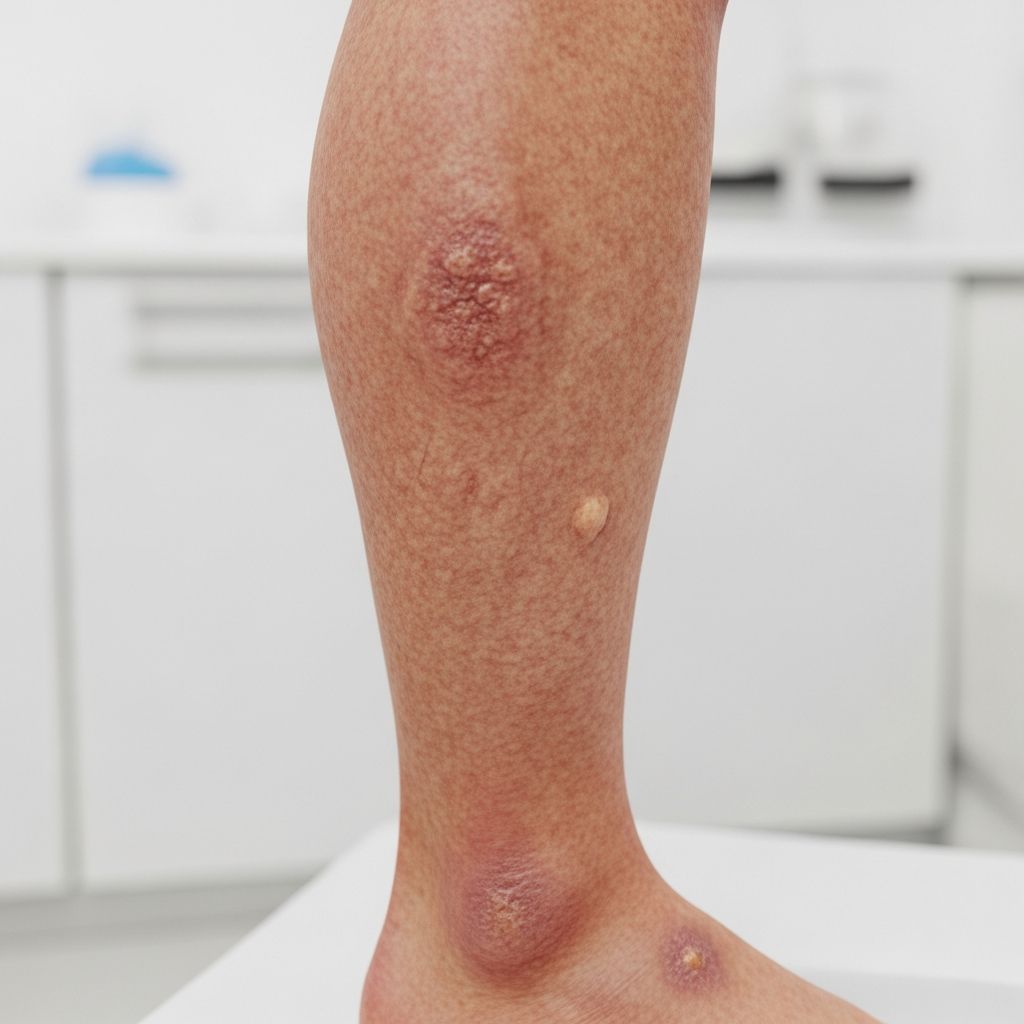
Lipodermatosclerosis is a chronic skin condition characterized by thickening, hardening, and discoloration of the skin and subcutaneous tissue, typically affecting the lower legs and ankles. Also referred to as “woody edema,” this condition develops as a progressive consequence of chronic venous insufficiency and venous hypertension. The name itself is highly descriptive of the pathological process: “lipo” referring to fat tissue, “dermato” referring to skin, and “sclerosis” referring to hardening or scarring.
Though treatment can improve symptoms or slow progression, lipodermatosclerosis is typically chronic and recurring. Early recognition and intervention are essential for managing this condition effectively and preventing serious complications such as venous ulcers.
What Causes Lipodermatosclerosis?
Lipodermatosclerosis develops from chronic venous insufficiency, a condition in which leg veins fail to return blood efficiently to the heart. The primary mechanism involves venous reflux caused by incompetent (leaky) vein valves, which leads to elevated pressure within the leg veins, a phenomenon known as venous hypertension.
The Inflammatory Cascade
When venous hypertension occurs, several interconnected processes unfold:
- Plasma leakage: Increased venous pressure forces blood plasma and proteins to leak into surrounding tissues, creating localized swelling and inflammation.
- Leukocyte activation: Venous hypertension increases leukocytes (white blood cells) within the veins, which migrate into surrounding tissue and become activated.
- Inflammatory response: Activated leukocytes release proinflammatory cytokines and cells, inducing a chronic inflammatory state that persists over time.
- Fibrosis and sclerosis: The chronic inflammation stimulates increased collagen production, leading to fibrosis of subcutaneous fat and skin hardening characteristic of the condition.
- Impaired oxygenation: Trapped fluid limits oxygen flow to the affected area, compromising the skin’s ability to repair itself and increasing susceptibility to ulceration.
Risk Factors and Associated Conditions
While the exact etiology is not fully understood, lipodermatosclerosis is strongly associated with several risk factors:
- Obesity and excess body weight
- Varicose veins (visible or “hidden”)
- Advanced age (most common at middle age or later)
- Prolonged venous reflux and untreated chronic venous disease
- Incompetent perforating veins
The most common cause of lipodermatosclerosis is venous reflux due to varicose veins or “hidden” varicose veins (previously termed superficial venous incompetence or chronic venous incompetence).
Clinical Presentation and Symptoms
Lipodermatosclerosis typically manifests in two distinct clinical stages: an acute phase followed by a chronic phase occurring several months later.
Acute Phase Symptoms
During the acute inflammatory phase, patients experience:
- Sudden onset of pain, inflammation, and tenderness in the lower leg
- Warm, tender inflammation above the ankle
- Induration (hardening of tissue)
- Erythema (redness) and color changes ranging from pink to bright red
- Itching and aching sensations
- Feeling of swelling or heaviness in one or both lower limbs
- Edema (fluid accumulation and swelling)
The acute phase can mimic cellulitis, making accurate diagnosis important.
Chronic Phase Symptoms
As the condition progresses into the chronic phase, patients develop:
- Persistent skin thickening and induration (hardening)
- Increased pigmentation, appearing as light brown, dark brown, or haemosiderin discoloration
- Flaky, scaling skin with possible white scarring (atrophie blanche)
- Characteristic change in leg shape, often described as an “inverted champagne bottle” or “bowling pin” appearance
- Duller, aching pain that intensifies with walking or exercise
- Reduced skin elasticity and resilience
- Swelling and edema
Related Stories



Pain is notably common in lipodermatosclerosis, identified as the most frequent symptom in approximately 43% of patients with the condition. In the chronic stage, discoloration persists and may be permanent, though some improvement in other symptoms is possible with treatment.
Associated Complications and Progression
Without appropriate treatment, lipodermatosclerosis can lead to serious complications:
- Venous leg ulcers: The hardened skin and compromised tissue elasticity make ulcer formation increasingly likely, particularly around the ankles. These ulcers are painful, difficult to heal, and prone to infection due to the associated chronic inflammatory state and fibrosis.
- Venous stasis dermatitis: Secondary dermatitis may develop alongside the primary condition.
- Aggravated venous insufficiency: Lipodermatosclerosis can further worsen chronic venous insufficiency, creating a self-perpetuating cycle of increased pressure, tissue damage, and inflammation.
- Impaired mobility: Pain and tightness in the lower legs may make walking uncomfortable, significantly affecting quality of life.
The condition’s association with poor wound healing due to chronic inflammation and fibrosis makes any resulting ulceration particularly challenging to manage.
Diagnosis and Clinical Assessment
Accurate diagnosis is crucial for appropriate management. High-resolution venous duplex ultrasound performed by a trained vascular technologist is considered the gold standard diagnostic tool. This imaging technique identifies the underlying causes of venous reflux, including:
- Incompetent saphenous veins
- Incompetent perforating veins
- Pelvic vein involvement (rare)
Clinical examination reveals the characteristic skin changes, tissue induration, and the distinctive leg shape changes that help confirm the diagnosis.
Treatment Options and Management Strategies
Treatment of lipodermatosclerosis involves a multifaceted approach addressing both symptoms and underlying venous disease.
Conservative Management
Compression therapy remains the cornerstone of initial treatment. This conservative approach includes:
- Compression stockings (graduated compression)
- Compression bandaging on affected areas
- Multi-layer bandaging (MLB) with interface pressure exceeding 40 mm Hg for acute cases
Research demonstrates that multi-layer bandaging can ease pain in a significant proportion of patients, with symptom resolution occurring within 2 to 11 weeks of treatment.
Lifestyle Modifications
Essential lifestyle changes significantly impact disease progression and symptom management:
- Maintaining a healthy body weight and balanced diet
- Regular exercise and physical activity
- Avoiding prolonged sitting or standing
- Leg elevation, particularly when resting
- Proper skin care and hygiene
Pharmacological Treatment
Medical interventions include:
- Clobetasol propionate: A potent corticosteroid applied topically to reduce inflammation
- Sulodexide: A glycosaminoglycan that has demonstrated significant improvement in objective signs of erythema, skin temperature, induration, and subjective symptoms of chronic venous disease with 3-month treatment courses.
- Oral medications: As necessary for symptom management
Advanced Surgical and Minimally Invasive Procedures
For advanced cases or when conservative measures prove insufficient, interventional procedures address the underlying venous pathology:
- Endovenous surgery: Treatment of incompetent saphenous veins
- Endovenous laser ablation (EVLA): Minimally invasive laser treatment to ablate dysfunctional veins
- Sclerotherapy: Injection of sclerosing agents to close incompetent veins
- TRLOP closure: Transdermal radiofrequency-powered occlusion of incompetent perforators
- Ultrasound-guided therapy: Advanced imaging-guided interventions
- Pelvic vein embolisation: Rarely used when pelvic veins contribute to the condition
Prognosis and Long-Term Management
While lipodermatosclerosis is typically chronic and recurring, appropriate management can effectively control symptoms and prevent progression. Early intervention and proactive management are crucial for improving outcomes and quality of life.
Some skin changes, particularly pigmentation and scarring, may be long-lasting even with successful treatment. However, with proper management of underlying venous insufficiency, reduction of inflammation, and adherence to lifestyle modifications, many patients experience:
- Symptom control and improvement
- Halted or slowed disease progression
- Prevention of serious complications such as ulceration
- Restored mobility and improved quality of life
Continuous monitoring and follow-up care help ensure optimal outcomes and allow for treatment adjustments as needed.
Frequently Asked Questions (FAQs)
Q: Is lipodermatosclerosis a serious condition?
A: Yes, lipodermatosclerosis is a serious chronic condition that requires medical attention. If left untreated, it can progress to severe complications including venous leg ulcers, which are painful and difficult to heal. However, with early intervention and appropriate treatment, complications can be prevented and progression can be halted or slowed.
Q: Can lipodermatosclerosis be cured?
A: Lipodermatosclerosis is typically a chronic and recurring condition that cannot be completely cured. However, it can be effectively managed with treatment. Addressing the underlying venous insufficiency through surgical or minimally invasive procedures combined with compression therapy and lifestyle modifications can significantly improve symptoms and prevent progression.
Q: How long does it take to see improvement with treatment?
A: The timeline for improvement varies depending on the treatment approach and individual factors. Multi-layer bandaging studies show symptom resolution within 2 to 11 weeks. Conservative measures like compression therapy and lifestyle changes may take several months to demonstrate full benefits, while surgical interventions may provide more rapid symptom relief.
Q: What is the “inverted champagne bottle” appearance?
A: This distinctive leg shape occurs in untreated or advanced lipodermatosclerosis when the hardened skin and tissue constrict the lower leg between the calf and ankle, while the calf muscle expands above this constriction, creating a shape reminiscent of an inverted champagne bottle or bowling pin.
Q: Can lipodermatosclerosis be prevented?
A: While lipodermatosclerosis cannot always be prevented, the risk of developing it can be reduced by managing underlying venous disease early, maintaining a healthy body weight, exercising regularly, avoiding prolonged sitting or standing, and seeking prompt treatment for varicose veins or other signs of venous insufficiency.
References
- Understanding Lipodermatosclerosis: Causes, Symptoms, Treatments — Vein Health Australia. 2025. https://www.veinhealth.com.au/lipodermatosclerosis-advanced-venous-disease/
- What is Lipodermatosclerosis and How is it Treated? — Miami Vein Center. 2025. https://www.miamivein.com/what-is-lipodermatosclerosis-how-is-it-treated/
- Lipodermatosclerosis – Vascular Institute of Chattanooga — Vascular Institute of Chattanooga. 2025. https://vascularinstituteofchattanooga.com/vein-clinic/venous-conditions/lipodermatosclerosis/
- Lipodermatosclerosis — DermNet. 2025. https://dermnetnz.org/topics/lipodermatosclerosis
- Lipodermatosclerosis Encinitas CA – Treatments for Swollen Edema — Savi Dermatology. 2025. https://www.saviderm.com/lipodermatosclerosis-encinitas/
- Lipodermatosclerosis (LDS) Treatment – The Whiteley Clinic — The Whiteley Clinic. 2025. https://thewhiteleyclinic.co.uk/lipodermatosclerosis-lds/
- Management of hypodermitis or lipodermatosclerosis: an up-to-date review — Phlebolymphology. 2025. https://www.phlebolymphology.org/management-of-hypodermitis-or-lipodermatosclerosis-an-up-to-date-review/
Similar Articles








Read full bio of Sneha Tete