Lipoma Pathology: Histological Features and Clinical Diagnosis
Comprehensive guide to lipoma pathology, histological characteristics, and diagnostic differentiation from malignant tumors.
Understanding Lipoma Pathology
Lipomas represent one of the most common benign tumors encountered in clinical practice, composed entirely of mature adipose tissue. These slow-growing subcutaneous lesions typically present as soft, rubbery nodules that develop beneath the skin, most frequently affecting the trunk and extremities. Understanding the pathological characteristics of lipomas is essential for accurate diagnosis and differentiation from more concerning lipomatous lesions, particularly well-differentiated liposarcoma.
Histological Characteristics of Lipomas
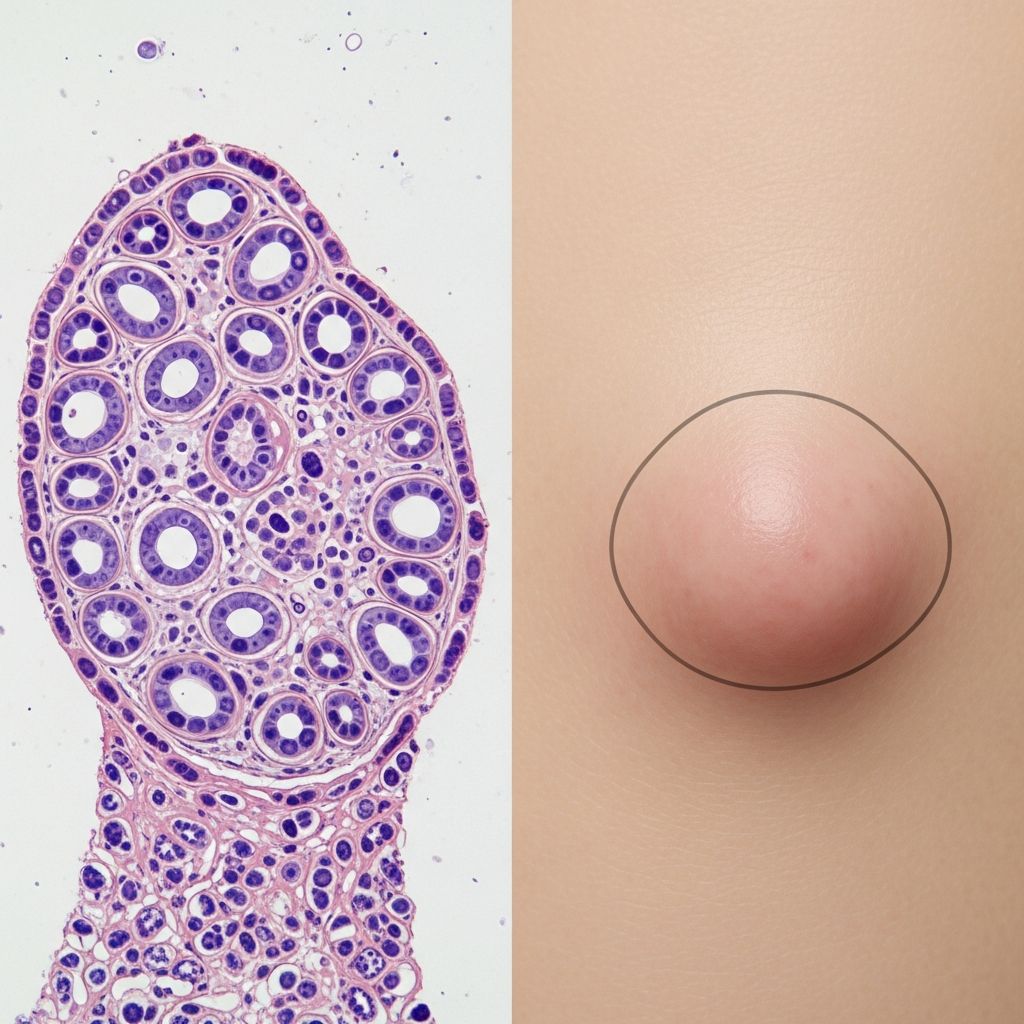
Microscopic examination of lipoma specimens reveals distinctive histological features that aid in diagnosis. Mature adipose tissue forms the primary component of lipomas, composed of uniform fat cells arranged in characteristic patterns. The tissue demonstrates minimal vascularity, with few small capillaries present within thin fibrous strands that traverse the fatty matrix.
A hallmark feature of lipomas includes the presence of a thin fibrous capsule that encapsulates the lesion, effectively separating it from surrounding normal subcutaneous tissue. This capsule plays a crucial role in surgical management, as complete removal of the capsule is necessary to prevent recurrence. The capsule also aids pathologists in distinguishing lipomas from diffuse fatty proliferations or normal subcutaneous fat.
The circumscription and encapsulation of lobules within lipomas provide a distinctive architectural pattern under microscopic examination. This organized lobular arrangement, combined with the thin fibrous capsule, helps differentiate lipomas from normal adipose tissue, which may be difficult when examining emulsified fat specimens obtained through liposuction or weight loss procedures.
Microscopic Features and Composition
Within the mature adipose tissue framework, lipomas display relatively uniform fat cell morphology with minimal inflammatory changes in uncomplicated cases. The adipocytes maintain normal size and appearance, and mitotic figures are absent or extremely rare. The supporting stroma consists of delicate fibrovascular tissue with minimal cellularity.
When lipomas undergo traumatic injury, secondary changes become evident histologically. Fat necrosis and associated inflammatory reactions may develop, characterized by granulomatous inflammation, foamy macrophages, and chronic inflammatory infiltrates. These reactive changes can potentially confound diagnosis if clinical history is not available, as they may suggest more aggressive pathology.
The vascular component of lipomas is notably sparse compared to other soft tissue tumors. Small capillaries are scattered throughout thin fibrous strands, but organized vascular patterns or prominent vascularity are not typical features. This relative avascularity contributes to the slow growth rate characteristic of these lesions.
Cytogenetic Abnormalities in Lipomas
Molecular and cytogenetic studies have identified genetic aberrations in approximately half of all lipomas, though these abnormalities are not required for diagnostic purposes. The most characteristic rearrangements involve:
- Chromosomal abnormalities affecting chromosomes 12, 6, and 13
- Various translocations and deletions
- Loss of chromosomal segments
While cytogenetic analysis can support diagnosis in ambiguous cases, routine diagnostic practice relies primarily on morphological examination rather than molecular testing. The presence of these genetic changes in benign lipomas indicates that chromosomal abnormalities alone do not predict malignant behavior, distinguishing them from liposarcomas which harbor specific amplifications such as MDM2 and CDK4 genes.
Diagnostic Challenges and Differential Diagnosis
Related Stories



Distinction from Normal Adipose Tissue
Differentiating lipomas from normal subcutaneous fat can present significant diagnostic challenges, particularly when examining specimens from liposuction procedures. Several features favor a diagnosis of lipoma over normal fat:
- Circumscription and encapsulation of fat lobules
- Distinct separation from surrounding tissues
- Uniform adipocyte composition
- Clinical history of a distinct lesion or mass
Clinical context becomes invaluable in these situations. When pathologists encounter emulsified fat specimens, detailed clinical history regarding whether the tissue represents a discrete lipoma or fat from weight loss procedures or body contouring surgery can resolve diagnostic uncertainty.
Lipoma Versus Well-Differentiated Liposarcoma
The most clinically significant differential diagnosis involves well-differentiated liposarcoma, a malignant tumor that can mimic lipoma histologically. Some areas of well-differentiated liposarcoma display such bland cytology that they appear virtually indistinguishable from benign lipomas. This diagnostic challenge necessitates careful examination strategies:
- Liberal sampling of the entire lesion, not just representative sections
- Multiple slides from different anatomic regions of the tumor
- Careful search for atypical adipocytes, lipoblasts, or mitotic figures
- Assessment of cellular pleomorphism and nuclear irregularity
- Immunohistochemical analysis when appropriate
Features that support liposarcoma diagnosis include presence of atypical lipoblasts with hyperchromatic nuclei, increased mitotic activity, areas of necrosis, and cytologic atypia. Clinical features such as large tumor size, deep location, rapid growth, and recurrence after excision also raise concern for liposarcoma. When diagnostic uncertainty persists, molecular testing for MDM2 and CDK4 amplification can confirm liposarcoma diagnosis.
Variants of Lipomatous Lesions
Spindle Cell Lipoma
Spindle cell lipomas represent a distinct variant characterized by a mixture of mature adipose tissue and bland spindle cells. These lesions typically develop in the posterior neck, shoulder, and back regions. Histologically, spindle cells display uniform morphology with narrow bipolar cytoplasmic processes and elongated nuclei.
Spindle cell lipomas frequently display myxoid change and abundant mast cells within the stroma. A distinctive feature includes ropey collagen, which pathologists often describe as resembling “grated carrot” in appearance. Immunohistochemical studies reveal strong CD34 positivity in the spindle cell component, while S100 staining is typically negative within spindle areas but may highlight mature adipocytes.
Some spindle cell lipomas exhibit a pseudoangiomatous morphology with irregular clefts and soft tissue projections that may superficially resemble angiosarcoma or other vascular lesions. However, the lesional cells maintain classic spindle cell morphology with uniform cells displaying elongated nuclei and bipolar processes, with intermixed mature adipocytes confirming benign nature.
Pleomorphic Lipoma
Pleomorphic lipomas display atypical cytologic features that may cause diagnostic confusion with liposarcoma. These benign lesions contain mature fat admixed with more cellular areas including mucinous and spindle cell components similar to spindle cell lipomas.
The characteristic feature distinguishing pleomorphic lipoma includes the presence of floret giant cells, which are large multinucleated cells with smudged, peripherally located nuclei and solid, deeply eosinophilic cytoplasm. These distinctive giant cells are lipoblast-like in appearance but lack the malignant features of true lipoblasts. Pleomorphic lipomas share identical cytogenetic abnormalities with spindle cell lipomas, including loss of chromosomes 16q or 13q, and some pathologists consider these lesions variants of a single entity.
CD34 positivity in pleomorphic lipoma cells and S100 positivity in the adipocytic component aid in diagnosis. Critically, mitotic figures remain sparse or absent in pleomorphic lipoma, whereas liposarcomas typically demonstrate increased mitotic activity. The smudgy degenerative changes and floret giant cells characteristic of pleomorphic lipoma are not typical features of liposarcoma.
Special Lipomatous Lesions
Naevus Lipomatosus Superficialis
This rare connective tissue lesion presents as mature adipose tissue within the superficial and mid dermal layers, frequently intermixed with foci of fibrosis. Histologically, the lesion appears benign with well-differentiated adipocytes. Solitary lesions of naevus lipomatosus superficialis are histologically identical to fibrolipoma, a benign variant composed of fat admixed with fibrous tissue.
Angiolipoma
While standard lipomas are typically painless, angiolipomas represent a distinct variant where pain constitutes a frequent clinical feature. These lesions contain vascular components intermixed with adipose tissue, and multiple painful lesions may indicate Dercum disease (adiposis dolorosa), a rare condition characterized by multiple painful lipomas often associated with metabolic disturbances.
Clinical Syndromes and Multiple Lipomatosis
While most lipomas present as solitary lesions, multiple lipomatous tumors occur in 5-10% of patients and frequently indicate underlying genetic syndromes or hereditary conditions. Recognition of these patterns is essential for appropriate patient management and genetic counseling:
| Syndrome | Characteristics | Associated Features |
|---|---|---|
| Familial Multiple Lipomatosis | Multiple lipomas inherited in autosomal dominant pattern | Family history of multiple lipomas |
| Proteus Syndrome | Rare overgrowth condition with lipomatous proliferation | Asymmetric tissue overgrowth, vascular malformations |
| PTEN Hamartoma Syndrome (Cowden Syndrome) | Multiple hamartomas including lipomatous lesions | Breast and thyroid malignancy predisposition |
| Gardner Syndrome | Familial adenomatous polyposis with multiple lipomas | Gastrointestinal polyps, increased cancer risk |
| Multiple Endocrine Neoplasia Type 2B | Multiple lipomas with endocrine tumors | Medullary thyroid carcinoma, pheochromocytoma |
Immunohistochemical Studies
Immunohistochemical analysis provides valuable diagnostic information in lipomatous lesions. The mature adipocytes within lipomas typically express S100 protein, which is expected in adipocytic differentiation. Spindle cell variants and pleomorphic lipomas demonstrate CD34 positivity in the spindle cell or pleomorphic cell component, which distinguishes them from other spindle cell lesions.
In challenging cases, immunohistochemistry for MDM2 and CDK4 can demonstrate amplification in liposarcomas, confirming malignant diagnosis. These molecular markers are absent in benign lipomas and their variants, providing definitive confirmation of benign status when liposarcoma is in the differential diagnosis.
Clinical Implications and Management Considerations
Accurate pathological diagnosis of lipomas carries important implications for clinical management. Lipomas diagnosed through careful histopathological examination can be managed conservatively with surgical excision when symptomatic or cosmetically bothersome. Surgical removal with complete capsule excision provides curative treatment with minimal recurrence risk.
Alternative treatment modalities including liposuction and laser lipolysis offer improved cosmetic outcomes but carry higher recurrence rates due to incomplete removal of the lipoma capsule. Understanding pathological features helps clinicians and patients make informed treatment decisions.
The identification of atypical features or diagnostic uncertainty warrants more extensive sampling and investigation before finalizing diagnosis. In cases suspicious for liposarcoma, correlation with clinical presentation, imaging findings, and cytogenetic analysis provides comprehensive diagnostic assessment.
Frequently Asked Questions
Q: What is the primary histological component of a lipoma?
A: Lipomas are composed of mature adipose tissue arranged in organized lobules, with a thin fibrous capsule surrounding the lesion. The fat contains few small capillaries within thin fibrous strands that provide minimal support.
Q: How can pathologists distinguish lipomas from normal subcutaneous fat?
A: The circumscription and encapsulation of fat lobules, along with distinct separation from surrounding tissues, favors lipoma diagnosis. Clinical history regarding whether tissue represents a discrete lesion versus fat from liposuction or weight loss procedures is essential for accurate differentiation.
Q: What is the most important differential diagnosis for lipoma?
A: Well-differentiated liposarcoma represents the most clinically significant differential diagnosis, as some areas can be histologically bland and mimic lipoma. Liberal sampling of fatty tumors is recommended to search for atypical areas that would indicate malignancy.
Q: Are cytogenetic abnormalities necessary to diagnose lipoma?
A: No. While approximately half of lipomas contain cytogenetic abnormalities affecting chromosomes 12, 6, and 13, these findings are not required for diagnostic purposes. Diagnosis relies primarily on morphological examination.
Q: What are floret giant cells, and in which lipoma variant are they found?
A: Floret giant cells are large multinucleated cells with smudged, peripherally located nuclei and eosinophilic cytoplasm characteristic of pleomorphic lipoma. These distinctive cells are lipoblast-like in appearance but represent benign changes without malignant potential.
Q: What immunohistochemical markers help distinguish lipoma variants?
A: Spindle cell and pleomorphic lipomas demonstrate CD34 positivity in spindle or pleomorphic cell components, while S100 protein marks adipocytes. In liposarcoma, MDM2 and CDK4 amplification can be demonstrated immunohistochemically, confirming malignant diagnosis.
Q: What happens when lipomas are traumatized histologically?
A: Fat necrosis and inflammatory changes become evident, including granulomatous inflammation, foamy macrophages, and chronic inflammatory infiltrates. These reactive changes may confound diagnosis if clinical history is unavailable.
Q: Can spindle cell lipomas show unusual morphologic patterns?
A: Yes, some spindle cell lipomas exhibit pseudoangiomatous morphology with irregular clefts resembling vascular lesions. However, the lesional cells maintain characteristic uniform spindle morphology with elongated nuclei and bipolar processes, confirming benign nature.
References
- Lipoma Pathology — DermNet, Dermatological Society of New Zealand. 2013. https://dermnetnz.org/topics/lipoma-pathology
- Spindle Cell Lipoma Pathology — DermNet, Dermatological Society of New Zealand. https://dermnetnz.org/topics/spindle-cell-lipoma-pathology
- Pleomorphic Lipoma Pathology — DermNet, Dermatological Society of New Zealand. 2013. https://dermnetnz.org/topics/pleomorphic-lipoma-pathology
- Lipoma (Fatty Lumps) — DermNet, Dermatological Society of New Zealand. https://dermnetnz.org/topics/lipoma
- Naevus Lipomatosus Superficialis Pathology — DermNet, Dermatological Society of New Zealand. https://dermnetnz.org/topics/naevus-lipomatosus-superficialis-pathology
- Spindle Cell Lipoma: What It Is, Causes & Treatment — Cleveland Clinic. https://my.clevelandclinic.org/health/diseases/24326-spindle-cell-lipoma
Similar Articles








Read full bio of medha deb