Lipomas: Complete Guide, Diagnosis, And Treatment Options
Understanding lipomas: causes, symptoms, diagnosis, and treatment options for benign fatty tumors.
Understanding Lipomas: A Complete Guide
A lipoma is a benign (noncancerous) soft tissue tumor composed of fatty tissue that grows slowly under the skin. These common growths are among the most frequently encountered benign tumors in clinical practice. Lipomas typically appear as soft, moveable lumps beneath the skin surface and are generally harmless, though they can sometimes cause cosmetic concerns or discomfort. Understanding what lipomas are, their characteristics, and available treatment options can help you make informed decisions about your health.
What Are Lipomas?
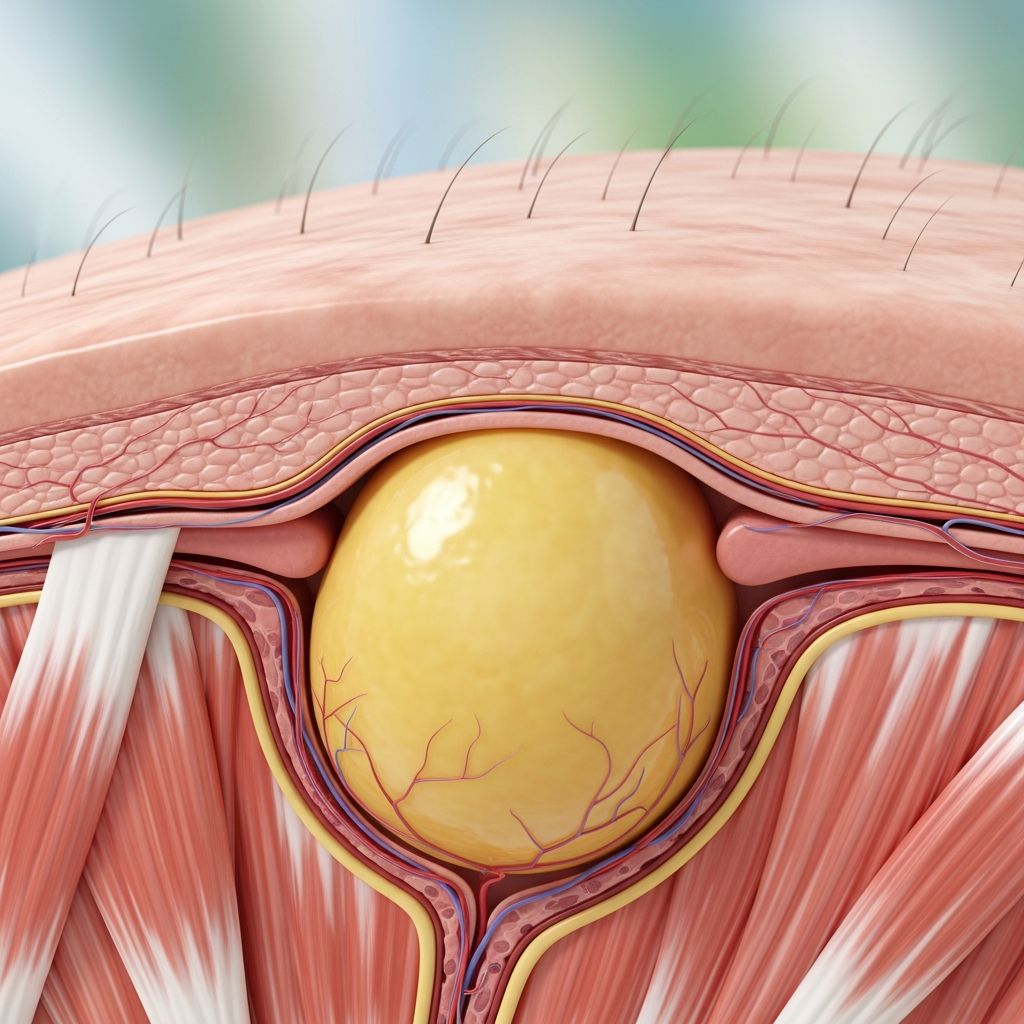
Lipomas are benign proliferations of mature fat cells that form in the soft tissues of the body. These tumors develop from adipose tissue and are encapsulated by a fibrous layer, which gives them their characteristic appearance and moveable quality. The yellowish fatty tissue comprises the bulk of the tumor, distinguishing it from surrounding tissue. Lipomas can range significantly in size, from small lumps less than one centimeter to larger growths several inches in diameter. Despite their classification as tumors, lipomas pose no cancer risk and do not become malignant over time.
Key Characteristics of Lipomas:
– Soft, rubbery texture- Round or oval shape, typically symmetrical- Moveable beneath the skin- Painless in most cases- Slow growth rate- May appear slightly yellowish in color- Usually located just beneath the skin surface
Symptoms and Clinical Presentation
Most individuals with lipomas experience no symptoms at all. The growths are discovered incidentally during physical examination or when patients notice a visible lump. However, some lipomas may present with specific characteristics that warrant medical evaluation. Understanding the presentation of lipomas helps distinguish them from other conditions and determines when medical attention is necessary.
Common Symptoms Include:
– Visible bump or lump under the skin- Softness and mobility of the growth- Possible mild tenderness or discomfort- Cosmetic concerns due to visibility- Rarely, pain if the lipoma presses on nearby nerves or structures
When Lipomas Cause Complications:
While rare, lipomas can occasionally cause problems requiring medical intervention. If a lipoma grows large enough, it may compress nearby nerves, causing pain or numbness in the affected area. Some individuals experience discomfort if the lipoma is located in an area subject to frequent pressure or movement. Additionally, individuals may seek removal for cosmetic reasons if the lipoma is visible and affects their self-confidence.
Causes and Risk Factors
The exact cause of lipomas remains unknown despite extensive research. They develop spontaneously in affected individuals, and there is no clear preventive measure or identifiable trigger. However, certain factors may influence their development or presentation.
Associated Risk Factors:
– Age: More common in middle-aged and older adults- Genetic predisposition: Familial lipomatosis in some cases- Possibly elevated lipid levels- Obesity: May increase risk or visibility of lipomas- Certain hereditary conditions
Research indicates that lipomas occur randomly and are not preventable through lifestyle modifications. While obesity may increase the likelihood of lipoma development in some individuals, lipomas can develop in people of any weight. The growth is independent of diet or exercise habits, suggesting an underlying genetic or metabolic component to their formation.
Related Stories



Diagnosis of Lipomas
Diagnosing lipomas typically begins with a physical examination by a healthcare provider. The characteristic feel and appearance of a lipoma—soft, moveable, and well-defined—often provide sufficient clinical evidence for diagnosis. However, imaging studies and sometimes biopsy may be recommended to confirm the diagnosis and rule out other conditions.
Diagnostic Methods:
Physical Examination
A thorough physical examination remains the first step in diagnosis. Healthcare providers assess the lipoma’s size, location, mobility, and consistency. The ability to move the growth under the skin suggests a benign lesion. Providers also evaluate whether the lipoma causes any functional impairment or compression of nearby structures.
Imaging Studies
For confirmation or to assess deeper lipomas, imaging tests may be ordered:
– Ultrasound: Often the first imaging choice, showing characteristic fat density- MRI (Magnetic Resonance Imaging): Provides detailed imaging of soft tissues- CT (Computed Tomography): Used when deeper involvement is suspected- X-rays: Occasionally used to exclude bone involvement
Biopsy
A needle biopsy may be performed to confirm the lipoma diagnosis and definitively rule out malignant conditions like liposarcoma. This minimally invasive procedure involves extracting a small tissue sample for laboratory analysis. Biopsies are particularly important when clinical features are atypical or when differentiation from cancerous lesions is necessary.
Lipoma vs. Liposarcoma: Important Distinctions
While lipomas are benign, it is crucial to distinguish them from liposarcoma, a rare cancer that develops from fat cells. Although uncommon, liposarcoma requires immediate medical attention and different treatment approaches.
| Feature | Lipoma | Liposarcoma |
|---|---|---|
| Growth Rate | Slow or stable | Rapid growth |
| Pain | Usually painless | Often painful |
| Mobility | Moveable | May be fixed |
| Consistency | Soft | Can be hard or firm |
| Cancer Risk | No malignant potential | Malignant condition |
| Prognosis | Benign, excellent | Requires aggressive treatment |
Seek medical evaluation immediately if you notice rapid growth, sudden pain, fixation of the lesion, or hardness of a previously soft mass. These features warrant investigation to rule out malignant transformation or liposarcoma.
Treatment Options for Lipomas
Treatment decisions depend on whether the lipoma causes functional problems, cosmetic concerns, or diagnostic uncertainty. Many individuals require no treatment and can safely observe their lipomas indefinitely.
Watchful Waiting
For asymptomatic lipomas that are not cosmetically concerning, watchful waiting is the recommended approach. Healthcare providers may monitor the lipoma at regular intervals to ensure it remains stable. Imaging studies may be repeated periodically to document that no significant changes have occurred. This conservative management strategy avoids unnecessary intervention while ensuring patient safety.
Surgical Removal
Surgical excision remains the definitive treatment for symptomatic or cosmetically bothersome lipomas. This procedure involves making a small incision and removing the fatty tumor along with its fibrous capsule.
Surgical Techniques:
– Elliptical excision: Traditional method with larger incision- Minimal incision extraction (MIE): Smaller incision with lower morbidity- Liposuction: Uses needle and syringe to extract fatty tissue- Steroid injection: May help shrink certain lipomas
The minimal incision extraction technique has gained popularity among dermatologists and surgeons because it can be performed in an office setting with local anesthesia, produces minimal scarring, and allows rapid recovery. Most patients return to normal activities within days of the procedure. Recurrence rates after proper excision are generally low, particularly when the fibrous capsule is completely removed.
Non-Surgical Options
Limited non-surgical options exist for lipoma management. Steroid injections directly into the lipoma may help reduce its size in some cases, though results are variable. Liposuction techniques using needle aspiration can remove fatty tissue but may have higher recurrence rates if the capsule remains intact.
Lipomas of Special Types
Intramuscular Lipomas
Intramuscular lipomas are rare benign tumors that develop within muscle tissue rather than subcutaneously. These deep-seated lipomas form beneath the fascia and can infiltrate surrounding muscle fibers. They may cause more significant functional impairment or pain compared to superficial lipomas. Intramuscular lipomas have higher recurrence rates after surgical removal, ranging from 50 to 80 percent if incompletely excised. Well-defined tumors have lower recurrence rates than infiltrating lesions.
Cost Considerations
The cost of lipoma removal varies widely depending on several factors. Surgical removal typically costs between $2,000 and $5,000, though prices may be higher or lower depending on geographic location, facility type, and complexity of the procedure. Insurance coverage varies; some plans cover removal if deemed medically necessary, while others classify it as an elective cosmetic procedure. Contacting your insurance provider beforehand can clarify coverage and potential out-of-pocket costs.
When to Seek Medical Attention
Contact your healthcare provider if you experience any of the following:
– Discovery of a new lump or swelling on your body- Sudden pain in or around an existing lipoma- Rapid growth of a known lipoma (enlargement over weeks to months)- Changes in the lipoma’s texture or consistency- Numbness, tingling, or weakness near the lipoma- Hardness or fixation of a previously moveable lipoma- Cosmetic concerns affecting your quality of life
Prevention of Lipomas
Unfortunately, there is no proven method to prevent lipomas. These benign tumors develop spontaneously and independently of lifestyle factors. Maintaining a healthy weight and balanced diet may reduce the visibility of lipomas in some individuals, but evidence suggests these factors do not prevent their formation. Lipomas are not caused by injury, infection, or poor health habits.
Frequently Asked Questions
Q: Can a lipoma turn into cancer?
A: No. Lipomas are benign tumors with no potential to become malignant. They remain benign throughout a person’s lifetime. However, new lumps should be evaluated by a healthcare provider to confirm they are lipomas and not other conditions.
Q: How quickly do lipomas grow?
A: Lipomas typically grow very slowly or remain stable in size. Rapid growth is unusual and warrants medical evaluation to rule out other conditions.
Q: Can lipomas disappear on their own?
A: Lipomas do not spontaneously resolve. Once formed, they persist unless surgically removed. However, they may remain stable for years without causing problems.
Q: Is lipoma removal covered by insurance?
A: Insurance coverage depends on whether removal is deemed medically necessary. Symptomatic lipomas causing pain or functional impairment are more likely to be covered. Cosmetic removal may not be covered. Contact your insurance provider for specific coverage information.
Q: What is the recovery time after lipoma removal?
A: Recovery depends on the surgical technique used. Minimal incision extraction typically allows return to normal activities within days. Traditional elliptical excision may require one to two weeks of recovery. Full healing occurs within four to six weeks.
Q: Can lipomas come back after removal?
A: Recurrence is uncommon after proper surgical removal with complete capsule excision. Superficial lipomas rarely recur. Intramuscular lipomas have higher recurrence rates, particularly if incompletely removed.
Q: How are lipomas different from other fatty bumps?
A: Lipomas are distinguished by their soft consistency, mobility, well-defined borders, and benign nature. Other conditions like cysts, moles, or dermatitis may appear similar but have different characteristics requiring proper diagnosis.
Conclusion
Lipomas are common, benign soft tissue tumors that rarely cause significant health problems. Most individuals with lipomas require no treatment and can safely observe their growths indefinitely. When symptoms develop or cosmetic concerns arise, several effective treatment options are available, ranging from conservative watchful waiting to minimally invasive surgical removal. Early diagnosis through physical examination and imaging helps confirm lipomas and rules out concerning conditions. If you discover a new lump or notice changes in an existing lipoma, consult your healthcare provider for proper evaluation and guidance regarding appropriate management strategies tailored to your individual needs.
References
- Intramuscular Lipoma: Symptoms, Causes & Treatment — Cleveland Clinic. 2022-07-29. https://my.clevelandclinic.org/health/diseases/23907-intramuscular-lipoma
- Minimal Incision Extraction of Lipomas — JAMA Dermatology. 2012. https://jamanetwork.com/journals/jamadermatology/fullarticle/1918740
- Lipoma (Fatty Tumor) – WebMD — WebMD Medical Reference. https://www.webmd.com/skin-problems-and-treatments/what-is-a-lipoma
- Doctor Explains LIPOMA: Symptoms, Clinical Photos and Treatment — Cleveland Clinic Educational Video. https://www.youtube.com/watch?v=sSJzjnL9CLU
- Hibernoma: What It Is, Causes & Treatment — Cleveland Clinic. https://my.clevelandclinic.org/health/diseases/24149-hibernoma
Similar Articles








Read full bio of Sneha Tete