Liposuction: What It Is, Surgery, Recovery & Results
Complete guide to liposuction surgery: techniques, preparation, recovery, and expected results.
What Is Liposuction?
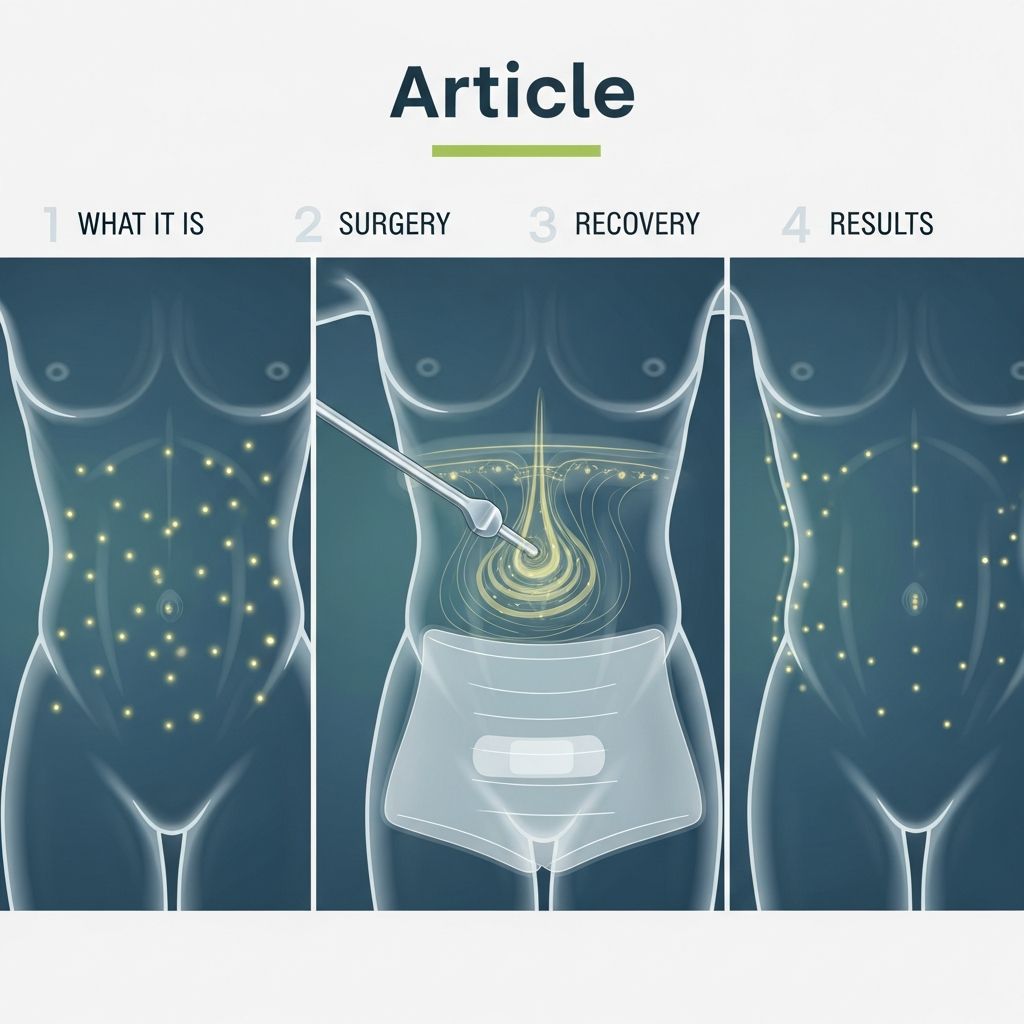
Liposuction is a cosmetic surgical procedure designed to remove excess fat deposits from specific areas of your body. The procedure works by permanently removing fat cells (adipocytes) that store fat from targeted sections of your body. Unlike diet and exercise, which can shrink fat cells, liposuction actually eliminates them entirely, making it an effective solution for people who have localized fat deposits that are resistant to traditional weight loss methods. This outpatient procedure has become increasingly popular as a body contouring option for individuals seeking to reshape and redefine specific body areas.
Common Treatment Areas
Liposuction can be performed on virtually any area of the body where excess fat deposits exist. The most commonly treated areas include:
- Chin and neck
- Abdomen and upper abdomen
- Hips and love handles
- Inner and outer thighs
- Knees and ankles
- Buttocks
- Arms and back
- Chest (for male breast enlargement or gynecomastia)
The procedure can also treat gynecomastia, a condition where men develop enlarged breast tissue. By targeting these specific areas, patients can achieve improved body proportions and enhanced self-confidence.
Types of Liposuction Procedures
Modern liposuction techniques have evolved significantly, offering patients multiple options tailored to their specific needs and goals. Each technique varies in methodology, recovery time, and effectiveness for different body areas.
Tumescent Liposuction
Tumescent liposuction is the most commonly used liposuction technique performed today. This procedure involves injecting a solution containing medications for anesthesia and decreased blood loss into the target area. The wetting solution is typically two to three times the volume of fat to be removed, causing the fat deposits to swell or “tumesce.” This swelling makes the fat easier to remove and reduces bleeding and bruising significantly. Tumescent liposuction requires either local anesthesia with sedation or general anesthesia, depending on the extent of the procedure and the patient’s medical history.
Super-Wet Liposuction
The super-wet technique differs from tumescent liposuction primarily in the volume of fluid injected. In this method, the wetting solution volume equals the volume of fat to be removed. This technique requires intravenous (IV) sedation or general anesthesia to keep the patient comfortable throughout the procedure. The super-wet approach is beneficial for larger treatment areas and can provide excellent results when administered by experienced surgeons.
Power-Assisted Liposuction (PAL)
Power-assisted liposuction utilizes the tumescent technique but incorporates a specialized device that uses tiny, rapid vibrations to break up fat cells. These vibrations loosen fat more effectively, making it easier to suction out of your body. This technique allows surgeons to treat larger areas more efficiently and can reduce operative time. PAL is particularly advantageous for fibrous areas of the body where traditional liposuction might be more challenging.
Laser-Assisted Lipectomy (LAL)
Laser-assisted lipectomy uses laser energy delivered through a small fiber inserted via a minimal incision. The laser heats and liquefies fat cells before removal, making the extraction process smoother. LAL is known for its precision and minimal invasiveness. Studies have shown a low complication rate, with careful attention needed to avoid thermal injury to surrounding tissues.
Ultrasound-Assisted Lipectomy (UAL)
Ultrasound-assisted lipectomy transmits ultrasound energy to emulsify fat prior to removal. This technique is particularly advantageous for fibrous areas such as the back, chest, and upper flank that are more difficult to treat with standard liposuction. UAL has shown marked benefits in treating gynecomastia. However, this technique requires larger incisions and extended operative time compared to other methods.
Related Stories



360 Liposuction (Lipo360)
The 360 liposuction procedure, also known as Lipo360, removes unwanted fat from several areas of your body during a single surgical session. This comprehensive approach typically focuses on your midsection, including the upper and lower abdomen and the space above your hips (commonly called love handles). Sometimes, this includes the back as well. Unlike traditional liposuction that targets a single section, 360 liposuction provides complete body contouring in one procedure.
How to Prepare for Liposuction Surgery
Proper preparation is essential for the success of your liposuction procedure and a smooth recovery. Your surgeon will provide specific pre-operative instructions tailored to your individual needs and medical history.
Pre-Surgery Consultation
Before your procedure, you’ll have a comprehensive consultation with your plastic surgeon. During this meeting, it’s crucial to have an open, honest conversation about your goals, expectations, and medical history. You should clearly understand what your liposuction surgery will entail, including:
- What your recovery will be like and how long it may take
- What preparations you can make for your surgery
- The realistic results you can expect
- Any potential risks or complications
- Aftercare requirements and lifestyle modifications
Medical Evaluation
A complete pretesting series of appointments will be conducted prior to your surgery. Your healthcare provider will evaluate your complete physical condition, medical history, current medications, and any underlying health conditions. This comprehensive assessment ensures you are an appropriate candidate for the procedure and helps your surgical team prepare for any special considerations.
Pre-Operative Instructions
Your surgeon will give you specific instructions to follow before your liposuction surgery. These may include:
- Fasting for a specific period before surgery (typically 6-8 hours)
- Avoiding certain medications, particularly blood thinners
- Discontinuing smoking for a specified period to improve healing
- Arranging for transportation home after surgery
- Wearing comfortable, loose-fitting clothing to your appointment
What to Expect During the Procedure
Understanding what happens during your liposuction surgery can help alleviate anxiety and prepare you mentally for the experience.
Anesthesia Administration
Before your liposuction procedure begins, your healthcare provider will administer anesthesia. Depending on the extent of the procedure, you may receive local anesthesia (affecting only the surgical area) or general anesthesia (which puts you to sleep). Your surgeon will recommend the most appropriate anesthesia method based on your specific needs and the areas being treated.
The Surgical Process
Once the anesthesia begins working, your surgeon will make one or more small incisions in your skin near the areas containing excess fat. Through these incisions, they’ll insert a suction device attached to a small, stainless steel instrument called a cannula into the fatty areas between your skin and muscles.
The surgeon will manipulate the cannula back and forth through the fat deposits to break up or liquefy the fat cells. This process loosens the fat, making it easier to remove. The fat is then suctioned out using a suction pipe or large syringe. The entire procedure can take anywhere from under an hour to 3 hours or longer, depending on the number of areas being treated and the volume of fat being removed.
Incision Closure
When your surgeon completes the fat removal, they’ll close up the incision sites with stitches that are either dissolvable or non-dissolvable. Since no skin is removed during liposuction, your surgeon relies on your skin’s natural contraction and elasticity to maintain its shape after the procedure.
Compression Garment Application
After surgery is complete, you’ll be placed in a compression garment. It’s important that you wear your compression garment exactly as directed by your surgeon. This garment helps reduce swelling, promotes proper healing, and supports the skin as it contracts to its new contours.
Recovery and Aftercare
Recovery from liposuction is relatively quick compared to many other surgical procedures, though the timeline varies based on individual factors.
Immediate Post-Operative Period
Liposuction is usually conducted in an outpatient setting with a fairly rapid recovery. You’ll typically go home the same day as your procedure. Your surgeon will provide specific aftercare instructions to follow during your recovery period. Most patients experience some swelling, bruising, and mild discomfort in the treated areas, which is completely normal.
Return to Activities
Most people can return to work within a few days and resume normal activities within about two weeks. However, every person’s recovery timeline varies based on factors such as the volume of fat cells removed and the specific areas treated. Your doctor will discuss what results you can expect to achieve and provide guidance on gradually resuming your regular routine.
Compression Garment Wear
Continue wearing your compression garment as directed by your surgeon. This typically ranges from 1-4 weeks, depending on the extent of your procedure. The compression helps minimize swelling and supports your skin as it adjusts to your new body contours.
Results and Long-Term Outcomes
Understanding realistic expectations for liposuction results helps ensure patient satisfaction.
Timeline for Results
While some improvement is visible immediately after surgery, final results typically emerge over several weeks to months as swelling subsides completely. The skin continues to contract and adapt during this period, gradually revealing your refined new body shape.
Permanence of Results
Liposuction results are long-lasting because the procedure removes fat cells permanently. However, maintaining your results requires maintaining a stable weight through proper diet and exercise. Significant weight gain after liposuction can cause remaining fat cells in treated and untreated areas to enlarge, potentially affecting your results.
Body Contouring Improvements
Your surgeon will discuss what results you can realistically expect to achieve based on your body type, the areas treated, and the volume of fat removed. Body contouring improvements can include more defined waistlines, slimmer thighs, improved abdominal contours, and better overall body proportions.
Am I a Candidate for Liposuction?
Ideal candidates for liposuction generally share certain characteristics. You may be a good candidate if you have localized fat deposits that haven’t responded to diet and exercise, maintain relatively stable body weight, have good skin elasticity, are in good overall health, and have realistic expectations about the procedure’s results.
During your consultation, your surgeon will evaluate your individual circumstances to determine if liposuction is appropriate for you. Factors considered include your age, medical history, skin quality, and specific goals.
Frequently Asked Questions
Q: How long do liposuction results last?
A: Liposuction results are permanent because the procedure removes fat cells entirely. However, maintaining your results requires maintaining a stable weight through healthy diet and regular exercise.
Q: What is the difference between tumescent and super-wet liposuction?
A: The main difference is the volume of wetting solution injected. Tumescent liposuction uses 2-3 times the volume of fat to be removed, while super-wet technique uses a volume equal to the fat being removed.
Q: Can liposuction be performed on multiple body areas at once?
A: Yes, procedures like 360 liposuction can treat multiple areas during a single surgical session, providing comprehensive body contouring.
Q: How much downtime is required after liposuction?
A: Most patients return to work within a few days and resume normal activities within about two weeks. Individual recovery times vary based on the procedure’s extent.
Q: What are the risks and complications of liposuction?
A: While complications are rare with modern techniques, potential risks include infection, seroma (fluid accumulation), bleeding, nerve damage, and contour irregularities. Your surgeon will discuss specific risks during your consultation.
Q: Can liposuction treat gynecomastia?
A: Yes, liposuction can effectively treat gynecomastia (male breast enlargement). This procedure is performed on both teenage and adult men experiencing this condition.
References
- Liposuction: What It Is, Surgery, Recovery & Results — Cleveland Clinic. 2025. https://my.clevelandclinic.org/health/treatments/11009-liposuction
- Liposuction | Patient Guide — American Board of Cosmetic Surgery. 2025. https://www.americanboardcosmeticsurgery.org/procedure-learning-center/body/liposuction-guide/
- Liposuction: Concepts, safety, and techniques in body-contouring — Cleveland Clinic Journal of Medicine. 2019. https://www.ccjm.org/content/87/6/367
- Liposuction: Common Techniques and Complications — Consult QD, Cleveland Clinic. 2025. https://consultqd.clevelandclinic.org/liposuction-common-techniques-and-complications
- Laser Lipolysis: What To Expect, Sessions & Results — Cleveland Clinic. 2025. https://my.clevelandclinic.org/health/treatments/24966-laser-lipolysis
- Liposculpture: What It Is, Recovery, Results & Complications — Cleveland Clinic. 2025. https://my.clevelandclinic.org/health/treatments/23249-liposculpture
Similar Articles








Read full bio of medha deb