Liquid Nitrogen Cryotherapy Guidelines For Clinicians
Comprehensive guidelines for safe and effective liquid nitrogen cryotherapy in clinical practice for skin lesion treatment.
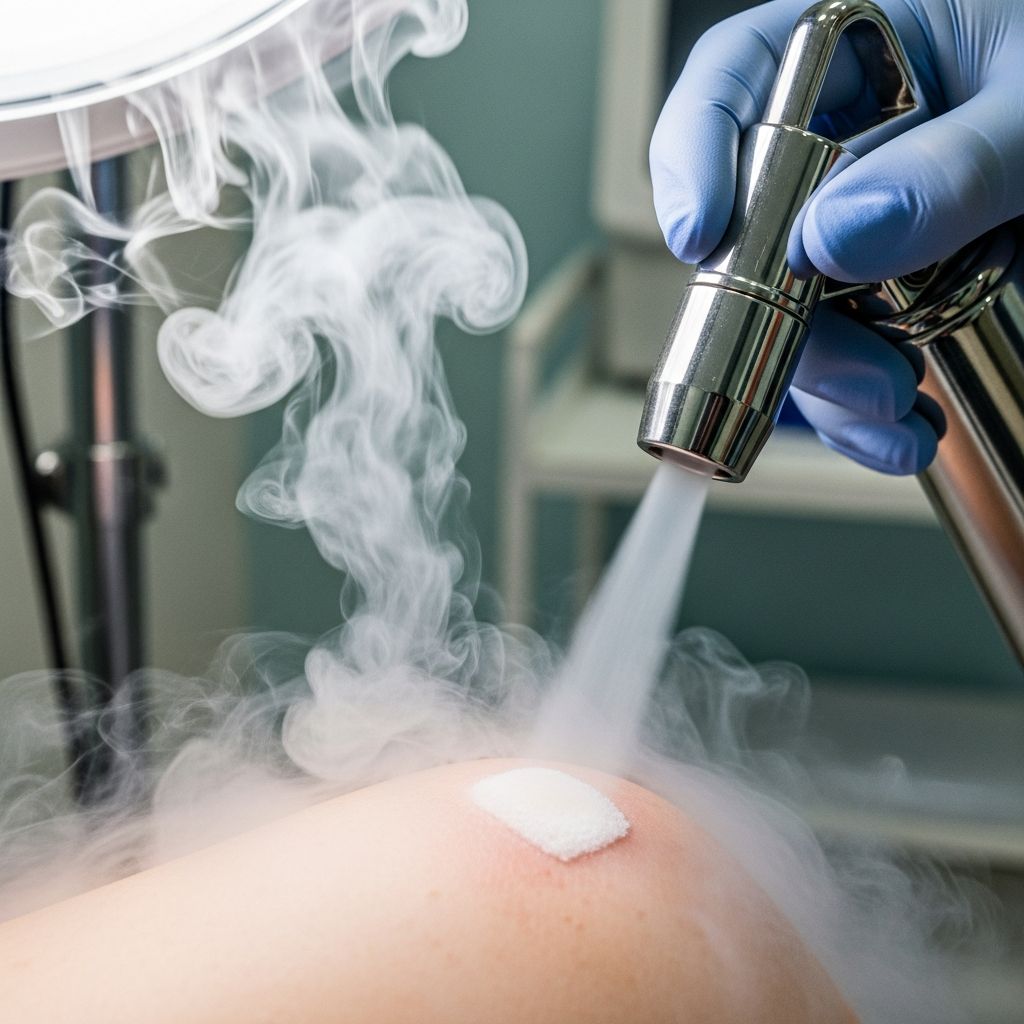
Cryotherapy is a minimally invasive procedure that uses an extremely cold liquid or instrument to freeze and destroy abnormal tissue that requires elimination. Also referred to as cryosurgery or cryoablation, it is commonly performed using liquid nitrogen at –196°C, the most effective cryogen for clinical use.
Definition
Liquid nitrogen cryotherapy involves applying extreme cold to targeted skin lesions, causing ice crystal formation within cells, direct cell membrane rupture, and vascular stasis during freezing, followed by osmotic damage and ischemic necrosis during thawing. This process leads to selective destruction of abnormal tissue while sparing deeper structures when properly dosed.
Scope
These guidelines are intended for trained medical practitioners and registered nurses in primary care settings, such as ProCare member practices in New Zealand. They focus on treating benign and select superficial premalignant skin lesions. Treatment of malignant skin lesions is excluded and requires specialist dermatologist oversight with biopsy confirmation. Cryotherapy is quick, cost-effective (liquid nitrogen ~$2/litre), and suitable for outpatient use but demands precise technique to avoid complications.
Indications
Cryotherapy is indicated for a variety of common benign and premalignant skin conditions. Key indications include:
- Benign lesions: Viral warts (common, plantar, flat), molluscum contagiosum, seborrhoeic keratoses, actinic keratoses, solar lentigos, dermatosis papulosa nigra, lichen simplex, and small haemangiomas.
- Premalignant lesions: Actinic (solar) keratoses and superficial basal cell carcinomas (BCCs <5mm, non-facial).
- Cosmetic concerns: Freckles, age spots (lentigos), and seborrhoeic keratoses.
Lesions should be superficial, well-defined, and responsive to cold destruction. For resistant warts or larger lesions, multiple sessions or adjunct therapies may be needed.
Contraindications
Cryotherapy should not be used in the following cases to prevent serious complications:
- Melanocytic lesions (e.g., lentigo maligna, naevi) due to inability to assess margins and risk of recurrence.
- Malignant lesions without biopsy confirmation and specialist input.
- Keloid-prone skin or areas with poor healing (e.g., lower legs in elderly patients).
- Cold hypersensitivity, cryoglobulinaemia, or peripheral neuropathy.
- Young children unless unavoidable, as treatment causes significant stinging.
- Pregnancy (relative, avoid large areas).
Precautions
Exercise caution in:
- Anatomical sites: Avoid or minimize freeze times on eyelids, tip of nose, lips, and anogenital areas due to higher complication risk.
- Patient factors: Dark skin types (higher hypopigmentation risk), anticoagulated patients (increased blistering/haemorrhage), diabetes, or immunosuppression.
- Test dose: Administer for patients with low pain tolerance to gauge reaction.
- Pigmented lesions: Biopsy if suspicious before treatment.
Inform patients of expected outcomes: blistering, scabbing, temporary pigment changes, and potential scarring. Healing takes 7-21 days depending on site and freeze depth.
Equipment and Preparation
Required equipment:
- Purpose-designed Dewar flask (e.g., 20-litre vacuum tank) for safe storage; never use glass thermoses.
- Cryospray unit with nozzles/adapters for lesion size.
- Cotton-tipped applicators (fresh for each patient), gallipots/Styrofoam cups for decanting.
- Cryoprobe or forceps for grasp techniques.
- Personal protective equipment (PPE): gloves, goggles, apron.
- Post-care supplies: sterile dressings, petroleum ointment.
Preparation checklist:
- Confirm diagnosis clinically or via biopsy if needed.
- Obtain informed consent, explaining risks/benefits.
- Decant liquid nitrogen into single-use container; ensure fresh applicators.
- Position patient comfortably; clean lesion site.
- Administer topical anaesthetic if required (e.g., for children).
Related Stories



Procedure Techniques
Liquid nitrogen is applied via timed spot freeze (most common), paint-spray, spiral, cotton swab, or cryoprobe methods. Hold spray 1-1.5cm from lesion perpendicularly; form ice ball covering lesion + 1-2mm margin.
| Method | Freeze Time (Single Cycle) | Indications | Notes |
|---|---|---|---|
| Timed Spot Freeze | 5-30 seconds | Warts, AK, SK | Spray until ice ball forms; double freeze-thaw for deeper lesions. |
| Paint-Spray | 10-20 seconds | Larger superficial lesions | Gentle sweeping motion. |
| Cotton Swab | 10-30 seconds | Small lesions (e.g., warts) | Dip 10s, apply firmly; new swab per patient. |
| Cryoprobe/Forceps | 5-10 seconds | Pedunculated lesions | Frost forceps first; combine with spray if needed. |
For double freeze-thaw: Freeze, thaw completely (1-2 min), repeat. Total dose depends on lesion depth: superficial (5s), medium (10-20s), deep (25-30s). Stop if excessive pain.
Checklist
Pre-procedure:
- Review indications/contraindications.
- Informed consent signed.
- Equipment checked (nitrogen level, spray function).
Intra-procedure:
- PPE worn.
- Correct technique/margins.
- Monitor patient tolerance.
Post-procedure:
- Apply dressing/petroleum if blistered.
- Provide aftercare instructions.
- Schedule follow-up if needed.
Post-procedure Care
Instruct patients:
- Expect redness, swelling, blistering (peaks 24-48h); scab forms in 7-10 days.
- Keep dry 24-48h; then wash gently, apply petroleum jelly twice daily.
- Avoid picking scabs; protect from sun (SPF 50+).
- No swimming/pools until healed.
- Seek review for infection signs: increasing pain/redness, pus, fever.
Healing times: Face 7-10 days; limbs 2-3 weeks; soles/periungual longer.
Complications and Side-effects
Common (expected):
- Pain/stinging, oedema, blistering, hypopigmentation/hyperpigmentation (especially darker skin), scabbing.
Rare/Serious:
- Infection, ulceration, hypertrophic/keloid scarring, nerve damage (e.g., digital neuropathy), tendon rupture (over-aggressive freeze), haemorrhage.
Manage: Analgesia, antiseptic if infected, intralesional steroid for scarring. Most resolve spontaneously.
Safety Considerations
- Storage: Dewar flasks only; vented, away from heat.
- Handling: PPE mandatory; avoid inhalation (asphyxiation risk in confined spaces).
- Infection control: Single-use applicators/containers; fresh per patient to prevent viral transmission (HPV, HSV viable at -196°C).
- Training: Only by competent staff; regular competency assessment.
Relevant Practice Policies and Procedures
Align with local protocols: informed consent forms, adverse event reporting, liquid nitrogen procurement/storage SOPs, infection control standards. Audit outcomes regularly for quality improvement.
Frequently Asked Questions (FAQs)
Q: How painful is liquid nitrogen cryotherapy?
A: It causes brief intense stinging (10-30s), manageable with distraction or topical anaesthetic. Pain varies by site/sensitivity.
Q: When will the lesion disappear after treatment?
A: Scab sheds in 7-21 days; full clearance may require 2-4 sessions for warts.
Q: Can cryotherapy be used on facial lesions?
A: Yes, but use shorter freezes (5-10s) and small margins to minimize scarring.
Q: Is cryotherapy safe for dark skin?
A: Possible, but higher risk of pigment loss; discuss alternatives like salicylic acid for warts.
Q: What if a blister forms?
A: Normal; leave intact or drain sterilely; apply non-stick dressing and ointment.
References
- Cryotherapy: Uses, Cautions, and Aftercare — DermNet NZ. 2023. https://dermnetnz.org/topics/cryotherapy
- Best practice in cryosurgery — British Dermatological Nursing Group. 2017-02. https://bdng.org.uk/wp-content/uploads/2017/02/DN_cryosurgery_supplement.pdf
- Cryotherapy — Rixis Dermatology. 2024. https://www.rixisdermatology.com/cryotherapy
- Common skin lesions. Non-surgical physical treatments — DermNet NZ. 2023. https://dermnetnz.org/cme/lesions/non-surgical-physical-treatments
- Liquid nitrogen/cryotherapy guidelines — DermNet NZ (ProCare). 2014-08-03. https://dermnetnz.org/topics/liquid-nitrogencryotherapy-guidelines
Similar Articles








Read full bio of Sneha Tete