Lithotripsy: Breaking Down Kidney Stones
Understanding lithotripsy: A non-invasive treatment option for kidney stones.
What is Lithotripsy?
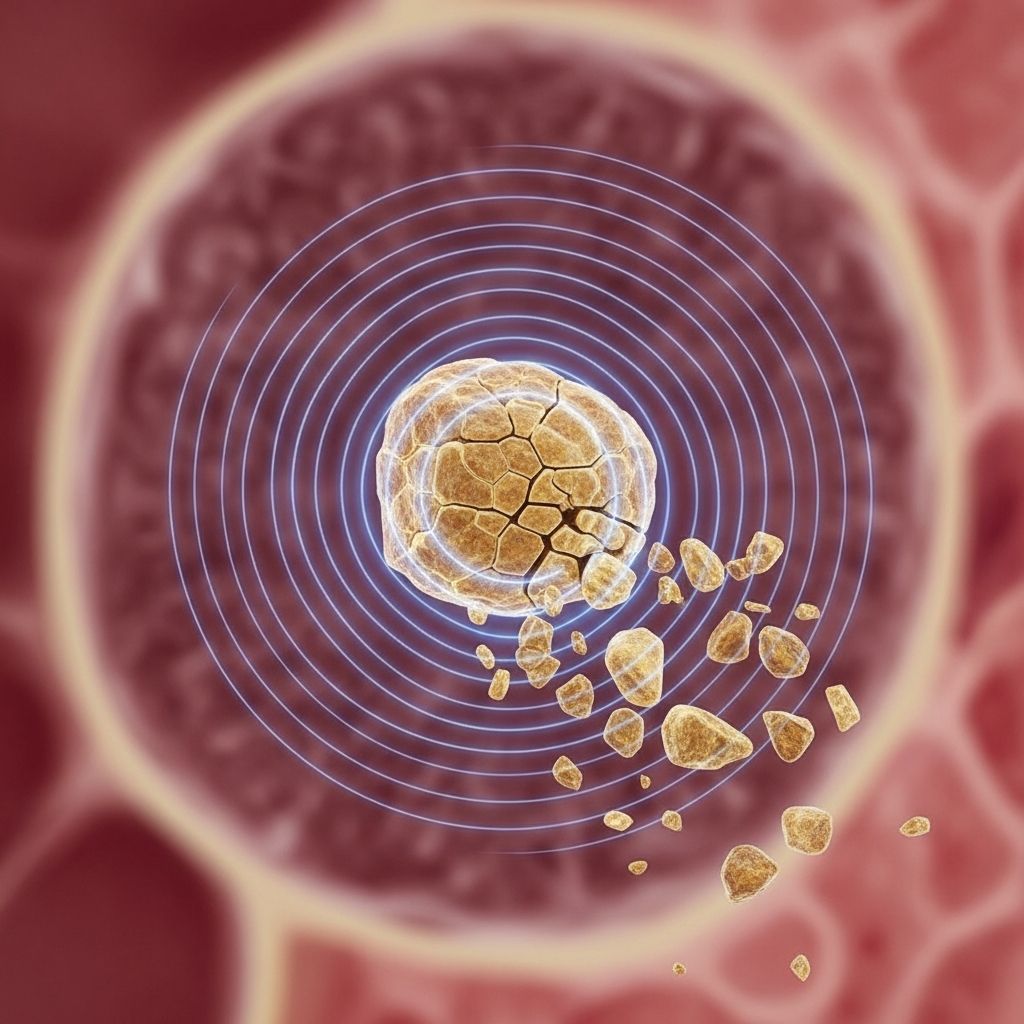
Lithotripsy, formally known as Extracorporeal Shock Wave Lithotripsy (ESWL), is a revolutionary non-invasive medical procedure designed to treat kidney stones. The term “extracorporeal” refers to the fact that the treatment occurs outside the body, making it one of the safest and most accessible options for kidney stone management. This procedure uses focused shock waves—powerful acoustic or pressure waves—that are generated outside the body and transmitted through the skin and surrounding tissues until they reach the kidney stone. Because these waves are precisely concentrated at the stone’s location, they effectively break it into smaller fragments without causing damage to the surrounding organs and tissues.
The revolutionary nature of lithotripsy cannot be overstated. Before the 1980s, the only treatment option for larger kidney stones was open surgery, which required significant incisions, carried risks of bleeding and infection, and necessitated weeks of recovery. Lithotripsy transformed stone treatment by making it possible to break stones from outside the body without any surgical cuts, fundamentally changing how millions of patients worldwide receive care for this painful condition.
How Lithotripsy Works
The process of lithotripsy involves a carefully orchestrated sequence of events designed to maximize stone fragmentation while minimizing discomfort and risk to the patient. Once the kidney stone is located using X-ray or ultrasound imaging, the lithotripsy machine generates hundreds to thousands of controlled shock waves. While each individual shock wave delivers minimal damage on its own, the cumulative effect of many waves striking the stone creates sufficient force to crack and fragment it into smaller pieces, typically less than a few millimeters in diameter.
The patient is positioned on a specialized lithotripsy table, and either a water-filled cushion or water bath is used to help transmit the shock waves effectively. Water is essential to this process because it conducts the acoustic energy from the machine to the stone with minimal energy loss. In some cases, a conductive gel may also be applied to the skin to further reduce energy loss and improve treatment efficacy.
The treatment begins with lower energy levels that are gradually increased throughout the procedure. Each shock wave lasts less than a microsecond but delivers extremely high energy. The entire procedure typically takes between 30 to 60 minutes to complete. After the session concludes, patients are monitored briefly and can usually return home the same day unless complications arise during the treatment.
Who Is a Good Candidate for Lithotripsy?
Not every patient with kidney stones is suitable for lithotripsy treatment. Doctors carefully evaluate multiple factors to determine whether ESWL is the appropriate choice for each individual patient.
Ideal candidates for lithotripsy have the following characteristics:
- Stones located in the kidney or upper ureter
- Stone diameter less than 2 centimeters
- No active urinary tract infection
- No bleeding disorders or anticoagulation therapy
- Favorable kidney anatomy for shock wave delivery
- Adequate renal function
- No severe obesity that would prevent adequate stone visualization
Patients with stones larger than 2.5 centimeters or stones located in unfavorable positions, such as the lower pole of the kidney, are often advised to pursue alternative treatment methods. Additionally, patients with certain anatomical variations, bleeding disorders, or those taking blood-thinning medications may not be appropriate candidates for lithotripsy.
Related Stories



Treatment Alternatives to Lithotripsy
Several alternative treatment options exist for kidney stones, and the choice between them depends on stone characteristics, patient anatomy, and clinical factors.
Ureteroscopy with Laser Lithotripsy: This minimally invasive endoscopic procedure involves inserting a scope through the urinary tract to directly access and visualize the stone. Once visualized, the stone can be broken using laser technology, particularly Holmium:YAG laser. Ureteroscopic laser lithotripsy can employ two primary approaches: dusting and fragmentation with extraction. Dusting uses low energy and high frequency settings to break off small fragments, while fragmentation with extraction uses high energy and low frequency settings for larger fragments that are then actively removed. Both approaches are effective, though dusting tends to have shorter procedure times and lower ureteral damage risk, while fragmentation with extraction may provide more complete initial stone clearance.
Percutaneous Nephrolithotomy (PCNL): This procedure involves making a small incision in the back to directly access and remove larger stones. PCNL is particularly effective for very large stones or those in unfavorable locations.
Open or Laparoscopic Surgery: These options are reserved for cases where other treatments have failed or are not suitable, as they involve more significant surgical intervention.
Success Rates and Effectiveness
The success of lithotripsy is typically defined as achieving a “stone-free” status or leaving only very small fragments that can pass naturally. Success rates for ESWL in appropriately selected patients generally range from 60 to 80 percent.
Several factors influence the likelihood of successful stone fragmentation:
- Smaller stones fragment more easily than larger stones
- Stones composed of softer material respond better to shock waves
- Optimal stone positioning enhances treatment effectiveness
- Patient body habitus and anatomical factors affect energy transmission
- Proper shock wave frequency and voltage escalation improves outcomes
In cases where initial ESWL does not achieve complete stone clearance, patients may require a second lithotripsy session. Patients with unfavorable anatomy or very hard stones may need to transition to alternative treatment modalities. Even when stones are successfully broken, the passage of fragments through the urinary tract can remain uncomfortable and may require weeks to complete.
What to Expect During the Procedure
Understanding the procedural timeline and what occurs at each stage helps patients prepare mentally and physically for their lithotripsy treatment.
Pre-Procedure: Patients are typically admitted to the hospital or urology clinic early in the day. Routine pre-operative checks are performed, including vital signs assessment and review of medical history. Blood work and imaging studies are verified to confirm stone location and size.
Stone Localization: The stone is precisely located using X-ray fluoroscopy or ultrasound imaging. This localization step is critical to ensure the shock waves are accurately directed at the stone.
Anesthesia: Patients receive sedation or general anesthesia to minimize discomfort and ensure they remain completely still during the procedure, which is essential for treatment accuracy.
Positioning and Setup: The patient is positioned on the lithotripsy table, and the treatment area is prepared with a water cushion or immersion bath. Conductive gel may be applied to the skin.
Treatment Delivery: The lithotripsy machine begins delivering shock waves at a controlled rate, typically starting at lower energy levels and gradually escalating. The patient may feel percussion sensations or mild discomfort despite the anesthesia.
Post-Procedure Monitoring: After completion, patients are monitored in a recovery area for a brief period. Vital signs are checked, and pain management is provided as needed.
Risks and Complications
While lithotripsy is generally a safe procedure, certain risks and potential complications should be considered before treatment.
Common Side Effects:
- Bruising or discoloration of the skin in the treatment area
- Mild discomfort or flank pain after the procedure
- Blood in the urine (hematuria) for several days
- Nausea or minor gastrointestinal upset
- Mild fever or chills
Potential Serious Complications:
- Ureteral obstruction (“Steinstrasse”) from accumulated stone fragments blocking the ureter
- Infection of the urinary tract or kidney
- Significant bleeding requiring transfusion or intervention
- Renal colic (severe pain) from fragment passage
- Damage to surrounding structures including the kidney itself
- Long-term renal function decline, particularly with repeated procedures
The risk of serious complications is relatively low when lithotripsy is performed by experienced practitioners on appropriately selected patients.
Recovery and Aftercare
Recovery from lithotripsy is generally rapid compared to surgical interventions. Most patients can resume normal daily activities within a few days, though complete recovery may take longer.
Immediate Post-Procedure Period: Patients typically go home the same day of the procedure. Mild pain or discomfort in the back or side is common and can be managed with over-the-counter pain medications. Some blood in the urine is normal and usually resolves within a few days.
First Week: Patients should avoid strenuous exercise and heavy lifting. Adequate hydration is crucial to help flush stone fragments from the urinary system. Most patients can return to light work or routine activities within a few days.
Follow-Up Care: Patients typically have follow-up appointments 2-3 weeks after the procedure to assess treatment success. Imaging studies may be performed to confirm stone clearance. If significant fragments remain, additional treatment may be recommended.
Long-Term Management: Patients should discuss strategies to prevent future stone formation with their urologist, including dietary modifications, increased fluid intake, and potential medication therapy depending on stone composition.
Frequently Asked Questions
Q: How long does a lithotripsy procedure take?
A: The actual lithotripsy treatment typically takes 30 to 60 minutes. However, the entire appointment, including pre-procedure preparation and post-procedure monitoring, usually requires 2-3 hours at the facility.
Q: Will lithotripsy hurt?
A: Patients receive sedation or anesthesia during the procedure, so they should not experience significant pain during treatment. Some discomfort or sensation of percussion may be felt despite anesthesia. After the procedure, mild pain in the back or side is common.
Q: How soon can I return to work?
A: Most patients can return to light duties within a few days. For physically demanding jobs, return may take 1-2 weeks. Your urologist will provide specific recommendations based on your job requirements and recovery progress.
Q: What is the success rate of lithotripsy?
A: Success rates for appropriately selected patients generally range from 60 to 80 percent, meaning patients become stone-free or have only very small fragments remaining. Success depends on stone size, composition, location, and patient factors.
Q: Can lithotripsy be repeated if it doesn’t work the first time?
A: Yes, a second lithotripsy session may be performed if the first procedure does not achieve complete stone clearance. However, if lithotripsy fails, your urologist may recommend an alternative treatment approach.
Q: What should I do after the procedure to help pass stone fragments?
A: Drink plenty of water and other fluids to maintain hydration and promote urine production. Most patients can resume normal diet immediately. Your urologist may recommend specific dietary changes based on your stone type to prevent future stones.
Q: Are there any restrictions after lithotripsy?
A: Avoid strenuous exercise and heavy lifting for at least 1-2 weeks. You should be able to resume normal activities relatively quickly. Your urologist will provide specific activity restrictions based on your individual recovery.
References
- Ureteroscopic Laser Lithotripsy: A Review of Dusting vs Fragmentation with Extraction — Journal of Endourology, National Center for Biotechnology Information. 2018-01-01. https://pubmed.ncbi.nlm.nih.gov/29061070/
- Shockwave Lithotripsy: What It Really Is and When It Is Used — Gleneagles Hospitals. 2024. https://www.gleneagleshospitals.co.in/blogs/urology-urogynaecology/shockwave-lithotripsy-what-it-really-is-and-when-it-is-used
- Shock-Wave Lithotripsy of Renal Calculi — Johns Hopkins University Research Portal. https://pure.johnshopkins.edu/en/publications/shock-wave-lithotripsy-of-renal-calculi
Similar Articles








Read full bio of Sneha Tete