Liver Biopsy: Procedure, Preparation & Results
Complete guide to liver biopsy: types, preparation, procedure steps, and what to expect.
Understanding Liver Biopsy
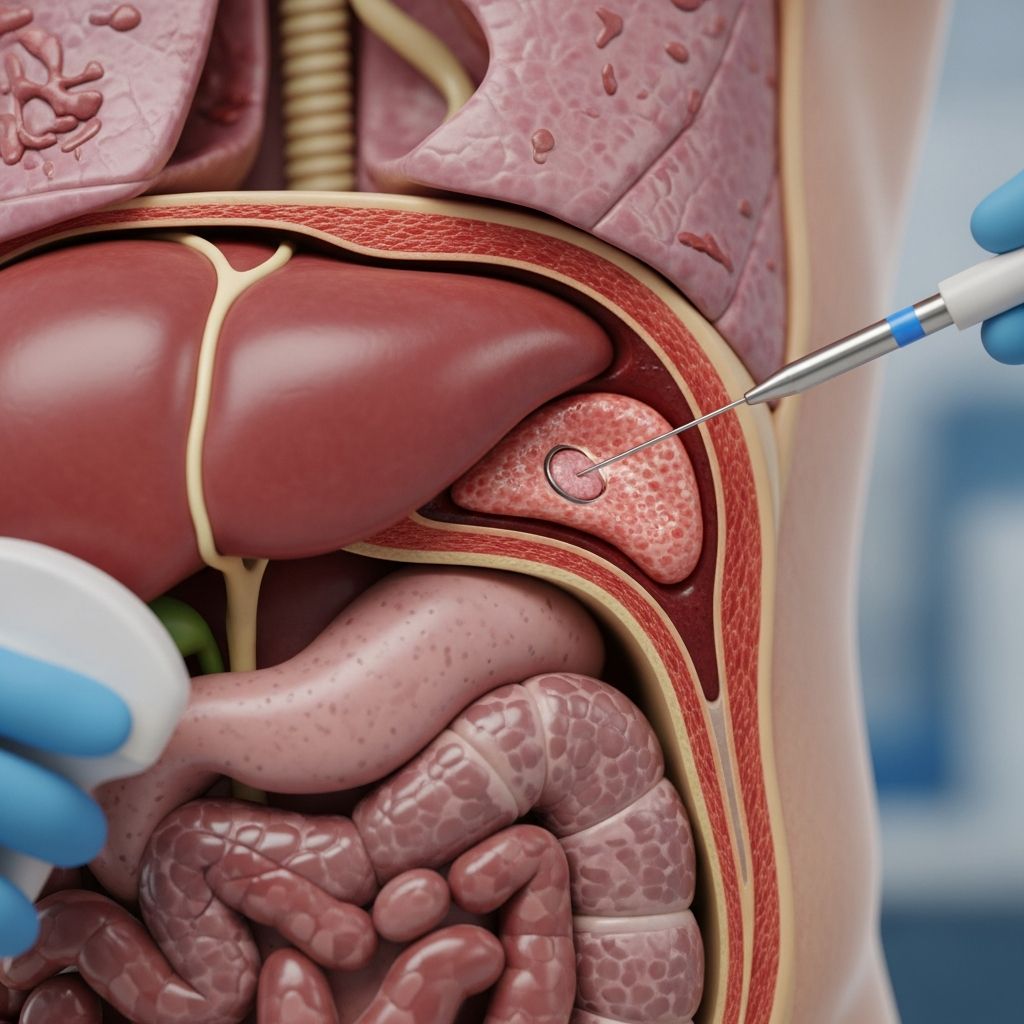
A liver biopsy is a minor medical procedure used to obtain a small tissue sample from your liver for laboratory examination. During this procedure, a healthcare provider uses a hollow needle to extract a tiny portion of liver tissue, which is then analyzed by a pathologist under a microscope. This tissue analysis provides crucial diagnostic information that helps healthcare providers identify, evaluate, and stage various liver conditions. The procedure is straightforward, often performed at a bedside or in an outpatient setting, and generally considered safe when performed by experienced medical professionals.
Why You Might Need a Liver Biopsy
Your healthcare provider may recommend a liver biopsy for several important reasons. A liver biopsy can diagnose general liver conditions and help determine the specific causes of liver disease. Common reasons for performing this procedure include:
- Investigating abnormal liver function test results
- Detecting signs of cirrhosis or liver fibrosis
- Diagnosing viral hepatitis (hepatitis B, hepatitis C)
- Evaluating autoimmune liver diseases
- Assessing fatty liver disease
- Identifying cholestasis and bile duct disorders
- Detecting liver cancer or suspicious nodules
- Evaluating liver transplant complications
- Staging the severity of known liver disease
Types of Liver Biopsy Procedures
There are three main approaches to performing a liver biopsy, each designed for different clinical situations and patient conditions. Your healthcare provider will determine which method is most appropriate based on your specific medical needs.
Percutaneous Liver Biopsy
The percutaneous liver biopsy is the most commonly performed type of liver biopsy procedure. “Percutaneous” refers to the needle passing directly through the skin. In this procedure, a healthcare provider inserts a biopsy needle through the skin of your abdomen and directly into the liver tissue. This method is the least invasive of the three approaches, which is why it’s often the first choice for patients who are suitable candidates. The procedure typically takes only 15 to 30 minutes to complete and requires only local anesthesia to numb the biopsy site.
Transvenous Liver Biopsy
A transvenous liver biopsy, also called a transjugular liver biopsy, is an alternative method that may be recommended for patients with specific medical conditions. “Transvenous” indicates that the needle reaches the liver through a vein rather than through direct skin penetration. In this procedure, the biopsy needle passes through a small catheter inserted into your jugular vein in the neck, then travels down to reach the liver. This approach is particularly suitable for patients who have bleeding disorders, take blood-thinning medications, or have excessive fluid accumulation in the abdomen. It’s also the preferred method for pregnant women who require a liver biopsy. The transvenous approach typically takes longer, requiring 30 to 60 minutes to complete.
Laparoscopic Liver Biopsy
During laparoscopic liver biopsy, the tissue sample is obtained during abdominal surgery performed for another reason. Laparoscopic surgery involves creating small “keyhole” incisions through which surgeons insert a thin, illuminated camera called a laparoscope. This camera displays images of your abdominal organs on a monitor, allowing the surgeon to visualize the liver and obtain a tissue sample under direct visualization. This method requires general anesthesia to keep you comfortably asleep throughout the procedure.
Image-Guided Liver Biopsy
Sometimes, your healthcare provider may want to obtain a sample from a specific area or lesion within your liver. In these cases, the biopsy may be performed in the radiology department using imaging guidance. Advanced imaging technology helps ensure the needle reaches the exact location of interest. Common imaging methods used to guide liver biopsies include:
Related Stories



Ultrasound Guidance
Ultrasound imaging uses high-frequency sound waves to create real-time images of your liver. This non-invasive imaging technique allows the radiologist to see the needle’s position as it enters the liver, ensuring accurate sample collection from the target area.
MRI Guidance
Magnetic resonance imaging (MRI) uses a combination of powerful magnets, radio waves, and computer technology to create detailed, cross-sectional images of your liver. MRI guidance is particularly useful for identifying small lesions or specific areas of concern within the liver tissue.
CT Scan Guidance
Computed tomography (CT) scanning combines X-ray technology with sophisticated computer processing to generate precise, three-dimensional images of your liver and surrounding structures. CT-guided biopsies are especially valuable for targeting lesions that may be difficult to visualize with other imaging methods.
Preparing for Your Liver Biopsy
Proper preparation is essential for ensuring a successful liver biopsy procedure. Your healthcare provider will give you detailed instructions to follow before your appointment. Key preparation steps include:
- Reviewing the informed consent form and discussing any questions with your provider
- Providing your complete medical history, including past surgeries and medical conditions
- Disclosing all medications and supplements you currently take
- Undergoing blood tests to assess your clotting function and liver function
- Receiving a physical examination to ensure you’re in adequate health for the procedure
- Fasting for a specified period before the procedure (typically 6-8 hours)
- Arranging for someone to drive you home after the procedure if sedation is used
- Wearing comfortable, loose-fitting clothing to the appointment
What Happens During a Percutaneous Liver Biopsy
Understanding what to expect during the procedure can help reduce anxiety and ensure you’re prepared. Here’s a step-by-step overview of how a percutaneous liver biopsy typically proceeds:
Initial Setup and Positioning
You’ll be asked to change into a hospital gown and remove any jewelry or objects that might interfere with the procedure. You’ll also be asked to use the restroom before the biopsy begins. An intravenous (IV) line may be started in your arm or hand to allow administration of medications or sedation if desired. You’ll then be positioned on your back with your right arm extended above your head, or on your left side, depending on your healthcare provider’s preference and your liver’s position.
Site Preparation and Marking
Your healthcare provider will gently palpate (feel) your abdomen to locate your liver and determine the optimal biopsy site. The provider will mark the area where the needle will be inserted. Local anesthetic is applied to numb the area, ensuring you won’t feel sharp pain during the procedure. An ultrasound, MRI, or CT scan may be used to identify a specific spot within the liver if a particular lesion or area needs to be sampled.
Needle Insertion and Sample Collection
You’ll be instructed to hold your breath as the biopsy needle is quickly inserted through the skin and into the liver. Holding your breath prevents movement of your chest wall and diaphragm, which could affect needle placement and sample quality. The needle enters and exits rapidly, typically in just a few seconds. You should lie quietly without moving during this phase. Your provider may need to obtain more than one tissue sample, in which case you’ll hold your breath again as the needle is reinserted.
Closure and Bandaging
Once the tissue sample has been collected, the biopsy needle is withdrawn. Firm pressure is applied to the biopsy site until any bleeding stops completely. A sterile bandage or dressing is then applied to protect the site. The tissue sample is carefully placed in a container and sent to the laboratory for analysis.
Anesthesia During Liver Biopsy
Most liver biopsies don’t require general anesthesia. Healthcare providers prefer you to remain conscious during the procedure so you can follow instructions, such as holding your breath when requested. However, local anesthesia is used to numb the biopsy site, eliminating sharp pain sensations. If you prefer, you can receive sedation to help you relax and feel more comfortable. Sedative medications may cause drowsiness but won’t render you completely unconscious. Only if you’re having a laparoscopic liver biopsy during abdominal surgery will you receive general anesthesia.
Duration of the Procedure
The actual biopsy procedure is relatively quick. A percutaneous liver biopsy typically takes only 15 to 30 minutes from start to finish. If you’re undergoing a transvenous biopsy, the procedure may take longer, approximately 30 to 60 minutes. However, plan to spend several hours at the healthcare facility for preparation, the procedure itself, and recovery observation.
Recovery and Aftercare
After your liver biopsy is complete, proper aftercare is crucial for optimal healing and complications prevention. You’ll be moved to a recovery room where you’ll rest quietly for two to four hours. During this time, your healthcare team will monitor your vital signs including heart rate, blood pressure, and oxygen saturation. They’ll observe you for any emerging complications, as most complications that do occur appear within this initial recovery window. Your healthcare provider will ask about pain levels and provide pain management as needed.
Depending on your condition and your provider’s preferences, you may be instructed to stay on bed rest for an additional 4 to 24 hours after the procedure. A blood sample may be taken a few hours after the biopsy to check for signs of internal bleeding. You should expect mild discomfort or soreness at the biopsy site for a few days following the procedure.
Safety and Complications
A liver biopsy is a common and generally safe procedure when performed by experienced healthcare providers. Serious complications are rare, with the risk of life-threatening complications estimated at only 0.1 percent. The most common complications after the procedure are temporary pain at the biopsy site and temporary low blood pressure. Other potential but rare complications may include bleeding, infection, or bile leakage. Your healthcare team will monitor you closely to detect and manage any complications promptly.
Biopsy Results and Interpretation
After your liver biopsy, your tissue sample will be sent to the laboratory where a pathologist will examine it carefully under a microscope. The pathologist will analyze the tissue structure, looking for signs of disease, inflammation, scarring, infection, or abnormal cells. They’ll prepare a detailed report explaining their findings, which will be sent back to your healthcare provider. Your provider will review the results with you and discuss what the findings mean for your diagnosis, treatment options, and prognosis. Results typically become available within a few days to one week after the procedure.
Frequently Asked Questions About Liver Biopsy
Q: Is a liver biopsy painful?
A: Local anesthesia numbs the biopsy site, so you shouldn’t feel sharp pain. You may feel pressure or mild discomfort, but the procedure itself is not painful. Some soreness may occur at the biopsy site for a few days afterward.
Q: How long does recovery take after a liver biopsy?
A: Most people recover quickly from a liver biopsy. You’ll rest in the recovery room for 2-4 hours, and your healthcare provider may recommend additional bed rest for 4-24 hours at home. Most people resume normal activities within a few days.
Q: What are the risks of a liver biopsy?
A: Serious complications are rare. The most common side effects are mild pain and temporary low blood pressure. Serious complications like bleeding or infection occur in less than 1 percent of cases.
Q: Can I drive home after a liver biopsy?
A: If you received sedation, you should not drive for at least 24 hours after the procedure. Arrange for someone to drive you home. If no sedation was used, you may be able to drive, but check with your healthcare provider.
Q: What should I avoid after a liver biopsy?
A: After your liver biopsy, avoid strenuous exercise and heavy lifting for at least one week. Follow your healthcare provider’s specific instructions regarding activity restrictions and wound care.
Q: How accurate is a liver biopsy?
A: Liver biopsy is highly accurate for diagnosing liver disease and determining its severity. However, no test is 100 percent accurate, and your healthcare provider may recommend additional testing if needed.
References
- Liver Biopsy: Procedure, How It’s Done, Aftercare & Results — Cleveland Clinic. 2024. https://my.clevelandclinic.org/health/procedures/9503-liver-biopsy
- Liver Biopsy — University Hospitals. 2024. https://www.uhhospitals.org/health-information/health-and-wellness-library/article/tests-and-procedures/liver-biopsy
- Hepatic & Pancreatobiliary Pathology — Cleveland Clinic Laboratories. 2024. https://clevelandcliniclabs.com/our-laboratories/pathology-subspecialty-consultative-services/hepatic-pancreatobiliary-pathology/
- Liver Disease: Signs & Symptoms, Causes, Stages, Treatment — Cleveland Clinic. 2024. https://my.clevelandclinic.org/health/diseases/17179-liver-disease
- What Is a Biopsy? Purpose & Results — Cleveland Clinic. 2024. https://my.clevelandclinic.org/health/diagnostics/15458-biopsy-overview
Similar Articles








Read full bio of Sneha Tete