Liver Cyst: Causes, Symptoms, and Treatment
Complete guide to understanding liver cysts, their symptoms, causes, and effective treatment options.
Understanding Liver Cysts
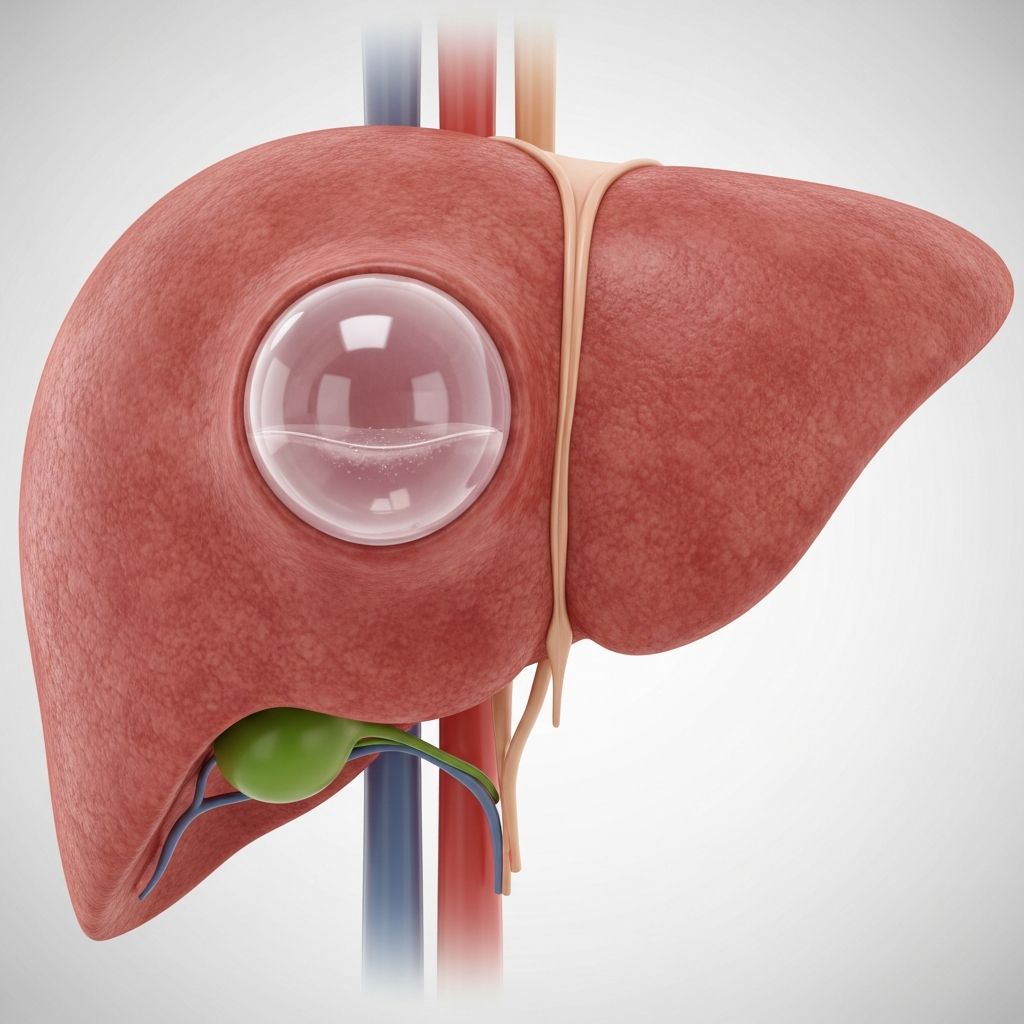
A liver cyst is a fluid-filled sac that develops in the liver tissue. These growths are benign in nature, meaning they are not cancerous and do not typically pose an immediate threat to your health. Liver cysts are among the most common liver findings, and many individuals who have them remain completely unaware of their presence throughout their lives.
Most liver cysts are present from birth as congenital growths, though they can also develop later in life. The majority of these cysts are asymptomatic and discovered incidentally during imaging studies performed for other reasons. Understanding what liver cysts are, their potential causes, and when they require treatment is essential for informed healthcare decisions.
What Are Liver Cysts?
Liver cysts are fluid-filled cavities that form within the liver parenchyma. They represent benign lesions and are classified into several categories based on their origin and characteristics. Most commonly, liver cysts are solitary simple cysts containing clear serous fluid, though some individuals may develop multiple cysts throughout the liver.
These cysts can range significantly in size, from microscopic lesions detected only on imaging to large masses that occupy substantial portions of the liver. The prevalence of liver cysts increases with age, with studies showing that approximately 15 to 30 percent of imaging studies detect at least one hepatic cyst. The overwhelming majority of these findings are clinically insignificant and require no intervention.
Causes of Liver Cysts
Liver cysts develop through various mechanisms, and understanding the underlying causes helps determine the appropriate management approach.
Congenital Cysts
The most common type of liver cyst is congenital, meaning it is present from birth. These cysts result from abnormal development of bile duct tissue during fetal development. Congenital cysts typically remain stable throughout life and rarely cause complications. They are often discovered incidentally during imaging studies performed for unrelated reasons.
Polycystic Liver Disease
Polycystic liver disease (PLD) is a rare genetic disorder that causes numerous fluid-filled cysts to develop throughout the liver. This inherited condition is often associated with autosomal dominant polycystic kidney disease (ADPKD). Unlike simple solitary cysts, PLD involves the development of multiple cysts that can gradually increase in size and number over time.
Parasitic Infections
Certain parasitic infections, particularly echinococcosis caused by the Echinococcus tapeworm, can lead to liver cyst formation. These parasitic cysts differ from simple congenital cysts and may require specific antiparasitic treatment with antibiotics to prevent complications and eliminate the infection.
Traumatic Cysts
Liver cysts can develop following trauma or injury to the liver. These traumatic cysts result from bile leakage or hemorrhage into damaged liver tissue. While most traumatic cysts resolve spontaneously, some may persist and require monitoring or intervention.
Neoplastic and Inflammatory Cysts
Certain liver tumors and inflammatory conditions can develop cystic components. Neoplastic cysts derive from cystic neoplasms, while inflammatory cysts may result from infection or other inflammatory processes affecting the liver.
Related Stories



Risk Factors for Liver Cysts
While liver cysts can develop in any individual, certain factors may increase the likelihood of their formation. Advanced age is associated with increased prevalence of simple hepatic cysts. Female gender has been associated with higher rates of cyst detection in some studies. Family history of polycystic liver disease or polycystic kidney disease increases risk for inherited cystic disease.
Currently, there is insufficient evidence to determine whether dietary factors, smoking, alcohol consumption, or other lifestyle elements contribute to the development of simple liver cysts. Unlike other liver conditions, cyst formation does not appear to be preventable through lifestyle modifications.
Symptoms and Complications
Most individuals with liver cysts experience no symptoms whatsoever. The majority of simple liver cysts are asymptomatic and discovered incidentally on imaging performed for other clinical reasons. However, when cysts become large or numerous, they can produce various symptoms.
Common Symptoms
Symptomatic liver cysts may cause:
- Abdominal pain or discomfort, particularly in the upper right portion of the abdomen
- Abdominal bloating or distension
- Nausea and loss of appetite
- Early satiety (feeling full quickly during meals)
- Back pain or referred discomfort
- Palpable abdominal mass in severe cases
Potential Complications
While uncommon, liver cysts can occasionally cause serious complications. Infection within a cyst can develop, leading to fever, systemic inflammatory response, and sepsis if untreated. Cyst rupture or hemorrhage into a cyst can cause acute pain and hemodynamic instability. In polycystic liver disease, extensive cyst involvement can eventually compromise liver function.
Cyst-related complications become more common in polycystic liver disease, where the burden of multiple cysts can lead to recurrent infections, pain, and progressive functional impairment. In severe cases with extensive liver involvement, liver transplantation may become necessary.
Diagnosis of Liver Cysts
Liver cysts are typically discovered through imaging studies and require careful evaluation to determine their nature and the need for further management.
Imaging Studies
Ultrasound is often the initial imaging modality used to evaluate the liver and frequently detects incidental cysts. Computed tomography (CT) imaging provides detailed characterization of cyst size, location, and internal characteristics. Magnetic resonance imaging (MRI) offers excellent soft tissue contrast and can further characterize cyst features.
These imaging modalities help radiologists classify cysts and determine whether they possess benign characteristics or potentially concerning features that warrant further investigation.
Blood Tests
Your healthcare provider may order blood tests to rule out infection, particularly parasitic infections such as echinococcosis. These tests help establish whether the cyst requires specific antiparasitic treatment or whether observation is appropriate. Laboratory studies may also assess liver function to ensure the cysts are not affecting hepatic synthetic or metabolic capacity.
Imaging Follow-up
For asymptomatic simple cysts with benign characteristics on initial imaging, routine follow-up imaging at specific intervals helps ensure stability. If imaging findings are atypical or if symptoms develop, more frequent or advanced imaging studies may be warranted. Your healthcare team determines the appropriate follow-up schedule based on cyst characteristics and your clinical presentation.
Treatment Options for Liver Cysts
The approach to treating liver cysts depends on whether symptoms are present, the cyst size and characteristics, and whether the cyst poses risks of complications or malignant transformation.
Conservative Management
Most individuals with simple liver cysts require no treatment. A watch-and-wait approach is appropriate for asymptomatic cysts with benign imaging characteristics. Periodic imaging surveillance ensures that cysts remain stable and do not develop concerning features. This conservative strategy avoids unnecessary intervention while maintaining vigilance for potential complications.
Percutaneous Aspiration and Sclerotherapy
For symptomatic cysts, percutaneous aspiration involves inserting a needle into the cyst under ultrasound or CT guidance to drain fluid. This procedure may provide temporary symptomatic relief but often results in cyst recurrence as fluid reaccumulates.
Sclerotherapy enhances the aspiration technique by injecting a sclerosing agent into the cyst cavity after fluid drainage. This agent damages the cyst lining, reducing the likelihood of reaccumulation. While sclerotherapy provides better results than aspiration alone, some cysts may still recur.
Surgical Removal
Surgical removal offers the most definitive treatment for symptomatic liver cysts. Surgeons can typically perform cyst removal using laparoscopic techniques, which involve making only two or three small incisions in the abdomen. This minimally invasive approach offers several advantages over traditional open surgery.
Laparoscopic cyst removal provides faster postoperative recovery, reduced pain compared to open surgery, minimal scarring, and typically requires only one night of hospitalization. Most patients achieve complete recovery within two weeks. Following surgical removal, cysts are unlikely to recur at the same location.
Treatment for Parasitic Cysts
If blood tests confirm a parasitic infection such as echinococcosis, your doctor will prescribe appropriate antiparasitic medications, typically antibiotics administered over a specific course. These medications treat the infection and may help prevent cyst progression.
Management of Polycystic Liver Disease
For individuals with polycystic liver disease, treatment strategies are individualized based on symptom severity and extent of liver involvement. Conservative management includes symptom management medications and dietary modifications. For specific problems caused by large cysts, minimally invasive procedures such as ultrasound-guided aspiration or endoscopic ablation may be considered.
In severe cases with extensive cyst burden and significant morbidity, surgical options including partial hepatectomy (removal of affected liver portions) or liver transplantation may become necessary. Liver transplantation represents the definitive treatment when PLD severely compromises liver function and quality of life.
When to Seek Medical Attention
While most liver cysts require no intervention, certain situations warrant medical evaluation and discussion with your healthcare provider:
- Development of abdominal pain, bloating, or nausea
- Unexplained weight loss or loss of appetite
- Fever or signs of infection
- Imaging discovery of a liver cyst, even if asymptomatic
- Family history of polycystic liver disease
- Rapid increase in cyst size on follow-up imaging
- Cysts with atypical imaging characteristics
Living with Liver Cysts
Most individuals with liver cysts live completely normal lives without restrictions or complications. Simple asymptomatic cysts require no lifestyle modifications. No specific dietary recommendations or activity restrictions are necessary unless your healthcare provider advises otherwise based on your individual situation.
For individuals with polycystic liver disease causing symptoms, maintaining open communication with your healthcare team helps optimize symptom management. Regular follow-up imaging ensures that cysts remain stable and do not develop concerning characteristics.
Frequently Asked Questions (FAQs)
Q: Are liver cysts cancerous?
A: No, liver cysts are benign growths and are not cancerous. Simple liver cysts do not develop into cancer. However, certain complex cysts or cystic lesions may require careful monitoring to ensure they maintain benign characteristics.
Q: Can liver cysts go away on their own?
A: Most congenital liver cysts remain stable throughout life and do not spontaneously resolve. However, some traumatic cysts may disappear following the initial injury. Your healthcare provider can discuss what to expect with your specific cyst based on its characteristics.
Q: How often do liver cysts cause symptoms?
A: The vast majority of liver cysts are asymptomatic. Only when cysts become quite large or when an individual develops polycystic liver disease do symptoms typically emerge.
Q: Can I prevent liver cysts?
A: There is no known way to prevent simple congenital liver cysts. For inherited polycystic liver disease, genetic counseling can help assess risk if you have a family history.
Q: What is the success rate of liver cyst surgery?
A: Laparoscopic cyst removal has high success rates, with cysts rarely recurring at the same location after surgical removal. Recovery is typically quick, with most patients returning to normal activities within two weeks.
Q: How is polycystic liver disease different from simple cysts?
A: Polycystic liver disease is a rare genetic disorder causing numerous cysts throughout the liver, whereas simple cysts are typically solitary benign growths. PLD requires specialized monitoring and may eventually cause liver function impairment.
References
- Liver Cyst: Symptoms, Treatments, and Causes — Healthline. 2024. https://www.healthline.com/health/liver-cyst
- Liver Cysts: Hepatic Cysts Symptoms, Causes & Treatments — American Liver Foundation. 2024. https://liverfoundation.org/liver-diseases/complications-of-liver-disease/liver-cysts/
- Hepatic cysts: a survival guide — PubMed Central/NIH. 2024. https://pmc.ncbi.nlm.nih.gov/articles/PMC12071424/
- Polycystic Liver Disease: Symptoms, Causes & Treatments — Cleveland Clinic. 2024. https://my.clevelandclinic.org/health/diseases/polycystic-liver-disease
- Liver Cyst: Causes, Symptoms, and Treatments — Medical News Today. 2024. https://www.medicalnewstoday.com/articles/324420
- Treatment for Liver Disease — Cleveland Clinic. 2024. https://my.clevelandclinic.org/departments/digestive/depts/liver-disease
Similar Articles








Read full bio of medha deb