Liver Fluke: Causes, Symptoms, Diagnosis & Treatment
Comprehensive guide to liver fluke infections: understand transmission, symptoms, diagnosis, and effective treatment options.
Understanding Liver Flukes: A Comprehensive Overview
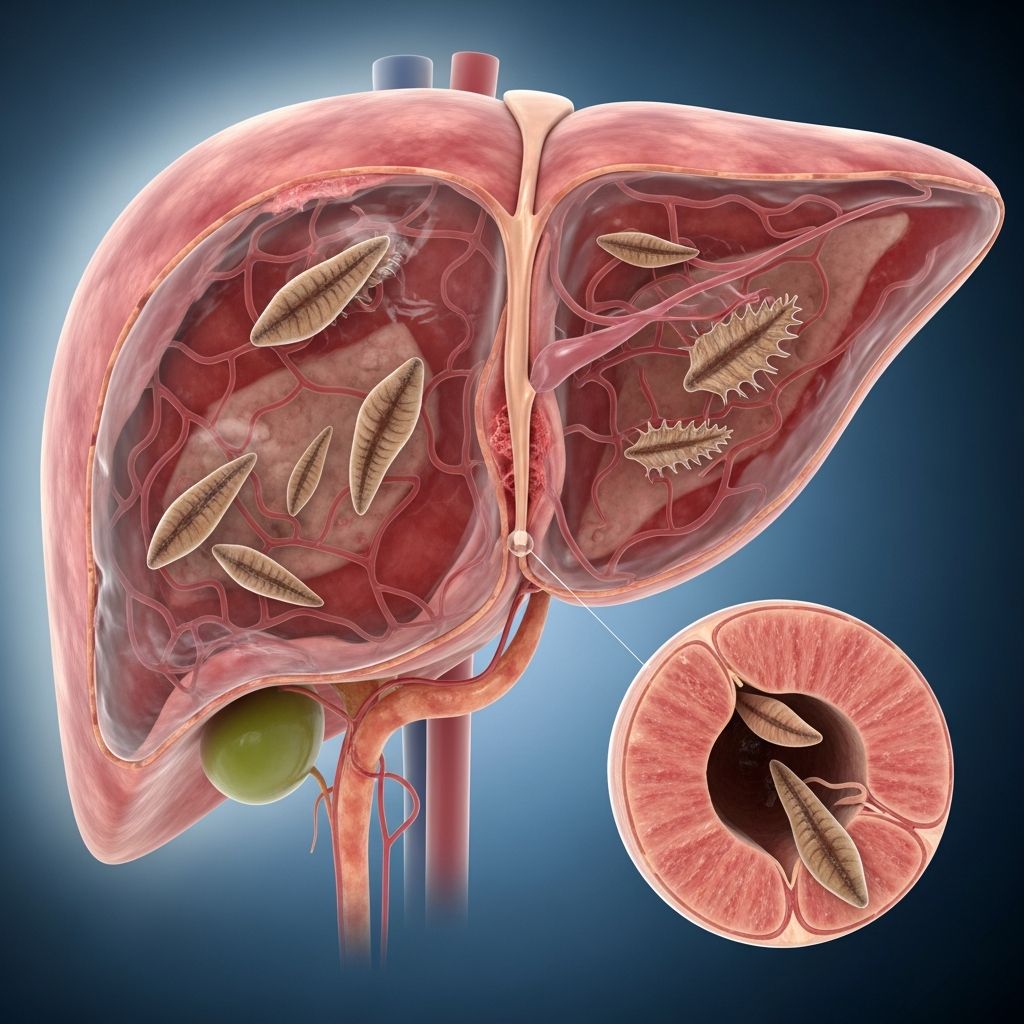
Liver flukes are parasitic worms that can infect and damage your liver, gallbladder, and bile ducts. These organisms live off the nutrients of their hosts and represent a significant health concern in certain regions around the world. Parasites are organisms that depend on a host for survival and reproduction, and liver flukes exemplify this relationship by establishing chronic infections that can last for years if left untreated.
The infection caused by liver flukes, known as fascioliasis when caused by Fasciola species and clonorchiasis when caused by Clonorchis species, affects millions of people globally. While these infections are relatively rare in the United States, they remain a significant public health concern in other parts of the world, particularly in regions with poor sanitation and limited access to clean water.
What Are Liver Flukes?
Liver flukes are parasitic flatworms that belong to two main families: Opisthorchiidae and Fasciolidae. These microscopic organisms have complex life cycles that involve both freshwater environments and human or animal hosts. The parasites are small but capable of causing significant damage to the organs they infect.
There are several types of liver flukes that can infect humans, each with distinct characteristics and geographic distributions:
– Fasciola hepatica and Fasciola gigantica — These are found worldwide and are responsible for fascioliasis- Clonorchis sinensis — Also known as the Chinese liver fluke- Opisthorchis viverrini — Known as the Southeast Asian liver fluke- Opisthorchis felineus — Called the cat liver fluke
How You Get Infected with Liver Flukes
Understanding transmission routes is crucial for prevention. Liver fluke infections occur through consumption of contaminated food or water. The parasites have adapted to specific ecological niches and transmission patterns that make infection possible in certain geographic regions and under particular circumstances.
You can get infected with a liver fluke if you:
– Eat raw or undercooked freshwater fish infected with fluke larvae- Consume contaminated watercress or other aquatic plants- Drink water contaminated with fluke cysts- Handle raw or undercooked infected fish without proper food safety practices
The lifecycle begins when fluke cysts present in contaminated water or infected aquatic plants are ingested. The cysts then open in your digestive tract, releasing larvae that migrate to the liver, gallbladder, and bile ducts where they mature into adult worms. Once established, these parasites can live and reproduce in the bile ducts for extended periods.
Geographic Distribution and Risk Factors
Liver flukes are found in specific regions around the world where environmental conditions support their life cycles. The distribution is not uniform across countries but rather concentrated in particular local areas.
Geographic areas with higher prevalence include:
– Southeast Asia (particularly Thailand, Laos, and Cambodia) — High prevalence of Opisthorchis and Clonorchis infections- Parts of South America — Areas where Fasciola species are endemic- Parts of Africa and the Middle East — Variable prevalence depending on local conditions- Europe — Particularly in areas with specific freshwater environments
You’re at higher risk of liver fluke infection if you:
Related Stories



– Live in or travel to endemic regions- Work with cattle or sheep in areas where flukes are present- Have a diet that includes raw or undercooked freshwater fish- Regularly consume unwashed watercress or similar aquatic plants- Have limited access to clean drinking water
Importantly, liver flukes are not contagious and cannot spread from person to person, nor can they be transmitted through untreated drinking water in all cases.
Recognizing Symptoms of Liver Fluke Infection
Symptoms of liver fluke infections can vary in their timing and severity. Some people may not experience noticeable symptoms immediately, while others develop acute symptoms within weeks of infection. The manifestations depend on the type of fluke, the severity of infection, and individual immune responses.
Common symptoms include:
– Fever- Abdominal or belly pain- Nausea and vomiting- Fatigue and weakness- Loss of appetite- Jaundice (yellowing of skin and eyes)- Diarrhea- Muscle aches
Some people don’t have symptoms or don’t recognize them right away, which can delay diagnosis and treatment. This is particularly concerning because chronic infections can cause significant organ damage over time.
Complications of Untreated Liver Fluke Infections
While liver flukes aren’t fatal on their own, chronic infection can lead to serious health complications. The parasites can live in your body for five to 25 years if left untreated, during which time they cause ongoing inflammation and damage to infected organs.
Potential complications include:
– Liver cirrhosis and liver damage- Gallbladder disease and dysfunction- Bile duct obstruction and stricture- Cholangiocarcinoma (bile duct cancer) — A particularly serious complication associated with chronic Clonorchis infections- Hepatic fibrosis- Pancreatic complications- Nutritional deficiencies- Organ failure in severe cases
The chronic inflammation caused by long-term infection can create an environment conducive to cancerous changes, making early detection and treatment critically important. Bile duct cancer, in particular, is a known complication of chronic clonorchiasis.
Diagnosis of Liver Fluke Infections
Diagnosing liver fluke infections requires a systematic approach combining laboratory tests and clinical evaluation. Healthcare providers use multiple diagnostic methods to confirm the presence of parasites and assess the extent of infection.
Diagnostic methods include:
– Stool (fecal) samples — Providers look for parasite eggs in stool specimens; multiple samples may be needed over time as parasite shedding can be intermittent- Blood tests — Antibody testing to detect immune response to infection- Imaging studies — Ultrasound, CT scans, or MRI to visualize organ damage and assess the extent of infection- Endoscopic procedures — May be used to examine bile ducts and obtain tissue samples
Prompt diagnosis is important, especially if you have traveled to endemic areas or consumed potentially contaminated food. Informing your healthcare provider about possible exposure is crucial for accurate diagnosis.
Treatment Options for Liver Fluke Infections
The good news is that liver fluke infections are treatable with antiparasitic medications. Treatment is typically effective and relatively brief, usually requiring only one to seven days of medication.
Standard antiparasitic medications include:
– Praziquantel — The most commonly used medication for most liver fluke infections- Albendazole — Used in some cases or as an alternative treatment- Triclabendazole — Particularly effective for Fasciola infections
These medications work by disrupting the parasites’ metabolism and ability to survive within the body. Most infections respond well to treatment, and parasites are typically eliminated within the short course of therapy. Your healthcare provider will determine the most appropriate medication and dosage based on the type of fluke, infection severity, and individual health factors.
Prevention Strategies
Prevention is the most effective approach to avoiding liver fluke infections. Understanding transmission routes allows you to take practical steps to protect yourself, especially if you live in or travel to endemic areas.
Ways to reduce your risk of liver fluke infections include:
– Cook freshwater fish thoroughly to internal temperatures that kill parasites- Avoid eating raw or undercooked fish, particularly in endemic areas- Thoroughly wash watercress and other aquatic plants before consumption- Drink only clean, treated water, or boil water before drinking- Practice good food safety and hygiene practices- Be cautious when eating in areas with poor sanitation- Avoid swimming in contaminated freshwater sources- Use protective equipment when handling raw fish in occupational settings
When to Seek Medical Attention
It’s important to consult a healthcare provider if you experience symptoms consistent with liver fluke infection, particularly if you live in or have traveled to areas where these parasites are common. Early intervention can prevent serious complications and lead to rapid resolution of infection.
Inform your provider if you believe you may have consumed contaminated food or water, even if the potential exposure occurred years ago. Some infections can remain dormant or progress slowly, so historical information is valuable for diagnosis.
Global Health Impact
Liver fluke infections are rare in the United States, but it’s estimated that millions of people around the world could be infected, sometimes without knowing it. In endemic regions, public health efforts focus on improving water sanitation, food safety education, and access to diagnostic and treatment services. The World Health Organization recognizes these parasitic infections as neglected tropical diseases requiring continued attention and resources.
Key Takeaways
Liver flukes are parasitic infections that can cause serious health problems if left untreated. However, when diagnosed early, these infections are highly treatable with short courses of antiparasitic medication. Understanding transmission routes, recognizing symptoms, and seeking prompt medical care are essential for managing this condition effectively. If you live in or have traveled to endemic areas and experience unexplained symptoms, discussing potential parasite exposure with your healthcare provider is crucial for proper diagnosis and treatment.
Frequently Asked Questions
Q: Are liver flukes contagious between people?
A: No, liver flukes are not contagious and cannot spread from person to person. Infection occurs only through consuming contaminated food or water.
Q: How long can liver flukes live in the body?
A: Without treatment, liver flukes can live in your body anywhere from five to 25 years, depending on the type of parasite and individual factors.
Q: Is liver fluke infection fatal?
A: Liver flukes themselves are not directly fatal, but untreated chronic infections can cause serious complications including liver cirrhosis, bile duct cancer, and organ failure.
Q: How quickly does treatment work for liver fluke infections?
A: Most liver fluke infections respond well to treatment with antiparasitic medications, typically requiring only one to seven days of therapy for complete parasite elimination.
Q: Can I get liver flukes from swimming in contaminated water?
A: Liver flukes cannot penetrate intact skin and are acquired through ingestion of contaminated food or water, not through skin contact or swimming in contaminated water.
Q: What should I do if I’ve been to an endemic area and have symptoms?
A: Contact your healthcare provider and inform them of your travel history and potential exposure to contaminated food or water, even if exposure occurred years ago. Multiple stool samples may be needed for accurate diagnosis.
References
- Liver Fluke: Fascioliasis, Causes, Symptoms & Treatments — Cleveland Clinic. 2024-07-24. https://my.clevelandclinic.org/health/diseases/liver-fluke
- About Liver Flukes — Centers for Disease Control and Prevention (CDC). https://www.cdc.gov/liver-flukes/about/index.html
- Cholangiocarcinoma (Bile Duct Cancer) — Cleveland Clinic. 2024-02-13. https://my.clevelandclinic.org/health/diseases/21524-cholangiocarcinoma
- Fascioliasis: Description, Cause, Transmission — Britannica. https://www.britannica.com/science/fascioliasis
- Treatment for Liver Disease — Cleveland Clinic Mikati Center for Liver Disease. https://my.clevelandclinic.org/departments/digestive/depts/liver-disease
Similar Articles








Read full bio of medha deb