Liver Tumors: Types, Diagnosis, and Treatment
Comprehensive guide to liver tumors: understanding benign and malignant types, diagnosis methods, and treatment options.
Understanding Liver Tumors
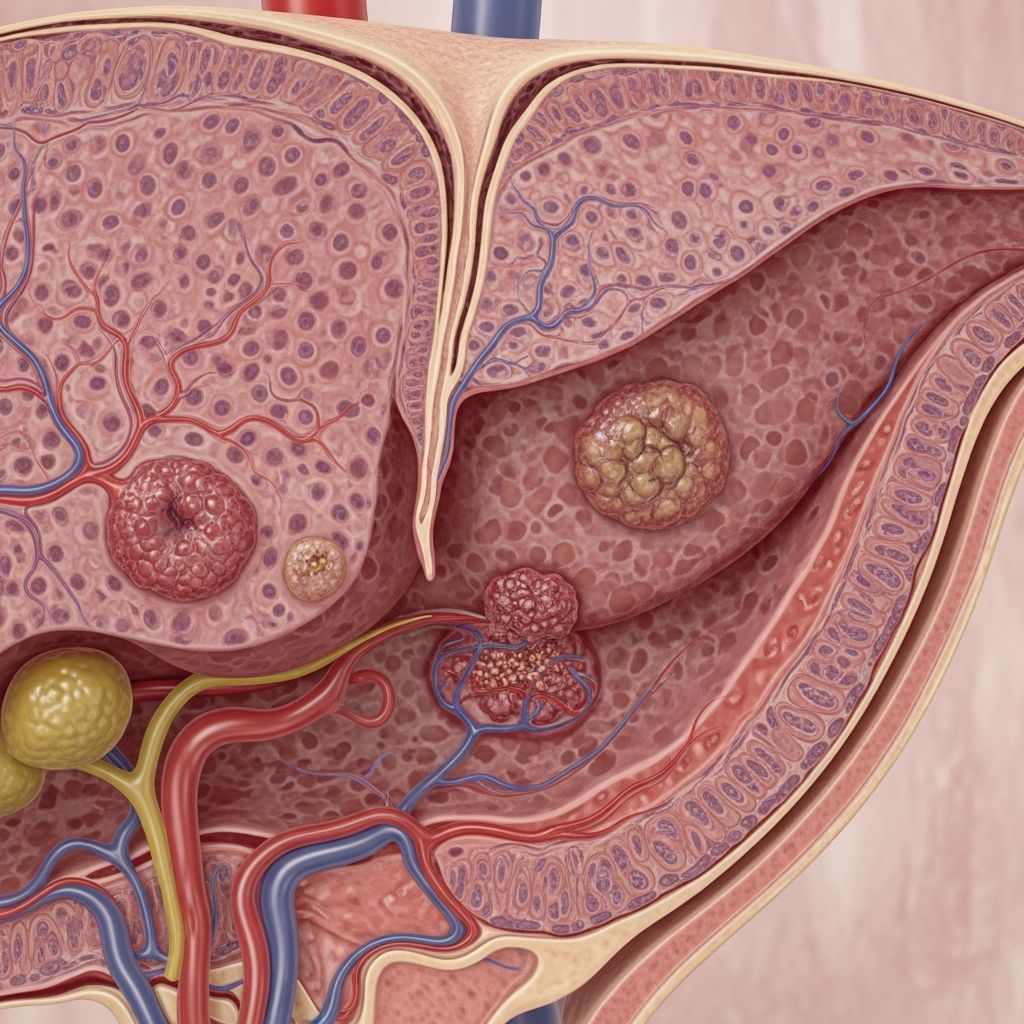
Liver tumors represent a significant health concern worldwide, with hepatocellular carcinoma being the sixth most common malignancy and fourth leading cause of cancer-related death globally. These tumors can originate from various cell types within the liver and surrounding structures, creating a wide spectrum of conditions ranging from benign, non-threatening growths to aggressive malignant cancers. Understanding the nature, types, and treatment options for liver tumors is essential for patients and healthcare providers in developing effective management strategies.
The liver, being a complex organ with multiple cell types and intricate vascular and biliary systems, can develop various tumor types. The rising incidence of liver cancers, particularly in Western nations, has been linked to increasing rates of nonalcoholic fatty liver disease and obesity. Modern multidisciplinary approaches to liver tumor management emphasize individualized care, combining surgical expertise, medical oncology, radiation therapy, and interventional radiology to achieve optimal outcomes for each patient.
Types of Liver Tumors
Liver tumors are classified based on their cell of origin and their potential to spread to other parts of the body. The fundamental distinction separates benign tumors, which are unlikely to metastasize and generally pose minimal health risk, from malignant tumors, which are cancerous and have the capacity to spread throughout the body and affect other organs.
Benign Liver Tumors
Benign liver tumors develop from the normal cellular structures within the liver and do not possess the characteristics of cancer. These tumors typically grow slowly and do not spread to other organs. Common benign liver tumors include:
- Hemangioma: A benign tumor arising from blood vessels within the liver, characterized by an abnormal collection of blood vessels.
- Hepatic Adenoma: A noncancerous tumor that develops from hepatocytes, the primary functional cells of the liver.
- Focal Nodular Hyperplasia: A benign growth of normal liver tissue that typically does not require treatment unless it causes symptoms.
- Hamartoma (Von Meyenburg Complex): A benign tumor of the bile ducts that usually remains asymptomatic.
Malignant Liver Tumors
Malignant liver tumors originate from cancerous cells and possess the ability to spread to distant sites. The primary malignant liver tumors include:
- Hepatocellular Carcinoma (HCC): The most common primary liver cancer, arising from hepatocytes. HCC accounts for the majority of liver cancer cases and typically develops in patients with underlying liver disease such as cirrhosis.
- Cholangiocarcinoma: A cancer arising from the bile ducts, which can be intrahepatic (within the liver) or extrahepatic (outside the liver).
- Hepatoblastoma: A rare liver cancer that primarily affects children under five years of age.
- Fibrolamellar Carcinoma: A rare variant of hepatocellular carcinoma with a relatively better prognosis than conventional HCC.
- Angiosarcoma: A rare malignant tumor arising from the blood vessels of the liver.
Risk Factors and Development
Most liver cancers develop in patients with cirrhosis, a condition characterized by severe liver scarring. However, it is important to note that some patients develop liver cancer without first experiencing cirrhosis, and this represents an area of particular clinical and research interest. The development of liver tumors is influenced by numerous factors including chronic viral hepatitis infections, alcohol consumption, nonalcoholic fatty liver disease, metabolic disorders, and environmental exposures to carcinogens.
The obesity epidemic has significantly increased the prevalence of nonalcoholic fatty liver disease, which has emerged as a major risk factor for hepatocellular carcinoma development. Patients with known risk factors require regular surveillance through imaging and blood work, including tumor markers such as alpha-fetoprotein, to enable early detection when treatment options are most effective.
Related Stories



Diagnosis of Liver Tumors
Accurate diagnosis of liver tumors is fundamental to determining appropriate treatment strategies and predicting patient outcomes. The diagnostic process involves multiple imaging and laboratory techniques to characterize masses found in the liver.
Imaging Techniques
Advanced imaging technologies play a crucial role in identifying and characterizing liver tumors. The primary imaging modalities include:
- Computed Tomography (CT) Scan: CT imaging with intravenous contrast provides detailed visualization of liver masses and can demonstrate vascular enhancement patterns characteristic of liver cancer. CT scans also assess whether tumors involve blood vessels and help determine if the disease extends beyond the liver.
- Magnetic Resonance Imaging (MRI): MRI offers enhanced assessment of liver masses with superior soft tissue contrast resolution. This modality is particularly useful for detecting smaller lesions and characterizing tumor composition.
- Ultrasound: Abdominal ultrasound serves as a valuable screening tool, particularly in surveillance programs for at-risk patients with cirrhosis. It can detect suspicious lesions and guide interventional procedures.
- Angiography: This technique involves injecting dye into blood vessels to visualize vascular patterns and detect abnormal blood supply associated with liver tumors.
Biopsy Procedures
When imaging cannot definitively determine whether a tumor is benign or malignant, a fine needle biopsy may be performed. During this procedure, a very thin needle is passed through the skin and directed into the liver toward the tumor using ultrasound guidance. Pathological examination of the tissue sample reveals characteristic changes in liver cancer, including abnormally widened columns of liver cells, which are thicker than the normal one or two cell thickness found in healthy liver tissue.
Blood Markers
Laboratory testing provides valuable diagnostic information. Alpha-fetoprotein (AFP) is a tumor marker that demonstrates high specificity for certain liver tumor types and helps in diagnosis, monitoring, and surveillance of at-risk patients.
Staging and Classification Systems
Proper staging of liver tumors is essential for treatment planning and prognostic assessment. The Barcelona Clinic Liver Cancer (BCLC) staging system is widely accepted and has undergone recent updates to incorporate new systemic therapies and reflect stage migration possibilities. Staging systems consider tumor size, number of lesions, vascular involvement, and liver function to guide treatment recommendations.
Early Stage Disease
Early-stage liver cancer is defined as either a single lesion in the liver or up to three lesions that are individually small. At this stage, treatment options emphasize curative approaches and may include surgical resection, ablation, or transplantation when appropriate.
Intermediate Stage Disease
Intermediate-stage cancer remains confined within the liver but involves multiple lesions or lesions larger than three centimeters. Treatment at this stage may combine local therapies with regional chemotherapy delivery directly to the cancer site.
Advanced Stage Disease
Advanced-stage disease involves vascular invasion or distant metastasis. Systemic therapies and combination approaches become increasingly important in managing advanced disease.
Treatment Options
The management of liver tumors requires individualized treatment planning considering both tumor characteristics and patient factors such as underlying liver disease extent. Modern treatment approaches emphasize multidisciplinary care with collaboration among surgeons, medical oncologists, radiation oncologists, and interventional radiologists.
Surgical Treatment
Hepatic Resection: Surgical removal of the affected liver portion remains the only potentially curative treatment for resectable tumors without vascular involvement. The extent of resection depends on tumor location and type. For intrahepatic cholangiocarcinoma, hepatectomy with lymph node dissection may suffice. For tumors at the bile duct bifurcation, hepatectomy combined with bile duct and lymph node resection becomes necessary. Extrahepatic cholangiocarcinoma may require a Whipple procedure involving removal of the pancreatic head, bile duct, and duodenum.
Liver Transplantation: For selected patients with unresectable disease above the cystic duct, liver transplantation offers a potential curative option. Candidates undergo staging surgery to assess lymph node involvement before transplant consideration.
Locoregional Therapies
These treatments target tumors directly without systemic effects and provide palliative or bridge-to-transplant benefits, though they are not curative:
- Ablation: Destroys tumor tissue through heat, cold, or chemical destruction.
- Chemoembolization: Delivers chemotherapy directly to the tumor while blocking its blood supply.
- Radioembolization (Y-90): Delivers radioactive particles directly to the tumor.
- Hepatic Artery Infusion Pump: Delivers chemotherapy directly through an implanted pump.
Systemic Therapies
Medical management has advanced significantly with the introduction of targeted therapies and immunotherapies. Recent advances in systemic therapies have led to changes in treatment guidelines and enable some patients with advanced disease to undergo downstaging and subsequent surgical resection. These therapies prolong survival among patients with advanced disease who would otherwise have been considered unresectable.
Chemotherapy
Traditional chemotherapy agents and newer targeted therapies provide options for patients ineligible for surgery or with advanced disease.
Multidisciplinary Approach to Care
The cornerstone of liver tumor management is multidisciplinary care. Comprehensive centers, such as Johns Hopkins’ liver multidisciplinary clinic, bring together surgical oncologists, medical oncologists, radiation oncologists, interventional radiologists, hepatologists, and pathologists. This collaborative approach ensures that each patient receives carefully individualized evaluation and treatment planning, recognizing that one size does not fit all in liver tumor management.
The multidisciplinary team reviews imaging, tumor markers, and patient-related factors to develop optimal treatment sequences that achieve the best cancer outcomes while preserving liver function. This collaborative model has become the gold standard in liver tumor management, as it enables complex cases to benefit from diverse expertise and perspectives.
Prognosis and Outcomes
Prognosis for liver tumors depends on multiple factors including tumor type, stage, extent of underlying liver disease, and patient age and overall health. Early detection through surveillance of at-risk patients significantly improves outcomes. The advent of more effective systemic and locoregional therapies has substantially improved survival rates, particularly among patients with advanced disease.
Frequently Asked Questions About Liver Tumors
Q: What is the difference between benign and malignant liver tumors?
A: Benign liver tumors are noncancerous growths unlikely to spread to other organs, while malignant tumors are cancerous and have the capacity to metastasize and invade other tissues. Benign tumors typically require monitoring but not aggressive treatment unless they cause symptoms.
Q: Who should be screened for liver cancer?
A: Patients at high risk should be screened regularly, including those with cirrhosis, chronic hepatitis B or C infection, nonalcoholic fatty liver disease, and family history of liver cancer. Screening typically involves abdominal ultrasound and blood work including alpha-fetoprotein levels.
Q: What is the most common type of liver cancer?
A: Hepatocellular carcinoma (HCC) is the most common primary liver cancer, accounting for the majority of cases. It typically develops in patients with underlying liver disease or cirrhosis.
Q: Can liver tumors be cured?
A: Early-stage liver tumors, particularly those without vascular involvement, can potentially be cured through surgical resection, transplantation, or ablation. Advanced-stage tumors may not be curable but can be managed with systemic and locoregional therapies to prolong survival and improve quality of life.
Q: What is the role of liver transplantation in treating liver tumors?
A: Liver transplantation offers a potentially curative option for selected patients with early-stage, unresectable tumors. It addresses both the cancer and underlying liver disease, making it appropriate for carefully selected candidates who meet specific criteria.
Q: How often should patients with diagnosed liver tumors be monitored?
A: Follow-up schedules depend on the tumor type, stage, and treatment received. Patients typically undergo imaging and blood work at regular intervals determined by their multidisciplinary team to detect recurrence early and assess treatment response.
References
- Management of Hepatocellular Carcinoma: A Review — Johns Hopkins University, JAMA Surgery. 2023-04-12. https://pure.johnshopkins.edu/en/publications/management-of-hepatocellular-carcinoma-a-review
- Diagnosis – Liver Cancer — Johns Hopkins Pathology. https://pathology.jhu.edu/liver-cancer/diagnosis
- Types of Liver Cancer — Johns Hopkins Pathology. https://pathology.jhu.edu/liver-cancer/types
- Advanced Treatments in Liver Cancer — Johns Hopkins Medicine. 2023-12-08. https://www.youtube.com/watch?v=LtUx9edYcK0
- American Association for the Study of Liver Diseases Clinical Practice Guidelines — AASLD (American Association for the Study of Liver Diseases). https://www.aasld.org
Similar Articles








Read full bio of Sneha Tete