Living with a Tracheostomy Tube and Stoma
Complete guide to managing your tracheostomy: care, maintenance, and daily living.
Understanding Your Tracheostomy
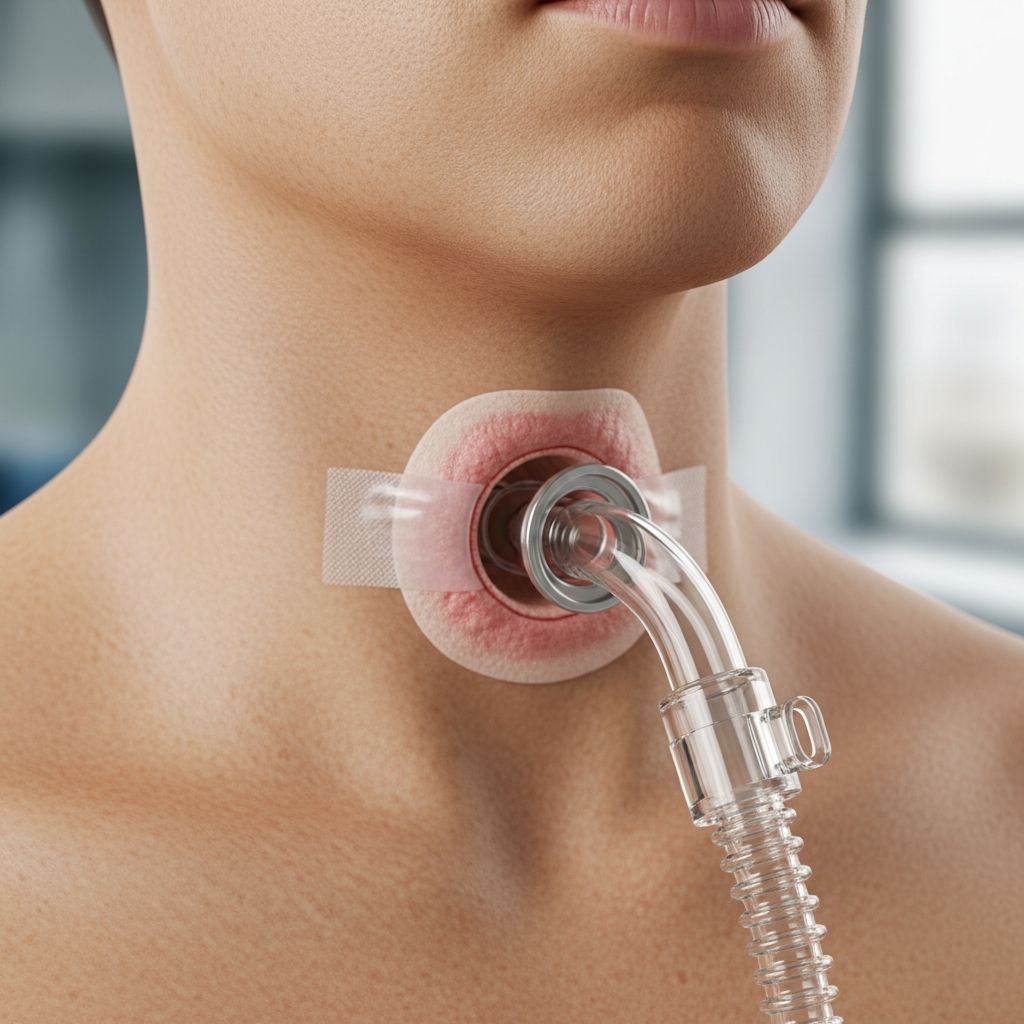
A tracheostomy is a surgical procedure that creates an opening in the front of the neck, called a stoma, which connects directly to the windpipe or trachea. A tracheostomy tube is then placed through this opening to help you breathe. This procedure is commonly performed for patients who require long-term respiratory support, have difficulty swallowing, or need assistance with airway management. Understanding the basic anatomy and function of your tracheostomy is essential for proper care and maintenance.
The tracheostomy tube consists of several components, including the outer cannula, inner cannula, and obturator. Each part serves a specific purpose in maintaining an open and functional airway. Regular care and maintenance of these components are crucial to prevent complications and ensure your continued comfort and safety.
Daily Cleaning and Maintenance
Proper daily care of your tracheostomy tube and stoma is vital for preventing infections and maintaining optimal respiratory function. Establishing a routine cleaning schedule will help you stay healthy and comfortable.
Essential Supplies for Stoma Care
Before beginning any cleaning procedure, gather all necessary supplies to ensure a smooth and effective care routine:
- Tracheostomy care kit or two small bowls
- Normal saline solution and hydrogen peroxide (equal parts mixed)
- Cotton-tipped applicators and gauze pads
- Velcro straps or tracheostomy ties
- Suction catheter and saline bullets
- Clean gloves and face cloth
- Suction apparatus
- Clean, dry towels
Step-by-Step Cleaning Procedure
Following a systematic approach to cleaning ensures that you remove all secretions and maintain proper hygiene around your stoma:
Step 1: Prepare Your Supplies
Wash your hands thoroughly before beginning. Open your tracheostomy care kit and pour equal parts of saline and hydrogen peroxide into one cleaning well. Pour plain saline into the second well. Put on clean gloves and ensure all equipment is within reach.
Step 2: Suctioning
Instill normal saline into the inner cannula as directed by your healthcare provider. Insert the suction catheter to the same length as the obturator. Apply gentle suction with your thumb and gradually pull out the catheter while twisting. This process should take no longer than 10 seconds. Allow time for recovery before repeating if necessary.
Step 3: Remove and Clean the Inner Cannula
Hold the flange of the tracheostomy tube and rotate the lock on the inner cannula counterclockwise to release it. Gently remove the inner cannula and place it in the basin containing the hydrogen peroxide solution. Use a brush or pipe cleaner to clean the inside of the inner cannula thoroughly. Agitate the cannula gently in the solution to rinse away debris. Remove excess saline by shaking gently.
Step 4: Reinsert the Inner Cannula
Carefully reinsert the inner cannula into the outer cannula and turn it clockwise to lock it in place. Verify that it is secured properly before proceeding.
Related Stories



Step 5: Clean the Stoma Site
Moisten cotton-tipped applicators and gauze pads with the hydrogen peroxide solution. Gently clean the skin around and under the tracheostomy tube, working from close to the tube outward. Follow with saline-moistened gauze to remove any remaining hydrogen peroxide. Use dry gauze to thoroughly dry the skin around the stoma. This prevents skin irritation, blistering, and infection.
Step 6: Replace the Tracheostomy Holder
If the tracheostomy holder or strap is soiled or worn, replace it after completing the stoma care. Remove the old strap while holding the tube in place. Attach the new strap with the shorter piece closer to you. Bring the longer end behind your neck and secure it, allowing one finger space between the strap and your neck for comfort and safety.
Step 7: Final Steps
Replace any oxygen or humidifying devices that were removed. Remove and discard your gloves, then wash your hands. Clean the tracheostomy brush and care kit with water and allow them to air dry.
Inner Cannula Care
The inner cannula requires special attention as it can accumulate secretions and debris that may obstruct airflow. Some inner cannulas are disposable and should be replaced regularly, while others are reusable and require thorough cleaning.
If you have a reusable inner cannula, clean it daily using the hydrogen peroxide solution and a specialized brush. Soak it for several minutes to loosen stubborn debris. For disposable inner cannulas, replace them according to your healthcare provider’s recommendations, typically every 24 to 48 hours or as needed.
Always ensure the inner cannula is completely dry before reinserting it to prevent moisture-related complications. Store extra cannulas in a clean, dry location.
Changing Your Tracheostomy Tube
Periodic tube changes are necessary to maintain proper function and prevent complications. Your healthcare provider will determine the appropriate frequency for changing your tube, which may vary based on your individual circumstances.
Preparation and Supplies
Before changing your tracheostomy tube, ensure you have all necessary supplies assembled:
- New tracheostomy tube of the correct size
- Backup tube one size smaller
- Inner cannula and obturator for the new tube
- Water-based lubricant
- Round-ended scissors for cutting ties
- New velcro straps or ties
- Gauze pads and saline solution
- Gloves and suction apparatus
Tube Change Procedure
Proper technique during tube changes prevents damage to the trachea and ensures a smooth transition. Begin by positioning yourself comfortably. If at home, recline in a sniffing position with your nose up and neck extended, or sit upright if that feels more comfortable.
Remove the new tracheostomy tube from its wrapper carefully. Insert the obturator into the tube and attach the velcro straps. Apply a small amount of water-based lubricant to the end of the tube. This lubricant prevents the tube from sticking to the skin during insertion.
While holding the old tube in place, carefully remove the tape or velcro straps securing it. Remove the old tube by following the natural curve of the trachea to avoid injury. Clean the skin around the stoma with gauze and saline solution.
Insert the new tracheostomy tube by holding it firmly by the flanges and sliding it gently along the curve of the trachea. Remove the obturator immediately after insertion. Secure the new tube with fresh straps or tape, allowing one finger space between the strap and your neck.
Insert the inner cannula and lock it in place. If coughing occurs during this process, withdraw the inner cannula and wait for coughing to subside before attempting reinsertion. Check for proper airflow by feeling air movement at the tube opening and observing your breathing pattern and skin color.
Managing Secretions and Suctioning
Accumulated secretions around the tracheostomy can interfere with breathing and promote infection. Regular suctioning helps maintain a clear airway and prevents complications.
Suction only when necessary, as excessive suctioning can damage the tracheal tissue. Signs that suctioning is needed include audible breathing sounds, difficulty breathing, or visible secretions at the stoma. Gentle, controlled suctioning lasting no more than 10 seconds prevents tissue damage while effectively removing secretions.
Always use sterile technique when suctioning and follow your healthcare provider’s specific instructions regarding saline instillation and suctioning frequency.
Skin Care Around the Stoma
The skin surrounding your tracheostomy requires special attention to prevent breakdown and infection. Regular cleansing with appropriate solutions removes mucus and bacteria that can accumulate in this moist environment.
Keep the area dry between cleanings, as moisture promotes bacterial growth and skin irritation. If you notice redness, swelling, or drainage that seems unusual, contact your healthcare provider promptly. Some patients benefit from using a dry gauze dressing under the tube, particularly if the skin appears irritated.
Avoid using harsh soaps or lotions around the stoma unless specifically recommended by your healthcare provider. Stick to prescribed cleaning solutions to prevent irritation and maintain optimal skin health.
Nutrition and Eating
Having a tracheostomy does not prevent you from eating normally. Most patients can resume oral feeding shortly after the procedure. However, certain precautions should be observed to ensure safety.
Avoid changing your tracheostomy tube immediately before or after eating. Wait at least two hours after eating before performing a tube change to reduce the risk of vomiting and potential airway obstruction. Eat slowly and chew food thoroughly. Take small bites and avoid foods that are excessively dry or difficult to swallow.
Keep your suction equipment nearby during meals in case you need to clear secretions. Stay upright while eating and for at least 30 minutes afterward to aid digestion and prevent aspiration.
Activity and Lifestyle
Life with a tracheostomy need not be severely restrictive. Most people can return to their normal activities with appropriate precautions. You can engage in light to moderate exercise, pursue hobbies, and maintain social connections.
Protect your stoma during showering or bathing by covering it with a waterproof dressing or special tracheostomy shower guard. Avoid activities that could directly damage the tube or stoma. Be cautious around water to prevent aspiration into the tracheostomy.
Humidification of inspired air is important for tracheostomy patients. Use a humidifier or heat and moisture exchanger during activities, particularly in dry environments or during exercise. This prevents secretions from becoming thick and difficult to manage.
Emergency Preparedness
Patients with tracheostomies should be prepared for emergencies. Keep emergency equipment and supplies readily accessible, including:
- Backup tracheostomy tubes (current size and one size smaller)
- Obturator and inner cannulas
- Suction catheter and portable suction device
- Water-based lubricant and gauze pads
- Scissors for cutting ties
- Flashlight and mirror for visibility
- Written emergency instructions
Inform family members, coworkers, and caregivers about your tracheostomy and basic emergency procedures. Wear medical alert identification indicating your tracheostomy status.
Recognizing Complications
While tracheostomies are generally safe, complications can occasionally occur. Seek immediate medical attention if you experience:
- Difficulty breathing or signs of airway obstruction
- Excessive bleeding or blood-tinged secretions
- Persistent fever or signs of infection
- Unusual or foul-smelling drainage
- Tube displacement or inability to reinsert the tube
- Severe pain or swelling around the stoma
- Difficulty swallowing or choking
Communication with Your Healthcare Team
Maintain regular contact with your healthcare providers. Attend all scheduled appointments and inform them of any concerns or changes in your condition. Keep detailed records of your tracheostomy care routine, including cleaning frequency, tube changes, and any complications or concerns.
Ask your healthcare provider for written instructions specific to your situation. Different patients may require slight variations in care techniques based on their medical history and individual needs.
Frequently Asked Questions
Q: How often should I clean my tracheostomy tube?
A: Most patients benefit from daily cleaning of the stoma and inner cannula. Your healthcare provider may recommend more frequent cleaning depending on your specific situation and the amount of secretions you produce.
Q: Can I shower or bathe with a tracheostomy?
A: Yes, you can shower with proper precautions. Use a waterproof dressing or tracheostomy shower guard to prevent water from entering the tube. Avoid submerging your neck under water.
Q: What should I do if my tracheostomy tube falls out?
A: If your tube accidentally comes out, attempt to reinsert it quickly using your backup tube. If you cannot reinsert it, call for emergency assistance immediately. Keep your emergency supplies and phone numbers readily accessible.
Q: Can I speak with a tracheostomy?
A: Speaking ability depends on the type of tracheostomy. With a standard tracheostomy, speech is possible but may require a speaking valve or special technique. Discuss speaking options with your healthcare provider.
Q: How long will I need my tracheostomy?
A: Duration varies based on your medical condition. Some patients have temporary tracheostomies while others require long-term or permanent management. Your healthcare provider can discuss your specific prognosis.
Q: What should I keep in my emergency go-bag?
A: Include backup tubes, obturators, suction catheter, lubricant, gauze, scissors, a flashlight, and written emergency instructions. Keep this bag easily accessible at all times.
References
- Tracheostomy and Laryngectomy Stoma Care — Johns Hopkins Medicine. 2025. https://www.hopkinsmedicine.org/health/treatment-tests-and-therapies/living-with-a-tracheostomy-tube-and-stoma
- Tracheostomy Tube Change — StatPearls, National Center for Biotechnology Information. 2024. https://www.ncbi.nlm.nih.gov/books/NBK555919/
- Skin and Stoma Care — Learn Tracheostomy Care. 2025. https://learntracheostomycare.weebly.com/skin-and-stoma-care.html
- Critically Appraised Topic: Tracheostomy Emergency Supplies — Children’s Mercy. 2025. https://www.childrensmercy.org/contentassets/878a471901cd4e858cc27ae0d82f441e/trach-go-bag-cat.pdf
Similar Articles








Read full bio of Sneha Tete