Local Anaesthesia In Dermatology: Guide For Safe Pain Management
Comprehensive guide to local anaesthesia in dermatological procedures, types, techniques, and safety considerations.
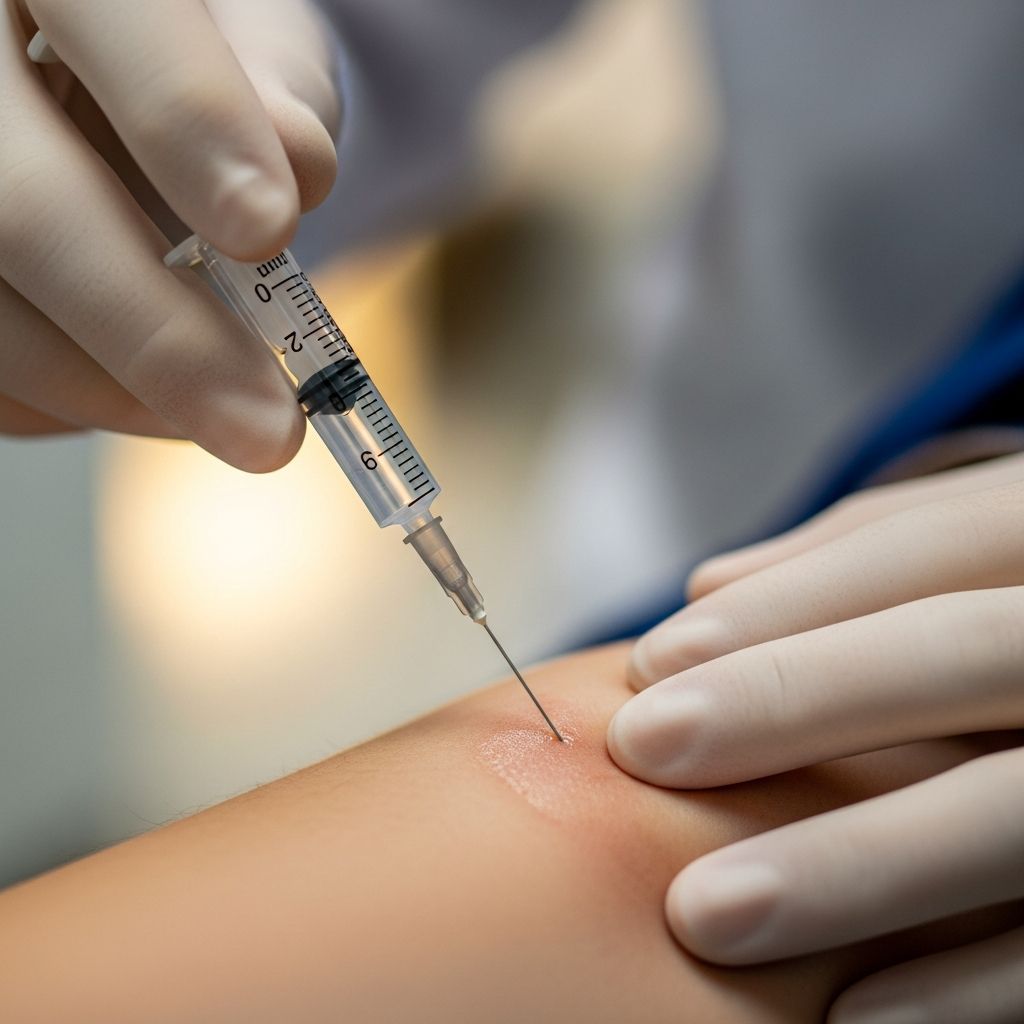
Local anaesthesia refers to the reversible loss of sensation in a defined area of the body. This loss of sensation is achieved by the topical application or injection of agents that block the sodium channels that facilitate nerve impulses in tissue.
Local anaesthesia is used in many dermatological procedures, surgical operations, and dental procedures. The aim is to minimise pain so that procedures can be conducted as efficiently and comfortably as possible.
Introduction
In dermatology, local anaesthesia plays a crucial role in enabling minor surgeries, biopsies, excisions, and cosmetic procedures without the need for general anaesthesia. By selectively paralysing sensory nerve endings and fibres, these agents block the reception and transmission of pain stimuli at the injection site, providing reversible regional anaesthesia. This targeted approach ensures patient comfort while minimising systemic effects, making it ideal for office-based procedures.
The use of local anaesthetics has expanded with the rise of day-case surgeries and aesthetic dermatology, where pain management is key to patient satisfaction. Effective local anaesthesia reduces post-procedure discomfort, erythema, and recovery time. Dermatologists must understand agent selection, dosing, techniques, and potential complications to ensure safety.
Types
Local anaesthetics are classified into two main categories: amides and esters, based on their chemical structure and metabolism. Amides, such as lidocaine and bupivacaine, are more commonly used in dermatology due to their stability and lower allergy risk. Esters, like procaine, are metabolised by plasma esterases but carry a higher risk of allergic reactions.
Key agents include:
- Lidocaine: Most widely used; rapid onset (2-5 minutes), duration 1-2 hours. Maximum dose without adrenaline: 3-4.5 mg/kg; with adrenaline: up to 7 mg/kg.
- Bupivacaine: Longer duration (4-8 hours), used for prolonged procedures. Maximum dose: 2 mg/kg.
- Prilocaine: Suitable for topical use; less cardiotoxic.
- Articaine: Effective for dental and mucosal procedures.
Adrenaline (epinephrine) is often added to prolong duration and reduce bleeding by causing vasoconstriction. Sodium bicarbonate can buffer solutions to reduce injection pain.
Topical Anaesthetics
Topical agents are applied directly to skin or mucosa via creams, gels, ointments, or sprays, penetrating to the papillary dermis to numb nerve endings. Common formulations include EMLA (eutectic mixture of lidocaine 2.5% and prilocaine 2.5%), LMX-4 (lidocaine 4%), and liposomal lidocaine. They are ideal for children, needle-phobic patients, or superficial procedures like laser treatments.
Non-invasive options like cryoanaesthesia (cold spray) provide temporary numbness via skin cooling.
Injectable Anaesthetics
Infiltration involves direct injection into tissue. Techniques include:
- Cutaneous infiltration: Small volumes into dermis for biopsies.
- Field block: Circular injection around the surgical site.
- Peripheral nerve block: Targets specific nerves, e.g., supraorbital, infraorbital, mental nerves for facial procedures.
- Tumescent anaesthesia (TA): Large volumes of dilute lidocaine (0.05-0.1%) with epinephrine infused into subcutaneous fat. Used in liposuction and extensive excisions; provides prolonged anaesthesia and haemostasis.
| Technique | Indications | Advantages | Disadvantages |
|---|---|---|---|
| Infiltration | Biopsies, excisions | Simple, rapid | Tissue distortion |
| Nerve block | Facial surgery | Large area, less volume | Requires anatomy knowledge |
| Tumescent | Liposuction, resurfacing | Prolonged effect, bloodless field | Volume overload risk |
Related Stories



Side Effects and Complications
Local anaesthetics are well tolerated when used appropriately, with minimal side effects. Common local reactions include temporary stinging, burning, bruising, or erythema at the injection site.
Local toxicity arises from direct effects or improper technique: pain on injection, oedema, haematoma, infection, hyperalgesia, or nerve injury. Rapid injection or high concentrations exacerbate pain; buffering mitigates this.
Systemic toxicity (LAST – Local Anaesthetic Systemic Toxicity) occurs with overdose or intravascular injection, affecting CNS first (tinnitus, seizures, coma) then cardiovascular (arrhythmias, hypotension). Risk factors: vascular areas, liver disease. Prevention: adhere to max doses, aspirate before injection, use ultrasound guidance.
Treatment: airway support, lipid emulsion (Intralipid) for severe cases.
Allergies
Hypersensitivity is rare (<1%), usually delayed type IV (contact dermatitis) rather than IgE-mediated anaphylaxis. Esters cause more true allergies due to PABA metabolite. Amides rarely cross-react.
Symptoms: localised erythema/swelling on re-exposure; mucosal use may cause facial oedema mimicking angioedema. Patch testing confirms diagnosis.
Management: Avoid allergen; use alternatives like ropivacaine.
Diagnosis
Suspected toxicity: Monitor for perioral numbness, metallic taste (early CNS). Allergies diagnosed via history, patch/epicutaneous testing (e.g., TRUE Test for lidocaine).
Differentiate from vasovagal syncope (common in anxious patients).
Treatment
For mild reactions: observation, antihistamines. Systemic toxicity: benzodiazepines for seizures, lipid rescue therapy. Anaphylaxis: epinephrine, fluids.
Administration Techniques
Optimal technique enhances safety and comfort:
- Antisepsis, mark site pre-injection.
- Use fine needles (27-30G), slow infusion, warm solution, vibration, or cold spray.
- Pre-treat with topical for injections.
- Aspirate to avoid vessels; incremental dosing.
In aesthetic procedures, nerve blocks (supratrochlear, infraorbital) or TA for face/body. Microneedling often needs no anaesthesia; topicals may interfere.
Local Anaesthesia in Specific Procedures
Aesthetic Dermatology
Pain limits patient tolerance in lasers, peels, microneedling. Topical for superficial; blocks/TA for deeper. Avoid lidocaine in microneedling due to bleeding interference.
Surgery and Biopsies
Infiltration standard; max lignocaine 3 mg/kg plain, higher with adrenaline.
Frequently Asked Questions
What is the maximum safe dose of lidocaine?
Without adrenaline: 3-4.5 mg/kg; with adrenaline: 7 mg/kg, adjusted for patient factors.
Are local anaesthetics safe in pregnancy?
Lidocaine category B; use lowest effective dose.
How to manage injection pain?
Buffer with bicarbonate, slow injection, topical pre-treatment.
Can allergies be tested?
Yes, patch testing for delayed hypersensitivity.
What if systemic toxicity occurs?
Stop injection, supportive care, lipid emulsion.
This comprehensive overview ensures dermatologists can safely employ local anaesthesia, balancing efficacy and risk for optimal patient outcomes. Word count: 1678.
References
- The use of local anaesthetics in dermatology, aesthetic medicine — PMC. 2023. https://pmc.ncbi.nlm.nih.gov/articles/PMC9993209/
- Safety of local anesthetics — SciELO Brazil. 2018-02-01. https://www.scielo.br/j/abd/a/4vdQBJGXDqD3vdhXGqf4KBt/
- Local anaesthesia – DermNet — DermNet NZ. 2023. https://dermnetnz.org/topics/local-anaesthesia
- Systematic literature review of topical local anaesthesia — Oxford Academic. 2022-06-15. https://academic.oup.com/burnstrauma/article/doi/10.1093/burnst/tkac020/6702824
- The development of local anesthetics — e-Century Publishing. 2023. https://e-century.us/files/ijcem/12/12/ijcem0100790.pdf
- Local anaesthesia and the dermatologist — Wiley Online Library. 2011-04-01. https://onlinelibrary.wiley.com/doi/full/10.1111/j.1365-2230.2011.04038.x
Similar Articles








Read full bio of medha deb