Losartan – an Angiotensin Receptor Blocker (Cozaar)
Losartan effectively lowers blood pressure, protects kidneys, and reduces heart strain for hypertension, heart failure, and diabetic kidney disease.
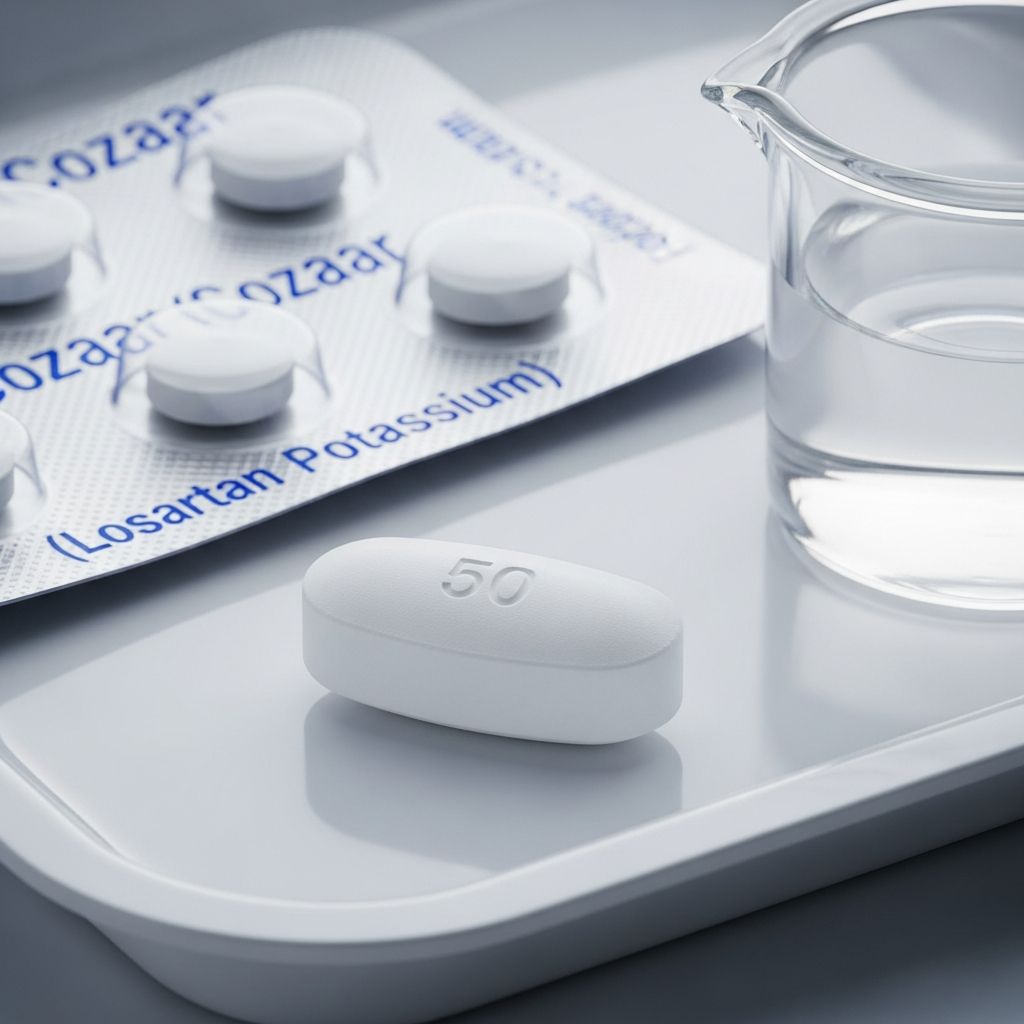
Losartan, commonly known by the brand name Cozaar, is a medication that belongs to a class of drugs called angiotensin-II receptor antagonists (AIIRAs). It works by blocking the action of angiotensin II, a hormone that narrows blood vessels and increases fluid retention, thereby reducing the heart’s workload, lowering blood pressure, and providing protective effects on the kidneys.
| Type of medicine | An angiotensin-II receptor antagonist |
|---|---|
| Used for | High blood pressure; heart failure; kidney disease associated with diabetes |
| Also called | Cozaar® |
| Available as | Tablets (12.5 mg, 25 mg, 50 mg, 100 mg) |
About losartan
Losartan is prescribed for several key conditions, primarily hypertension (high blood pressure), heart failure, and nephropathy (kidney damage) associated with type 2 diabetes. In hypertension, it relaxes blood vessels to lower blood pressure, reducing the risk of stroke, heart attack, and kidney damage. For patients with high blood pressure and left ventricular hypertrophy (LVH), an enlargement of the heart’s left chamber, losartan helps lower stroke risk, though it may be less effective in Black patients with this condition.
The drug’s mechanism involves selectively blocking the AT1 receptor subtype of angiotensin II, preventing vasoconstriction and aldosterone release, which retains sodium and water. This leads to vasodilation, decreased blood volume, and reduced cardiac output. Losartan also offers renoprotective benefits, slowing the progression of diabetic nephropathy in type 2 diabetes patients with hypertension and proteinuria.
Pharmacokinetics show losartan has about 33% systemic bioavailability, with peak concentrations reached in approximately 1 hour. It has a volume of distribution of 34 L and is highly bound to plasma proteins (primarily albumin), with a free fraction of 1.3%. It is metabolized in the liver, primarily via CYP2C9 and CYP3A4, producing an active metabolite E-3174, which contributes significantly to its effects.
You may take losartan alone or combined with other antihypertensives. A common combination is Cozaar-Comp®, which pairs losartan with hydrochlorothiazide, a diuretic, to enhance blood pressure control and simplify dosing. The FDA approves its use in adults and children over 6 years for hypertension, but not in those with certain kidney issues.
Before taking losartan
Before starting losartan, inform your doctor of any relevant health conditions or medications to ensure safety. It is contraindicated in pregnancy due to risks of fetal harm, including renal failure and skull hypoplasia; discontinue if pregnancy is detected. Use caution if breastfeeding, as it may pass into milk.
Key precautions include:
- Renal artery stenosis (blockage of kidney arteries), which can worsen kidney function.
- Heart valve problems or cardiomyopathy.
- Liver impairment, as losartan is hepatically metabolized; dose adjustments may be needed.
- Hyperkalemia risk, especially with potassium supplements or supplements like ACE inhibitors.
- History of angioedema or allergic reactions to ARBs.
- Dehydration or volume depletion, which can cause hypotension.
Disclose all medications, including over-the-counter drugs, herbals, and supplements, as interactions occur with NSAIDs (e.g., ibuprofen, aspirin), which can reduce efficacy and increase kidney risks; potassium-sparing diuretics; lithium; and certain antidepressants. Regular monitoring of blood pressure, kidney function (creatinine, BUN), and electrolytes (especially potassium) is essential.
Related Stories



How to take losartan
Follow your doctor’s instructions precisely. Take losartan once daily, with or without food, at the same time each day for consistent levels. Available strengths include 12.5 mg, 25 mg, 50 mg, and 100 mg tablets; do not crush or chew extended-release forms if applicable.[10]
Adult dosages:
| Condition | Starting Dose | Maintenance Dose | Maximum Dose |
|---|---|---|---|
| Hypertension | 25-50 mg once daily | 25-100 mg once daily | 100 mg/day |
| Stroke risk reduction (with LVH) | 50 mg once daily | 50-100 mg once daily | 100 mg/day |
| Diabetic nephropathy | 50 mg once daily | 50-100 mg once daily | 100 mg/day |
[10]
Pediatric (6-16 years, >20 kg): Start at 0.7 mg/kg up to 50 mg once daily, titrate to 1.4 mg/kg up to 100 mg.
Read the patient information leaflet for full details on side effects and storage. If you miss a dose, take it as soon as remembered unless near the next dose; do not double up. Your doctor may adjust dosage based on response, starting low and increasing gradually.[10]
Getting the most from your treatment
To optimize benefits:
- Attend all follow-up appointments for blood pressure checks and lab tests (kidney function, potassium levels).
- Adopt lifestyle changes: reduce salt, maintain healthy weight, exercise regularly, limit alcohol, quit smoking.
- Consult a pharmacist before buying OTC painkillers like ibuprofen or aspirin, as they can interfere with losartan’s effects and raise side-effect risks.
- Avoid potassium supplements or salt substitutes unless advised.
- Monitor for dizziness, especially when standing; rise slowly.
Do not stop suddenly without medical advice, as blood pressure may rebound. If combining with diuretics, monitor for hypotension.
Can losartan cause problems?
Most people tolerate losartan well, but side effects can occur. Common ones often resolve as the body adjusts.
| Common Side Effects | Frequency | Management |
|---|---|---|
| Dizziness/light-headedness (orthostatic hypotension) | Common | Rise slowly; sit if dizzy |
| Tiredness/fatigue | Common | Usually transient |
| Upper respiratory infection | Common (>1%) | Symptomatic relief |
| Back pain | Common | Rest, analgesics if approved |
| Diarrhea (esp. in diabetic nephropathy) | Common | Hydrate; see doctor if persistent |
| Hyperkalemia (high potassium) | Monitored | Blood tests |
Rare but serious effects include angioedema (swelling of face/lips/throat), severe hypotension, kidney impairment, and liver enzyme elevation. Seek immediate help for difficulty breathing, swelling, or fainting. In clinical trials, losartan showed similar side effects to placebo in many cases.
Frequently Asked Questions (FAQs)
Q: Can I take losartan if I’m pregnant?
A: No, losartan is contraindicated in pregnancy due to fetal risks like kidney damage. Use effective contraception and inform your doctor if pregnant.
Q: Does losartan interact with ibuprofen?
A: Yes, NSAIDs like ibuprofen can reduce losartan’s blood pressure-lowering effect and harm kidneys. Check with a pharmacist.
Q: How long does it take for losartan to work?
A: Blood pressure may lower within 1-2 weeks, with full effects in 3-6 weeks. Peak plasma levels occur in 1 hour.
Q: Is losartan safe for children?
A: Approved for hypertension in children 6+ years (>20 kg), but not for those under 6 or with certain kidney issues.
Q: What if I forget a dose?
A: Take it as soon as possible unless it’s almost time for the next. Skip if close; never double dose.
Q: Can losartan cause high potassium?
A: Yes, hyperkalemia is possible. Regular blood tests monitor this.
Note: This information is for educational purposes. Always consult a healthcare professional for personalized advice.
References
- Losartan – an angiotensin receptor blocker — Patient.info. 2023. https://patient.info/medicine/losartan-an-angiotensin-receptor-blocker-cozaar
- COZAAR (losartan potassium) Tablets — U.S. Food and Drug Administration (FDA). 2006-07-27. https://www.accessdata.fda.gov/drugsatfda_docs/label/2006/020386s043s046pi.pdf
- COZAAR Prescription & Dosage Information — MPR (Monthly Prescribing Reference). Accessed 2023. https://www.empr.com/drug/cozaar/
- Cozaar – referral — European Medicines Agency (EMA). 2008-09-03. https://www.ema.europa.eu/en/medicines/human/referrals/cozaar
- Losartan (oral route) — Mayo Clinic. Accessed 2023. https://www.mayoclinic.org/drugs-supplements/losartan-oral-route/description/drg-20067341
- Losartan — NCBI StatPearls. 2023. https://www.ncbi.nlm.nih.gov/books/NBK526065/
Similar Articles








Read full bio of Sneha Tete