Losartan HCTZ: Combo Therapy for Hypertension
Discover how losartan and hydrochlorothiazide work together to effectively manage high blood pressure and reduce stroke risk.
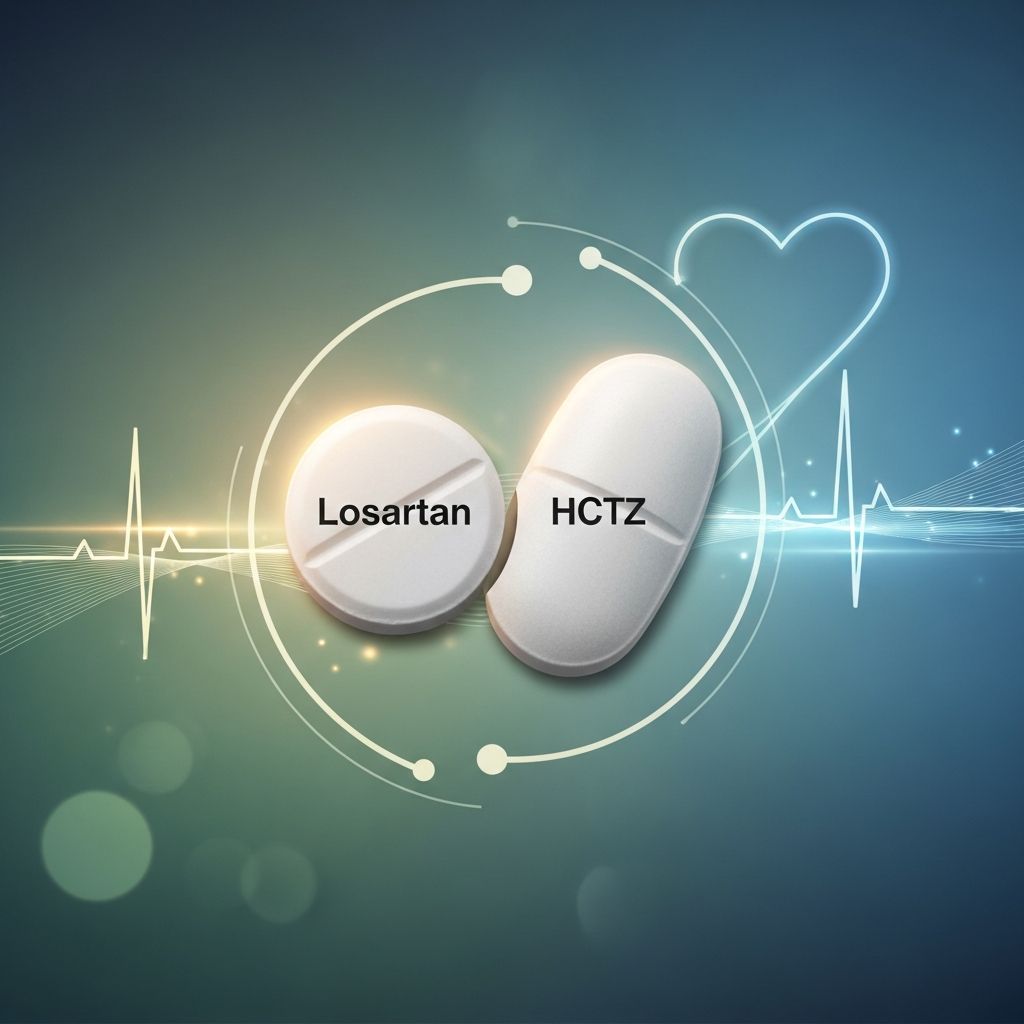
The combination of losartan and hydrochlorothiazide, often branded as Hyzaar, represents a cornerstone in modern hypertension management. This dual therapy merges an angiotensin II receptor blocker (ARB) with a thiazide diuretic to deliver synergistic blood pressure reduction. Approved for treating essential hypertension, it is particularly valuable when monotherapy proves insufficient or for patients with significant blood pressure elevations. By relaxing blood vessels and promoting fluid excretion, it addresses hypertension’s multifaceted pathophysiology, potentially lowering risks of stroke, heart attack, and kidney damage.
Understanding Hypertension and the Need for Combination Therapy
Hypertension, defined as sustained blood pressure exceeding 130/80 mmHg, imposes excessive strain on the cardiovascular system. Untreated, it fosters atherosclerosis, left ventricular hypertrophy, and organ damage in the brain, heart, and kidneys. Single-agent treatments often fall short, especially in patients with blood pressure more than 20/10 mmHg above target levels. Combination therapies like losartan HCTZ offer additive effects, enhancing efficacy while simplifying regimens to boost adherence.
Clinical guidelines endorse initial combination therapy for moderate-to-severe hypertension, as it achieves goal blood pressure faster and with fewer adjustments. The losartan-HCTZ pairing exemplifies this approach, supported by trials demonstrating superior outcomes compared to alternatives like beta-blockers.
How Losartan and Hydrochlorothiazide Work Together
Losartan selectively blocks angiotensin II type 1 (AT1) receptors, countering the hormone’s vasoconstrictive and aldosterone-releasing actions. This vasodilation reduces peripheral resistance and blood pressure. Hydrochlorothiazide (HCTZ), a thiazide diuretic, inhibits sodium reabsorption in the distal convoluted tubule, increasing urine output and depleting extracellular fluid volume.
The synergy arises from complementary mechanisms: HCTZ activates the renin-angiotensin-aldosterone system (RAAS) by volume depletion, elevating angiotensin II levels, which losartan then neutralizes. HCTZ-induced potassium loss is mitigated by losartan’s aldosterone suppression. Additionally, losartan’s uricosuric properties offset HCTZ’s tendency to raise uric acid, reducing hyperuricemia risk.
- Losartan benefits: Vessel relaxation, cardioprotection, stroke risk reduction in hypertrophied hearts.
- HCTZ benefits: Diuresis, salt excretion, rapid onset BP lowering.
- Combined advantages: Enhanced BP control, fewer metabolic side effects.
Clinical Evidence Supporting Efficacy
The Losartan Intervention For Endpoint reduction in hypertension (LIFE) study, involving over 9,000 patients followed for 4.8 years, showcased losartan’s superiority. Despite similar BP reductions, losartan reduced the composite endpoint of cardiovascular death, stroke, and myocardial infarction by 13% versus atenolol (p=0.021). Stroke risk dropped 25%, attributed to losartan’s effects on arterial stiffness, endothelial function, and uric acid lowering.
Meta-analyses confirm ARB-HCTZ combos yield comparable systolic/diastolic reductions across agents like candesartan, irbesartan, and valsartan. Fixed-dose losartan/HCTZ proved effective as initial therapy, in monotherapy non-responders, and for severe hypertension—the only such combo US-approved for this indication.
| Study | Key Finding | BP Reduction |
|---|---|---|
| LIFE Study | 13% endpoint reduction vs. atenolol | Similar to control |
| Meta-analysis (Conlin 2000) | Additive effects of ARB+HCTZ | Greater than monotherapy |
| Initial therapy trials | Suitable for BP >20/10 mmHg over target | Significant drops |
Available Dosages and Administration Guidelines
Common formulations include losartan 50 mg/HCTZ 12.5 mg, 100 mg/12.5 mg, and 100 mg/25 mg tablets. Start with the lowest effective dose, typically 50/12.5 mg daily, titrating based on response. Administer once daily, with or without food; ensure adequate hydration to avoid hypotension.
Related Stories



For patients with renal impairment, monitor function closely, especially if on NSAIDs, as RAAS blockade can worsen it. Dual RAAS inhibition (e.g., with ACEIs) heightens risks of hyperkalemia and acute kidney injury—avoid unless supervised.
- Max daily dose: Losartan 100 mg + HCTZ 25 mg.
- Adjust in elderly or volume-depleted patients.
- Miss a dose? Take as soon as remembered unless near next dose.
Potential Side Effects and Management
Most users tolerate losartan HCTZ well, but monitor for dizziness, headache, fatigue, and hypokalemia. HCTZ may cause hyperuricemia, hyperglycemia, and lipid changes, partially countered by losartan. Rare but serious risks include angioedema, severe hypotension, and skin cancers with high cumulative HCTZ exposure (e.g., OR 3.98 for squamous cell carcinoma at ≥50,000 mg).
Symptoms to watch:
- Common: Cough (less than ACEIs), nausea, muscle cramps.
- Serious: Swelling (face/lips), chest pain, irregular heartbeat.
- Lab changes: Elevated creatinine, low potassium/sodium.
Report persistent issues to providers; dose reduction or switching may help. Losartan’s uric acid-lowering uniquely benefits gout-prone patients.
Who Benefits Most from This Combination?
Ideal for essential hypertension unresponsive to single agents, those with left ventricular hypertrophy (stroke risk reduction), or needing convenient fixed-dose therapy. Cost-effective via fewer copays and better compliance. Prefer over ACEI-HCTZ for superior tolerability.
Contraindicated in pregnancy (fetal toxicity), severe renal/hepatic disease, or anuria. Use cautiously with diabetes, hyperkalemia history, or lithium.
Lifestyle Integration and Long-Term Management
Pair medication with DASH diet, exercise (150 min/week), sodium restriction (<2,300 mg/day), and weight control. Regular BP monitoring ensures targets (<130/80 mmHg for most). Annual labs check electrolytes, renal function, and glucose.
Frequently Asked Questions (FAQs)
Can I drink alcohol while on losartan HCTZ?
Moderate alcohol is generally fine but may amplify dizziness or hypotension. Limit intake and consult your doctor.
Does it interact with other blood pressure meds?
Yes, additive effects with other antihypertensives; avoid potassium supplements or supplements without guidance due to hyperkalemia risk.
How long until I see blood pressure improvements?
Effects begin within 1-2 weeks, with full benefits in 3-6 weeks. Consistent use is key.
Is it safe for older adults?
Yes, with caution—start low, monitor renal function and hydration.
Can it cause weight gain or loss?
HCTZ may cause mild initial weight loss from diuresis; no significant gain reported.
Monitoring and When to Seek Help
Track BP at home; seek immediate care for fainting, severe headache, vision changes, or swelling. Routine check-ups optimize therapy and detect issues early.
References
- Fixed combination of losartan and hydrochlorothiazide and its place in the treatment of hypertension — PMC/NCBI. 2008-03-19. https://pmc.ncbi.nlm.nih.gov/articles/PMC2293966/
- Losartan and hydrochlorothiazide (oral route) – Description and Brand Names — Mayo Clinic. 2023. https://www.mayoclinic.org/drugs-supplements/losartan-and-hydrochlorothiazide-oral-route/description/drg-20062877
- Losartan potassium/Hydrochlorothiazide 100 mg/25 mg film-coated tablets – SmPC — medicines.org.uk (MHRA). 2023-11-15. https://www.medicines.org.uk/emc/product/3083/smpc
Similar Articles








Read full bio of medha deb