4 Ways Low-Calorie Diets Can Sabotage Your Health
Discover how extremely restrictive calorie intake undermines your body's essential functions and long-term health.
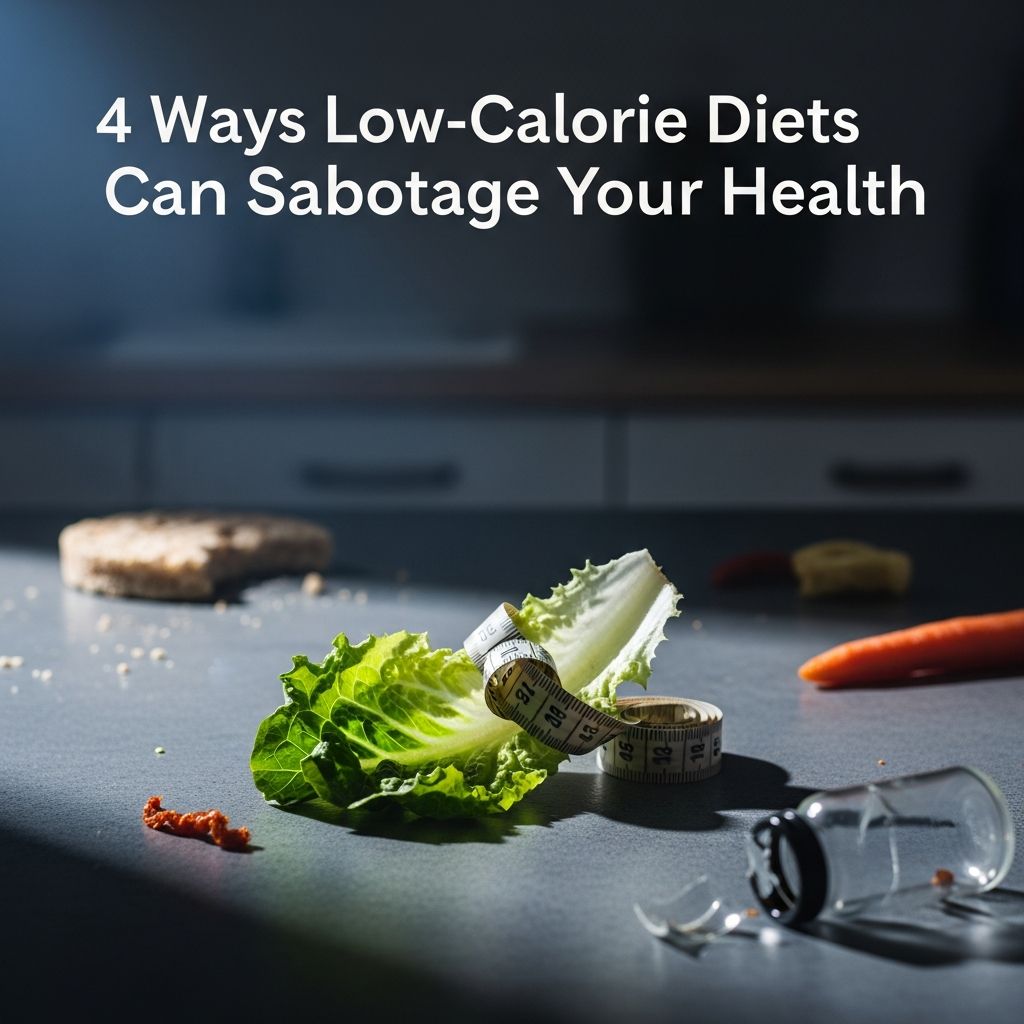
Your body requires energy to power its basic functions. The calories you consume serve as fuel for digestion, breathing, pumping blood, and all the physical activity you engage in throughout the day. Many people don’t realize that your resting metabolic rate—the amount of energy your body uses at rest—makes up the largest portion of the calories you burn daily. When you consume too few calories, you may be putting your health at serious risk. Understanding these risks is essential for making informed decisions about weight management and nutrition.
Why Calorie Intake Matters
It’s important to consume enough calories from food to keep your body functioning normally. Your body has specific caloric needs that vary based on age, activity level, metabolism, and overall health status. When calorie consumption falls below these needs, your body cannot adequately support its essential functions. This can trigger a cascade of health problems that extend far beyond temporary hunger or fatigue.
The Academy of Nutrition and Dietetics emphasizes that extremely restrictive calorie intake is not a sustainable or healthy approach to weight management. Instead, working with qualified nutrition professionals to determine appropriate calorie levels for your individual circumstances is crucial for maintaining both short-term wellness and long-term health.
1. You Won’t Meet Your Nutrient Needs
One of the most significant consequences of following a low-calorie diet is the difficulty in meeting your body’s nutrient requirements. It’s easy to underestimate the importance of vitamins, minerals, fiber, and other nutrients because you cannot see or feel them working. However, these nutrients are absolutely critical to maintaining optimal health and preventing chronic disease.
When you severely restrict calories, you typically reduce your intake of nutrient-dense foods, making it nearly impossible to consume adequate amounts of essential vitamins and minerals. This nutritional deficit can have serious long-term consequences for multiple body systems.
The Calcium and Bone Health Connection
Calcium serves as an excellent example of how nutrient deficiencies from low-calorie dieting can cause lasting harm. Calcium is important for long-term bone health and immediate bodily functions such as muscle control and circulation. For the first 30 years of life, your body stores excess calcium in your bones, building bone mass and density. After age 30, you stop gaining bone mass and must rely on existing calcium stockpiles to keep your bones strong for the remainder of your life.
If you cannot meet your calcium needs through adequate calorie consumption, your body is forced to “break open the piggy bank” and tap into your bones for this crucial mineral. This process significantly increases your risk for osteoporosis—a condition characterized by thinning of the bones and loss of bone density—and hip fractures, which can severely impact quality of life and independence in older age.
Other Essential Nutrients at Risk
Beyond calcium, low-calorie diets put you at risk for deficiencies in:
- Iron: Essential for oxygen transport in the blood and preventing anemia
- Vitamin B12: Crucial for nerve function and red blood cell formation
- Vitamin D: Works with calcium to maintain bone health and support immune function
- Protein: Necessary for muscle maintenance, immune function, and hormone production
- Fiber: Important for digestive health, blood sugar regulation, and cholesterol management
- Healthy fats: Required for brain function, hormone production, and nutrient absorption
Related Stories



These nutrient deficiencies can accumulate over time, leading to weakened immunity, decreased energy, poor skin and hair health, and increased susceptibility to infections and diseases.
2. You Slow Your Metabolism
Your metabolism is not a fixed rate—it’s a dynamic process that your body actively regulates based on energy availability. When you’re not taking in enough calories, your body responds by slowing down your metabolism in an effort to conserve energy and protect vital functions. This is an ancient survival mechanism that once helped humans survive periods of food scarcity, but it works against you when you’re trying to lose weight through severe calorie restriction.
Physical Symptoms of Metabolic Slowdown
When your metabolism slows, you may experience several uncomfortable physical symptoms:
- Persistent fatigue and sluggishness: You may feel constantly tired and lack energy for daily activities and exercise
- Feeling cold: Your body reduces heat production as a conservation mechanism, causing you to feel cold even in warm environments
- Gastrointestinal abnormalities: Constipation and other digestive issues are common as your digestive system slows along with your overall metabolism
- Dry skin and hair: Reduced metabolic activity affects skin hydration and hair quality
- Irregular menstrual cycles: In women, severely low calorie intake can disrupt hormonal balance
The Long-Term Metabolic Impact
Perhaps most problematically, prolonged calorie restriction can have lasting effects on your metabolic rate. Even after you return to normal eating patterns, your metabolism may remain slower than before the restriction period. This makes it increasingly difficult to maintain weight loss and creates a frustrating cycle where weight regain becomes nearly inevitable. Additionally, the metabolic adaptation means you may end up burning fewer calories at rest than you did before dieting, making future weight management more challenging.
3. You Lose Your Mental Edge
Your brain is an energy-intensive organ, consuming approximately 20% of your body’s total calorie expenditure despite making up only about 2% of body weight. Your brain needs calories to run, and when you restrict calories severely, cognitive function suffers significantly. If you’re hungry all day and running on fumes, you cannot work at peak capacity.
Cognitive and Mental Health Effects
Low-calorie dieting can impair multiple aspects of cognitive function:
- Concentration and focus: Difficulty maintaining attention on tasks and completing complex mental work
- Memory problems: Both short-term and long-term memory can be affected by insufficient calorie intake
- Decision-making ability: Reduced glucose availability impairs judgment and executive function
- Mood disturbances: Increased irritability, anxiety, and depressive symptoms
- Mental fatigue: Feeling mentally exhausted even after minimal mental exertion
- Reduced motivation: Difficulty initiating and sustaining effort toward goals
Impact on Work and Daily Life
These cognitive effects have real consequences for your professional performance, academic success, personal relationships, and overall quality of life. Students following extreme diets may see declining grades. Workers may experience reduced productivity and increased errors. The mental fog and difficulty concentrating can make even simple tasks feel overwhelming, creating a cycle of stress and frustration that further impacts mental health.
4. You Might Get Gallstones
One of the most serious and often surprising consequences of low-calorie dieting is the increased risk of gallstone formation. Gallstones are solid particles that develop in the gallbladder, an organ responsible for storing bile to help digest fats. Rapid weight loss can significantly increase the risk of gallstones, which may cause severe abdominal pain and potentially require surgery for removal.
How Low-Calorie Diets Trigger Gallstone Formation
The relationship between rapid weight loss and gallstone formation involves several mechanisms. When you drastically reduce calorie intake, your body mobilizes stored fat for energy. This increased fat mobilization changes the composition of bile in your gallbladder, promoting the formation of cholesterol crystals that can develop into gallstones. Additionally, reduced eating means less frequent gallbladder contraction, allowing bile to stagnate and concentrate, further promoting stone formation.
Symptoms and Complications
Gallstones can cause:
- Sudden, severe abdominal pain (often called a gallbladder attack)
- Pain between shoulder blades
- Right shoulder pain
- Nausea and vomiting
- Fever (if infection develops)
- Jaundice (yellowing of skin and eyes)
While some gallstones cause no symptoms, others require surgical removal of the gallbladder (cholecystectomy). This is a significant medical procedure with recovery time and potential long-term digestive effects. The risk of gallstone formation is particularly high in people losing weight rapidly, making it one of the most serious risks associated with extreme low-calorie dieting.
How to Determine Your Appropriate Calorie Needs
When it comes to calories, how do you know what constitutes too low? The answer depends on a variety of individual factors:
| Factor | Impact on Calorie Needs |
|---|---|
| Age | Younger individuals typically have higher metabolic rates; needs decrease with age |
| Sex | Men generally require more calories than women due to greater muscle mass |
| Activity Level | Sedentary individuals need fewer calories than those who exercise regularly |
| Metabolism | Individual variation in metabolic rate can affect calorie requirements significantly |
| Medical Status | Certain medical conditions, medications, and health history affect nutritional needs |
| Body Composition | Muscle tissue burns more calories than fat tissue at rest |
| Weight Loss Goals | Sustainable weight loss typically requires a moderate deficit, not extreme restriction |
Consulting a registered dietitian nutritionist who has the expertise to assess your individual circumstances is the most reliable way to determine appropriate calorie intake. These professionals can create a nutrition plan tailored specifically to your needs, health status, and goals—one that supports sustainable weight loss without sacrificing your health.
Sustainable Alternatives to Low-Calorie Dieting
Rather than pursuing extreme calorie restriction, evidence supports adopting balanced eating habits that include a variety of nutrient-dense foods. This approach provides adequate calories and nutrients while supporting sustainable weight loss and long-term health. Focus on:
- Whole foods: Fruits, vegetables, whole grains, lean proteins, and healthy fats
- Adequate protein: Supports muscle maintenance and promotes satiety
- Fiber-rich foods: Helps with digestion and keeps you feeling full longer
- Mindful eating: Paying attention to hunger and fullness cues
- Regular physical activity: Supports metabolism and overall health without requiring extreme calorie restriction
- Adequate sleep: Improves metabolic function and appetite regulation
- Stress management: Reduces emotional eating and supports hormonal balance
Working with Nutrition Professionals
If you’re struggling with weight management or considering a restrictive diet, consulting with a registered dietitian nutritionist is invaluable. These credentialed professionals have specialized training in nutrition science and can provide evidence-based guidance tailored to your specific situation. They can help you:
- Determine appropriate calorie intake for sustainable weight loss
- Identify nutritious foods you enjoy eating
- Address nutrient deficiencies
- Manage medical conditions through nutrition
- Develop a sustainable approach to eating that supports long-term health
- Navigate conflicting nutrition information and fad diets
Frequently Asked Questions
Q: Is any level of calorie restriction safe?
A: Moderate calorie restriction under professional guidance can be safe for weight loss. However, very low calorie diets (typically under 1,200 calories for women or 1,500 calories for men) should only be pursued under medical supervision. The key is finding a calorie level that creates sustainable weight loss without causing nutrient deficiencies or metabolic damage.
Q: How quickly is weight loss considered “rapid” and risky?
A: Generally, weight loss faster than 1-2 pounds per week is considered rapid and carries increased health risks, including gallstone formation. Sustainable, healthy weight loss typically occurs at a slower pace and is more likely to be maintained long-term.
Q: Can my metabolism permanently slow down from low-calorie dieting?
A: While your metabolism may adapt during restrictive dieting, it typically normalizes with adequate calorie intake and nutrition. However, repeated cycles of restriction can make the body increasingly resistant to weight loss, making future dieting more difficult.
Q: Should I completely avoid dieting if I want to lose weight?
A: Not necessarily. Sustainable approaches to weight management that include balanced nutrition, adequate calories, physical activity, and behavioral changes can be effective. The key is avoiding extreme restriction and working with professionals to ensure your approach is safe and appropriate for your individual situation.
Q: What should I do if I’ve been following a low-calorie diet and experiencing these symptoms?
A: If you’ve experienced fatigue, cognitive difficulties, digestive issues, or other symptoms from calorie restriction, consult with your healthcare provider or a registered dietitian nutritionist. They can assess your nutritional status, address any deficiencies, and help you transition to a more balanced eating pattern that supports your health and weight goals.
Q: How can I lose weight safely without extreme calorie restriction?
A: Safe weight loss involves creating a modest calorie deficit (typically 500 calories per day for 1 pound per week loss) through a combination of nutritious eating and physical activity. Including adequate protein, fiber, fruits, vegetables, and whole grains helps maintain satiety and nutrient intake while supporting sustainable weight loss.
References
- 4 Ways Low-Calorie Diets Can Sabotage Your Health — Academy of Nutrition and Dietetics. https://www.eatright.org/health/wellness/weight-and-body-positivity/4-ways-low-calorie-diets-can-sabotage-your-health
- Scrolling for Health: The Risks Behind Viral Nutrition Fads — Academy of Nutrition and Dietetics. https://www.eatright.org/health/wellness/diet-trends/scrolling-for-health
- What is Intermittent Fasting? — Academy of Nutrition and Dietetics. https://www.eatright.org/health/wellness/diet-trends/what-is-intermittent-fasting
- Academy Statement on 2025-2030 DGAs Release — Academy of Nutrition and Dietetics. January 7, 2026. https://www.eatrightpro.org/about-us/who-we-are/public-statements/academy-statement-on-2025-2030-dgas-release
- Caloric Restriction in Humans: Impact on Physiological — National Center for Biotechnology Information (NCBI). https://pmc.ncbi.nlm.nih.gov/articles/PMC3014770/
- Heart Health Tips for Men — Academy of Nutrition and Dietetics. https://www.eatright.org/health/health-conditions/cardiovascular-health-heart-disease-hypertension/heart-health-tips-for-men
Similar Articles








Read full bio of medha deb