Low-Calorie Dinner Recipes for Better Digestion
Discover nutritious low-calorie dinners designed to support digestive health and wellness.
Low-Calorie Dinner Recipes to Help Improve Digestion
Creating balanced dinners that support digestive health doesn’t mean sacrificing flavor or satisfaction. Low-calorie meals that prioritize digestive wellness combine strategic ingredient choices, proper preparation methods, and mindful portion control. These dinners work with your body’s natural processes to enhance nutrient absorption, reduce digestive stress, and promote overall wellness. By selecting recipes that emphasize fiber, lean proteins, and anti-inflammatory ingredients, you can enjoy satisfying evening meals that leave you feeling light and energized rather than sluggish or uncomfortable.
Why Dinner Choices Matter for Digestion
Dinner represents a critical mealtime for digestive health because your body’s metabolic rate naturally slows as evening approaches. Heavy, high-calorie meals consumed close to bedtime can overwhelm your digestive system, potentially leading to discomfort, poor sleep quality, and compromised nutrient absorption. Low-calorie dinners that are thoughtfully composed allow your digestive system to process food efficiently without excessive strain. Additionally, eating lighter meals earlier in the evening provides adequate time for digestion before sleep, promoting better rest and reducing issues like acid reflux or bloating that commonly affect those who consume large meals late at night.
Key Ingredients for Digestive Support
Understanding which ingredients naturally support digestive function helps you make informed choices when planning meals. The following components should feature prominently in your low-calorie dinner recipes:
- Fiber-Rich Vegetables: Leafy greens, broccoli, Brussels sprouts, and bell peppers provide soluble and insoluble fiber that promotes healthy digestive movement and feeds beneficial gut bacteria.
- Lean Proteins: Skinless chicken, fish, tofu, and legumes offer amino acids necessary for tissue repair without excessive saturated fat that can slow digestion.
- Whole Grains: Quinoa, brown rice, and oats contain fiber and nutrients that support consistent digestive function and stable blood sugar levels.
- Healthy Fats: Olive oil, avocado, and fatty fish provide omega-3 fatty acids that reduce inflammation and support gut lining integrity.
- Probiotic Foods: Fermented options like yogurt, kefir, and sauerkraut introduce beneficial bacteria that enhance digestive efficiency and immune function.
- Herbs and Spices: Ginger, turmeric, fennel, and peppermint have historically been used to ease digestive discomfort and enhance nutrient absorption.
Essential Cooking Methods for Digestive-Friendly Meals
How you prepare food significantly impacts both its caloric density and digestibility. Certain cooking techniques preserve nutrients while keeping meals light and easy to digest, making them ideal choices for dinner preparation.
Steaming and Boiling
These gentle cooking methods preserve vegetables’ nutritional integrity while requiring no added fats. Steaming particularly maintains fiber content and water-soluble vitamins that support digestive health. These techniques work exceptionally well for preparing vegetables, fish, and legumes without adding unnecessary calories.
Grilling and Baking
Grilling and baking allow proteins and vegetables to cook through their own moisture while developing rich flavors without requiring heavy sauces or added oils. Using minimal oil on cookware and allowing fat to drip away creates satisfying meals that won’t burden your digestive system.
Stir-Frying with Minimal Oil
Quick-cooking vegetables and proteins in a wok or large skillet using just a teaspoon or two of oil maintains nutritional value while creating flavorful, low-calorie dishes. The brief cooking time preserves fiber and heat-sensitive nutrients critical for digestive function.
Sample Low-Calorie Digestive-Friendly Dinner Recipes
Herb-Roasted Chicken with Steamed Vegetables
This straightforward recipe combines lean protein with nutrient-dense vegetables. Season skinless chicken breasts with fresh herbs like rosemary and thyme, then roast at 400°F for approximately 20-25 minutes. Serve alongside steamed broccoli, carrots, and zucchini drizzled with a small amount of extra-virgin olive oil and lemon juice. The combination provides complete amino acid profiles, substantial fiber, and approximately 300-350 calories per serving, making it ideal for digestive health without excess caloric burden.
Related Stories



Lentil and Vegetable Soup
Combine dry lentils with low-sodium vegetable broth, diced tomatoes, carrots, celery, and spinach for a fiber-rich, protein-packed dinner. Lentils provide resistant starch that feeds beneficial gut bacteria, while the vegetable variety offers diverse nutrients and phytonutrients. Season with turmeric and ginger for additional anti-inflammatory benefits. A generous bowl provides substantial satiety at approximately 250-300 calories, making it exceptionally digestive-friendly and satisfying.
Baked White Fish with Quinoa Pilaf
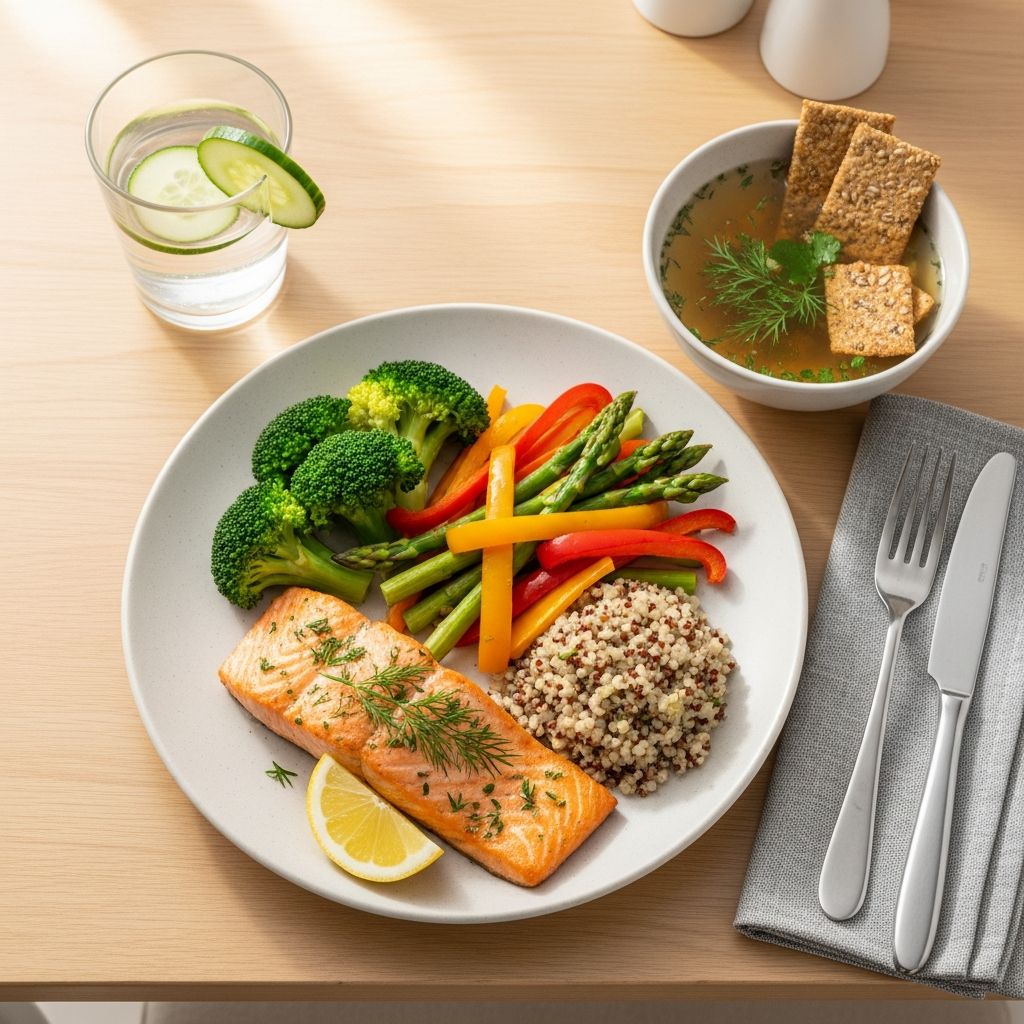
White fish varieties like cod, halibut, or tilapia contain easily digestible protein and omega-3 fatty acids with minimal fat content. Bake seasoned fish fillets on parchment paper with lemon and fresh dill, serving alongside quinoa mixed with diced vegetables and fresh herbs. Quinoa provides complete protein including all essential amino acids, making this combination nutritionally complete while remaining light and digestively manageable at approximately 350-400 calories per serving.
Buddha Bowl with Chickpeas
Layer brown rice, roasted chickpeas, steamed broccoli, shredded carrots, cucumber, and leafy greens in a bowl, then drizzle with tahini-lemon dressing made from two tablespoons tahini, lemon juice, water, and garlic. This colorful composition provides diverse fiber sources, plant-based protein, and micronutrients supporting digestive health. The varied textures and colors indicate nutritional diversity while the 350-calorie portion size prevents digestive overload.
Vegetable Stir-Fry with Tofu
Press extra-firm tofu to remove excess moisture, then cube and stir-fry with bell peppers, broccoli, snap peas, and mushrooms using just one tablespoon of sesame oil and low-sodium tamari. Serve over cauliflower rice or a small portion of brown rice for a filling yet digestive-friendly meal. Tofu provides complete protein while vegetables offer abundant fiber and phytonutrients, resulting in a satisfying 300-350 calorie dinner that supports digestive wellness.
Nutritional Considerations for Digestive Health
Beyond calorie counting, successful digestive dinners incorporate balanced macronutrient ratios and micronutrient density. Aim for plates containing approximately 25-30% lean protein, 40-50% non-starchy vegetables, and 20-25% whole grains or healthy fats. This distribution ensures adequate satiety while preventing the blood sugar fluctuations that can compromise digestive function and energy levels.
Fiber Balance
Adequate dietary fiber supports regular bowel movements and feeds beneficial gut bacteria, yet excessive sudden fiber increases can cause bloating or discomfort. Gradually incorporate fiber-rich ingredients while ensuring adequate hydration, aiming for 25-30 grams daily through whole foods rather than supplements alone.
Hydration
Proper hydration facilitates digestive processes and prevents constipation. Drink water throughout your meal and maintain consistent hydration throughout the day, as evening consumption of excessive fluids can disrupt sleep quality. Herbal teas like ginger or peppermint can support digestion while providing hydration benefits.
Portion Control
Even nutritious foods consumed in excessive quantities can overwhelm the digestive system. Dinner portions should leave you satisfied but not uncomfortably full, typically translating to approximately 400-500 calories for most adults seeking weight management alongside digestive wellness.
Foods to Limit for Optimal Digestion
Certain ingredients, while not inherently unhealthy, can compromise digestive comfort and should be minimized or eliminated from dinner meals:
- High-Fat Foods: Fried items, heavy cream sauces, and fatty cuts of meat require extended digestive processing, potentially causing discomfort and sluggishness.
- Excessive Spice: While modest amounts of spices support digestion, extremely spicy foods can irritate sensitive digestive systems, particularly before sleep.
- Carbonated Beverages: Fizzy drinks introduce gas into your digestive system, potentially causing bloating and discomfort.
- Artificial Sweeteners: Some individuals experience digestive upset from artificial sweetening agents; whole food sweeteners like small honey amounts are preferable.
- Highly Processed Foods: Items containing additives, preservatives, and refined ingredients often lack beneficial fiber and nutrients while potentially irritating sensitive digestive systems.
- Excessive Caffeine: While not typically dinner components, avoiding caffeine after mid-afternoon supports sleep quality and reduces digestive irritation.
Meal Timing and Digestive Wellness
When you eat dinner significantly impacts digestive health alongside what you consume. Eating dinner at least 2-3 hours before bedtime provides adequate time for initial digestion, reducing nighttime acid reflux and sleep disruption. This timing also allows your body to focus on cellular repair and restoration during sleep rather than active food digestion. Consistency in meal timing supports your body’s natural digestive rhythms, potentially improving overall digestive efficiency over time.
Creating a Sustainable Dinner Routine
Sustainable dietary changes require practical strategies that fit your lifestyle. Preparing components in advance—such as pre-cooking grains, steaming vegetables, and portioning proteins—enables quick dinner assembly on busy evenings. Maintaining a well-stocked pantry with versatile low-calorie staples ensures you can consistently prepare digestive-friendly meals without resorting to less nutritious convenience options.
Meal Prep Strategies
Dedicate one to two hours weekly to preparing dinner components. Cook a batch of quinoa or brown rice, roast a sheet pan of vegetables, and prepare grilled proteins that can be combined in various ways throughout the week. This approach reduces evening cooking time while ensuring consistent access to digestive-friendly ingredients.
Frequently Asked Questions (FAQs)
Q: How many calories should a digestive-friendly dinner contain?
A: Most adults seeking weight management benefit from dinners containing 400-500 calories, though individual needs vary based on activity level, overall daily intake, and metabolic factors. Consult with a healthcare provider or registered dietitian for personalized recommendations.
Q: Can I include carbohydrates in a low-calorie digestive dinner?
A: Yes, whole grain carbohydrates like brown rice, quinoa, and oats support digestive health through their fiber content. Limit portions to approximately ½ to ¾ cup cooked grains to maintain caloric balance while preserving digestive benefits.
Q: Are there specific vegetables I should avoid for digestive issues?
A: Most vegetables support digestion, though some individuals with sensitive systems may experience temporary bloating from cruciferous vegetables like cabbage or Brussels sprouts. Start with modest portions and gradually increase to assess individual tolerance.
Q: How does fiber intake specifically support digestion?
A: Dietary fiber promotes regular bowel movements, feeds beneficial gut bacteria, and helps maintain stable blood sugar levels. Both soluble fiber (found in oats and legumes) and insoluble fiber (found in vegetables and whole grains) contribute to overall digestive wellness.
Q: Can I drink wine or alcohol with a digestive-friendly dinner?
A: Alcohol can irritate the digestive system and disrupt sleep quality. If choosing to consume alcohol, limit intake to moderate amounts and allow several hours before bedtime to minimize digestive impact.
Q: Are there supplements that support digestion alongside these meals?
A: While whole foods provide optimal nutrition, some individuals benefit from digestive enzymes or probiotics. Consult healthcare providers before beginning supplements, particularly if taking medications or managing existing digestive conditions.
Q: How quickly will I notice digestive improvements after changing my dinner habits?
A: Many individuals notice improved digestion, energy levels, and sleep quality within one to two weeks of consistently consuming low-calorie, nutrient-dense dinners. Sustained benefits typically develop over several weeks as your body adapts to improved nutrition.
References
- Dietary Guidelines for Americans 2020-2025 — U.S. Department of Agriculture and U.S. Department of Health and Human Services. 2020. https://www.dietaryguidelines.gov
- The Role of Fiber in Digestive Health and Disease Prevention — American Journal of Gastroenterology, American College of Gastroenterology. 2021. https://journals.lww.com/ajg/pages/default.aspx
- Gut Microbiota and Its Role in Health and Disease — National Institutes of Health, National Center for Biotechnology Information. 2022. https://www.ncbi.nlm.nih.gov/pubmed
- Meal Timing and Digestive Function: Circadian Considerations — Journal of Nutritional Biochemistry, Elsevier. 2023. https://www.sciencedirect.com/journal/the-journal-of-nutritional-biochemistry
- Omega-3 Fatty Acids and Gastrointestinal Health — American Journal of Clinical Nutrition, American Society for Nutrition. 2022. https://academic.oup.com/ajcn
- Anti-Inflammatory Foods and Digestive Wellness — Food & Function, Royal Society of Chemistry. 2023. https://pubs.rsc.org/en/journals/journalissues/fo
Similar Articles








Read full bio of Sneha Tete