Low-Level Laser Therapy For Hair Loss: Effectiveness & Devices
Discover how low-level laser therapy promotes hair regrowth in androgenetic alopecia through safe, non-invasive photobiomodulation.
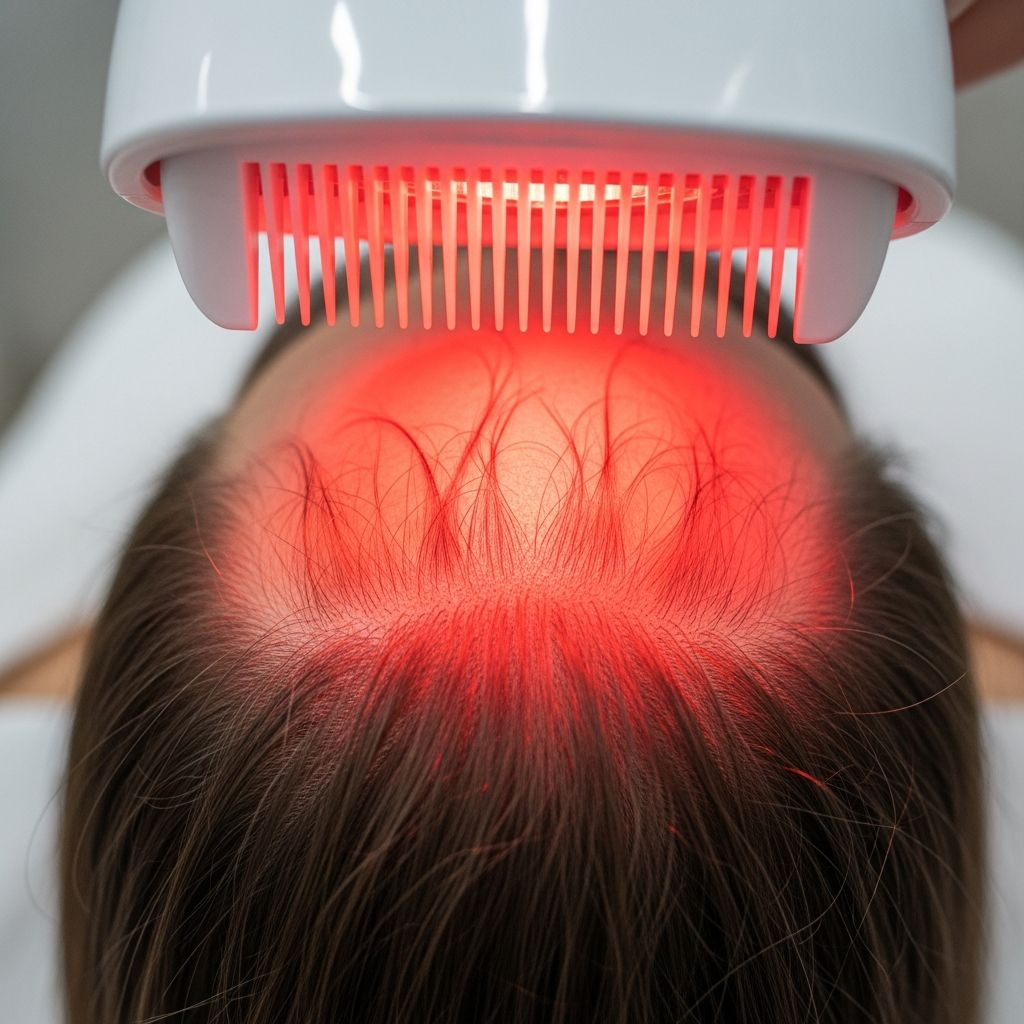
Low-dose laser therapy, also known as
low-level laser therapy (LLLT)
orphotobiomodulation (PBM)
, uses red or near-infrared light to stimulate hair growth in individuals withandrogenetic alopecia
(pattern baldness). This non-invasive treatment targets thinning hair by enhancing cellular activity in hair follicles without heat, pain, or damage to surrounding tissues.What is low level laser therapy?
Low-level laser therapy involves devices emitting low-power lasers or light-emitting diodes (LEDs) at wavelengths typically between 630–670 nm (red light) or up to 830 nm (near-infrared). These devices include helmets, caps, combs, or brushes that deliver light to the scalp. The therapy is FDA-cleared for safety and efficacy in promoting hair growth in men and women with hereditary pattern hair loss.
The light penetrates the scalp to reach dermal papilla cells in hair follicles, triggering biological responses that shift follicles from resting (telogen) to growth (anagen) phases. Unlike high-powered lasers used for hair removal, LLLT operates at safe energy densities (usually 1–5 J/cm² per session) to avoid thermal effects.
Who is low level laser therapy intended for?
LLLT is designed for adults with mild to moderate
androgenetic alopecia
. For men, this corresponds toNorwood-Hamilton Classifications IIa to V
, indicating receding hairlines or crown thinning. Women withLudwig-Savin Scale I-4, II-1, II-2
, or frontal patterns benefit similarly. Patients should haveFitzpatrick skin phototypes I to IV
for optimal light penetration.It is not suitable for complete baldness (Norwood VII), scarring alopecias, or sudden hair loss from other causes like telogen effluvium. Consultation with a dermatologist is essential to confirm eligibility and rule out underlying conditions.
How does low level laser hair therapy work?
The hair growth cycle includes three phases:
anagen
(growth, 2–7 years),catagen
(transition, 2–3 weeks), andtelogen
(resting/shedding, 3 months). In androgenetic alopecia,dihydrotestosterone (DHT)
shortens anagen and prolongs telogen, miniaturizing follicles.LLLT is theorized to counteract this by:
- Increasing
scalp blood flow
to deliver nutrients and oxygen to follicles. - Stimulating
mitochondrial activity
via cytochrome c oxidase absorption of red light, boosting ATP production and cellular metabolism. - Reducing
inflammation
and oxidative stress around follicles. - Promoting
anagen phase transition
from telogen/catagen follicles, increasing terminal hair density.
Studies confirm mechanisms like enhanced proliferation of dermal papilla cells and modulation of growth factors (e.g., VEGF, TGF-β).
Is low level laser therapy effective?
Physicians’ opinions vary: some endorse LLLT as a valuable adjunct for androgenetic alopecia, while others question its standalone efficacy due to modest results and study limitations. It may aid post-hair transplant healing and growth.
Clinical evidence supports moderate benefits:
- A randomized trial of 103 men and 122 women using HairMax LaserComb (7–12 beams, 655 nm) showed significant
terminal hair density increases
vs. sham after 26 weeks (e.g., 20.9–25.7 hairs/cm²). - Meta-analyses report
14–17% hair coverage improvement
after 24 weeks, with laser diodes outperforming LEDs alone (SMD 1.52 vs. sham). - 830 nm wavelength yielded superior growth in animal models vs. other wavelengths.
- Combination with minoxidil boosted density by 43.69% vs. 34.41% for LLLT alone.
Related Stories



However, trials face criticism for industry funding and small samples. Anecdotal reports are mixed, with ~60–70% responders seeing reduced shedding and thicker hair after 12–26 weeks.
What does low level laser therapy involve?
Treatments occur in salons by trained professionals or at home with FDA-cleared devices. Sessions last
8–15 minutes
,2–3 times weekly
for 6–12 months minimum. Consistency is crucial; proprietors emphasize twice-weekly use over a year.| Device Type | Description | Treatment Time | Frequency |
|---|---|---|---|
| Helmet/Cap | Hands-free, full scalp coverage (e.g., 655 nm diodes) | 15–25 min | Every other day |
| LaserComb/Brush | Handheld, targeted combing through hair | 8–11 min | 3x/week |
| Bonnet | Overhead light panel | 10–15 min | 2–3x/week |
Adjuncts like scalp massage enhance circulation. Home devices cost $200–$3,000; salon sessions vary.
Low level laser therapy devices
FDA-cleared options include:
- HairMax LaserComb: 7, 9, or 12 red laser diodes (655 nm, 5 mW); proven in trials for density gains.
- iRestore: Helmet with LEDs/lasers; 25-min sessions.
- LaserCap: Cap with 224 diodes; portable.
- Others like Capillus or Theradome use similar tech.
Select based on coverage needs and budget; laser diodes (LDs) may be more effective than LEDs.
Side effects of low level laser hair therapy
LLLT is safe with <1% adverse events reported. Rare mild effects include scalp tingling, itchiness, or temporary shedding (follicle synchronization). No systemic risks, burns, or interactions with medications like minoxidil/finasteride. Contraindications: photosensitivity, epilepsy, scalp cancer.
Response to low level laser therapy
Improvement appears after
12–26 weeks
: reduced shedding first, then visible regrowth (10–20 hairs/cm²). Peak at 6–12 months;maintenance
1–2x/week required, as gains reverse within months of stopping.[10]Success rates: 63–95% report thicker hair, better in early-stage loss. Non-responders (~20–30%) may need alternatives.
Frequently asked questions
Is low level laser therapy safe?
Yes, FDA-cleared as safe for home use with no serious side effects in trials.
How often should I use LLLT?
2–3 sessions weekly for 15–25 minutes; consistency over 6+ months yields best results.
Does LLLT work for women?
Yes, effective for female pattern hair loss (Ludwig I–II), with similar density gains as men.
Can LLLT regrow hair completely?
No, it thickens existing hair and slows loss but won’t revive dormant follicles fully.
How much does it cost?
Home devices: $500–$3,000 one-time; salon: $50–$200/session.
References
- Low dose laser therapy for hair loss — DermNet NZ. 2023-10-15. https://dermnetnz.org/topics/low-dose-laser-therapy-for-hair-loss
- Photobiomodulation (PBM)/LLLT — International Society of Hair Restoration Surgery (ISHRS). 2024-01-12. https://ishrs.org/patients/treatments-for-hair-loss/medications/photobiomodulation-pbm-lllt/
- Low Level Laser Light Therapy (LLLT) for Hair Loss — American Hair Loss Association. 2023-05-20. https://www.americanhairloss.org/hair-loss-treatment/non-invasive-treatment/low-level-laser-light-therapy-lllt-for-hair-loss/
- A Systematic Review and Meta-analysis of Randomized Controlled Trials of Low-Level Laser Therapy for Androgenetic Alopecia — Journal of Clinical and Aesthetic Dermatology (JCAD). 2023-11-01. https://jcadonline.com/laser-therapy-hair-loss/
- Role of Low-Level Light Therapy (LLLT) in Androgenetic Alopecia — PubMed Central (PMC). 2022-03-01. https://pmc.ncbi.nlm.nih.gov/articles/PMC8906269/
Similar Articles








Read full bio of medha deb