Lower Back Pain: Causes, Symptoms & Treatment
Complete guide to understanding, managing, and treating lower back pain effectively.
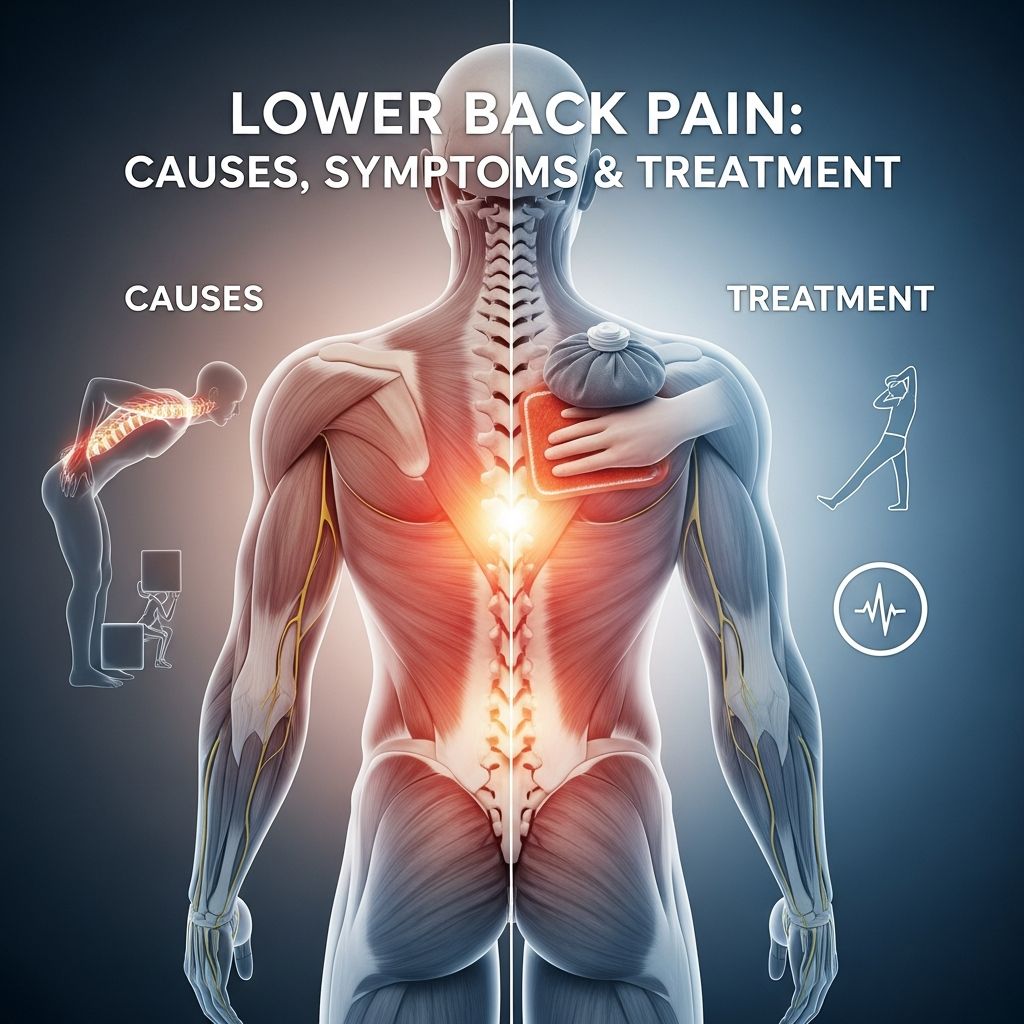
Understanding Lower Back Pain: A Comprehensive Guide
Lower back pain, medically known as lumbar pain, stands as one of the most prevalent health concerns affecting millions of individuals worldwide. This condition can range from acute discomfort lasting a few days to chronic pain persisting for months or years. Lower back pain often results from a strain or injury to the muscles and tendons supporting your spine, but numerous other factors can contribute to its development. Whether you’re experiencing sudden onset pain or have been managing chronic symptoms, understanding the underlying causes, recognizing warning signs, and exploring available treatment options can significantly improve your quality of life and help you return to activities you enjoy.
What Causes Lower Back Pain?
Lower back pain can develop from various causes, each requiring different approaches to treatment and management. The lumbar spine, which comprises the lower portion of your vertebral column, bears considerable stress from daily activities, making it particularly susceptible to injury and degeneration.
Common Causes of Lower Back Pain
The most frequent cause of lower back pain involves muscle or ligament strain. This typically occurs when you lift heavy objects improperly, engage in sudden movements, or experience repetitive stress on your lower back. Poor posture during work or daily activities can accumulate strain over time, leading to persistent discomfort.
Herniated discs represent another significant cause of lower back pain. The discs between your vertebrae contain a gel-like substance surrounded by a cartilage exterior. When this disc material protrudes into the spinal canal, it can compress nerves and cause pain that may radiate down your legs.
Degenerative disc disease occurs when the cushioning discs between vertebrae deteriorate over time, reducing their ability to absorb shock and support proper spinal alignment. Arthritis, particularly osteoarthritis and rheumatoid arthritis, can affect the joints in your lower spine, causing inflammation and pain. Spinal stenosis, a condition where the spinal canal narrows, can compress nerves and cause back pain, especially when standing or walking.
Other contributing factors include spondylolisthesis, where one vertebra slips forward over another; fractures from trauma or osteoporosis; and conditions affecting organs in your pelvis or abdomen that may refer pain to your lower back.
Recognizing Symptoms of Lower Back Pain
Lower back pain manifests differently for each individual, ranging from mild discomfort to severe, debilitating pain. Recognizing your specific symptoms helps guide appropriate treatment decisions.
Types of Lower Back Pain Symptoms
Acute lower back pain typically appears suddenly and may follow an injury or lifting incident. You might experience sharp, localized pain in your lower back region. Chronic lower back pain persists for twelve weeks or longer and may develop gradually or result from an initial injury that hasn’t fully resolved.
Pain characteristics vary significantly. Some people describe a dull, constant ache, while others experience sharp, stabbing sensations. Radiating pain that extends into your buttocks, hips, or down your leg suggests possible nerve involvement. Stiffness in your lower back, particularly after prolonged sitting or upon waking, commonly accompanies many lower back conditions. Limited range of motion, difficulty bending forward or backward, and increased pain with specific movements are typical symptoms.
Related Stories



In some cases, lower back pain accompanies numbness or tingling in your legs or feet, muscle weakness, or loss of bladder or bowel control. These symptoms warrant immediate medical attention as they may indicate serious spinal cord compression.
Risk Factors for Developing Lower Back Pain
Understanding which factors increase your likelihood of experiencing lower back pain can help you take preventive measures. Several modifiable and non-modifiable risk factors contribute to lower back pain development.
Key Risk Factors
Age plays a significant role, with lower back pain becoming increasingly common after age 30 or 40. Degenerative changes in the spine accumulate over decades, making older adults more vulnerable to pain.
Physical fitness level directly impacts back health. Weak abdominal and back muscles provide insufficient support for your spine, increasing strain on discs and ligaments. Conversely, sudden increases in physical activity without proper conditioning can trigger back injuries.
Body weight influences spinal stress. Excess weight, particularly concentrated around your abdomen, alters your center of gravity and increases demands on your lower back muscles and discs.
Occupational demands matter significantly. Jobs requiring heavy lifting, prolonged sitting in poor ergonomic positions, or repetitive bending movements increase back pain risk. Professional drivers, construction workers, and office workers face particular vulnerability.
Smoking impairs blood flow to spinal discs, accelerating degeneration and reducing the spine’s ability to heal from injury. Smokers experience more severe and longer-lasting back pain episodes.
Mental health influences pain perception and recovery. Depression, anxiety, and chronic stress can amplify pain sensations and slow healing processes.
Previous back injuries increase the likelihood of recurring episodes. Once you’ve experienced significant back pain, your tissue remains more vulnerable to reinjury.
Diagnosing Lower Back Pain
Accurate diagnosis forms the foundation for effective treatment. Healthcare providers employ various assessment methods to identify the underlying cause of your lower back pain.
Diagnostic Evaluation Process
Your healthcare provider begins with a detailed medical history, discussing when your pain started, what activities trigger or worsen it, and what interventions you’ve already attempted. Physical examination follows, assessing your posture, range of motion, and identifying areas of tenderness or muscle spasm.
Neurological testing evaluates nerve function, checking for weakness, numbness, or abnormal reflexes. Your provider may perform special maneuvers to assess flexibility and pinpoint pain sources.
Imaging studies often help confirm diagnoses. X-rays reveal bone structure and alignment, while magnetic resonance imaging (MRI) provides detailed views of discs, nerves, and soft tissues. Computed tomography (CT) scans offer another imaging option when MRI isn’t suitable. Electromyography (EMG) can assess nerve and muscle function when nerve compression is suspected.
Treatment Options for Lower Back Pain
Treatment approaches vary based on pain severity, underlying causes, and individual circumstances. Most acute lower back pain improves with conservative management, while chronic cases may require more comprehensive interventions.
Conservative Treatment Approaches
Rest and activity modification form the foundation of initial treatment. While complete bed rest is no longer recommended, reducing activities that aggravate pain allows tissues to heal. Gradually resuming normal activities as pain improves prevents deconditioning.
Over-the-counter and prescription medications manage pain and inflammation. Nonsteroidal anti-inflammatory drugs (NSAIDs) reduce inflammation and discomfort. Muscle relaxants alleviate spasm, while topical creams provide localized pain relief. Prescription medications may address more severe pain when over-the-counter options prove insufficient.
Physical therapy represents a cornerstone of lower back pain treatment. Trained physical therapists design individualized exercise programs strengthening abdominal and back muscles, improving flexibility, and correcting postural habits. Stretching exercises reduce muscle tension, while strengthening exercises stabilize your spine.
Heat and cold therapy provide symptomatic relief. Ice reduces inflammation during acute phases, while heat promotes muscle relaxation and blood flow during later stages. Massage therapy, whether performed professionally or self-administered, relieves muscle tension and improves circulation.
Advanced Therapeutic Interventions
When conservative treatments don’t provide adequate relief, advanced options become appropriate. Spinal injections target pain sources directly. Epidural steroid injections deliver anti-inflammatory medication to irritated nerves, providing pain relief lasting weeks to months. Facet joint injections address pain originating from inflamed joints in your spine.
Trigger point injections relax knotted muscles causing pain. Nonsurgical spinal decompression therapy gently stretches your spine, relieving pressure on compressed discs and nerves. This specialized treatment may reduce pain and improve function in selected cases.
Behavioral and Psychological Approaches
Mind-body strategies significantly impact chronic lower back pain management. Mindfulness meditation reduces pain perception by changing how your brain processes pain signals. Cognitive behavioral therapy helps identify and modify thoughts and behaviors that perpetuate pain. Relaxation techniques, breathing exercises, and guided imagery provide additional tools for pain management.
Surgical Treatment
Surgery becomes a consideration when conservative treatments fail and imaging shows clear structural abnormalities causing your pain. Minimally invasive surgical techniques reduce tissue damage and recovery time compared to traditional open surgery.
Procedures may include disc herniation removal, spinal fusion to stabilize unstable segments, laminectomy to relieve nerve compression from spinal stenosis, or facet joint fusion. Robotic and computer-assisted technologies enhance surgical precision and outcomes.
Specialized Treatment Programs
Comprehensive pain recovery programs address multiple aspects of chronic lower back pain through integrated multidisciplinary approaches. These programs combine medical, physical, and psychological expertise to provide whole-person care.
The Chronic Pain NeuroRehabilitation Program
This intensive four-to-six week outpatient program serves individuals whose pain persists beyond three months despite surgery and medication trials. The program meets Monday through Thursday for three to four hours daily, combining physical reconditioning, medication management, social reengagement, and psychological coping strategies.
Treatment incorporates intensive physical therapy, behavioral therapies, medication optimization with potential weaning from addictive medications, group skills training for mindset improvement and stress management, and family education. This evidence-based approach has successfully treated thousands of patients since its establishment in 1979.
Back on TREK Program
Back on TREK (Transform. Restore. Empower. Knowledge.) provides a more flexible ten-week program for individuals still working but experiencing functional limitations from spine pain. The program combines individual physical therapy with weekly group behavioral medicine sessions, incorporating both virtual and in-person components.
Participants receive specialized training from pain psychologists on evidence-based pain management techniques while maintaining work and daily activities. This program requires commitment to one or two appointments weekly and targets individuals at least eighteen years old with spine-related pain lasting three months or longer.
Prevention and Self-Management Strategies
While not all lower back pain is preventable, numerous strategies reduce your risk of developing pain or experiencing recurrent episodes.
Practical Prevention Tips
Maintain proper posture during sitting, standing, and working. Ergonomic workstations with appropriate chair support, monitor height, and keyboard positioning reduce strain. Take frequent position changes and stretch regularly throughout your day.
Strengthen your core through regular exercise. Strong abdominal and back muscles provide crucial spinal support. Incorporate exercises targeting these muscle groups into your fitness routine.
Lift properly by bending at your knees rather than your waist, keeping heavy objects close to your body, and avoiding twisting while holding weight.
Maintain a healthy weight to reduce spinal stress. Excess weight, particularly around your abdomen, increases lower back strain.
Stay active and flexible through regular exercise, yoga, or tai chi. Movement maintains muscle strength and joint mobility while reducing pain risk.
Avoid smoking, which impairs spinal healing and disc nutrition. Smoking cessation improves overall spinal health and pain outcomes.
Manage stress through relaxation techniques, meditation, or counseling. Chronic stress amplifies pain perception and slows healing.
Frequently Asked Questions
Q: How long does acute lower back pain typically last?
A: Most acute lower back pain improves within two to four weeks with conservative treatment. However, some individuals experience symptoms for six weeks or longer. Chronic pain is defined as lasting twelve weeks or more.
Q: When should I see a doctor for lower back pain?
A: Seek immediate medical attention if you experience severe pain following trauma, pain accompanied by fever or unexplained weight loss, numbness in your groin or legs, loss of bladder or bowel control, or progressive neurological symptoms. For persistent pain lasting more than a few weeks, schedule an appointment with your healthcare provider.
Q: Is bed rest recommended for lower back pain?
A: Prolonged bed rest is no longer recommended and may actually slow recovery. Instead, maintain activity as tolerated, gradually resuming normal activities as your pain improves. Staying active prevents deconditioning and typically promotes faster healing.
Q: Can lower back pain be completely cured?
A: Many cases of acute lower back pain resolve completely with appropriate treatment. Chronic pain may not completely disappear but can be effectively managed through comprehensive treatment approaches combining physical therapy, behavioral strategies, and medical interventions.
Q: What role does mental health play in lower back pain?
A: Mental health significantly influences pain perception and recovery. Depression, anxiety, and chronic stress amplify pain sensations, slow healing, and reduce treatment effectiveness. Addressing psychological factors through counseling or behavioral therapy improves overall outcomes.
Q: Are there any exercises I should avoid with lower back pain?
A: Generally, avoid activities causing sharp pain or significant discomfort. High-impact exercises, heavy deadlifts, and excessive spinal flexion may aggravate symptoms. Consult with a physical therapist to develop a safe, personalized exercise program appropriate for your specific condition.
References
- Low Back Pain Treatment — Cleveland Clinic. 2025. https://my.clevelandclinic.org/services/low-back-pain-treatment
- Comprehensive Pain Recovery Program — Cleveland Clinic. 2025. https://my.clevelandclinic.org/departments/neurological/depts/spine/comprehensive-pain-recovery-program
- Low Back Pain Coping Tips — Cleveland Clinic. 2025. https://my.clevelandclinic.org/health/articles/4290-low-back-pain-coping
- Back Pain Causes, Treatment & Pain Relief — Cleveland Clinic. 2025. https://my.clevelandclinic.org/health/symptoms/back-pain
- Nociplastic Pain: A Practical Guide to Chronic Pain Management — Cleveland Clinic Journal of Medicine, 2025. https://www.ccjm.org/content/92/4/236
Similar Articles








Read full bio of Sneha Tete