Lower Urinary Tract Symptoms: Causes, Types & Treatments
Understanding lower urinary tract symptoms, their causes, and how to manage them effectively.
Lower Urinary Tract Symptoms: Overview
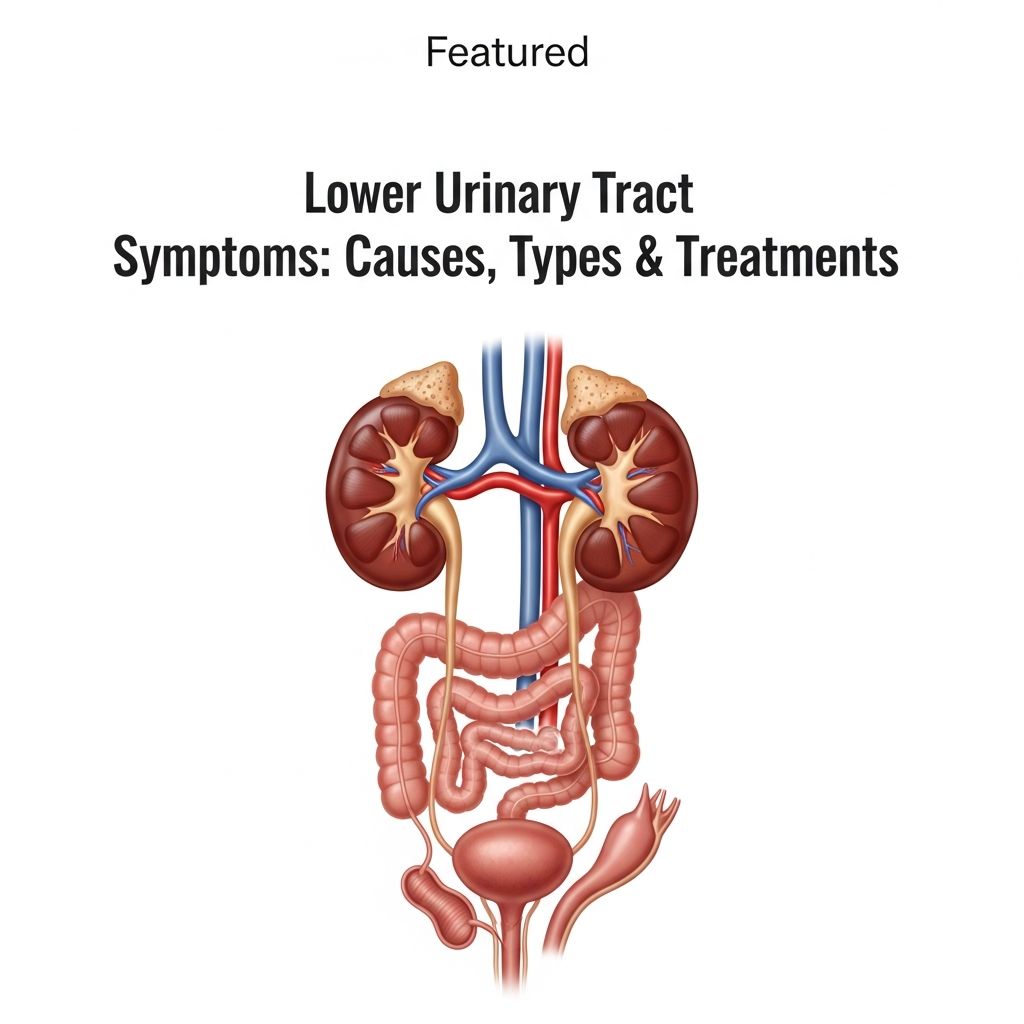
Lower urinary tract symptoms (LUTS) refer to a group of symptoms that affect the bladder, urethra, and sometimes the prostate. These symptoms can significantly impact daily life, causing discomfort, embarrassment, and even emotional distress. LUTS are common, especially as people age, but they can affect individuals of any age. Understanding the causes, types, and treatments of LUTS is essential for effective management and improved quality of life.
Types of Lower Urinary Tract Symptoms
LUTS can be broadly categorized into three main types: storage symptoms, voiding symptoms, and post-micturition symptoms. Each type has distinct characteristics and underlying causes.
Storage Symptoms
- Frequency: Needing to urinate more often than usual, typically eight or more times in 24 hours.
- Urgency: A sudden, strong urge to urinate that is difficult to control.
- Nocturia: Waking up more than twice a night to urinate.
- Urge incontinence: Involuntary leakage of urine following a sudden urge to urinate.
Voiding Symptoms
- Difficulty starting urination: Trouble initiating the urine stream.
- Weak urine stream: A slow or interrupted flow of urine.
- Straining: Needing to push or strain to urinate.
- Intermittency: The urine stream starts and stops.
Post-Micturition Symptoms
- Feeling of incomplete emptying: Sensation that the bladder is not fully emptied after urination.
- Dribbling: Leakage of urine after finishing urination.
Common Causes of Lower Urinary Tract Symptoms
LUTS can result from a variety of underlying conditions. Some of the most common causes include:
Overactive Bladder (OAB)
Overactive bladder is characterized by sudden urges to urinate that are difficult to control. It can lead to frequent urination, urgency, and urge incontinence. OAB is often caused by involuntary contractions of the bladder muscles.
Bladder Outlet Obstruction (BOO)
Bladder outlet obstruction occurs when there is a blockage at the neck of the bladder, slowing or stopping the flow of urine. Common causes include an enlarged prostate gland (benign prostatic hyperplasia or BPH), bladder stones, scar tissue, or prostate cancer. BOO can cause difficulty starting urination, a weak urine stream, and a feeling of incomplete emptying.
Urinary Tract Infections (UTIs)
Urinary tract infections are caused by bacteria, most commonly E. coli, entering the urinary system. UTIs can lead to symptoms such as frequent urination, pain or burning during urination, and pain in the side or lower back. If left untreated, UTIs can spread to the kidneys and cause more serious complications.
Neurogenic Bladder
Neurogenic bladder is a condition where nerve damage affects bladder control. This can result in difficulty starting urination, a slow urine stream, dribbling, or loss of bladder control. Neurogenic bladder can be caused by conditions such as spinal cord injury, multiple sclerosis, or diabetes.
Urinary Incontinence
Urinary incontinence is the loss of bladder control, leading to involuntary leakage of urine. There are several types of incontinence, including stress incontinence (leakage during physical activity), urge incontinence (leakage following a sudden urge), and mixed incontinence (a combination of both).
Related Stories



Complications of Lower Urinary Tract Symptoms
If left untreated, LUTS can lead to several complications, including:
- Anxiety and emotional distress
- Depression
- Sleep disturbances
- Social isolation
- Sexual problems
- Increased risk of urinary tract infections
- Kidney damage (in severe cases)
Diagnosis of Lower Urinary Tract Symptoms
Diagnosing LUTS involves a thorough medical history, physical examination, and possibly additional tests. Common diagnostic methods include:
- Urinalysis: To check for infection or other abnormalities in the urine.
- Urodynamic testing: To assess bladder function and pressure.
- Ultrasound: To visualize the bladder and kidneys.
- Cystoscopy: To examine the inside of the bladder and urethra.
Treatment Options for Lower Urinary Tract Symptoms
Treatment for LUTS depends on the underlying cause and severity of symptoms. Common treatment options include:
Lifestyle Modifications
- Reducing fluid intake before bedtime
- Avoiding bladder irritants (e.g., caffeine, alcohol)
- Practicing pelvic floor exercises (Kegels)
- Maintaining a healthy weight
Medications
- Anticholinergics for overactive bladder
- Alpha-blockers for bladder outlet obstruction
- Antibiotics for urinary tract infections
- Medications to improve bladder control
Surgical Interventions
- Transurethral resection of the prostate (TURP) for enlarged prostate
- Bladder neck incision for bladder outlet obstruction
- Implantation of a bladder stimulator for neurogenic bladder
Behavioral Therapies
- Bladder training to increase the time between urinations
- Timed voiding to establish a regular urination schedule
- Fluid management to reduce nighttime urination
Prevention of Lower Urinary Tract Symptoms
While not all cases of LUTS can be prevented, certain lifestyle choices can reduce the risk:
- Staying well-hydrated
- Practicing good hygiene
- Exercising regularly
- Managing chronic conditions (e.g., diabetes, high blood pressure)
- Seeking prompt treatment for urinary tract infections
Frequently Asked Questions (FAQs)
Q: What are the most common lower urinary tract symptoms?
A: The most common LUTS include frequent urination, urgency, difficulty starting urination, weak urine stream, and feeling of incomplete emptying.
Q: Can lower urinary tract symptoms be a sign of a serious condition?
A: Yes, LUTS can sometimes indicate serious conditions such as bladder outlet obstruction, neurogenic bladder, or urinary tract infections. It’s important to seek medical evaluation if symptoms persist or worsen.
Q: Are lower urinary tract symptoms more common in men or women?
A: LUTS are common in both men and women, but certain types are more prevalent in specific groups. For example, bladder outlet obstruction is more common in men due to prostate issues, while stress incontinence is more common in women.
Q: How are lower urinary tract symptoms diagnosed?
A: Diagnosis typically involves a medical history, physical examination, urinalysis, and possibly additional tests such as urodynamic testing, ultrasound, or cystoscopy.
Q: Can lifestyle changes help manage lower urinary tract symptoms?
A: Yes, lifestyle modifications such as reducing fluid intake before bedtime, avoiding bladder irritants, practicing pelvic floor exercises, and maintaining a healthy weight can help manage LUTS.
Q: When should I see a doctor for lower urinary tract symptoms?
A: You should see a doctor if you experience persistent or worsening symptoms, pain, fever, blood in the urine, or if symptoms interfere with your daily life.
References
- Overactive Bladder – Symptoms and Causes — Mayo Clinic. 2023. https://www.mayoclinic.org/diseases-conditions/overactive-bladder/symptoms-causes/syc-20355715
- Bladder Outlet Obstruction (BOO): Symptoms & Treatment — Cleveland Clinic. 2023. https://my.clevelandclinic.org/health/diseases/15181-bladder-outlet-obstruction
- Urinary Tract Infection (UTI): Causes, Symptoms & Treatment — Cleveland Clinic. 2023. https://my.clevelandclinic.org/health/diseases/9135-urinary-tract-infections
- Urinary System: Organs, Anatomy, Function & Conditions — Cleveland Clinic. 2023. https://my.clevelandclinic.org/health/body/21197-urinary-system
- Neurogenic Bladder: Causes, Symptoms & Management — Cleveland Clinic. 2023. https://my.clevelandclinic.org/health/diseases/15133-neurogenic-bladder
- Overactive Bladder (OAB): Causes, Symptoms & Treatment — Cleveland Clinic. 2023. https://my.clevelandclinic.org/health/diseases/14248-overactive-bladder
- Urinary Incontinence: Causes, Leakage, Types & Treatment — Cleveland Clinic. 2023. https://my.clevelandclinic.org/health/diseases/17596-urinary-incontinence
Similar Articles








Read full bio of medha deb