Lower Urinary Tract Symptoms in Men: Causes & Treatment
Understanding LUTS in men: causes, symptoms, and effective treatment options.
Lower Urinary Tract Symptoms in Men
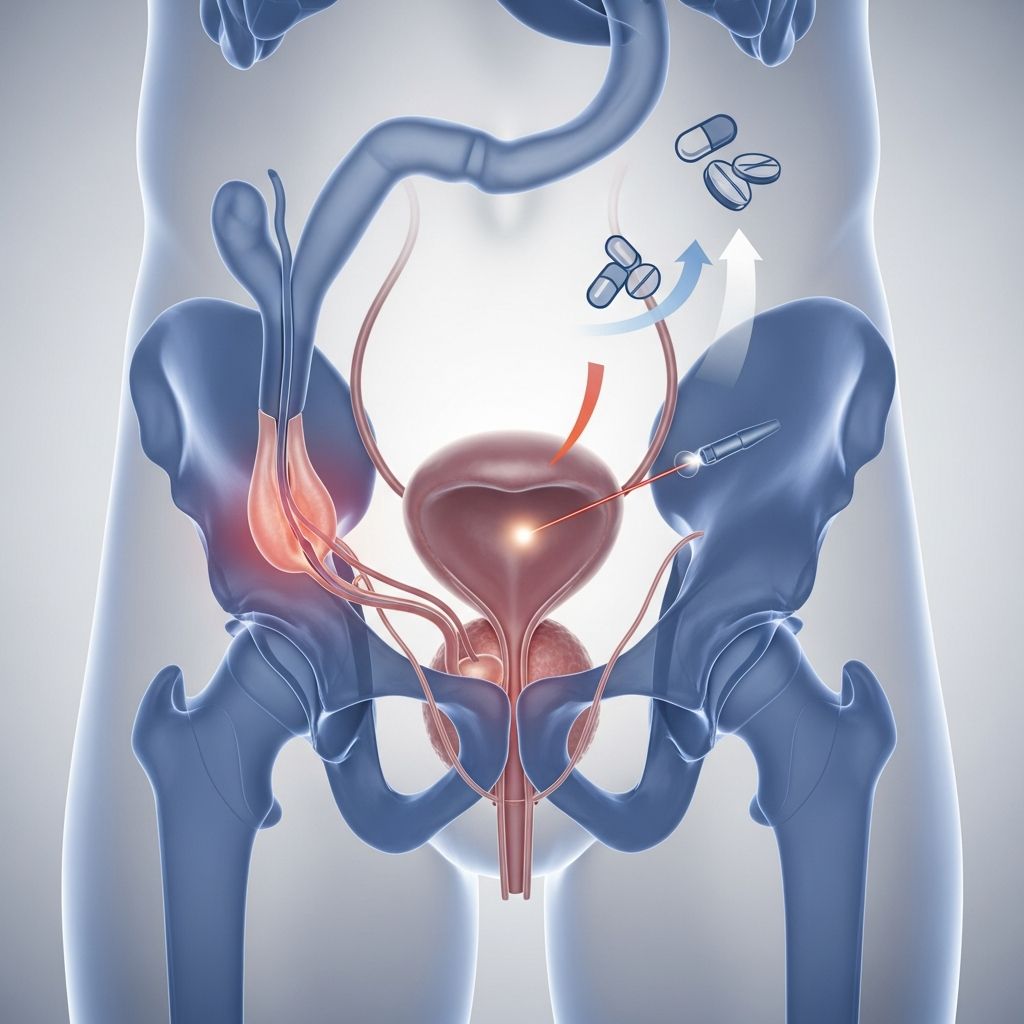
Lower urinary tract symptoms (LUTS) are a very common problem, especially in men over the age of 65 years. These symptoms can significantly impact quality of life and warrant proper evaluation and management. Up to 40% of men older than 50 years experience lower urinary tract symptoms, including urinary urgency, nocturia, and weak urinary stream, due to disorders of the bladder and prostate. Understanding the underlying causes and available treatment options is essential for men experiencing these symptoms.
LUTS can result from various conditions affecting the lower urinary tract, and the appropriate treatment depends on the underlying cause and how much the symptoms interfere with quality of life. Some men choose not to have treatment if their symptoms are not too bothersome and the cause is not serious. However, early intervention can often be more effective in managing symptoms and preventing progression.
What Causes Lower Urinary Tract Symptoms (LUTS)?
There are various causes of LUTS, and understanding the specific etiology is crucial for effective treatment. Lower urinary tract symptoms are triggered by an obstruction, abnormality, infection or irritation of the urethra, bladder, sphincter or prostate.
Most Common Causes
- An enlarged prostate gland — The prostate gland is situated around the neck of the bladder. When this gets bigger it can cause voiding symptoms. As men age, the prostate naturally enlarges, and for some men, excess prostate tissue can slowly squeeze the urethra and block the normal flow of urine.
- Overactive bladder detrusor — This is a syndrome characterized by urinary urgency and frequency that affects bladder storage function.
- Water balance problems — As people get older, it becomes harder for the body to reduce the amount of urine that they pass at night. This leads to the need to pass urine more often at night. Therefore, at the age of 65 and over it can be normal to pass urine at least once a night.
Other Less Common Causes
Other causes of LUTS include diabetes mellitus, urinary infections, bladder stones, prostate cancer, bladder cancer and neurological conditions such as multiple sclerosis. Additional risk factors associated with LUTS include erectile dysfunction, high blood pressure (hypertension), and obesity.
Types of Lower Urinary Tract Symptoms
Lower urinary tract symptoms can be categorized as being related to urine storage or voiding (obstruction), and present themselves as various voiding dysfunctions.
Storage Symptoms
In addition to benign prostatic hyperplasia (BPH), individuals with overactive bladder, chronic pelvic pain (Interstitial Cystitis), inflammation of the prostate (prostatitis) or urinary tract infections typically experience lower urinary tract symptoms associated with urine storage, irritation or inflammation. These symptoms can include:
- Urinary frequency — needing to pass urine more often than normal
- Urinary urgency — a compelling desire to pass urine
- Urge incontinence — involuntary leakage of urine
- Nocturia — using the restroom several times during the night
Voiding/Obstruction Symptoms
Individuals diagnosed with LUTS may exhibit voiding issues caused by a blockage such as BPH. When prostate enlargement obstructs urine flow, these men may experience:
- Weak or slow urinary stream
- Hesitancy or difficulty initiating urination
- Sensation of incomplete emptying
- Post-void dribbling
Impact on Quality of Life
LUTS symptoms can negatively affect quality of life and may be associated with urinary retention, which can cause serious complications. These complications include kidney insufficiency, bladder calculi (stones), hematuria (blood in urine), and urinary tract infections. It is important to talk to a healthcare provider if you have any lower urinary tract symptoms, as even if the symptoms are mild, they may be signs of a developing health problem. Treatment can be more effective if started early.
Related Stories



Lower Urinary Tract Symptoms Treatment
The treatment for LUTS will depend upon the underlying cause and how much the symptoms are interfering with the quality of life. A comprehensive approach typically begins with behavioral interventions and progresses to pharmacologic therapy or surgery as needed.
First-Line Therapy
First-line therapy consists of behavioral interventions, such as pelvic floor physical therapy and timed voiding, as well as pharmacologic therapy, including α-adrenergic blockers (tamsulosin), 5α-reductase inhibitors (finasteride), phosphodiesterase inhibitors (tadalafil), anticholinergics (trospium), and β3 agonists (mirabegron).
Self-Help Treatment for Lower Urinary Tract Symptoms
Several self-help measures might help manage LUTS symptoms effectively:
- Reduce drinking in the evening — It is ideal to try to drink as little as possible after 4 pm if you are having night-time symptoms.
- Anticipate times of symptoms — Try to anticipate times when urinary frequency and urgency are likely to be most inconvenient and reduce the volume of fluid drunk beforehand.
- Change your beverage choices — Fizzy and caffeine-containing drinks can all make LUTS worse. It is best to stop drinking these.
- Stop smoking — Stopping smoking may significantly improve symptoms, as nicotine irritates the bladder.
- Sit to pass urine — Evidence shows that men with LUTS have reduced symptoms if they sit to pass urine instead of standing.
- Lifestyle modifications — You may need to lose weight, lower your blood pressure, or change your drinking habits. Your doctor can help you make these healthy changes.
Medical Treatment Options
Medicines
Medicines can be effective in treating various causes of LUTS. Medicines like antibiotics can help treat urinary tract infections, a common cause of LUTS. Other medicines can relax your bladder, constrict your bladder, or reduce the size of your prostate depending on the cause of your LUTS.
Medications for Bladder Outlet Obstruction
For men with BPH causing bladder outlet obstruction, several medication classes are available:
- α-blockers (such as tamsulosin) — These medications relax the smooth muscle in the prostate and bladder neck, improving urine flow.
- 5α-reductase inhibitors (such as finasteride) — These medications reduce the size of the prostate by blocking the conversion of testosterone to DHT.
- Phosphodiesterase 5 inhibitors (such as tadalafil) — These medications improve LUTS symptoms and may also help with erectile dysfunction.
These medications improve lower urinary tract symptoms with a mean improvement of 3-10 points on the International Prostate Symptom Score (IPSS), which ranges from 0-35, with higher scores indicating greater severity. They can also prevent symptom worsening measured by increased IPSS greater than or equal to 4 points or development of secondary sequelae, such as urinary retention.
Medications for Overactive Bladder
Treatment for overactive bladder detrusor muscle includes anticholinergics (eg, trospium) and β3 agonists (eg, mirabegron), which reduce voiding frequency by 2 to 4 times per day and reduce episodes of urinary incontinence by 10 to 20 times per week. Medicines can also be effective to improve symptoms of an overactive bladder and storage symptoms. They can improve symptoms of passing urine in the night.
Combination Therapy
Combination therapies are more effective than monotherapy in managing LUTS. For example, α-blockade (eg, tamsulosin) combined with 5α-reductase inhibition (eg, finasteride) lowers progression risk to less than 10% compared with 10% to 15% with monotherapy. This synergistic approach addresses both the obstructive and progressive components of BPH.
Surgical and Minimally Invasive Treatment Options
For men with persistent lower urinary tract symptoms despite lifestyle changes and medications, or for refractory or complicated cases of BPH, surgical and minimally invasive procedures are available. These are defined as persistent symptoms despite behavioral and pharmacologic therapy.
Transurethral Resection of the Prostate (TURP)
If a severely enlarged prostate is causing LUTS, your doctor may perform TURP to remove part of the prostate and relieve pressure on the bladder and urethra. In this minimally invasive procedure, your doctor will insert a specialized camera and surgical tool through your urethra (the tube which carries urine out of your body). This tool allows them to remove sections of the prostate. You won’t have any scars, but may spend one to two days in the hospital. TURP can improve IPSS by 10 to 15 points and has a retrograde ejaculation rate of approximately 5%.
Holmium Laser Enucleation of the Prostate (HoLEP)
During this technique, your urologist uses a laser to remove parts of the prostate blocking urine flow. They also use a specialized tool to cut away parts of the prostate. Like TURP, you’ll have no scars and have a fast recovery with just a day or two in the hospital. HoLEP can improve IPSS by 10 to 15 points with a retrograde ejaculation rate of approximately 3.3%.
Minimally Invasive Procedures
Minimally invasive procedures, such as water vapor therapy and prostatic urethral lift, have lower complication rates but are associated with increased need for surgical retreatment. These options include:
- Water vapor therapy — Endoscopic injection of steam into BPH tissue with complication rates of incontinence (0%-8%), erectile dysfunction (0%-3%), and retrograde ejaculation (0%-3%).
- Prostatic urethral lift — Endoscopic insertion of nonabsorbable suture implants that mechanically open the urethra, with similar complication rates but retreatment rates of 3.4%-21%.
These procedures are highly effective for refractory cases and can significantly improve IPSS scores.
Catheterization
If there are problems with incontinence of urine then a small tube (a catheter) to drain the urine from the bladder might be of benefit. Many men use catheters just to empty their bladders so they do not have a catheter in all the time. Rarely, some men may need to have long-term catheters.
Treatment Comparison Table
| Treatment Type | IPSS Improvement | Incontinence Risk | Erectile Dysfunction Risk | Retrograde Ejaculation | Retreatment Rate |
|---|---|---|---|---|---|
| Medical Therapy (Monotherapy) | 3-10 points | Variable | Low | None | 10-15% |
| Combination Medical Therapy | 3-10 points | Variable | Low | None | <10% |
| TURP | 10-15 points | Variable | Low | ~5% | 5% |
| HoLEP | 10-15 points | Variable | Low | ~3.3% | 3.3% |
| Water Vapor Therapy | 10-15 points | 0-8% | 0-3% | 0-3% | 3.4-21% |
| Prostatic Urethral Lift | 10-15 points | 0-8% | 0-3% | 0-3% | 3.4-21% |
Frequently Asked Questions
Q: At what age do men typically develop lower urinary tract symptoms?
A: LUTS are especially common in men over 65 years of age, though up to 40% of men older than 50 years experience these symptoms. Age-related changes in the prostate and bladder function contribute to LUTS development.
Q: Is it normal to wake up multiple times at night to urinate?
A: At age 65 and over, it can be normal to pass urine at least once a night due to age-related changes in water balance regulation. However, frequent nocturia should be evaluated by a healthcare provider to rule out underlying conditions.
Q: Can lifestyle changes alone treat lower urinary tract symptoms?
A: Behavioral therapy, including pelvic floor physical therapy, timed voiding, and fluid restriction, can improve symptoms. However, the effectiveness depends on the underlying cause. Many men benefit from combining lifestyle changes with medication.
Q: What is the International Prostate Symptom Score (IPSS)?
A: The IPSS is a standardized scoring system ranging from 0-35 that measures the severity of LUTS. Higher scores indicate greater symptom severity. Medical treatments typically improve IPSS by 3-10 points, while surgical interventions improve it by 10-15 points.
Q: Are there side effects to LUTS medications?
A: While medications like α-blockers and 5α-reductase inhibitors are generally well-tolerated, they may have side effects. Discuss potential adverse effects with your healthcare provider to determine the best treatment option for your situation.
Q: When should I consider surgery for LUTS?
A: Surgery should be considered when LUTS persist despite lifestyle changes and appropriate medication use, or when complications develop such as urinary retention, recurrent infections, or bladder stones. Consult your healthcare provider about whether surgical intervention is appropriate for you.
References
- Lower Urinary Tract Symptoms in Men: A Review — PubMed Central, National Institutes of Health. 2024-12-31. https://pubmed.ncbi.nlm.nih.gov/40658396/
- Lower Urinary Tract Symptoms (LUTS) — University of Miami Health, Department of Urology. 2024. https://umiamihealth.org/en/treatments-and-services/urology/lower-urinary-tract-symptoms-(luts)-
- Lower Urinary Tract Symptoms (LUTS) — Patient.info. 2024. https://patient.info/mens-health/prostate-and-urethra-problems/lower-urinary-tract-symptoms-in-men
- Lower Urinary Tract Symptoms (LUTS): Overview — Cleveland Clinic. 2024. https://my.clevelandclinic.org/health/symptoms/24248-lower-urinary-tract-symptoms
- Lower Urinary Tract Symptoms – LUTS — Urology Austin. 2024. https://urologyaustin.com/general-urology/lower-urinary-tract-symptoms/
- Lower Urinary Tract Symptoms in Men — JAMA Network, American Medical Association. 2024. https://jamanetwork.com/journals/jama/fullarticle/2839309
Similar Articles








Read full bio of medha deb