Lumbar Spine: Anatomy, Function & Common Disorders
Understanding your lower back: Structure, function, and treatment options for lumbar spine health.
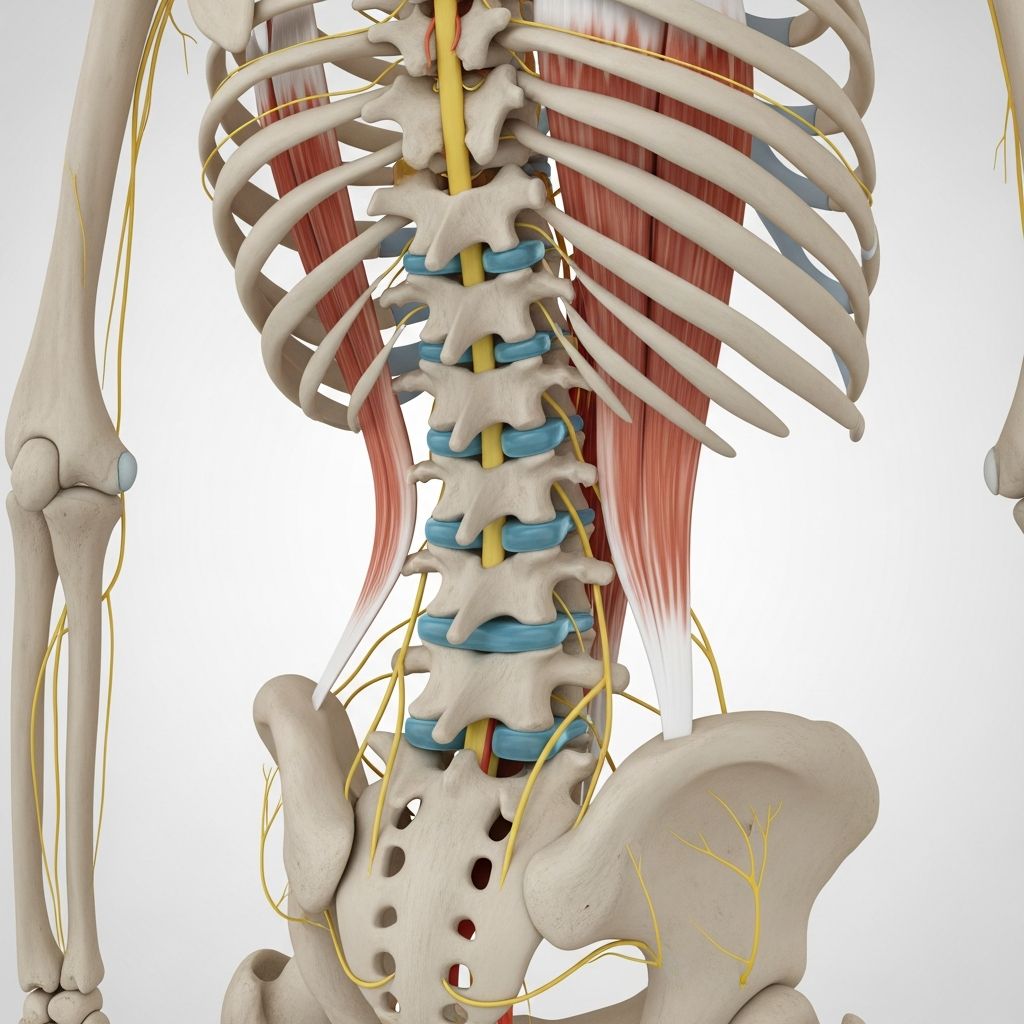
Your lumbar spine is the lower back region of your spinal column, serving as a critical foundation for your body’s structure and movement. Understanding your lumbar spine—its anatomy, functions, and potential disorders—is essential for maintaining spinal health and recognizing when professional medical attention is needed.
What Is the Lumbar Spine?
The lumbar spine consists of five vertebrae located in your lower back, specifically designated as L1 through L5. These five bones represent the largest vertebrae in your entire spine and form a crucial weight-bearing segment of your spinal column. Your lumbar spine is positioned below your 12 thoracic vertebrae (chest bones) and sits above the five fused bones that comprise your sacrum, the triangular bone at the base of your spine.
The primary functions of your lumbar spine include providing structural support for the weight of your body, protecting your spinal cord and nerve roots, and enabling a wide range of body motions and movements. The lumbar region bears considerable responsibility in daily activities such as walking, bending, lifting, and twisting.
Lumbar Spine Anatomy and Structure
Vertebrae (L1-L5)
Your lumbar vertebrae are the largest bones in your spinal column. Each vertebra is a complex structure consisting of a main body that bears most of your body’s weight, along with bony projections and openings. These vertebrae work together to create the spinal canal, a protective tunnel that houses your spinal cord.
Intervertebral Disks
Between each pair of lumbar vertebrae sit intervertebral disks, commonly referred to as “shock absorber cushions.” Five disks are positioned between the vertebrae of your lumbar spine. These disks serve multiple critical functions: they act as shock absorbers to cushion impact from movement and daily activities, help support your body’s weight by bearing the load coming down your spine, and allow flexibility and movement between adjacent vertebrae. The lumbar region disks are particularly susceptible to degeneration or herniation, which can cause lower back pain or pain that radiates down your legs and feet.
Ligaments
Ligaments in your lumbar spine connect bone to bone and serve several important purposes: they help keep your lumbar spine stable, allow smooth motion of your spine, and help absorb the force of trauma or injury. These tough, fibrous tissues are essential for maintaining spinal integrity during movement and protecting against injury.
Spinal Cord and Nerve Roots
Your spinal cord is a bundle of nerve tissue that extends from the lower part of your brain to approximately your L1 vertebra, carrying messages between your brain and muscles throughout your body. Below the L1 vertebra, nerve roots called the cauda equina continue downward through the spinal canal, branching off at each lumbar level to provide nerve function to your lower body, including your legs, feet, and pelvic organs.
Common Lumbar Spine Disorders and Conditions
Many problems can occur in your lumbar spine, potentially limiting motion in your back or hips and causing pain, weakness, numbness, or tingling sensations. Common disorders affecting the lumbar spine include:
Related Stories



- Lower back pain – Often caused by muscle or tendon injury, this is among the most common lumbar complaints
- Arthritis – Degenerative changes in the spine affecting joints and vertebrae
- Degenerative disk disease – Progressive deterioration of intervertebral disks over time
- Lumbar spinal stenosis – Narrowing of the spinal canal that can compress nerves
- Spondylolisthesis – When a vertebra slips out of alignment onto the vertebra below it
- Herniated disks – When disk material protrudes and presses on nerve roots
- Sciatica – Pain radiating along the sciatic nerve, typically affecting one leg
- Spinal fractures – Breaks in vertebrae from trauma or osteoporosis
- Infections – Including osteomyelitis (bone infection) or epidural abscess
Diagnosis of Lumbar Spine Conditions
Proper diagnosis is the first step toward effective treatment. Your healthcare provider will use a comprehensive approach to evaluate your lumbar spine condition:
Clinical Evaluation
Your provider will begin by gathering your complete medical and medication history, asking detailed questions about your symptoms including when they started and what makes them worse or better. A thorough physical examination follows, which may include assessing your range of motion, strength, and neurological function.
Imaging and Testing
To visualize your lumbar spine and identify specific problems, your healthcare provider may order:
- X-rays – Initial imaging to visualize bone structure and alignment
- Computed tomography (CT) scans – Detailed cross-sectional images of vertebrae and surrounding structures
- Magnetic resonance imaging (MRI) – Advanced imaging to assess soft tissues, disks, nerves, and spinal cord
- Electromyography (EMG) – Tests to measure electrical activity in muscles and nerves
- Blood tests – To identify infections or inflammatory conditions
Nonsurgical Treatment Options
For many lumbar spine conditions not caused by trauma or tumors, healthcare providers typically recommend less invasive approaches first. Common nonsurgical treatment options include:
- Physical therapy and rehabilitation – Exercises to strengthen muscles and improve flexibility
- Anti-inflammatory medications – Over-the-counter or prescription drugs to reduce pain and swelling
- Heat and ice therapy – To manage pain and inflammation
- manual therapy – chiropractic care or osteopathic manipulation
- Epidural steroid injections – To reduce inflammation around nerves
- Activity modification – Adjusting daily activities to prevent symptom aggravation
- Weight management – Reducing stress on the lumbar spine
- Behavioral pain management programs – Evidence-based interventions to develop coping strategies
Studies show that between 10% and 40% of patients who undergo lumbar spine surgery experience persistent post-surgical pain, highlighting the importance of exploring nonsurgical options first and utilizing behavioral pain management techniques to enhance outcomes.
Surgical Treatment Options
When Surgery Is Recommended
You may be a candidate for lumbar spine surgery if nonsurgical treatments have not provided adequate relief or if you have specific conditions requiring surgical intervention. Surgery is typically considered a first-line treatment for trauma (such as a car accident affecting your lumbar region), cancer, epidural abscess, osteomyelitis, cauda equina syndrome, or conus medullaris syndrome.
Common Surgical Approaches
Minimally Invasive Spine Surgery
In most cases today, minimally invasive spine surgery has replaced traditional open surgery. While open surgery requires one large incision through your skin, minimally invasive procedures are performed through one or more smaller incisions. Working through smaller incisions causes significantly less damage to muscles and soft tissues compared to a single long incision, resulting in faster recovery times and reduced complications.
Lumbar Spinal Decompression Surgery
Lumbar spinal decompression is a general term referring to various procedures used to relieve symptoms caused by pressure or compression on your spinal cord or nerve roots. Common surgical techniques for decompression include laminectomy (removing part of the vertebra to expand the spinal canal), discectomy (removing herniated disk material), and facetectomy (removing bone spurs or facet joints causing compression).
Lumbar Disk Replacement Surgery
This procedure involves removing a diseased lumbar disk and replacing it with an artificial disk. The most common reason for this procedure is lumbar disk degeneration. However, this procedure is less commonly performed in recent years due to potential complications from surgery.
Lumbar Spinal Fusion
Lumbar spinal fusion is surgery that permanently connects one or more lumbar vertebrae together. The surgery eliminates motion between vertebrae, which can reduce pain caused by degenerative conditions or instability. This procedure is often used for spondylolisthesis, where a vertebra has slipped out of place.
Functional Electrical Stimulation
For spinal cord injuries, functional electrical stimulation uses small electrical impulses to activate specific muscles and nerves, helping restore function to lower body muscles controlled by lumbar nerves.
Recovery After Spine Surgery
Recovery time after lumbar spine surgery varies depending on the specific procedure performed and your individual circumstances. Recovery can take anywhere from a few weeks to several months. Your surgeon will provide a customized recovery timeline based on your specific needs and condition. Following post-operative instructions carefully, including physical therapy recommendations and activity restrictions, is essential for optimal healing.
Frequently Asked Questions
Q: What are the most common causes of lower back pain?
A: The most common causes include muscle or tendon injuries, poor posture, heavy lifting, prolonged sitting, and age-related degenerative changes. Most lower back pain resolves within a few weeks with conservative treatment.
Q: When should I see a doctor about lumbar spine pain?
A: You should consult a healthcare provider if pain persists beyond a few weeks, worsens despite conservative treatment, is accompanied by numbness or tingling in your legs, or follows a significant injury.
Q: Is lumbar spine surgery always necessary?
A: No, many lumbar spine conditions respond well to nonsurgical treatments including physical therapy, medications, and lifestyle modifications. Surgery is typically considered when conservative treatments fail or for specific conditions like cauda equina syndrome.
Q: Can I prevent lumbar spine problems?
A: Yes, maintaining a healthy weight, practicing proper lifting techniques, staying physically active with regular exercise, maintaining good posture, and avoiding smoking can help reduce your risk of lumbar spine disorders.
Q: What is the difference between minimally invasive and open spine surgery?
A: Minimally invasive surgery uses smaller incisions, resulting in less damage to muscles and tissues, faster recovery, and reduced complications compared to traditional open surgery with one large incision.
Q: How long does recovery take after lumbar spine surgery?
A: Recovery typically ranges from several weeks to several months, depending on the specific procedure and individual factors. Your surgeon will provide a personalized recovery timeline and specific activity guidelines.
Key Takeaways
Your lumbar spine is a complex and vital structure consisting of five vertebrae, disks, ligaments, and nerves working together to support your body weight and enable movement. Many conditions can affect this crucial region, but fortunately, numerous treatment options exist ranging from conservative nonsurgical approaches to advanced surgical techniques. Understanding your lumbar spine anatomy and recognizing warning signs of potential problems can help you seek appropriate care early. Whether you’re managing chronic back pain or recovering from spine surgery, working closely with qualified healthcare providers and following evidence-based treatment plans can help you maintain spinal health and quality of life.
References
- Lumbar Spine: What It Is, Anatomy & Disorders — Cleveland Clinic. 2024. https://my.clevelandclinic.org/health/articles/22396-lumbar-spine
- Behavioral Pain Management for Spine Surgery Patients — Cleveland Clinic Center for Spine Health. 2024. https://consultqd.clevelandclinic.org/behavioral-pain-management-for-spine-surgery-patients-podcast
- Spinal Stenosis: What It Is, Causes, Symptoms & Treatment — Cleveland Clinic. 2023. https://my.clevelandclinic.org/health/diseases/17499-spinal-stenosis
- Spondylolisthesis: What Is It, Causes, Symptoms & Treatment — Cleveland Clinic. 2023. https://my.clevelandclinic.org/health/diseases/10302-spondylolisthesis
- Lower Back Pain: Causes, Symptoms & Treatment — Cleveland Clinic. 2023. https://my.clevelandclinic.org/health/diseases/7936-lower-back-pain
- Spine: Anatomy, Function, Parts, Segments & Disorders — Cleveland Clinic. 2023. https://my.clevelandclinic.org/health/body/10040-spine-structure-and-function
Similar Articles








Read full bio of medha deb