Lumbar Strain in Weight Lifters: Causes, Symptoms, and Treatment
Understand lumbar strain injuries common in weightlifters and learn effective prevention and treatment strategies.
Understanding Lumbar Strain in Weight Lifters
Lumbar strain represents one of the most common injuries affecting weightlifters and fitness enthusiasts. The lower back region endures tremendous stress during resistance training, making it particularly vulnerable to muscle and ligament injuries. Understanding the mechanics of lumbar strain, its causes, symptoms, and treatment options is essential for anyone engaged in weightlifting activities. This comprehensive guide explores the nuances of lumbar strain specifically as it affects weight lifters, providing actionable insights for prevention and recovery.
What Is Lumbar Strain?
Lumbar strain is an injury involving the muscles and tendons of the lower back that can range from simple stretching injuries to partial or complete tears in the muscle-tendon complex. When the tissues in the lower back are stretched beyond their normal capacity or torn, microscopic damage occurs that triggers inflammation in the surrounding area. This inflammatory response results in painful muscle spasms and restricted movement patterns that can significantly impact training ability and daily function. The lumbar region supports the weight of the upper body and is actively involved in lifting, twisting, and bending movements—all of which are central components of weightlifting activities.
How Lumbar Strain Develops in Weightlifters
Weight lifters are particularly susceptible to lumbar strain due to the extreme loads placed on the lower spine during resistance training. The muscles, ligaments, vertebrae, and intervertebral discs of the lower back experience substantially multiplied stress compared to daily activities such as standing or walking. When lifting movements are performed incorrectly or when the load exceeds the structural capacity of supporting tissues, lumbar strain injuries can develop.
Primary Causes of Lumbar Strain in Weight Lifters
Several specific factors contribute to lumbar strain development in weightlifting populations:
– Lifting too much weight without adequate preparation or progressive overload- Utilizing poor lifting form and body mechanics during exercises- Maintaining inadequate core stability and strength- Experiencing muscle imbalances across core and back musculature- Performing sudden, explosive movements or jerking motions- Failing to properly warm up before intense training sessions- Overtraining without adequate recovery periods
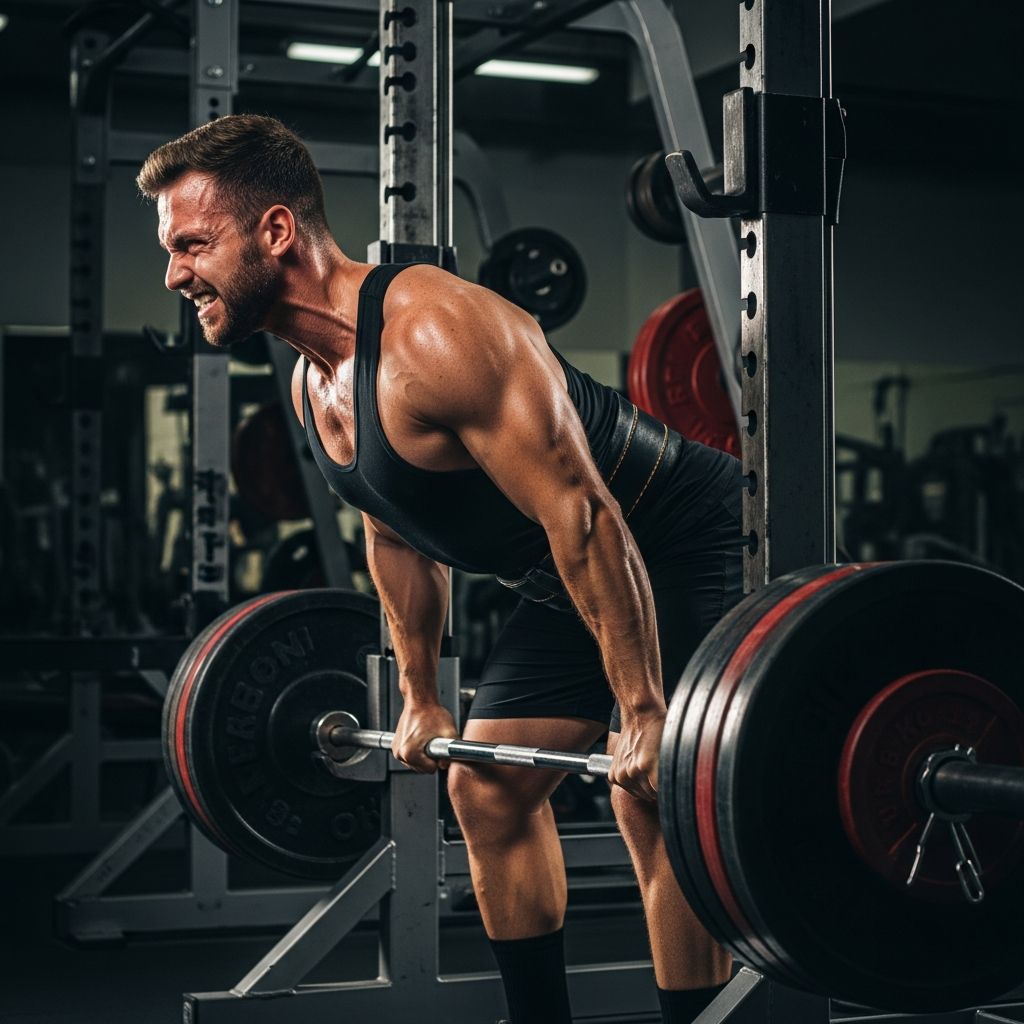
The muscle fibers and tendons are subjected to excessive tensile forces during heavy lifting, leading to microtrauma near the myotendinous junction—the connection point between muscle and tendon. This is particularly common when movements involve violent muscular contractions combined with excessively forceful stretching, such as during deadlifts, squats, or bent-over rows performed with improper technique.
Recognizing Symptoms of Lumbar Strain
The symptoms of lumbar strain vary depending on the severity of the injury and the degree of tissue damage. Recognizing these warning signs early allows weightlifters to implement appropriate interventions before injuries become more serious.
Common Symptoms of Lumbar Strain
Weight lifters experiencing lumbar strain typically report:
– Acute pain in the lumbar muscles or nonspecific lower back pain- Muscle tenderness when touching the affected area- Muscle spasms occurring during movement or at rest- Possible swelling in and around the involved musculature- Stiffness in the lower back area restricting range of motion- Pain that worsens during standing and twisting motions- Difficulty maintaining normal posture due to stiffness and pain- Lower back muscle tension and tightness- Pain that may radiate into the buttocks but does not extend down the legs
Related Stories



Acute pain from lumbar strain is typically most intense 24 to 48 hours following the initial injury. For most individuals, this acute pain resolves within a maximum of 10 to 14 days; however, if pain persists beyond one week without improvement or extends into the legs, medical evaluation is warranted.
Severity Levels and Progression
Lumbar strains are classified based on the extent of tissue damage and resulting symptoms. Small, superficial tears typically cause mild symptoms that may subside within just a few days and require minimal modification of training activities. Conversely, large, deep tears can produce symptoms severe enough to necessitate significant decreases in weightlifting activities or temporary cessation of training. A lumbar strain classified as acute typically persists for days or weeks, while chronic lumbar strain indicates symptoms that have persisted for longer than three months.
Diagnosis of Lumbar Strain
Proper diagnosis is essential for appropriate treatment planning and return-to-training decisions. Healthcare providers typically employ a combination of clinical evaluation methods and imaging studies when necessary. Weight lifters should seek medical evaluation when experiencing persistent lower back pain, particularly if associated with weakness, numbness, tingling in the legs or groin area, unexplained weight loss, fever, or bladder or bowel problems.
The diagnosis process generally begins with a thorough history and physical examination. The clinician will inquire about the specific mechanism of injury, training history, and symptom progression. In many cases, patients may not recall a specific inciting incident—approximately one-third of patients with acute mechanical back strain report being unable to remember a particular event that triggered their pain. Physical examination findings typically reveal point tenderness over the affected musculature, visible muscle spasms, and possible lateral deviation of the spine with severe spasm.
While most lumbar strains can be diagnosed clinically, imaging studies such as X-rays or magnetic resonance imaging (MRI) may be ordered when symptoms are severe or persistent, or when the clinical presentation suggests more serious underlying pathology. However, in many cases of uncomplicated lumbar strain, imaging may not be necessary for diagnosis.
Treatment Approaches for Lumbar Strain
Treatment of lumbar strain in weight lifters focuses on reducing inflammation, managing pain, restoring function, and preventing recurrence. The appropriate treatment approach depends on the severity of the strain and the individual’s recovery trajectory.
Conservative Treatment Strategies
Most lumbar strains respond well to conservative, non-surgical management. Initial treatment typically emphasizes relative rest—which means modifying activities rather than complete immobilization—combined with anti-inflammatory measures. Ice application during the acute phase (first 48 to 72 hours) can help reduce inflammation and associated pain. Heat application after the acute phase may provide symptomatic relief and improve tissue extensibility.
Over-the-counter nonsteroidal anti-inflammatory medications may be used to manage pain and inflammation, though these should be taken as directed and for the shortest duration necessary. Gentle, progressive stretching and range-of-motion exercises help prevent stiffness and promote healing. Physical therapy plays a crucial role in recovery, incorporating exercises designed to strengthen core stabilizers, improve muscle balance, and restore normal movement patterns.
Return to Training Progression
Weight lifters must approach return to training carefully and progressively. Premature return to heavy lifting risks re-injury and chronic complications. A structured progression typically begins with pain-free range-of-motion exercises, progresses to gentle strengthening activities, then gradually increases intensity and load as tolerated. Working with a physical therapist or strength and conditioning coach experienced in injury rehabilitation ensures appropriate progression and helps identify and correct the biomechanical factors that contributed to the initial injury.
Prevention of Lumbar Strain in Weight Lifters
Preventing lumbar strain is substantially more effective than managing injury after it occurs. Weight lifters can implement numerous evidence-based strategies to protect their lower backs and maintain long-term health.
Essential Prevention Strategies
– Master proper lifting technique: Invest time in learning correct form for all major lifts. Poor form is one of the primary contributors to lumbar strain and should be addressed through coaching, video analysis, or training instruction.- Develop core stability: A weak core forces the lower back muscles to work harder to stabilize the spine. Dedicated core training with exercises targeting the deep stabilizer muscles is essential.- Strengthen glutes and upper back: Weak glutes and upper back muscles, particularly the rhomboids, contribute to inadequate spinal support and postural dysfunction.- Address muscle imbalances: Many weightlifters develop strength imbalances by preferentially training certain body regions while neglecting others. Comprehensive programming that trains all movement patterns helps prevent compensatory strain.- Implement progressive overload safely: Gradually increase training loads rather than attempting dramatic jumps in weight. This allows tissues to adapt appropriately to increasing demands.- Maintain adequate mobility: Mobility deficits are common among weightlifters and significantly contribute to lumbar strain risk. Tight hip flexors, hamstrings, and glute muscles can pull the pelvis out of alignment, forcing back muscles to work harder.- Ensure adequate recovery: Allow sufficient recovery between intense training sessions. Overtraining without adequate recovery impairs tissue repair and increases injury risk.- Warm up appropriately: Perform dynamic warm-up activities before intense weightlifting sessions to prepare tissues and improve movement quality.
Addressing Strength and Mobility Deficits
Even advanced weightlifters may have underlying strength or mobility deficits that increase lumbar strain risk. Honest self-assessment of training programming often reveals areas of neglect. Many lifters preferentially train body parts they enjoy, potentially neglecting back day or mobility work. Dedicating specific training sessions to address weak areas and implementing comprehensive mobility routines protects against injury development and improves long-term training capacity.
The Role of Spinal Anatomy in Lumbar Strain
Understanding the anatomical structures involved in lumbar strain helps weightlifters appreciate why certain exercises or movements cause problems. The lumbar spine is supported by three primary muscle groups that work together to provide stability and enable movement:
– Extensors: Back muscles and gluteal muscles that extend the spine- Flexors: Abdominal muscles and iliopsoas muscles that flex the spine- Obliques or rotators: Side muscles that enable twisting and rotational movements
Any of the posterior spinal muscles and their associated tendons can be involved in strain injuries, though muscles that span multiple joints are most susceptible. The lower back’s role in supporting upper body weight while simultaneously enabling complex movement patterns places considerable demand on these supporting structures during weightlifting.
When to Seek Medical Attention
While many lumbar strains resolve with conservative management, certain symptoms warrant prompt medical evaluation. Weight lifters should consult a healthcare provider if experiencing:
– Pain persisting longer than one week without improvement- Pain radiating into the legs or extending below the knee- Weakness or numbness in the legs or groin area- Tingling or “pins and needles” sensations- Unexplained weight loss accompanying back pain- Fever concurrent with back pain- Bladder or bowel dysfunction- Severe pain unresponsive to conservative management
These symptoms may indicate more serious conditions such as nerve compression, disc herniation, or other spinal pathology requiring specialized evaluation and treatment.
Long-Term Management and Lifestyle Modifications
Weight lifters with a history of lumbar strain should implement long-term strategies to prevent recurrence. This includes maintaining consistent core and posterior chain strength training, performing regular mobility work, practicing proper body mechanics during all activities, and periodically reassessing training programming for potential imbalances or excessive loads. Staying within appropriate intensity ranges and avoiding training through pain contribute to long-term spinal health.
Frequently Asked Questions About Lumbar Strain in Weight Lifters
Q: How long does lumbar strain typically take to heal?
A: Most acute lumbar strains resolve within 10 to 14 days with appropriate conservative treatment. However, healing time varies based on strain severity, with small superficial tears healing faster than large, deep tears. Some individuals may experience residual symptoms for several weeks.
Q: Can I continue weightlifting with lumbar strain?
A: This depends on strain severity. Mild strains may allow continuation of pain-free activities, while moderate to severe strains may require temporary cessation of weightlifting. A healthcare provider or physical therapist can recommend appropriate activity modifications during recovery.
Q: What is the difference between lumbar strain and lumbar sprain?
A: Lumbar strain involves injury to muscles and tendons, while lumbar sprain involves injury to ligaments. Both result from excessive stretching or tearing of tissue but affect different anatomical structures.
Q: Is imaging necessary to diagnose lumbar strain?
A: Most uncomplicated lumbar strains can be diagnosed through clinical evaluation without imaging. Imaging studies are typically ordered when symptoms are severe, persistent, or when clinical presentation suggests more serious pathology.
Q: How can I prevent lumbar strain when weightlifting?
A: Prevention strategies include maintaining proper lifting technique, developing strong core and glute muscles, addressing mobility deficits, implementing progressive overload, ensuring adequate recovery, and maintaining balanced training programs that address all muscle groups and movement patterns.
Q: Should I use a back brace for lumbar strain?
A: Back braces may provide symptomatic relief during acute phases, but should be used judiciously. Prolonged bracing can reduce core activation and potentially delay recovery. Consult with a healthcare provider regarding appropriate bracing recommendations for your specific situation.
References
- Lumbar Strain — Physiopedia. 2024. https://www.physio-pedia.com/Lumbar_Strain
- Common Lower Back Injuries Suffered by Weightlifters — PB Ortho. 2024. https://pbortho.com/common-lower-back-injuries-suffered-by-weightlifters/
- Low Back Strain and Sprain — American Association of Neurological Surgeons (AANS). 2024. https://www.aans.org/patients/conditions-treatments/low-back-strain-and-sprain/
- Low Back Pain After Lifting: Common Causes and Treatment — Baylor Scott & White Health. 2024. https://www.bswhealth.com/blog/why-does-my-back-hurt-after-lifting-weights-understanding-fitness-lower-back-pain
- Lumbar Strain: Causes, Symptoms, and Treatment — Hinge Health. 2024. https://www.hingehealth.com/resources/articles/lumbar-strain/
- Lumbar Back Strain — Shoreline Orthopaedic Associates. 2024. https://shorelineortho.com/specialty/lumbar-back-strain/
- Back Strains and Sprains — Cleveland Clinic. 2024. https://my.clevelandclinic.org/health/diseases/10265-back-strains-and-sprains
Similar Articles








Read full bio of Sneha Tete