Lung Cancer: Complete Guide To Causes, Symptoms & Treatment
Comprehensive guide to lung cancer: understanding causes, symptoms, diagnosis, treatments, and prognosis for better management and outcomes.
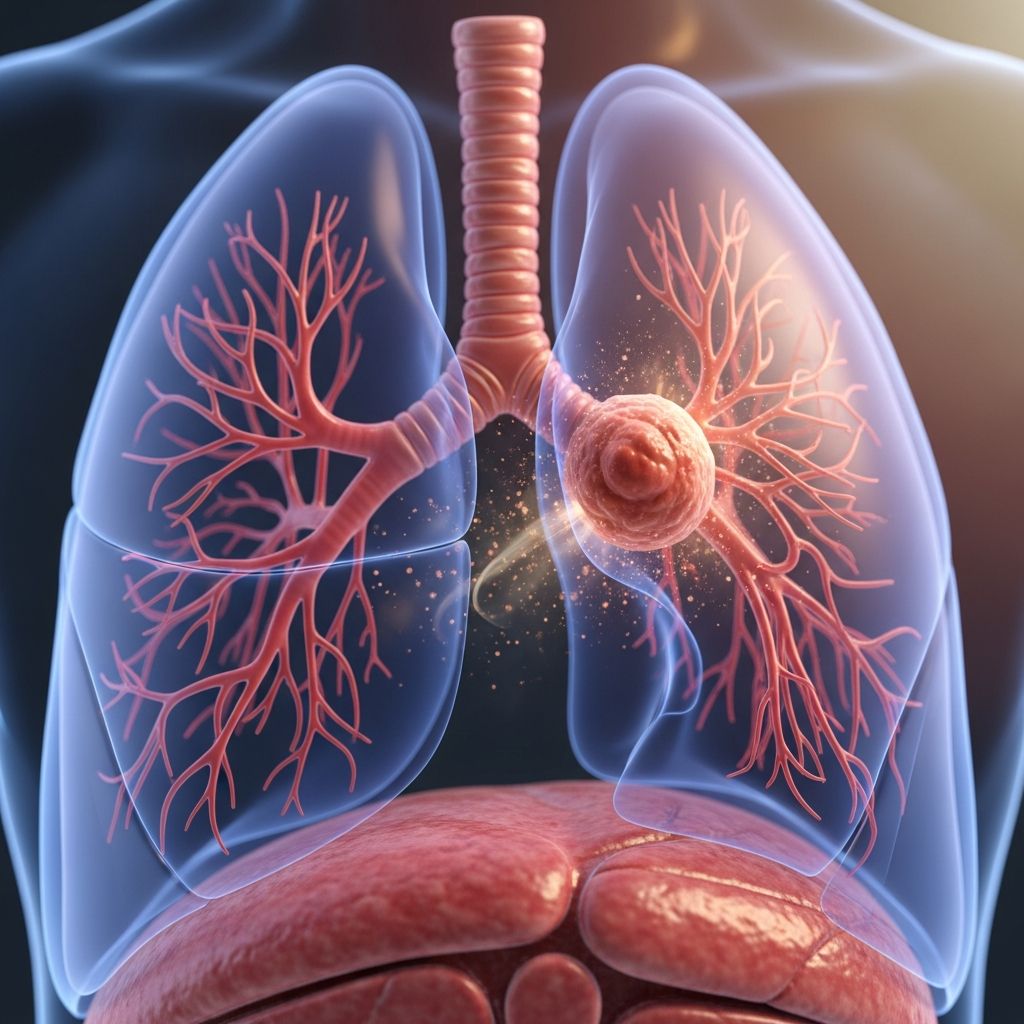
Lung cancer is one of the most common and serious types of cancer worldwide, with over 43,000 new cases diagnosed annually in the UK alone. Primarily affecting smokers, it often develops silently in early stages but can be treated effectively if caught early.
What is lung cancer?
Lung cancer refers to uncontrolled growth of abnormal cells in one or both lungs, typically starting in the lining of the bronchi or alveoli. There are two main types: non-small cell lung cancer (NSCLC), which accounts for about 85% of cases and grows more slowly, and small cell lung cancer (SCLC), which is more aggressive and linked strongly to smoking.
NSCLC includes subtypes like adenocarcinoma, squamous cell carcinoma, and large cell carcinoma. SCLC, though less common, spreads quickly and is responsible for a significant portion of lung cancer deaths. Around 8 in 10 cases occur in people over 60, with 4 in 10 over 75.
The disease often has no symptoms initially, making early detection challenging. Risk factors extend beyond smoking to include radon exposure, asbestos, air pollution, and genetic predispositions.
Lung cancer causes
The primary cause of lung cancer is smoking tobacco, responsible for about 90% of cases. Cigarette smoke contains over 70 known carcinogens that damage lung cell DNA, leading to mutations.
- Tobacco use: Both active and passive smoking increase risk; quitting reduces it over time.
- Radon gas: A naturally occurring radioactive gas from uranium decay in soil, the second leading cause.
- Occupational exposures: Asbestos, diesel exhaust, arsenic, and chromium in certain workplaces.
- Air pollution: Fine particulate matter from vehicle emissions and industry.
- Previous radiation therapy: To the chest for other cancers.
- Family history: Genetic factors play a role in 5-10% of cases.
More than 80% of lung cancer deaths are attributed to tobacco, highlighting prevention through smoking cessation.
Lung cancer symptoms
Symptoms usually appear in later stages but can include:
- A persistent cough lasting over 3 weeks.
- Coughing up blood (haemoptysis).
- Breathlessness or wheezing.
- Chest pain worsening with breathing or coughing.
- Unexplained weight loss and fatigue.
- Hoarseness, recurrent infections like pneumonia, or finger clubbing.
These symptoms warrant urgent medical evaluation, especially in smokers or those over 40.
Lung cancer diagnosis
Diagnosis begins with a GP assessment, often prompted by symptoms or an abnormal chest X-ray. Key steps include:
- Chest X-ray: Initial imaging to detect abnormalities.
- Sputum cytology: Examining coughed-up mucus for cancer cells.
- CT scan: Detailed imaging of chest and abdomen.
- Biopsy: Tissue sample via bronchoscopy, needle, or surgery to confirm cancer type.
- PET-CT scan: To assess metabolic activity and spread.
- Brain MRI: To check for metastases.
Biomarker testing for NSCLC identifies mutations like EGFR or ALK for targeted therapies.
Assessing the extent and spread (Staging)
Staging determines cancer size, lymph node involvement, and metastases using the TNM system (Tumor, Node, Metastasis).
| Stage | Description |
|---|---|
| Stage 0 | In situ; cancer confined to lung lining. |
| Stage I | Small tumor in one lung, no lymph nodes. |
| Stage II | Larger tumor (>4-7cm), possible nearby spread. |
| Stage III | Large tumor with lymph node involvement (IIIA/IIIB/IIIC). |
| Stage IV | Metastasized to distant sites (IVA/IVB). |
For SCLC, staging is limited (one lung/nearby) or extensive (widespread). Staging guides treatment and prognosis.
Lung cancer treatment
Treatment depends on type, stage, patient’s health, and preferences. Options include:
Related Stories



Surgery
For early-stage NSCLC: lobectomy (remove lobe), pneumonectomy (whole lung), or segmentectomy. Offered if cancer is localized.
Chemotherapy
Drugs like platinum-based regimens (cisplatin) kill rapidly dividing cells. Standard for SCLC and advanced NSCLC, often combined with others.
Radiotherapy
High-energy rays target tumors. Used curatively in early stages or palliatively. Stereotactic body radiotherapy (SBRT) for small tumors.
Targeted therapy
For specific mutations: EGFR inhibitors (osimertinib), ALK inhibitors. Requires genetic testing.
Immunotherapy
Drugs like pembrolizumab boost immune response, effective in advanced NSCLC.
Treatment plans are multidisciplinary, with clinical trials offering new options.
Your cancer care team
A multidisciplinary team includes oncologists, surgeons, radiologists, nurses, and palliative care specialists to create a personalized plan.
Lung cancer outlook (prognosis)
Prognosis varies: 5-year survival is ~60% for stage I, dropping to <10% for stage IV. Early detection improves chances; quitting smoking enhances outcomes.
SCLC has poorer prognosis due to rapid spread, but treatments can extend life.
Prevention and screening
Avoid smoking; test homes for radon. No UK screening, but US low-dose CT reduces mortality by 20% in high-risk groups.
Frequently Asked Questions (FAQs)
Q: Is lung cancer only caused by smoking?
A: No, while 90% of cases link to smoking, nonsmokers can develop it from radon, pollution, or genetics.
Q: What are early signs of lung cancer?
A: Persistent cough, breathlessness, chest pain, or weight loss; see a GP promptly.
Q: Can lung cancer be cured?
A: Yes, if diagnosed early (stages I-II), surgery offers cure potential.
Q: How is lung cancer staged?
A: Using TNM: tumor size, node involvement, metastases.
Q: What support is available?
A: Multidisciplinary teams, counseling, and organizations like Roy Castle provide booklets and help.
Managing side effects and living with lung cancer
Treatments cause fatigue, nausea, hair loss, and neuropathy. Manage with anti-emetics, pain relief, nutrition, and exercise. Palliative care improves quality of life.
Coping involves emotional support, stigma navigation, oxygen therapy if needed, and wellness practices like diet and mindfulness.
Questions to ask your doctor
- What stage is my cancer?
- What are my treatment options and side effects?
- What is the goal: cure, control, or palliation?
- Are clinical trials suitable?
- How will this affect my daily life?
References
- Small Cell Lung Cancer Booklet — LUNGevity Foundation. 2019-05-15. https://www.lungevity.org/sites/default/files/request-materials/LUNGevity-SCLC-booklet-051519.pdf
- Living With Lung Cancer Guide — Lung Cancer Research Foundation. 2024. https://www.lungcancerresearchfoundation.org/for-patients/print-and-digital-resources/living-with-lung-cancer/
- Lung Cancer Introduction — American Thoracic Society. 2023. https://www.thoracic.org/patients/patient-resources/resources/lung-cancer-intro.pdf
- Lung Cancer Leaflet — Patient.info. 2024-10-01. https://patient.info/cancer/lung-cancer-leaflet
- Lung Cancer Pro — Patient.info (Doctor). 2024. https://patient.info/doctor/oncology/lung-cancer-pro
- Lung Cancer Booklets — Roy Castle Lung Cancer Foundation. 2025. https://roycastle.org/our-support/lung-cancer-booklets/
- Lung Cancer — NHS UK. 2024-11-20. https://www.nhs.uk/conditions/lung-cancer/
Similar Articles








Read full bio of Sneha Tete