Lung Cancer Treatment: Options and Approaches
Comprehensive guide to lung cancer treatment options including surgery, chemotherapy, radiation, and immunotherapy.
Understanding Lung Cancer Treatment
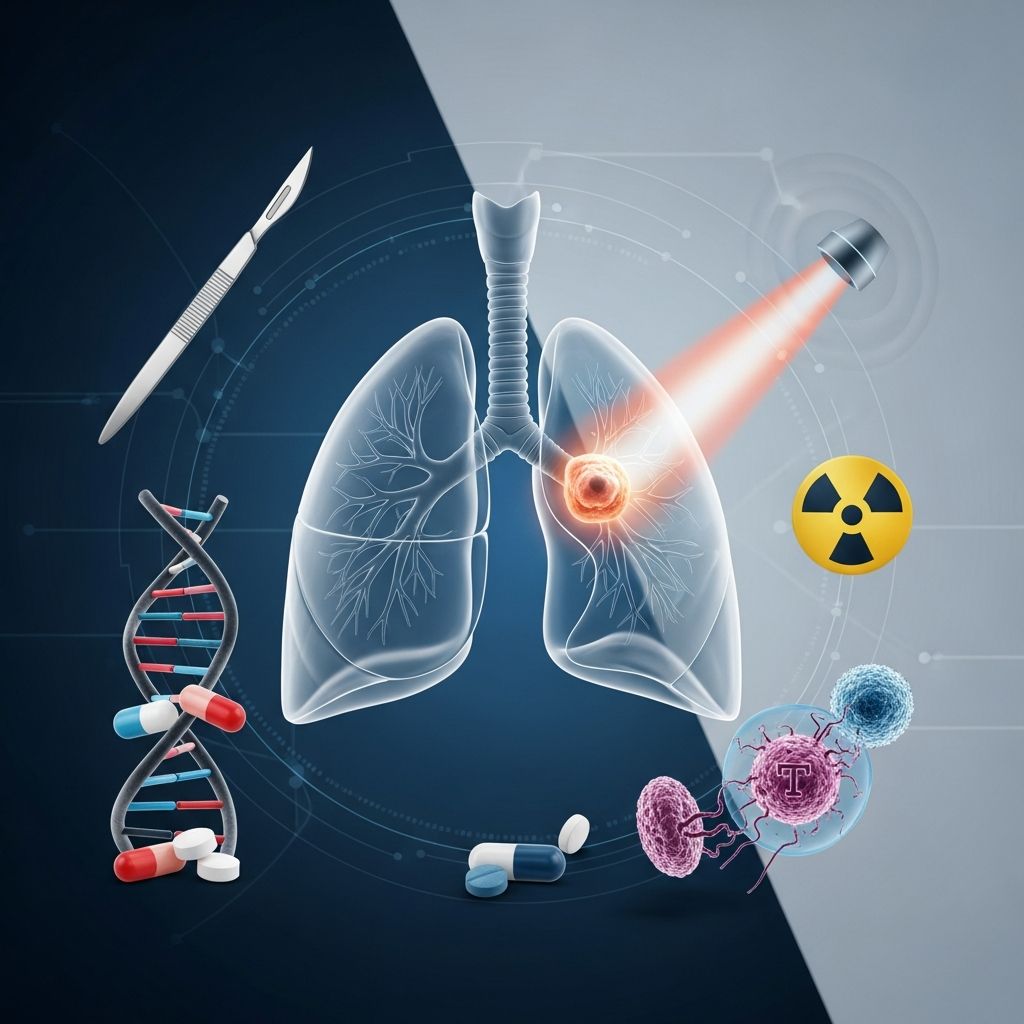
Lung cancer remains one of the leading causes of cancer deaths worldwide, affecting millions of patients annually. Treatment approaches have evolved significantly over recent years, offering patients multiple options tailored to their specific diagnosis, stage, and overall health condition. The primary goal of lung cancer treatment is to eliminate cancer cells while preserving lung function and quality of life. Modern treatment strategies often combine multiple modalities to achieve optimal outcomes.
The type of lung cancer, whether non-small cell lung cancer (NSCLC) or small cell lung cancer (SCLC), significantly influences treatment decisions. Additionally, factors such as cancer stage, patient age, smoking history, and overall health status play crucial roles in determining the most appropriate treatment plan. Patients should work closely with their healthcare team to understand all available options and make informed decisions about their care.
Surgery for Lung Cancer
Surgical intervention remains one of the cornerstone treatments for lung cancer, particularly in early-stage disease. Surgery aims to remove the tumor and surrounding affected tissue while preserving as much healthy lung function as possible. The type of surgical procedure depends on the tumor’s location, size, and stage.
Types of Surgical Procedures
Lobectomy is the most common surgical procedure, involving removal of an entire lobe of the lung. This procedure is often recommended when the tumor is confined to one lobe and regional lymph nodes are involved. Surgeons carefully assess the extent of disease to ensure adequate margin around the tumor while maintaining respiratory function.
Segmentectomy or wedge resection involves removing a smaller portion of lung tissue than a lobectomy. This approach is increasingly used in selected patients with small peripheral tumors, particularly in individuals with limited lung function or those who are poor surgical candidates. Segmentectomy offers the advantage of preserving more functional lung tissue.
Pneumonectomy, the removal of an entire lung, is reserved for cases where the tumor is centrally located or involves multiple lobes. This procedure is performed less frequently due to its significant impact on respiratory function, though modern anesthetic and perioperative techniques have improved outcomes.
Video-assisted thoracoscopic surgery (VATS) represents a minimally invasive approach using small incisions and a camera to visualize the surgical field. This technique reduces postoperative pain, shortens hospital stays, and accelerates recovery compared to traditional open thoracotomy.
Chemotherapy for Lung Cancer
Chemotherapy uses powerful drugs to kill cancer cells throughout the body. These medications work by interfering with cancer cell division and growth. Chemotherapy can be administered before surgery (neoadjuvant), after surgery (adjuvant), or as the primary treatment for advanced disease.
Chemotherapy Administration
Chemotherapy is typically delivered intravenously in cycles, allowing the body time to recover between treatments. Standard regimens often involve combination therapy using two or more chemotherapy agents. Common drug combinations include platinum-based agents paired with taxanes, gemcitabine, or pemetrexed, depending on histology and patient factors.
Recent research has demonstrated significant advances in chemotherapy efficacy when combined with other treatment modalities. Studies have shown that patients receiving chemotherapy plus immunotherapy before surgery achieved substantially improved long-term survival outcomes compared with chemotherapy alone. In clinical trials, 24% of patients receiving combination chemotherapy and immunotherapy achieved complete cancer remission, with 95% of those patients remaining alive five years after treatment.
Related Stories



Side Effects and Management
Chemotherapy can cause various side effects, including nausea, vomiting, fatigue, hair loss, and increased infection risk. Modern supportive care medications have significantly improved tolerance. Patients should communicate openly with their healthcare team about any side effects to enable timely management.
Radiation Therapy
Radiation therapy utilizes high-energy beams to target and destroy cancer cells. This treatment modality can be used alone, in combination with chemotherapy (concurrent chemoradiation), or after surgery to eliminate residual disease.
Types of Radiation Therapy
External beam radiation therapy (EBRT) directs radiation from outside the body toward the tumor. Modern techniques such as intensity-modulated radiation therapy (IMRT) and volumetric modulated arc therapy (VMAT) allow precise dose delivery while minimizing exposure to healthy tissue.
Stereotactic body radiation therapy (SBRT) delivers high doses of radiation in fewer fractions to small tumors. This approach is particularly useful for early-stage peripheral lung cancers in patients who cannot undergo surgery or who decline surgery.
Brachytherapy involves placing radioactive sources directly within or adjacent to the tumor, allowing high-dose delivery with minimal surrounding tissue exposure. This technique is used less frequently but may be considered in selected cases.
Targeted Therapy
Targeted therapies represent a paradigm shift in lung cancer treatment, focusing on specific molecular alterations driving cancer growth. These precision medicine approaches improve treatment efficacy while potentially reducing toxicity compared to traditional chemotherapy.
Common Targeted Therapy Options
EGFR inhibitors target epidermal growth factor receptor mutations, particularly common in adenocarcinomas. These oral medications include gefitinib, erlotinib, and afatinib, offering convenient administration and favorable side effect profiles.
ALK inhibitors target anaplastic lymphoma kinase rearrangements, representing another important molecular subset. Agents such as crizotinib, alectinib, and brigatinib provide effective disease control with manageable toxicity.
ROS1 inhibitors address ROS1 fusion mutations, and BRAF inhibitors target BRAF V600E mutations. Additional targeted approaches continue to emerge as molecular profiling becomes standard practice.
Patients with advanced lung cancer should undergo comprehensive molecular testing to identify actionable mutations. This personalized approach maximizes treatment efficacy and improves patient outcomes.
Immunotherapy
Immunotherapy harnesses the body’s immune system to recognize and eliminate cancer cells. This revolutionary approach has fundamentally changed lung cancer management, particularly in advanced disease.
Checkpoint Inhibitors
PD-1 inhibitors such as nivolumab and pembrolizumab block programmed death-1 checkpoint, allowing immune cells to attack cancer cells more effectively. PD-L1 inhibitors including atezolizumab and durvalumab work through similar mechanisms.
Recent landmark research demonstrates that combining immunotherapy with chemotherapy before surgery significantly improves long-term survival in operable non-small cell lung cancer. The initial chemotherapy and immunotherapy combination received FDA approval as the standard of care for this patient population, representing a major advance in treatment outcomes.
Combination Immunotherapy
CTLA-4 inhibitors such as ipilimumab can be combined with PD-1 or PD-L1 inhibitors to enhance immune activation. These combination approaches show particular promise in patients with high tumor mutational burden.
Combination Treatment Approaches
Modern lung cancer treatment frequently involves combining multiple modalities for optimal outcomes. Treatment decisions depend on cancer type, stage, molecular characteristics, and patient performance status.
Neoadjuvant Therapy
Administering chemotherapy, immunotherapy, or radiation before surgery (neoadjuvant treatment) can shrink tumors and improve surgical outcomes. This approach may increase complete resection rates and improve long-term survival. Recent advances have shown that chemotherapy combined with immunotherapy before surgery provides substantial survival benefits.
Adjuvant Therapy
Treatment given after surgery aims to eliminate potential microscopic disease and reduce recurrence risk. Chemotherapy remains standard for patients with stage II-III disease, while targeted therapy or immunotherapy may be considered based on molecular testing results.
Concurrent Chemoradiation
For locally advanced unresectable disease, combining chemotherapy with radiation therapy simultaneously often provides superior outcomes compared to sequential administration. This approach requires careful patient selection and supportive care.
Treatment by Disease Stage
| Disease Stage | Primary Treatment Options |
|---|---|
| Stage I | Surgery (lobectomy or segmentectomy); SBRT for non-surgical candidates |
| Stage II | Surgery with adjuvant chemotherapy; combined modality therapy |
| Stage IIIA | Neoadjuvant therapy followed by surgery; concurrent chemoradiation with consolidation immunotherapy |
| Stage IIIB-IV | Chemotherapy ± immunotherapy; targeted therapy based on molecular testing; palliative radiation |
Emerging Treatment Strategies
Lung cancer research continues to advance treatment options. Clinical trials investigating novel immunotherapy combinations, next-generation targeted agents, and personalized medicine approaches offer hope for improved outcomes. Patients should discuss clinical trial participation with their healthcare team, as these opportunities may provide access to cutting-edge treatments.
Side Effects and Supportive Care
Managing treatment side effects significantly impacts quality of life and treatment tolerance. Healthcare teams provide supportive medications and strategies to address nausea, fatigue, infections, and other complications. Nutritional support, physical therapy, and mental health services complement medical treatment.
Follow-up and Surveillance
After completing treatment, patients require regular follow-up imaging and clinical assessments to monitor for recurrence and detect new cancers. Surveillance strategies depend on disease stage, treatment received, and individual risk factors. Regular communication with oncology team members helps address concerns and manage long-term treatment effects.
Frequently Asked Questions
Q: How is the type of lung cancer determined?
A: Lung cancer type is determined through tissue sampling via biopsy, examining cell characteristics under a microscope, and molecular testing to identify specific mutations. Imaging studies including CT scans and PET scans help determine disease extent.
Q: What factors influence treatment selection?
A: Treatment decisions depend on cancer type and stage, molecular characteristics, patient age and overall health, lung function, performance status, and patient preferences. Multidisciplinary team discussions ensure comprehensive treatment planning.
Q: Can treatment combine surgery with chemotherapy?
A: Yes, many treatment plans combine multiple modalities. Chemotherapy or immunotherapy may be given before surgery (neoadjuvant) to shrink tumors or after surgery (adjuvant) to eliminate remaining cancer cells.
Q: What is immunotherapy and how does it work?
A: Immunotherapy enhances the immune system’s ability to recognize and attack cancer cells. Checkpoint inhibitors remove “brakes” on immune cells, allowing more effective cancer cell destruction. Recent research shows combining immunotherapy with chemotherapy before surgery significantly improves survival.
Q: How are targeted therapies selected?
A: Molecular testing identifies specific mutations driving cancer growth. Targeted therapies matching these mutations offer precision treatment with improved efficacy. All patients with advanced lung cancer should undergo molecular profiling to identify available targeted options.
Q: What should patients expect during treatment?
A: Treatment experiences vary based on the specific approach used. Patients should expect regular appointments, possible side effects requiring management, and ongoing communication with healthcare teams. Support services including nutritional counseling and mental health support are available.
References
- Immunotherapy plus chemotherapy before lung cancer surgery significantly improves long-term survival, analysis finds — Johns Hopkins Medicine. 2025-06-03. https://hub.jhu.edu/2025/06/03/lung-cancer-survival-immunotherapy-chemotherapy/
- Non-small cell lung cancer: Clinical Practice Guidelines in Oncology — Johns Hopkins University School of Medicine. https://pure.johnshopkins.edu/en/publications/non-small-cell-lung-cancer-clinical-practice-guidelines-in-oncolo-8
- NCCN Guidelines® Insights: Lung Cancer Screening, Version 1.2025 — National Comprehensive Cancer Network. 2025-01. https://pubmed.ncbi.nlm.nih.gov/39819601/
Similar Articles








Read full bio of Sneha Tete