Lung Cancer: Types, Stages, Symptoms & Treatment
Comprehensive guide to lung cancer: understanding types, stages, symptoms, diagnosis, and treatment options.
Understanding Lung Cancer
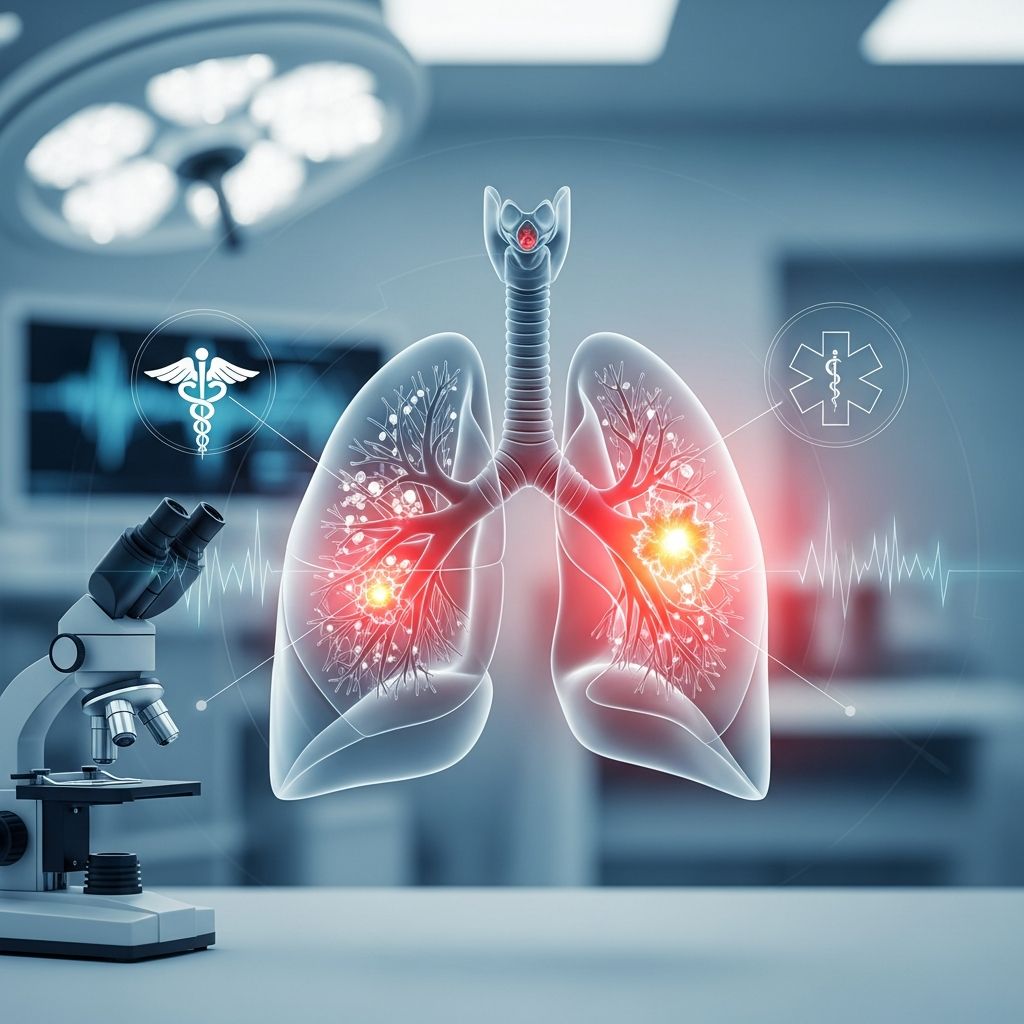
Lung cancer remains one of the most significant health challenges worldwide, affecting individuals across all demographics. This disease develops when malignant cells form in the lungs, which are the organs responsible for breathing and oxygen exchange. Understanding the fundamentals of lung cancer, including its types, stages, symptoms, and available treatment options, is essential for patients, families, and healthcare providers working together toward better outcomes.
Lung cancer can develop in anyone, regardless of smoking history, though certain risk factors increase the likelihood of diagnosis. The disease is characterized by the uncontrolled growth of cells in the lung tissue, which can spread to other parts of the body if left untreated. Early detection and comprehensive treatment planning significantly improve survival rates and quality of life for patients diagnosed with this condition.
Types of Lung Cancer
Lung cancer is primarily classified into two main categories based on how the cancer cells appear under a microscope and how quickly they tend to grow. These classifications help determine the most appropriate treatment approach for each patient.
Non-Small Cell Lung Cancer (NSCLC)
Non-small cell lung cancer represents approximately 80-85% of all lung cancer cases. This type tends to grow more slowly than small cell lung cancer and may not spread as quickly to other parts of the body. NSCLC is further subdivided into several subtypes based on the type of cells involved in the tumor.
Adenocarcinoma is the most common type of NSCLC, typically developing in the outer regions of the lungs. This subtype often affects people who have smoked less or never smoked at all. Adenocarcinoma arises from mucus-secreting gland cells in the airways.
Squamous cell carcinoma originates in the flat, thin cells that line the airways in the lungs. This subtype is often associated with a history of smoking and typically develops in the central part of the lungs near the bronchi.
Large cell carcinoma is a less common subtype that can develop anywhere in the lung and tends to grow relatively quickly. This type represents a smaller percentage of NSCLC cases but requires prompt treatment attention.
Small Cell Lung Cancer (SCLC)
Small cell lung cancer accounts for 15-20% of all lung cancer cases. This type is more aggressive and tends to grow quickly, spreading to other organs rapidly. SCLC is almost exclusively associated with smoking history and is divided into two stages: limited-stage disease confined to one lung and regional lymph nodes, and extensive-stage disease that has spread beyond the lungs.
Recognizing Lung Cancer Symptoms
Identifying potential symptoms of lung cancer is crucial for early detection and intervention. Many individuals in early stages may not experience noticeable symptoms, which underscores the importance of screening for high-risk individuals.
Related Stories



Common Symptoms
The most prevalent signs of lung cancer include:
- A persistent cough that lasts more than three weeks or worsens over time
- Shortness of breath or difficulty breathing
- Chest pain that may worsen with breathing, coughing, or laughing
- Hoarseness in the voice that persists
- Unexplained weight loss occurring over several weeks or months
- Fatigue and weakness
- Recurring respiratory infections such as pneumonia or bronchitis
- Coughing up blood or blood-tinged mucus
When to Seek Medical Attention
Any persistent respiratory symptoms warrant evaluation by a healthcare provider. Individuals with risk factors for lung cancer, including current or former smokers, those with occupational exposures to harmful substances, or those with a family history of lung cancer, should consult with their physician about screening options and symptom awareness.
Lung Cancer Stages and Prognosis
Staging provides critical information about how far the cancer has spread and helps guide treatment decisions and prognosis. The TNM staging system classifies lung cancer based on the size of the tumor (T), involvement of lymph nodes (N), and presence of distant metastases (M).
Stage I
Stage I lung cancer is localized to the lung with no spread to lymph nodes or distant organs. Tumors at this stage are typically smaller and have not invaded major blood vessels or airways. Patients at this stage often have more favorable prognosis and treatment outcomes.
Stage II
Stage II cancer involves the lung and may have spread to nearby lymph nodes. Tumors at this stage are larger or may have invaded deeper into surrounding tissues. Treatment options typically include surgery combined with chemotherapy or radiation therapy.
Stage III
Stage III lung cancer indicates more extensive spread to lymph nodes and potentially to the chest wall or other structures in the chest cavity. This stage is often divided into IIIA and IIIB, with more advanced disease in Stage IIIB. Multimodal treatment approaches combining surgery, chemotherapy, and radiation are common.
Stage IV
Stage IV represents advanced disease with spread to distant organs such as the brain, liver, adrenal glands, or bones, or to the opposite lung. Treatment focuses on extending survival and maintaining quality of life, utilizing chemotherapy, targeted therapy, and immunotherapy approaches.
Diagnostic Procedures and Testing
Accurate diagnosis of lung cancer requires a multifaceted approach combining imaging, tissue analysis, and clinical evaluation. Healthcare providers use these diagnostic tools to confirm the presence of cancer, determine its type and stage, and identify the most appropriate treatment strategy.
Imaging Studies
Chest X-rays are often the initial imaging test, revealing suspicious masses or abnormalities in the lungs. However, they may miss smaller tumors or those obscured by other structures.
CT scans provide detailed cross-sectional images of the chest, offering superior sensitivity for detecting lung nodules and assessing their characteristics. High-resolution CT scanning is the standard imaging modality for lung cancer diagnosis and staging.
PET/CT scans combine positron emission tomography with computed tomography to identify areas of abnormal metabolic activity, helping determine if cancer has spread to distant sites. This imaging is particularly useful for staging and identifying metastatic disease.
MRI and brain imaging may be performed to evaluate for spread to the brain, particularly in patients with advanced disease or symptoms suggesting neurological involvement.
Biopsy Procedures
Tissue diagnosis is essential for confirming lung cancer and determining the specific cell type. Various biopsy techniques are employed depending on the location and accessibility of the suspicious lesion.
Bronchoscopy involves passing a thin, flexible tube through the mouth into the airways, allowing direct visualization and tissue sampling of central airway lesions. This minimally invasive procedure is valuable for centrally located tumors.
CT-guided biopsy uses computed tomography imaging to guide a needle to peripheral lung nodules for tissue sampling. This approach is particularly useful for lesions in the lung periphery not easily accessible by bronchoscopy.
Endobronchial ultrasound (EBUS) combines bronchoscopy with ultrasound imaging to sample lymph nodes in the central chest, providing both diagnostic tissue and staging information.
Treatment Approaches for Lung Cancer
Modern lung cancer treatment is highly individualized, based on cancer type, stage, patient age, overall health status, and personal preferences. A multidisciplinary team of specialists collaborates to develop the optimal treatment plan for each patient.
Surgical Treatment
Surgery remains a primary treatment option for early-stage lung cancer and selected patients with more advanced disease. The extent of lung tissue removed depends on tumor location, size, and patient factors.
Segmental resection involves removal of only a small portion of the lung, preserving maximum lung function. This approach is considered for small, peripheral tumors in patients with limited pulmonary reserve.
Lobectomy involves removal of an entire lobe of the lung. The right lung has three lobes while the left has two. This is considered the standard surgical approach for most resectable lung cancers, as it removes the tumor with adequate margins.
Pneumonectomy involves removal of an entire lung and is reserved for tumors that cannot be managed by lesser resections. This major surgery is performed in selected patients with good functional capacity.
Video-assisted thoracic surgery (VATS) represents a minimally invasive surgical approach using small incisions and specialized cameras. VATS lobectomy offers equivalent oncologic outcomes to open surgery with reduced postoperative pain, faster recovery, and shorter hospital stays.
Chemotherapy
Chemotherapy uses powerful medications to kill cancer cells throughout the body. Various chemotherapy regimens are employed depending on cancer type and stage. Chemotherapy may be administered before surgery to shrink tumors, after surgery to eliminate remaining cancer cells, or as primary treatment for advanced disease.
Modern chemotherapy combinations often include platinum-based agents paired with targeted chemotherapy drugs. Treatment is typically given in cycles allowing recovery periods between doses. Healthcare providers carefully monitor patients for side effects and adjust treatment as needed to maintain quality of life.
Radiation Therapy
Radiation therapy uses high-energy beams to destroy cancer cells and shrink tumors. Three-dimensional conformal radiation therapy precisely targets cancer while minimizing exposure to surrounding healthy tissue.
Stereotactic body radiation therapy (SBRT) delivers high doses of radiation to small tumors in just 3 to 5 treatments. SBRT is now considered the standard of care for medically inoperable, early-stage lung cancer patients, offering excellent local control rates with minimal side effects.
Radiation therapy may be combined with chemotherapy (chemoradiation) for improved treatment effectiveness. This approach is commonly used for locally advanced lung cancer.
Targeted Therapy
Targeted drug therapy attacks cancer cells that possess specific genetic mutations or molecular features. Testing of tumor tissue identifies potential targets for therapy. Targeted agents are often effective with fewer side effects compared to traditional chemotherapy, as they specifically attack cancer cells while sparing many normal cells.
These medications block specific proteins that promote cancer cell growth, offering improved outcomes for patients with tumors harboring actionable mutations.
Immunotherapy
Immunotherapy harnesses the body’s immune system to recognize and destroy cancer cells. These medications block proteins that cancer uses to evade immune detection, allowing the body’s immune cells to attack the tumor.
Checkpoint inhibitors targeting PD-1 and PD-L1 proteins have revolutionized lung cancer treatment, particularly for advanced NSCLC. Immunotherapy is increasingly used as first-line treatment for metastatic disease and is being integrated into earlier-stage treatment approaches.
Radiofrequency Ablation
Radiofrequency ablation uses heat energy to destroy small lung tumors. This minimally invasive procedure is particularly useful for patients with limited pulmonary function or those who cannot tolerate surgery. Imaging guidance ensures accurate placement of the ablation probe.
Follow-Up Care and Survivorship
Following initial treatment, patients require regular monitoring to detect any recurrence and assess for treatment-related side effects. Follow-up typically includes periodic imaging studies and clinical evaluations at intervals determined by cancer stage and treatment received.
Survivorship programs address physical and emotional recovery, providing support for lifestyle modifications, management of treatment side effects, and psychological adjustment to cancer diagnosis. Rehabilitation services help patients regain physical function and return to normal activities when possible.
Frequently Asked Questions
Q: Can non-smokers develop lung cancer?
A: Yes, approximately 10-15% of lung cancer cases occur in people who have never smoked. Other risk factors include environmental exposures, family history, and certain genetic factors.
Q: What is the survival rate for lung cancer?
A: Five-year survival rates vary significantly based on cancer stage at diagnosis. Overall five-year survival is approximately 21%, but this improves substantially for early-stage disease detected through screening.
Q: How long does lung cancer treatment typically take?
A: Treatment duration varies widely depending on the type and stage of cancer. Surgery may be completed in a single procedure, while chemotherapy typically spans several months, and radiation therapy is often completed in 4-6 weeks.
Q: Are clinical trials available for lung cancer patients?
A: Yes, numerous clinical trials are actively enrolling lung cancer patients. These trials test new treatment approaches and may provide access to cutting-edge therapies not yet widely available.
Q: What support services are available for lung cancer patients?
A: Comprehensive cancer centers offer support services including counseling, support groups, nutritional guidance, rehabilitation, palliative care, and financial assistance programs.
References
- Lung Cancer: Types, Stages, Symptoms, Diagnosis & Treatment — Cleveland Clinic. 2024. https://my.clevelandclinic.org/health/diseases/4375-lung-cancer
- Cancer Statistics Center: Lung Cancer — National Cancer Institute. 2024. https://cancerstatisticscenter.cancer.gov
- Global Cancer Observatory: Cancer Today – Lung Cancer Fact Sheet — World Health Organization International Agency for Research on Cancer. 2024. https://gco.iarc.who.int
- Lung Cancer Program — Cleveland Clinic Cancer Center. 2024. https://my.clevelandclinic.org/departments/cancer/depts/lung
- National Comprehensive Cancer Network Guidelines: Non-Small Cell Lung Cancer — NCCN. 2024. https://www.nccn.org
- Stereotactic Body Radiation Therapy for Early-Stage Lung Cancer — American Society for Radiation Oncology. 2024. https://www.astro.org
Similar Articles








Read full bio of medha deb