Lung Cancer Types: 3 Classifications And Treatment Options
Comprehensive guide to lung cancer types, classifications, and treatment options.
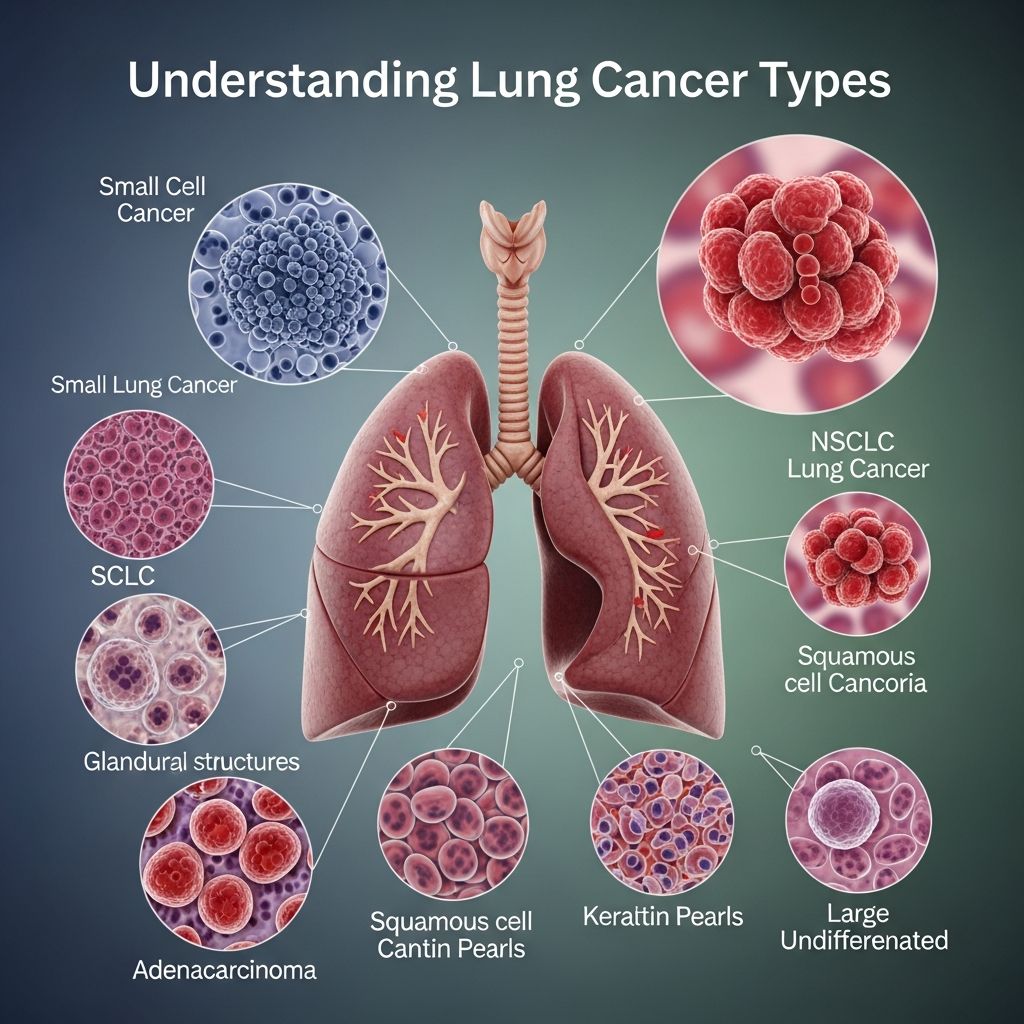
Understanding Lung Cancer Types
Lung cancer is one of the most serious health conditions affecting millions of people worldwide. Understanding the different types of lung cancer is essential for patients, families, and healthcare providers to determine the most appropriate treatment strategies and predict outcomes. The classification of lung cancer depends on the type of cells in which the cancer develops and how quickly the disease progresses. Each type has distinct characteristics, treatment options, and prognoses that significantly impact a patient’s care plan.
Overview of Lung Cancer Classification
Lung cancer is primarily classified into three main categories based on the type of cells involved and the rate of growth. The most common distinction divides lung cancer into non-small cell lung cancer (NSCLC) and small cell lung cancer (SCLC), with lung carcinoid tumors representing a third, less common category. This classification system helps oncologists determine which treatments are most likely to be effective and helps patients understand their diagnosis and prognosis.
Non-Small Cell Lung Cancer (NSCLC)
Non-small cell lung cancer represents the most prevalent form of lung cancer, accounting for approximately 80% to 85% of all lung cancer diagnoses. NSCLC is generally less aggressive than small cell lung cancer and often responds well to various treatment modalities, including surgery, chemotherapy, radiation therapy, and targeted therapies. The disease typically grows more slowly than SCLC, which provides patients with a somewhat better prognosis when caught early.
Adenocarcinoma
Adenocarcinoma is the most common subtype of non-small cell lung cancer, accounting for approximately 40% of all lung cancer cases. This cancer develops in the mucus-secreting cells (epithelial cells) that line the surface of the lungs. Adenocarcinoma has several distinctive characteristics that set it apart from other lung cancer types. It typically spreads more slowly than other lung cancer subtypes and is often found in the peripheral regions of the lungs, particularly in the outer portions and at the lung’s edges.
Interestingly, adenocarcinoma is the most common type of lung cancer among people who do not smoke, making it unique among lung cancer types. It is also more frequently diagnosed in women compared to men and tends to develop in younger individuals compared to other lung cancer types. While smoking history remains a significant risk factor for adenocarcinoma development, the increasing prevalence of this subtype among non-smokers suggests that other environmental and genetic factors play important roles in its development.
Squamous Cell Carcinoma
Squamous cell carcinoma represents the second most common subtype of NSCLC, accounting for 25% to 30% of all lung cancer cases. This cancer develops from flat cells (squamous cells) that line the inside of the lung airways. These tumors are often closely associated with a significant history of smoking and typically originate in the central portions of the lungs, specifically near the main airways (bronchi).
The location of squamous cell carcinomas in the central airways distinguishes them from adenocarcinomas, which are more commonly found in the peripheral lung regions. Due to their central location, squamous cell carcinomas are sometimes detected earlier when they cause symptoms such as coughing or airway obstruction. However, their location near vital lung structures can sometimes complicate surgical treatment options.
Large Cell Carcinoma
Large cell carcinoma accounts for fewer than 3% of all lung cancer cases and represents one of the less common NSCLC subtypes. This cancer subtype can develop in any region of the lung, making it variable in presentation. A significant characteristic of large cell carcinoma is its tendency to grow and spread relatively quickly compared to adenocarcinoma and squamous cell carcinoma, which can complicate treatment and worsen prognosis.
Related Stories



A notable subtype of large cell carcinoma is large cell neuroendocrine carcinoma (LCNEC), which has characteristics similar to both NSCLC and small cell lung cancer. LCNEC is a particularly aggressive and fast-growing variant that requires specialized treatment approaches and is often associated with a poorer prognosis than other large cell variants.
Other NSCLC Subtypes
Several additional NSCLC subtypes exist but occur much less frequently than the three main types. Adenosquamous carcinoma occurs when a tumor contains elements of both adenocarcinoma and squamous cell carcinoma cells, making up only 0.4% to 4% of lung cancer cases. This rare subtype requires specialized diagnostic techniques to identify the mixed cell populations and may influence treatment decisions.
Sarcomatoid carcinoma is an exceptionally rare NSCLC subtype, accounting for only 0.1% to 0.4% of cases. This variant is particularly aggressive, spreads quickly, and unfortunately responds poorly to many standard treatment approaches, making it one of the most challenging lung cancer subtypes to manage effectively.
Small Cell Lung Cancer (SCLC)
Small cell lung cancer accounts for approximately 10% to 15% of all lung cancer cases. Unlike NSCLC, small cell lung cancer is notably aggressive, growing and spreading much faster than non-small cell types. The disease demonstrates a particularly troubling characteristic: in approximately 6 out of 10 patients with SCLC, the cancer has already metastasized (spread) beyond the lungs at the time of initial diagnosis, which significantly limits treatment options and impacts prognosis.
Despite its aggressive nature, SCLC does possess one advantage—it tends to respond well to chemotherapy and radiation therapy. However, the cancer frequently returns even after successful initial treatment response, making long-term management challenging. The rapid growth rate of SCLC means that early detection is particularly crucial for improving patient outcomes, yet the disease’s aggressive nature often prevents early detection.
Small Cell Carcinoma
Small cell carcinoma occurs when the cancer tumor is composed entirely of small cell lung cancer cells. This represents the primary form of SCLC and typically demonstrates the characteristics of rapid growth and tendency to metastasize that define the disease category. Treatment for small cell carcinoma often involves combination chemotherapy regimens, sometimes supplemented with radiation therapy.
Combined Small Cell Carcinoma
Combined small cell carcinoma occurs when a patient’s tumor contains both small cell lung cancer cells and cells from an NSCLC subtype, such as adenocarcinoma or squamous cell carcinoma. This mixed histology can complicate treatment planning, as it combines characteristics of both cancer types and may require integrated treatment approaches designed to address both cell populations effectively.
Lung Carcinoid Tumors
Lung carcinoid tumors represent the least common type of lung cancer, accounting for between 1% and 2% of all lung cancer cases diagnosed annually. These tumors develop from neuroendocrine cells, which are specialized cells that help regulate air and blood flow within the lungs. Also known as bronchial carcinoids, these tumors are generally considered low-grade malignancies, meaning they typically grow slowly compared to other lung cancer types.
Despite being the rarest type of lung cancer, carcinoid tumors are often considered the easiest to treat, and patients generally have the most favorable prognosis among all lung cancer types. Research indicates that lung carcinoid patients live for over 5.5 years on average, which substantially exceeds survival rates for NSCLC and SCLC.
Typical Carcinoids
Typical carcinoids represent the more common subtype of lung carcinoid tumors and generally demonstrate slower growth patterns and better treatment responses compared to atypical carcinoids. These tumors have a lower risk of metastasis and generally carry a more favorable prognosis.
Atypical Carcinoids
Atypical carcinoids are characterized by more aggressive behavior patterns and often metastasize to other parts of the body. This subtype is considerably rarer than typical carcinoids but carries a worse prognosis due to its more aggressive growth patterns and greater tendency to spread. Treatment for atypical carcinoids may require more intensive intervention than typical carcinoid tumors.
Classification by Location
Lung carcinoid tumors can also be classified based on where they develop within the lung. Central carcinoids develop in the bronchi (the main airways leading into the lungs) and represent the majority of lung carcinoid cases. Peripheral carcinoids form in the bronchioles (smaller branches of the bronchi) and are considerably less common than central carcinoids. The location of the tumor can influence treatment options and may affect the likelihood of early detection.
Treatment Considerations by Lung Cancer Type
The specific type of lung cancer diagnosed significantly influences treatment planning and selection. NSCLC patients often have multiple treatment options available, including surgical resection for localized disease, chemotherapy, radiation therapy, targeted molecular therapies, and immunotherapy approaches. The specific NSCLC subtype may influence which treatment modalities are most effective.
SCLC patients typically receive chemotherapy as a primary treatment, often combined with radiation therapy. Due to the aggressive nature of SCLC and its tendency to have already metastasized at diagnosis, treatment typically focuses on systemic approaches rather than localized surgical intervention. The rapid response of SCLC to chemotherapy is beneficial, though long-term disease control remains challenging.
Lung carcinoid tumors often respond well to surgical resection, particularly when detected early and localized to a specific lung region. Due to their slower growth rates and better prognosis, some carcinoid tumors may be monitored with observation initially before treatment becomes necessary.
Frequently Asked Questions
Q: What is the most common type of lung cancer?
A: Non-small cell lung cancer (NSCLC) is the most common type, accounting for 80% to 85% of all lung cancer diagnoses. Within NSCLC, adenocarcinoma is the most frequent subtype, representing about 40% of all cases.
Q: Can non-smokers develop lung cancer?
A: Yes, non-smokers can develop lung cancer, particularly adenocarcinoma, which is actually the most common lung cancer type in non-smokers. Other risk factors include secondhand smoke exposure, radon gas, genetic factors, and environmental pollutants.
Q: Why is small cell lung cancer so aggressive?
A: Small cell lung cancer grows very rapidly and often metastasizes early, with about 6 out of 10 patients having disease spread beyond the lungs at diagnosis. This aggressive behavior makes early detection difficult and limits treatment options.
Q: What is the prognosis for lung carcinoid tumors?
A: Lung carcinoid tumors generally have the most favorable prognosis among lung cancer types, with average survival exceeding 5.5 years. They are typically slow-growing and are considered the easiest lung cancer type to treat.
Q: How are lung cancer types determined?
A: Lung cancer types are determined through tissue biopsies and pathological examination, where doctors analyze the specific cells present in the tumor and examine their characteristics under a microscope to classify the cancer type and subtype.
Q: Is squamous cell carcinoma always linked to smoking?
A: While squamous cell carcinoma is often linked to a history of smoking, not all cases occur in smokers. However, smoking remains a significant risk factor for development of this specific subtype.
References
- Non-small cell lung cancer — Johns Hopkins University. 2008. https://pure.johnshopkins.edu/en/publications/non-small-cell-lung-cancer-6
- Types of Lung Cancer: Get Help For Different Lung Cancer Types — Lung Cancer Group. 2024. https://www.lungcancergroup.com/lung-cancer/types/
- What Is Lung Cancer? Types of Lung Cancer — American Cancer Society. 2024. https://www.cancer.org/cancer/types/lung-cancer/about/what-is.html
Similar Articles








Read full bio of medha deb