Lung Decortication: Procedure, Recovery, and Outcomes
Complete guide to lung decortication surgery: What to expect, risks, and recovery process.
Understanding Lung Decortication: A Comprehensive Guide
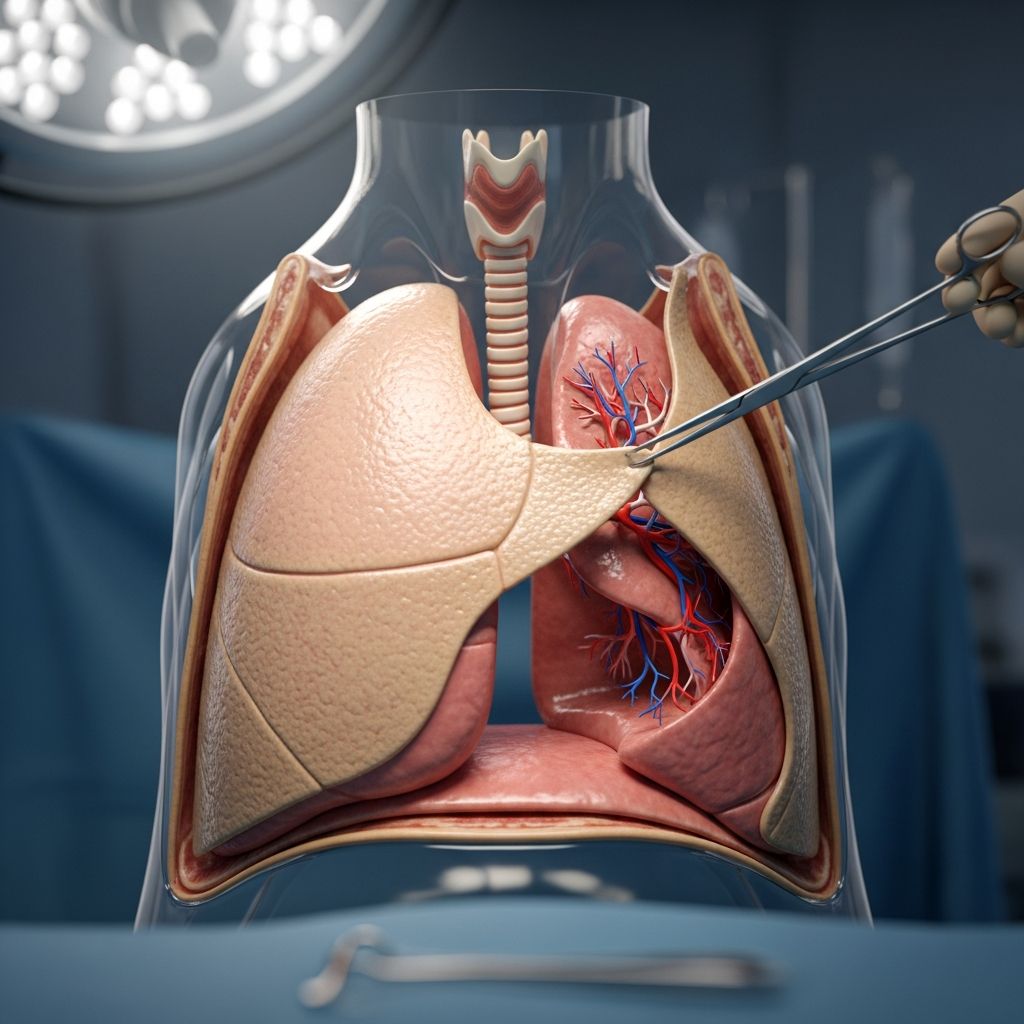
Lung decortication is a major surgical procedure designed to remove an abnormally thickened membrane, known as the pleura, that surrounds your lung. When this membrane becomes fibrous and restricts lung expansion, decortication allows the lung to re-expand, enabling you to breathe more effectively. This procedure is typically performed after other less invasive treatment methods have been attempted without success.
What Is Decortication and How Does It Work?
Decortication involves the surgical removal of an abnormal or thickened pleural membrane that has restricted your lung’s ability to expand normally during breathing. The pleura is a thin membrane that lines the inside of your chest cavity and covers your lungs. When fluid buildup occurs over an extended period, this membrane can become thick, scarred, and fibrous—a condition known as fibrothorax. This fibrotic tissue acts like a restrictive “peel” around the lung, preventing normal expansion and reducing your breathing capacity.
By removing this thickened membrane during surgery, surgeons allow the underlying lung tissue to re-expand and function more effectively. This restoration of lung function can significantly improve oxygen intake and overall respiratory performance.
Common Reasons for Lung Decortication
Decortication may be recommended for several medical conditions:
– Longstanding pleural effusions: Persistent fluid accumulation, including pus or blood, in the pleural space- Pleural tumors: Abnormal growths within the pleural membrane- Trapped lung (fibrothorax): A lung restricted by thick, scarred pleural tissue- Empyema: Infected fluid collection in the pleural space- Hemothorax: Blood accumulation in the pleural space
Many of these conditions develop due to underlying disease or infection, such as pneumonia or tuberculosis. In most cases, healthcare providers consider decortication only after attempting less invasive interventions, such as needle or tube drainage, have proven unsuccessful.
Surgical Approaches to Decortication
Surgeons employ two primary approaches for performing decortication, each with distinct advantages and considerations:
Open Thoracotomy Decortication
Open thoracotomy decortication is considered the gold standard approach. In this procedure, the surgeon makes an incision to directly access the pleura and carefully remove the thickened membrane. This direct visualization allows the surgeon to thoroughly remove the fibrous tissue and ensure complete lung re-expansion. While this approach requires a larger incision and potentially longer recovery, it offers superior visualization and control, making it easier to remove thick membranes without excessive bleeding.
Minimally Invasive Approach
In selected cases, surgeons may perform decortication using a minimally invasive technique. This approach involves removing the pleural membrane in smaller pieces through a small incision. The primary advantage is faster recovery time and reduced postoperative pain. However, this technique has limitations: surgeons must fit membrane fragments through a small opening, which is challenging when dealing with thick peels. Additionally, the restricted visualization can make it difficult to prevent major bleeding complications, potentially obscuring the surgical field.
Preoperative Preparation and Testing
Before undergoing decortication, your healthcare provider will conduct a comprehensive medical evaluation to ensure you are an appropriate surgical candidate. This preparation includes:
Related Stories



– Detailed medical history assessment, including tobacco use, previous radiation therapy, and asbestos exposure- Physical examination and vital sign assessment- Blood work and laboratory tests- Imaging studies such as chest X-rays or computed tomography (CT) scans- Pulmonary function tests to evaluate baseline lung capacity- Cardiac evaluation if deemed necessary- Discussion of medications and potential adjustments before surgery
Your surgical team will review all findings and discuss the procedure’s risks, benefits, and expected outcomes with you before proceeding.
The Decortication Surgical Procedure
Understanding the steps involved in decortication can help you prepare mentally and physically for the procedure:
Step-by-Step Surgical Process
– Anesthesia administration: General anesthesia is administered to ensure you remain unconscious and pain-free throughout the procedure- Incision placement: The surgeon makes an appropriate incision based on the chosen approach (open thoracotomy or minimally invasive)- Membrane visualization: The pleural membrane is carefully exposed and examined- Membrane removal: The thickened, fibrotic pleural layer is systematically removed- Bleeding control: Any bleeding from the underlying lung surface is controlled- Chest tube placement: Tubes are positioned to drain fluid and allow the lung to remain expanded- Incision closure: The surgical site is closed with sutures or staples
The entire procedure typically takes more than two hours, though the exact duration varies based on the approach and complexity of the case. Minimally invasive procedures may take longer because the surgeon must remove and extract membrane pieces individually.
Recovery and Immediate Post-Surgical Care
After decortication surgery, your recovery begins in the intensive care unit (ICU), where medical staff can monitor you closely for complications and provide specialized care.
First 24-48 Hours
Immediately after surgery, you may have a breathing tube (endotracheal tube) in your throat for 24 to 48 hours. This tube helps keep your lung inflated, promotes proper ventilation, and can reduce postoperative bleeding. You’ll also have chest tubes in place to drain fluid accumulation and maintain proper lung expansion. These tubes remain in place for at least 48 hours, and your healthcare team will remove them once drainage becomes clear and decreases to less than 50 milliliters (approximately 2 ounces) per day.
Pain Management
Pain control is an essential component of your recovery. You’ll likely receive pain relief through an epidural catheter or nerve block administered during surgery. These methods provide excellent pain control while minimizing the need for systemic opioid medications, allowing you to breathe deeply and move more comfortably during early recovery.
Post-Operative Monitoring
Your medical team will perform several assessments during your ICU stay:
– Chest X-ray: Usually performed the day after surgery to visualize lung expansion- Oxygen level assessment: Arterial blood gas analysis to ensure adequate oxygenation- Fluid balance monitoring: Tracking input and output to manage hydration- Vital sign monitoring: Continuous monitoring of heart rate, blood pressure, and respiratory rate- Wound assessment: Regular evaluation of the surgical incision for signs of infection or complications
Long-Term Recovery and Outcomes
Your recovery timeline extends well beyond the initial ICU stay. Most patients spend several days to a week in the hospital following decortication. Full recovery typically requires several weeks, during which you gradually resume normal activities.
Expected Benefits
Decortication can significantly improve your respiratory function and quality of life. The primary benefit is lung re-expansion, which allows your trapped lung to function normally again. This restoration enables improved oxygen intake, better exercise tolerance, and relief from breathing difficulties. In most cases, patients experience substantial symptomatic improvement, though outcomes depend on various factors including disease severity and overall health status.
Recovery Prognosis
Your prognosis following decortication depends on multiple factors: your overall health condition, the underlying cause of the thickened pleura, and the severity of your disease. While severe cases may show limited improvement, most patients achieve good results with improved lung function. A severely compromised lung may not fully recover to normal function, but the surgery typically provides meaningful improvement compared to preoperative status.
Risks and Complications
As with all major surgical procedures, decortication carries certain risks. Understanding these potential complications can help you make an informed decision:
– Bleeding: Excessive bleeding from the lung surface or surrounding tissues- Infection: Surgical site infection or pneumonia- Respiratory complications: Difficulty breathing or need for prolonged mechanical ventilation- Persistent air leak: Air continuing to escape from the lung after surgery- Incomplete lung re-expansion: The lung may not fully re-expand after membrane removal- Prolonged air leak: Continued air leakage requiring extended drainage- Cardiac complications: Heart rhythm disturbances or other cardiac issues- Death: Though rare, the risk exists with any major surgery
Your surgical team will discuss your individual risk factors and take appropriate measures to minimize these complications.
Combination Procedures
In some cases, your surgeon may perform additional procedures in conjunction with decortication. For example, if a pleural tumor is present, the surgeon may perform a pleurectomy (removal of the pleural membrane) and decortication in the same operation. Healthcare providers often refer to this combined procedure as “P/D.” Your surgeon will discuss any combination procedures that may be necessary based on your specific condition.
Decortication in Lung Transplant Recipients
Decortication has proven particularly valuable for lung transplant recipients who develop pleural space complications. Research shows that decortication allows salvage of graft function with acceptable morbidity in transplant patients. Studies demonstrate that 88% of allografts achieve full expansion during surgery, with forced expiratory volume improving initially and remaining stable over time. Early intervention for pleural complications can prevent late-onset fibrothorax, which is more difficult to manage.
Frequently Asked Questions About Lung Decortication
Q: How long does decortication surgery take?
A: Lung decortication typically takes more than two hours. The exact duration depends on your specific condition and the surgical approach used. Minimally invasive procedures may take longer because the surgeon must remove membrane pieces individually.
Q: When will my breathing improve after decortication?
A: Many patients notice breathing improvement within days to weeks after surgery as the lung re-expands and fluid drains. However, maximum improvement may take several weeks to months as your lungs fully recover and chest wall muscles regain strength.
Q: How long will I need to stay in the hospital?
A: Most patients remain hospitalized for several days to a week following decortication. The exact length depends on your recovery progress, drainage from chest tubes, and any complications.
Q: What activities can I resume after decortication?
A: You should gradually resume normal activities over several weeks. Your surgeon will provide specific guidelines, but generally expect to avoid strenuous exercise and heavy lifting for 4-6 weeks.
Q: Will my lung function return to completely normal?
A: Most patients experience significant functional improvement after decortication. However, complete normalization depends on factors like disease severity and underlying lung condition. Your surgeon can provide more specific predictions based on your individual situation.
Q: What is the success rate of decortication?
A: Most patients achieve good results from decortication with improved lung function and symptom relief. Success rates vary based on the underlying cause and disease severity, but the procedure is generally considered successful when it allows lung re-expansion and functional improvement.
Q: Are there alternatives to decortication?
A: Less invasive alternatives like needle aspiration or chest tube drainage are typically attempted first. Decortication is recommended when these methods fail or when fluid recurs repeatedly.
References
- Decortication: Procedure and What It Treats — Cleveland Clinic. 2024. https://my.clevelandclinic.org/health/procedures/decortication
- Decortication After Lung Transplant Improves Outcomes With Acceptable Safety — Ahmad U, et al. Journal of Heart and Lung Transplantation. 2021-03-29. https://pubmed.ncbi.nlm.nih.gov/33994081/
- Pleural Space Management After Lung Transplant — National Center for Biotechnology Information (NCBI). 2021. https://pubmed.ncbi.nlm.nih.gov/33994081/
- Video-Assisted Thoracoscopic Surgery (VATS) — Cleveland Clinic. 2024. https://my.clevelandclinic.org/health/treatments/17617-video-assisted-thoracic-surgery-vats
- Decortication After Lung Transplantation — PubMed Central, U.S. National Library of Medicine. 2008. https://pubmed.ncbi.nlm.nih.gov/18291193/
Similar Articles








Read full bio of Sneha Tete