Lung Lobectomy: Surgery, Recovery & Outlook
Complete guide to lung lobectomy surgery, recovery timeline, and long-term outcomes for lung cancer treatment.
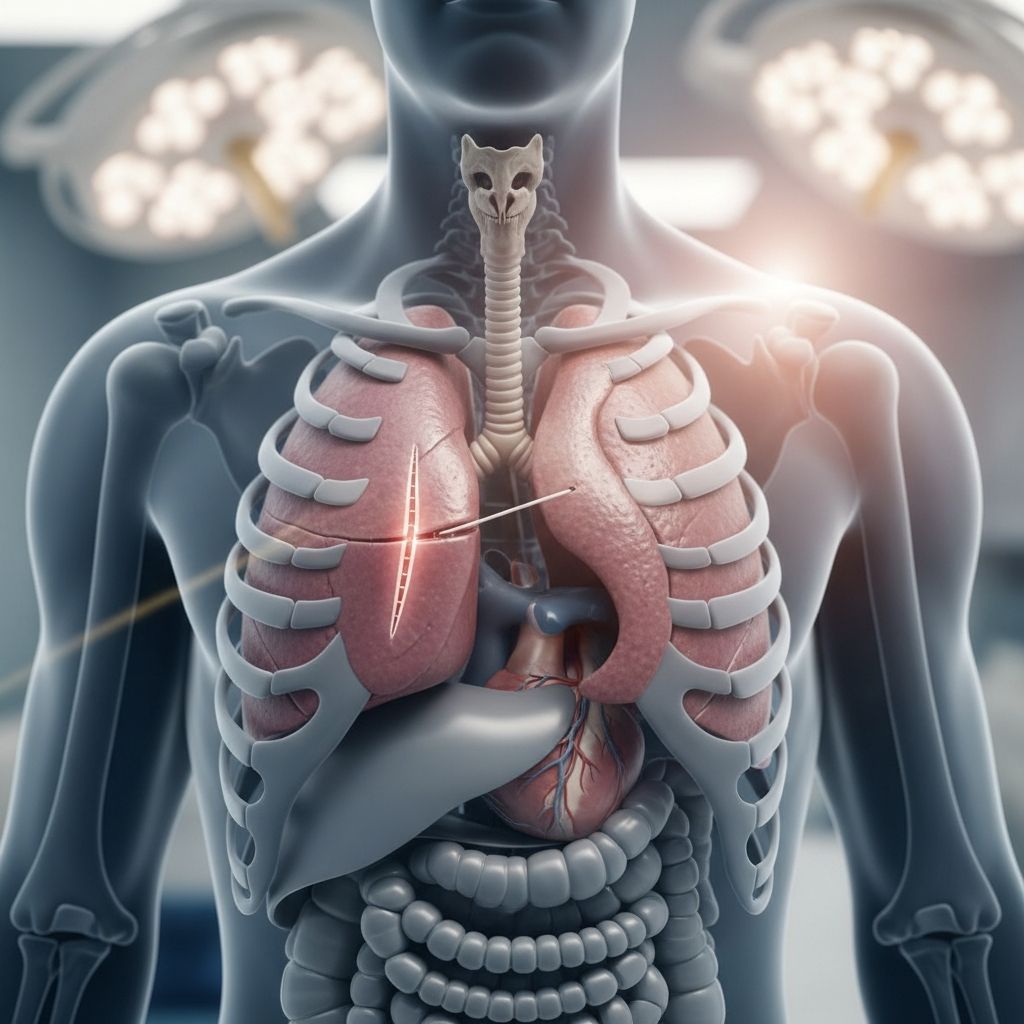
What Is a Lobectomy?
A lung lobectomy, also known as a pulmonary lobectomy, is a surgical procedure in which a thoracic surgeon removes an entire lobe of the lung. This operation is most commonly performed to treat non-small cell lung cancer in its early stages, though it may also be used for lung carcinoid tumors and small cell lung cancer. The procedure offers patients with early-stage lung cancer the best chance of achieving a cure while preserving remaining lung function.
The human lungs are divided into distinct lobes: the right lung contains three lobes, while the left lung contains two lobes. A lobectomy removes one complete lobe while leaving the remaining lobes intact, allowing the patient to continue breathing and maintaining adequate lung capacity for daily activities. This is a major surgery that requires careful planning and professional medical evaluation to determine candidacy.
Why Is a Lobectomy Performed?
A lobectomy is performed primarily as a treatment for early-stage lung cancer. The procedure is considered the standard of care for lung cancer that has not spread beyond the initial tumor site. By removing the entire affected lobe along with surrounding lymph nodes, surgeons can eliminate visible cancer cells while preserving the healthy portions of the lungs.
The procedure is particularly effective for patients with localized non-small cell lung cancer and provides superior outcomes compared to other surgical options for early-stage disease. Medical professionals recommend this approach because it offers the best opportunity for cure while maintaining reasonable lung function in most patients.
Who Is a Candidate for Lung Lobectomy?
Not every patient with lung cancer is a candidate for lobectomy surgery. Your medical team will evaluate several factors to determine if this procedure is appropriate for your specific situation.
You may be eligible for a lobectomy if you meet the following criteria:
- You have non-small cell lung cancer (NSCLC) that is localized to one lung lobe and has not spread to other areas
- Your lung function is sufficiently strong to support breathing with reduced lung capacity after surgery
- You are in good overall health without severe heart disease or other lung diseases that would significantly increase surgical risks
- Your cancer has not metastasized or spread beyond the lungs to distant organs
- You are able to tolerate general anesthesia and can manage the potential complications associated with surgery
- You have adequate performance status to undergo a major surgical procedure
Your healthcare provider will conduct a thorough evaluation including imaging studies, heart tests, blood work, and a comprehensive physical examination to confirm your eligibility and develop an individualized surgical plan.
Preparation for Lobectomy Surgery
Proper preparation is essential for successful surgery and optimal recovery. Your medical team will guide you through several important steps before your procedure date.
Pre-Surgical Testing
Before undergoing a lobectomy, your healthcare provider will order various diagnostic tests to ensure you are healthy enough for surgery and to precisely plan the surgical approach. These tests typically include:
- Chest imaging studies such as X-rays and CT scans to visualize the tumor and determine its exact location
- PET scans to detect if cancer has spread to other areas of the body
- Cardiac testing to evaluate your heart function and assess surgical risk
- Blood tests to check your overall health and organ function
- Pulmonary function tests to measure how well your lungs are currently working
- A thorough physical examination by your surgeon and anesthesiologist
Related Stories



In some cases, your provider may order a CT scan or MRI of your head to determine whether cancer has spread to the brain, which would affect your treatment plan.
Lifestyle Modifications
If you are still smoking at the time of your lung cancer diagnosis, it is highly recommended that you quit smoking before your lobectomy. Smoking can compromise your lung function further and increase the risk of complications during surgery and recovery. Your healthcare team can provide resources and support to help you successfully quit smoking before your procedure.
Your surgical team will provide specific instructions regarding what you should and should not do in the days leading up to surgery, including dietary restrictions and medication adjustments.
Types of Lobectomy Procedures
Surgeons can perform lobectomy using different techniques, each with distinct advantages. The choice of procedure depends on factors including tumor size, location, complexity, and overall patient health status.
Video-Assisted Thoracoscopic Surgery (VATS)
Video-assisted thoracoscopic surgery (VATS) is a minimally invasive approach that uses small incisions and a tiny camera called a thoracoscope to visualize and remove the affected lung lobe. This technique allows surgeons to accomplish the same surgical goals as traditional open surgery while causing significantly less trauma to the chest wall.
VATS lobectomy typically involves several small incisions (ports) spaced throughout the chest wall, through which specialized instruments and the camera are inserted. The surgeon performs the procedure while watching a video monitor, providing excellent visualization of the surgical field. This minimally invasive approach results in reduced pain, shorter hospital stays, faster recovery times, and fewer complications compared to open surgery.
Robot-Assisted Thoracoscopic Surgery (RATS)
Robot-assisted thoracoscopic surgery (RATS) represents an advanced form of minimally invasive surgery that uses robotic surgical instruments controlled by the surgeon. This technology provides enhanced precision and dexterity, allowing for even smaller incisions than traditional VATS.
The robotic approach offers several advantages including reduced risk of air leaks, decreased damage to surrounding healthy lung tissue, and improved surgical precision. Like VATS, robotic-assisted lobectomy results in less pain, shorter recovery periods, and faster return to normal activities compared to open surgery.
Thoracotomy (Open Surgery)
Thoracotomy is the traditional open surgical approach to lung lobectomy. This procedure involves making a larger incision, typically between the ribs along the side of the chest, followed by spreading the ribs apart to gain access to the lungs. While this approach is more invasive than VATS or RATS, it remains necessary in certain complex cases.
Open surgery may be recommended when dealing with large tumors, extensive lymph node involvement, or other anatomical complexities that make minimally invasive approaches difficult or unsafe. Although recovery is typically longer and pain levels higher than with minimally invasive techniques, open thoracotomy provides excellent outcomes for appropriate cases.
For most lung cancer patients, VATS and RATS lobectomies are preferred because of their less invasive nature and shorter recovery times. Your lung cancer specialist will determine which procedure is most appropriate based on your specific clinical situation.
The Lobectomy Procedure
Understanding what happens during your surgery can help reduce anxiety and prepare you for the experience.
During Surgery
When you arrive for your lobectomy, you will be given general anesthesia, which means you will be asleep and will not feel any pain during the procedure. A breathing tube (endotracheal tube) will be placed in your throat, and a ventilator will manage your breathing throughout the surgery. An intravenous (IV) line will be inserted in your arm to deliver medications and fluids during the operation.
The median duration of a pulmonary lobectomy is approximately two hours, though this can vary depending on the complexity of your case. Some surgeries may take less time, while others may require longer if additional procedures or complications arise.
Your surgeon will follow these general steps during the procedure:
- Make incisions according to the chosen surgical approach (VATS, RATS, or thoracotomy)
- Carefully separate the affected lung lobe from surrounding tissues
- Identify and seal blood vessels and airways connected to the lobe using staples or sutures
- Remove the entire affected lobe
- Remove nearby lymph nodes for testing to determine cancer staging
- Inspect the remaining lung tissue for any additional abnormalities
- Place chest tubes to drain fluid and air from the surgical space
- Close the incisions with sutures or staples
Risks and Complications
While lobectomy is a well-established surgical procedure, like all major surgeries, it carries certain risks. It is important to understand these potential complications and discuss them with your surgical team.
The most common complication following lung lobectomy is atrial fibrillation, an irregular heart rhythm that can occur in the days following surgery. This complication can usually be managed with medication.
Other possible risks associated with pulmonary lobectomy may include:
- Bleeding from large blood vessels within the lungs, which can be serious
- Air leaks (bronchopleural fistula) from the remaining lung tissue
- Infection or pneumonia
- Blood clots in the legs or lungs
- Prolonged air leaks requiring extended chest tube placement
- Difficulty breathing or respiratory complications
- Persistent pain at the surgical site
- Fluid accumulation in the chest cavity
Your surgical team will take comprehensive measures to minimize these risks through careful patient selection, meticulous surgical technique, and thorough post-operative monitoring.
Recovery After Lobectomy
Immediate Post-Operative Period
Following your lobectomy, you will be transferred to a recovery room where medical staff will monitor your vital signs closely as you wake from anesthesia. You may feel groggy and disoriented initially, which is a normal response to general anesthesia.
You will likely have chest tubes in place to drain fluid and air from the surgical space. These tubes are essential for proper lung re-expansion and healing. You may also have an oxygen mask to ensure adequate oxygen levels during early recovery.
Hospital Stay
The length of your hospital stay depends on which surgical approach was used. With VATS or RATS lobectomy, your hospital stay is typically two to three days. Recovery tends to be significantly faster with these minimally invasive approaches due to less pain and bleeding compared to open-chest procedures.
If you underwent traditional open surgery (thoracotomy), your hospital stay may be longer. During your hospital stay, nursing staff will help you manage pain, encourage deep breathing and coughing exercises to prevent complications, and monitor your surgical incisions for signs of infection.
Pain Management
Some soreness and pain in the surgical area is expected after lobectomy, particularly in the first two weeks. Your healthcare team will provide appropriate pain medications to help manage discomfort. With minimally invasive approaches like VATS, pain levels are considerably reduced compared to traditional open surgery.
As one thoracic surgeon notes, minimally invasive surgery results in much reduced pain compared to traditional open thoracotomy, though some postoperative soreness is reasonable to expect. Most patients find that pain gradually improves and typically resolves within the first two weeks following surgery.
Long-Term Recovery
It takes at least a month to recover from a lobectomy, though minimally invasive approaches may allow for faster recovery. During this time, you should gradually increase your activity level as tolerated, but avoid strenuous exercise and heavy lifting.
Your surgical team will provide specific guidelines for returning to work and normal activities. Most patients who undergo VATS or RATS lobectomy can return to regular activities faster than those undergoing open surgery due to reduced pain and faster healing.
Long-Term Outcomes and Follow-Up Care
Lobectomy offers excellent long-term outcomes for appropriately selected patients with early-stage lung cancer. A lobectomy or segmentectomy can cure cancer in people with stage I to III non-small cell lung cancer. Results of a less invasive lobectomy are as good as or better than those of an open procedure, making minimally invasive approaches the preferred option for most patients.
Surveillance and Monitoring
After your lobectomy, you will require ongoing surveillance to monitor for cancer recurrence. Depending on your cancer stage, your provider may refer you to an oncologist for additional treatment such as chemotherapy or radiation therapy.
For all stages of lung cancer, you can expect to have CT scans for the next five years following your surgery. Your provider will typically schedule CT scans every six months after your lobectomy to screen for any signs of cancer recurrence. This regular monitoring is important because it allows early detection if cancer returns.
Lung Function After Surgery
Most patients maintain adequate lung function following lobectomy. Your remaining lobes will gradually expand to partially compensate for the removed lobe, though you may notice some decrease in overall lung capacity. Most patients do not experience significant limitations in their daily activities or exercise capacity after recovery.
Frequently Asked Questions
Q: Is lobectomy a major surgery?
A: Yes, lobectomy is a major surgery. While minimally invasive approaches like VATS and RATS reduce trauma compared to open surgery, the procedure still involves significant tissue manipulation and removal of lung tissue. However, serious complications are relatively uncommon with proper patient selection and experienced surgeons.
Q: How long does a lobectomy take?
A: The median time for a pulmonary lobectomy is approximately two hours, though individual procedures may take less or more time depending on the complexity of the case and any unexpected findings during surgery.
Q: What is the difference between VATS and open surgery recovery?
A: VATS lobectomy results in shorter hospital stays (typically 2-3 days versus longer for open surgery), less pain, faster return to normal activities, and fewer complications. Recovery with VATS is generally much faster due to smaller incisions and less trauma to the chest wall.
Q: Can I smoke after lobectomy?
A: You should not smoke after lobectomy, as smoking can damage your remaining lung tissue and increase the risk of lung cancer recurrence. Your healthcare team can provide resources to help you maintain smoking cessation.
Q: Will I need chemotherapy after lobectomy?
A: Whether you need chemotherapy depends on your cancer stage and other factors. Your oncologist will discuss this with you based on your specific pathology results and cancer characteristics.
References
- Lung Cancer Lobectomy Surgery for Lung Tumors — Lung Cancer Group. 2024. https://www.lungcancergroup.com/treatment/surgery/lobectomy/
- Lung Lobectomy: Surgery, Recovery & Outlook — Cleveland Clinic. 2024. https://my.clevelandclinic.org/health/treatments/17608-lobectomy
- Video-assisted thoracoscopic surgery for the treatment of lung cancer — Cleveland Clinic Journal of Medicine. 2010. https://www.ccjm.org/content/ccjom/79/5_e-suppl_1/S23.full.pdf
- Lung Resection: Procedure, Types, Risks & Recovery — Cleveland Clinic. 2024. https://my.clevelandclinic.org/health/treatments/21868-lung-resection
- Thoracic Surgery: Types, Procedure Details & Recovery — Cleveland Clinic. 2024. https://my.clevelandclinic.org/health/treatments/24201-thoracic-surgery
Similar Articles








Read full bio of Sneha Tete