Lungs: Location, Anatomy, Function & Complications
Complete guide to lung anatomy, location, function and health conditions affecting respiratory health.
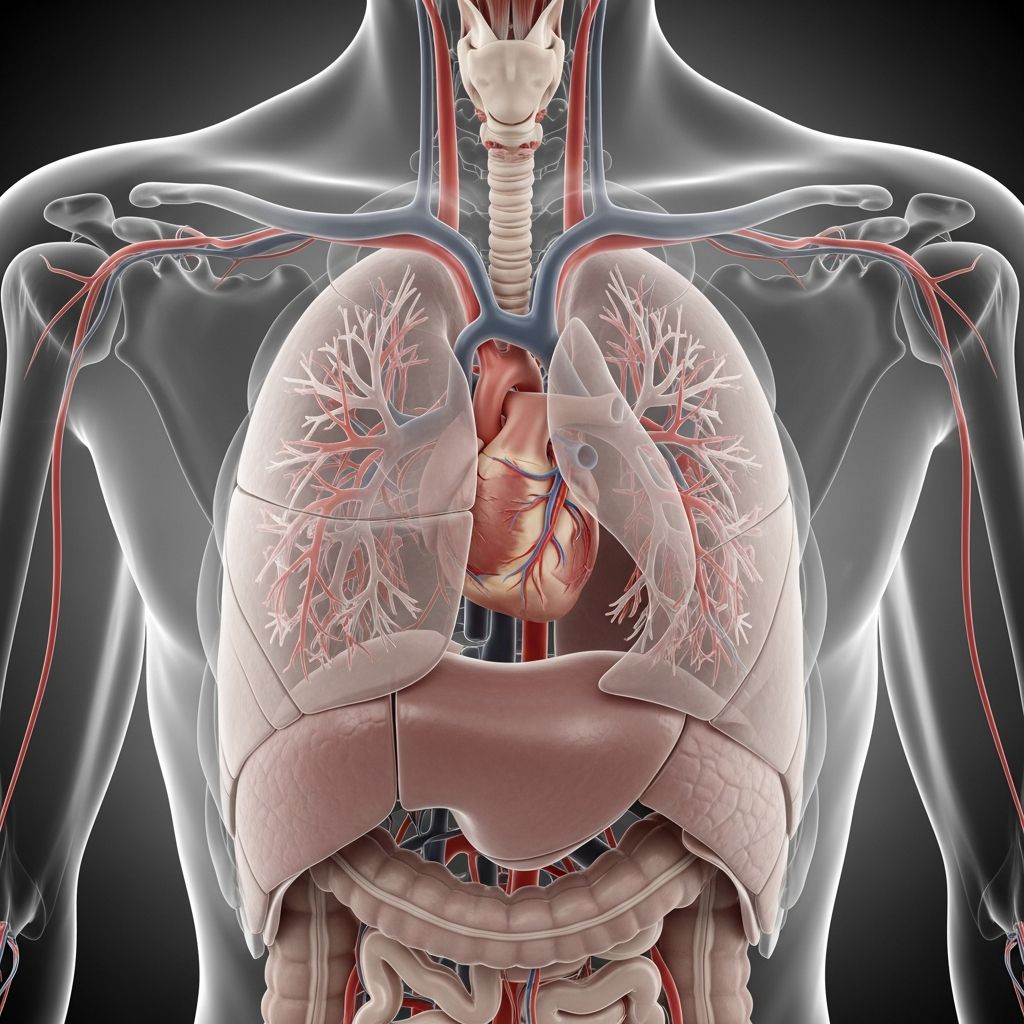
Your lungs are among the largest organs in your body and serve as the cornerstone of your respiratory system. These remarkable organs work tirelessly to bring oxygen into your body and remove carbon dioxide, a waste product of cellular metabolism. Understanding the structure and function of your lungs is essential for maintaining respiratory health and recognizing when something might be wrong.
What Are Lungs?
Lungs are spongy, elastic organs located in your chest cavity that perform the critical function of gas exchange. They are made up of millions of tiny air sacs called alveoli, which are where oxygen from the air you breathe is transferred to your blood, and carbon dioxide from your blood is released to be exhaled. This remarkable design allows your lungs to process large volumes of air daily while supporting essential bodily functions.
The lungs are part of the lower respiratory tract, which begins at the windpipe, also called the trachea, and branches into two main pathways. These pathways divide into smaller tubes called bronchi, which further subdivide into bronchioles. Finally, these tiny branches end in the alveoli, where the actual gas exchange takes place.
Location of the Lungs
Your lungs are located in your chest, in a space called the thoracic cavity. This cavity contains not only your lungs but also your heart and other vital organs. The lungs rest on a muscle called the diaphragm, which plays a crucial role in the breathing process by contracting and relaxing to draw air in and push it out.
The lungs extend from just below your collarbone down to approximately the bottom of your rib cage. They are positioned on either side of your heart, with the left lung being slightly smaller to accommodate this vital organ. The pleural tissue, a protective covering, surrounds both lungs and helps them move smoothly within the chest cavity.
Anatomy of the Lungs
Lobes and Structure
The lungs are not symmetrical organs. Your right lung is divided into three distinct sections called lobes: the superior (upper), middle, and inferior (lower) lobe. The right lung is shorter and wider than its counterpart on the left side.
Your left lung, by contrast, has only two lobes: the superior and inferior. This difference in structure exists because your heart occupies the space where the middle lobe would be on the left side. Your left lung also features two unique structures that your right lung does not have: the cardiac notch, which is an indentation where your heart sits, and the lingula, an extension of the superior lobe that somewhat compensates for the missing middle lobe.
Surfaces of the Lungs
The lungs have three main surfaces that interact with surrounding body structures. The outer surface, covered by the pleura, faces the rib cage and allows for smooth movement during breathing. The inner surface faces the middle of the chest, preventing the lungs from moving too far toward the heart and other organs. The bottom surface, also covered by the pleura, rests on the diaphragm and helps the lungs stay in place as it contracts and relaxes during the breathing process.
Related Stories



The Diaphragm’s Role
The diaphragm functions as a flexible partition separating your chest cavity from your abdominal cavity. When you inhale, your diaphragm contracts and flattens, moving downward. This action increases the volume of your chest cavity, creating a vacuum-like effect that draws air into your lungs. When you exhale, your diaphragm relaxes and returns to its dome shape, reducing the chest cavity volume and gently squeezing the lungs to push air out.
How Lungs Function
The Breathing Process
Breathing is a continuous cycle that occurs 12 to 20 times per minute throughout your life. When you inhale through your nose or mouth, air travels down your pharynx (the back of your throat), passes through your larynx (voice box), and enters your trachea (windpipe). Think of this pathway as a series of airport runways guiding passengers—in this case, oxygen molecules—to their final destination.
From the trachea, air flows into your bronchial tubes, which lead to smaller air passages called bronchi, and then into even smaller bronchioles. These tiny branches terminate in clusters of air sacs called alveoli, which look like small round grapes clustered together. At the alveolar level, the actual gas exchange occurs.
Gas Exchange at the Alveoli
The alveoli are where the magic of respiration happens. Oxygen from the inhaled air is transferred from the alveoli into your blood through the capillary walls. This oxygen-rich blood then leaves your lungs and is carried to your heart, which pumps it throughout your body to provide oxygen to the cells of your tissues and organs.
Simultaneously, as cells throughout your body use oxygen for metabolism, they produce carbon dioxide as a waste product. This carbon dioxide is transferred to your blood, which carries it back to your lungs. When you exhale, you remove this carbon dioxide from your body, completing the gas exchange cycle.
Additional Lung Functions
Beyond gas exchange, your lungs perform several other vital functions that support overall health and homeostasis:
Blood Pressure Regulation
Your lungs help regulate blood pressure by providing angiotensin-converting enzyme (ACE), which converts a hormone called angiotensin I into angiotensin II. Angiotensin II narrows blood vessels, which increases blood pressure. This regulatory function helps maintain cardiovascular equilibrium.
Surfactant Production
Your lungs produce a special substance called surfactant, which helps your lungs inflate easily during breathing. Without surfactant, breathing would be significantly harder, and you wouldn’t be able to get enough oxygen. This substance is particularly important in newborns, whose lungs produce surfactant only in the final weeks of pregnancy.
Blood Reservoir Function
Your lungs store approximately 10% of your body’s blood supply. This blood can be released quickly when your body needs it, such as during physical exercise or in emergency situations requiring increased oxygen delivery.
Temperature Regulation
Your lungs help cool your body down by releasing heat through controlled breathing. By slowing or increasing the pace of breathing, your lungs can help regulate core body temperature.
Immune Defense
Your lungs play an important role in protecting your body from germs and particles in the air. They trap these harmful substances in mucus, which you can then cough up or blow out, preventing infection and maintaining respiratory health.
Protection of the Airways
Your respiratory system has multiple mechanisms to prevent harmful substances from entering your lungs. These protective features include mucus production, cilia action, and coughing reflexes that work together to keep your airways clean and free from debris and pathogens.
Common Lung Complications and Conditions
Several conditions can affect your lungs and respiratory function. These range from acute infections to chronic diseases:
- Asthma: A chronic condition causing inflammation and narrowing of the airways
- Chronic Obstructive Pulmonary Disease (COPD): Progressive lung disease affecting breathing
- Pneumonia: Infection causing inflammation of the alveoli
- Pulmonary Fibrosis: Scarring of lung tissue affecting gas exchange
- Lung Cancer: Malignant growth in lung tissue
- Bronchitis: Inflammation of the bronchial tubes
- Emphysema: Damage to alveoli reducing surface area for gas exchange
- Sleep Apnea: Temporary cessation of breathing during sleep
Maintaining Lung Health
Protecting your lungs is essential for overall health and longevity. Key strategies include avoiding smoking and secondhand smoke, exercising regularly, maintaining good air quality in your environment, staying up to date with vaccinations, and seeking medical attention for persistent respiratory symptoms. Regular check-ups with your healthcare provider can help detect and manage lung conditions early.
Frequently Asked Questions
How much air can my lungs hold?
Your lungs can hold about 5 liters of air at maximum capacity. However, you typically only use about 500 milliliters of air with each normal breath, called the tidal volume.
Why is the left lung smaller than the right lung?
Your left lung is smaller because your heart is located slightly to the left of center in your chest. The space where the middle lobe would normally be on the left side is occupied by your heart, creating the cardiac notch.
What is the pleura?
The pleura is a protective double-layered membrane that covers your lungs. It allows your lungs to move smoothly against the rib cage and other structures during breathing while preventing friction.
How many times per minute do I breathe?
The average person breathes 12 to 20 times per minute at rest. This rate can increase during physical activity or decrease during sleep.
What happens if my lungs are damaged?
Lung damage can reduce your lungs’ ability to perform gas exchange, leading to reduced oxygen levels in your blood and increased carbon dioxide retention. This can result in shortness of breath, fatigue, and other respiratory complications. Seeking medical care is important for managing lung damage.
Can my lungs regenerate?
While lungs have some capacity for repair and regeneration, severe damage such as from extensive smoking or advanced lung disease may result in permanent scarring and reduced function. Early intervention and prevention are crucial for preserving lung health.
References
- How Lungs Look and Function — Breathe Free. Accessed December 2024. https://www.breathefree.com/lung-health/how-lungs-look-and-function
- Lungs: Location, Anatomy, Function & Complications — Cleveland Clinic. Updated 2024. https://my.clevelandclinic.org/health/body/8960-lungs
- How Do Lungs Work? — Cleveland Clinic. Video resource. https://cle.clinic/48aiCoe
- Respiratory System: Organs, Facts, Anatomy & Function — Cleveland Clinic. Updated 2024. https://my.clevelandclinic.org/health/body/21205-respiratory-system
- The Human Respiratory System: A Marvelous Bodily Circuit or a Fragile Interconnected Network — Youth Medical Journal. February 24, 2022. https://youthmedicaljournal.com/2022/02/24/the-human-respiratory-system-a-marvelous-bodily-circuit-or-a-fragile-interconnected-network/
- Airways: Respiratory Tract, Parts, Anatomy & Function — Cleveland Clinic. Updated 2024. https://my.clevelandclinic.org/health/body/airway
Similar Articles








Read full bio of Sneha Tete