Lupus Pernio: Diagnosis, Treatment, And Outcomes Guide
Chronic skin manifestation of sarcoidosis causing disfiguring plaques on face, requiring targeted therapy to prevent scarring.
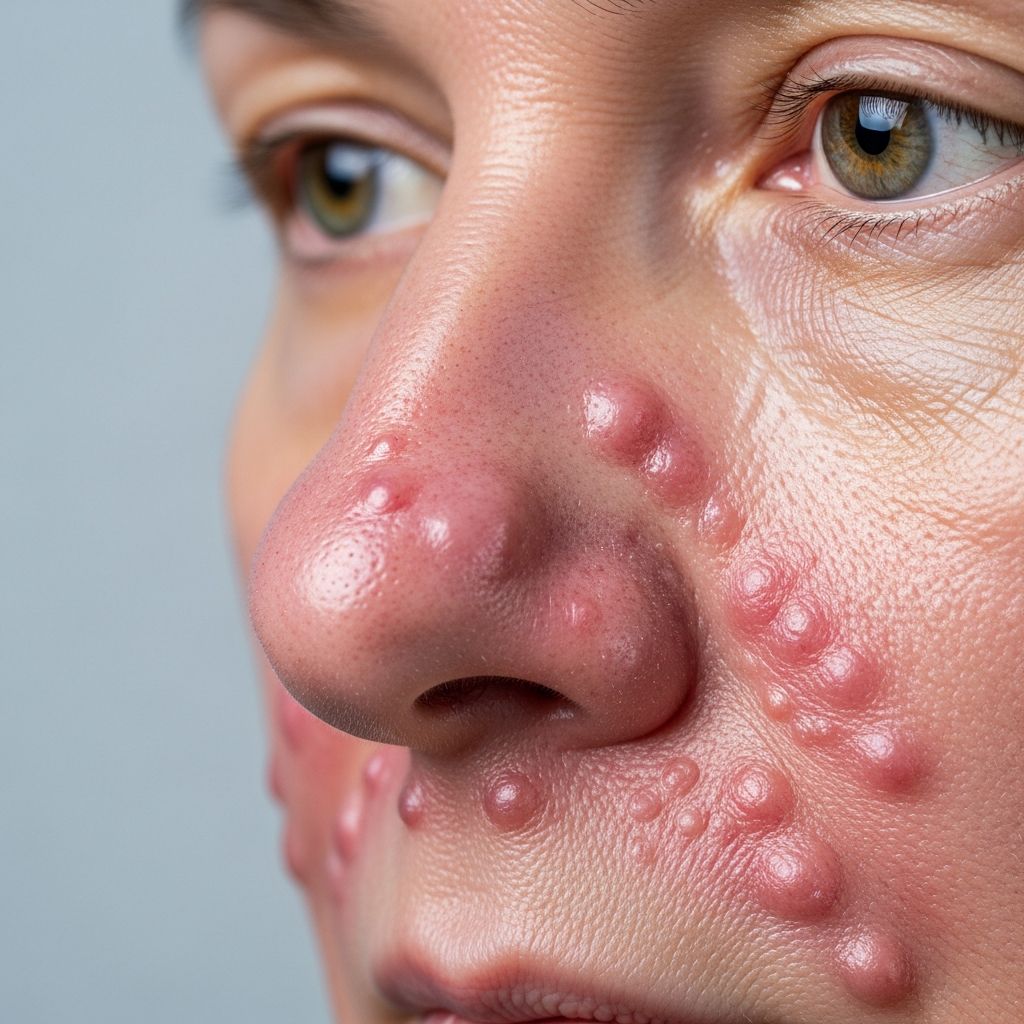
Lupus pernio is a distinctive and often disfiguring cutaneous manifestation of sarcoidosis, characterised by chronic, violaceous, indurated plaques primarily affecting the central face.
What is lupus pernio?
**Lupus pernio** represents a severe form of skin involvement in sarcoidosis, a multisystem granulomatous disorder of unknown aetiology. Unlike more common papular sarcoid lesions, lupus pernio features plaque-like or nodular lesions that infiltrate deeper tissues, leading to fibrosis, cartilage destruction, and permanent deformity. First described by Besnier in 1889, the term ‘lupus pernio’ evokes its resemblance to chronic lupus vulgaris (tuberculosis) combined with pernio (chilblain-like appearance).
These lesions occur in 5-10% of sarcoidosis patients but carry a high risk of chronicity and extracutaneous involvement, particularly in the respiratory tract (up to 75% of cases). Lupus pernio signals advanced, potentially aggressive sarcoidosis, distinguishing it from milder cutaneous forms.
Who gets lupus pernio?
Lupus pernio predominantly affects adults aged 25-45 years, with a marked female predominance (3:1 ratio). It is more prevalent in individuals of African or Scandinavian descent, reflecting sarcoidosis epidemiology.
- Risk factors: Chronic sarcoidosis phenotype, Northern European or African ancestry, female sex
- Associations: Pulmonary sarcoidosis (75%), upper respiratory tract involvement (50%), bone cysts (nasal mucosa), lacrimal gland infiltration
Unlike acute sarcoid rash, lupus pernio rarely remits spontaneously and requires aggressive intervention to prevent progression.
What causes lupus pernio?
The exact pathogenesis remains elusive, but sarcoidosis involves exaggerated T-cell mediated immune response to an unknown antigen, forming non-caseating granulomas. In lupus pernio:
- Persistent antigenic stimulation triggers macrophage aggregation and granuloma formation in dermis and subcutis
- Cytokine dysregulation (TNF-α, IL-2) promotes fibrosis and tissue remodelling
- Vascular involvement contributes to violaceous hue and induration
Genetic predisposition (HLA-DRB1 alleles) and environmental triggers (e.g., organic dust exposure) play roles, though no specific lupus pernio trigger identified.
What are the clinical features of lupus pernio?
Classic lesions appear as
smooth, shiny, violaceous or erythematous plaques
on the nose, cheeks, ears, lips, and forehead. Lesions begin as subtle nodules but progressively indurate, eroding cartilage and bone, causing:- Nasal deformity: Broadened ‘saddle-nose’, septal perforation
- Facial distortion: Bulbous ears, thickened lips, leonine facies
- Extremity involvement: Rare plaques on fingers/toes (acral lupus pernio)
Symptoms include cosmetic disfigurement, tenderness, and epistaxis from nasal crusting. Extracutaneous signs (dyspnoea, eye redness) indicate systemic disease.
| Location | Frequency | Typical Features |
|---|---|---|
| Nose | 90% | Violaceous plaque, cartilage destruction, saddle-nose deformity |
| Cheeks | 75% | Indurated plaques, telangiectasia |
| Ears | 50% | Earlobe thickening, nodular |
| Lips/Forehead | 30% | Mucosal involvement, shiny surface |
| Extremities | <10% | Acral nodules (poor prognosis) |
Diagnosis of lupus pernio
Diagnosis combines clinical morphology, histopathology, and sarcoidosis exclusion:
- Clinical: Characteristic central facial plaques with apple-jelly nodules on diascopy
- Histology: Skin biopsy reveals
naked sarcoid granulomas
(non-caseating epithelioid histiocytes) - Systemic evaluation: Chest X-ray/CT (hilar adenopathy), pulmonary function tests, serum ACE (elevated in 60%), calcium
Differential diagnosis: Tuberculosis (lupus vulgaris), leishmaniasis, granuloma faciale, relapsing polychondritis, midline granuloma.
Treatment of lupus pernio
Treatment aims to halt progression, induce regression, and minimise scarring/disfigurement. Response varies; lupus pernio proves notoriously treatment-resistant.
Local therapies
- Intralesional corticosteroids: Triamcinolone acetonide (10-40 mg/mL) injected every 4-6 weeks; first-line for localised disease
- Topical corticosteroids: Class I-II potency under occlusion; limited penetration
- Topical calcineurin inhibitors: Tacrolimus 0.1% or pimecrolimus 1% BID; steroid-sparing
Related Stories



Systemic therapies
| Agent | Dose | Response Rate | Monitoring |
|---|---|---|---|
| Prednisone | 0.5-1 mg/kg/day | 60-80% (rapid) | Bone density, glucose |
| Methotrexate | 15-25 mg/week | 50-70% | LFTs, CBC q1-2 months |
| Hydroxychloroquine | 200-400 mg/day (<6.5 mg/kg IBW) | 40-60% | Annual ophthalmology |
| TNF-α inhibitors (infliximab) | 3-5 mg/kg IV q4-8w | 70-90% (refractory) | TB screen, infusions |
Stepwise approach: Start intralesional steroids ± topicals; escalate to oral steroids/methotrexate; reserve biologics for refractory cases.
Refractory disease
- Minocycline/doxycycline: 100 mg BID (anti-inflammatory)
- Thalidomide: 100-200 mg/day (restricted access due to teratogenicity)
- Infliximab/adalimumab: Superior for disfiguring nasal disease
Surgical reconstruction considered post-remission for severe nasal deformity, though recurrence risk high.
What is the outcome for lupus pernio?
Lupus pernio follows a chronic, unremitting course in 80-90% of cases, contrasting with self-limited sarcoid rashes. Untreated, it causes progressive disfigurement and signals multisystem sarcoidosis (lungs, URT). With therapy:
- Remission: 30-50% achieve partial/complete response
- Relapse: Common upon tapering; maintenance therapy often required
- Scarring: Irreversible fibrosis prevalent despite treatment
Prognosis improves with early intervention; pulmonary involvement dictates overall survival.
Prevention of lupus pernio
No primary prevention exists, but sarcoidosis patients benefit from:
- Sun protection (photosensitivity rare but possible)
- Smoking cessation (worsens sarcoidosis)
- Early dermatology referral for papular sarcoid to prevent plaque evolution
Frequently Asked Questions
Is lupus pernio contagious?
No. Lupus pernio results from immune dysregulation in sarcoidosis, not infection.
Can lupus pernio be cured?
Complete cure rare; most achieve disease control with scarring. Remission possible in 30-50%.
Does lupus pernio always affect the lungs?
No, but 75% have pulmonary sarcoidosis at diagnosis; screening essential.
How long do lupus pernio lesions take to respond to treatment?
Topicals: 4-8 weeks; systemic steroids: 2-4 weeks; antimalarials/mtx: 3-6 months.
Can surgery fix lupus pernio deformity?
Reconstructive surgery post-remission improves cosmesis but risks recurrence in scars.
References
- Chilblain Lupus (SLE pernio) — Dermatology Advisor. 2023. https://www.dermatologyadvisor.com/home/decision-support-in-medicine/dermatology/chilblain-lupus-sle-pernio/
- Lupus Pernio — MD Searchlight. 2024. https://mdsearchlight.com/skin-problems-and-treatments/lupus-pernio/
- Lupus Pernio: Successful Treatment With a Potent Topical Corticosteroid — JAMA Dermatology. 1999-04-01. https://jamanetwork.com/journals/jamadermatology/fullarticle/556685
- Lupus pernio — Wikipedia. 2024. https://en.wikipedia.org/wiki/Lupus_pernio
- Lupus pernio — DermNet. 2024. https://dermnetnz.org/topics/lupus-pernio
- Lupus Pernio — StatPearls [Internet]. NCBI Bookshelf. 2023-07-17. https://www.ncbi.nlm.nih.gov/books/NBK536968/
Similar Articles








Read full bio of Sneha Tete