Lupus vs. Rheumatoid Arthritis: Key Differences
Understand the critical differences between lupus and rheumatoid arthritis for better diagnosis and treatment.
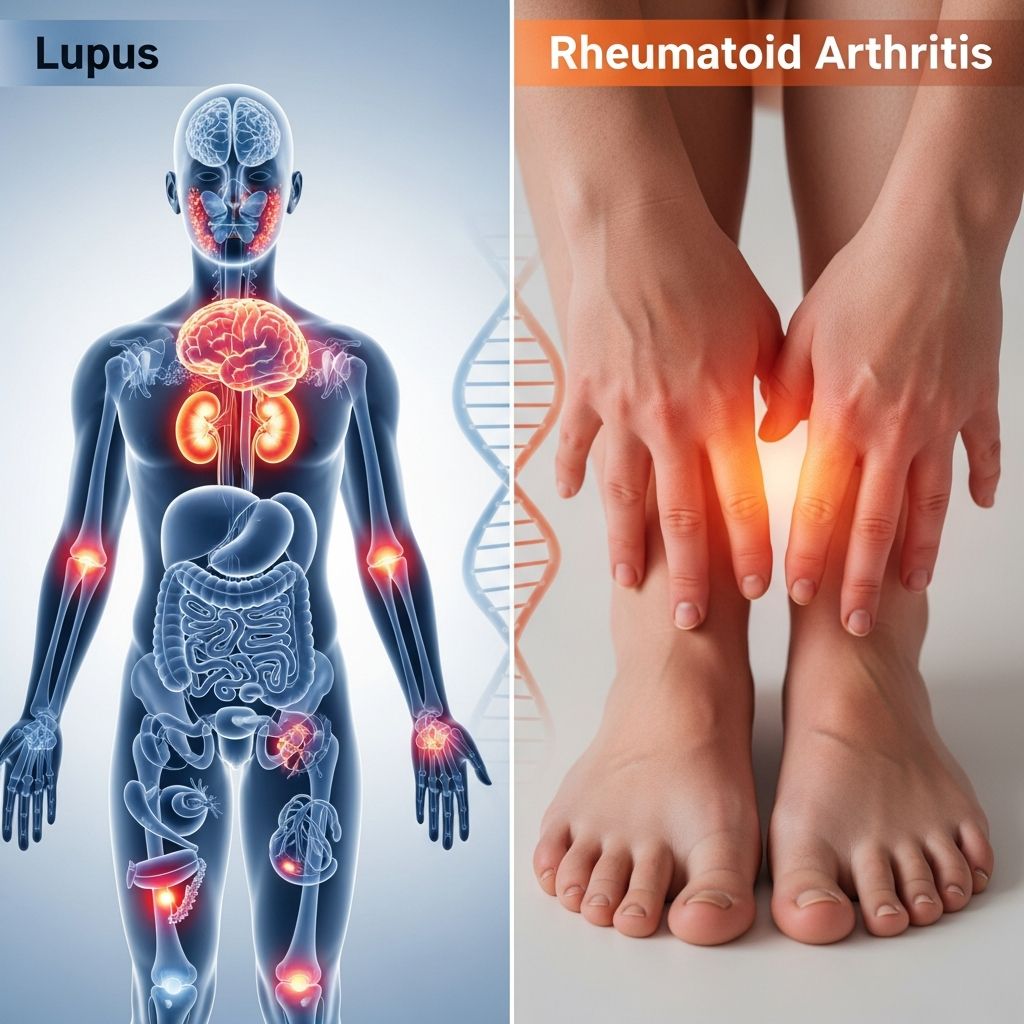
Lupus vs. Rheumatoid Arthritis: Understanding the Differences
Both lupus and rheumatoid arthritis (RA) are autoimmune diseases that can cause significant discomfort and affect quality of life. While they share some similarities, these conditions have distinct characteristics that affect how they progress and how they are treated. Understanding the differences between lupus and rheumatoid arthritis is essential for proper diagnosis and management.
What Are Lupus and Rheumatoid Arthritis?
Lupus, formally known as systemic lupus erythematosus (SLE), is an autoimmune disease in which the body’s immune system attacks its own tissues and organs. This can affect the skin, joints, blood vessels, heart, lungs, kidneys, and nervous system. Rheumatoid arthritis is an autoimmune disease that primarily targets the joints, causing inflammation and deterioration of joint tissue.
Similarities Between Lupus and Rheumatoid Arthritis
Despite their differences, lupus and rheumatoid arthritis share several common characteristics:
- Joint pain and stiffness: Both conditions cause joint pain and stiffness, particularly in the morning
- Symmetrical symptoms: Both diseases typically affect joints symmetrically, meaning the same joints on both sides of the body are affected
- Morning stiffness: Patients with either condition often experience morning stiffness lasting at least one hour that improves with movement
- Fatigue: Both lupus and rheumatoid arthritis cause persistent fatigue and weakness
- Fever: A periodic low-grade fever is a shared symptom, though it is more common in lupus
- Joint swelling: Hot and tender joints are common in both conditions, though more pronounced in RA
- Systemic symptoms: Both diseases can cause depression, loss of appetite, and weight loss
Key Differences Between Lupus and Rheumatoid Arthritis
Parts of the Body Affected
One of the most significant differences between these two conditions is the scope of their impact. Rheumatoid arthritis primarily affects the joints, including the fingers, wrists, knees, and ankles. Lupus, on the other hand, is a more systemic disease that can affect virtually any part of the body, including internal organs and skin. This means lupus patients may experience symptoms far beyond joint involvement.
Skin Manifestations
Skin rashes are common with lupus but rare with rheumatoid arthritis. Lupus characteristically causes a butterfly-shaped rash (malar rash) across the cheeks and nose. Lupus can also cause raised red patches on the skin and rashes triggered by sunlight exposure. Rheumatoid arthritis, conversely, may occasionally cause painful skin nodules, though this is not a common symptom.
Joint Swelling and Deformity
The swelling of joints in rheumatoid arthritis tends to be more prominent than in lupus. Additionally, rheumatoid arthritis can cause permanent joint deformities over time, while lupus-related joint deformities like Jaccoud’s arthropathy are typically reversible. This makes RA potentially more destructive to joint structure in the long term.
Pattern of Symptoms
Rheumatoid arthritis typically results in consistent pain and swelling in the joints, while lupus symptoms tend to be more sporadic, appearing and disappearing without a predictable pattern. RA symptoms may come and go in periods called flares and remissions, but they are generally more constant when active. Lupus, by contrast, can have unpredictable flare-ups and periods of relative quiet.
Related Stories



Timing of Joint Pain
Pain associated with rheumatoid arthritis is usually worse in the morning and tends to improve as the day progresses. Lupus-related joint pain, however, remains relatively constant throughout the day. This distinction can help differentiate between the two conditions when patients describe their symptoms.
Distinctive Symptoms of Each Condition
Rheumatoid Arthritis-Specific Symptoms
According to the Arthritis Foundation, rheumatoid arthritis presents with specific characteristics:
- Pain, stiffness, or swelling in joints lasting six weeks or more
- Stiff joints in the morning lasting 30 minutes or more
- Multiple joint involvement
- Symptoms occurring first in smaller joints, such as hands, wrists, and feet
- Tender, warm, and swollen joints
- Fatigue and low-grade fever
Lupus-Specific Symptoms
Lupus presents a broader range of symptoms beyond joint involvement:
- Butterfly-shaped rash across cheeks and nose
- Raised red patches on skin and sun-triggered rashes
- Ulcers or open sores in the mouth or nose, usually painless
- Hair loss or alopecia
- Chest pain, especially when taking deep breaths
- Headaches and neurological symptoms
- Seizures or psychosis
- Kidney problems
- Blood disorders, including low white cell or platelet counts
- Low-grade fever, usually at night
- Sensitivity to light
- Swelling in hands, feet, or around the eyes
Organ Involvement and Complications
Rheumatoid Arthritis Complications
While rheumatoid arthritis primarily affects the joints, it can extend to other organ systems. RA can cause inflammation in the lungs and around the heart, as well as affect the eyes and blood counts. However, these systemic complications are less common with available treatment options.
Lupus Complications
Lupus can lead to more serious complications affecting multiple internal organs. Common lupus-related complications include:
- Kidney failure
- Blood clotting problems
- Seizures
- Pleuritic chest pain with inflammation of the lungs and heart lining
- Psychosis and delusions
Diagnosis: How Doctors Tell Them Apart
Diagnosing Rheumatoid Arthritis
Diagnosing rheumatoid arthritis often involves blood tests that look for specific markers, such as rheumatoid factor (RF) or anti-citrullinated protein antibody (ACPA). Imaging tests like X-rays are also commonly used to assess joint damage and inflammation.
Diagnosing Lupus
Lupus diagnosis is more challenging and typically requires a combination of blood tests, urine tests, and physical examinations to identify the presence of autoantibodies and evaluate symptoms. A positive test for antinuclear antibodies (ANA) is often indicative of lupus. Doctors may also look for specific lupus antibodies and evaluate kidney function through urine tests.
Understanding RHUPUS
There is a rare condition called RHUPUS in which patients have many signs and symptoms of lupus, such as skin rashes, oral ulcers, chest pain, and shortness of breath, combined with an aggressive form of arthritis that can cause erosions to the bones and joint deformities. These patients usually have positive Rheumatoid Factor (RF) and Anti-CCP antibodies together with other autoantibodies present in lupus. This overlap highlights why doctors may recommend testing for rheumatoid arthritis even in patients diagnosed with lupus.
Comparison Table: Lupus vs. Rheumatoid Arthritis
| Feature | Rheumatoid Arthritis | Lupus |
|---|---|---|
| Primary Affected Areas | Joints (fingers, wrists, knees, ankles) | Multiple body systems (joints, skin, organs) |
| Joint Swelling | More prominent | Less prominent |
| Skin Rash | Rare (skin nodules may occur) | Common (butterfly rash) |
| Joint Pain Pattern | Worse in morning, improves during day | Constant throughout day |
| Symptom Pattern | Consistent when active | Sporadic and unpredictable |
| Organ Involvement | Less common | Common (kidneys, heart, lungs, nervous system) |
| Key Diagnostic Test | Rheumatoid Factor (RF), Anti-CCP | Antinuclear Antibodies (ANA) |
| Serious Complications | Lung and heart inflammation | Kidney failure, blood clots, seizures |
Frequently Asked Questions
Q: Can someone have both lupus and rheumatoid arthritis at the same time?
A: Yes, a condition called RHUPUS combines characteristics of both lupus and rheumatoid arthritis. Patients with RHUPUS have both lupus symptoms and aggressive arthritis with positive markers for both conditions.
Q: Is lupus worse than rheumatoid arthritis?
A: Both conditions can be serious, but lupus tends to be more life-threatening due to its potential for affecting vital organs like the kidneys and nervous system. However, modern treatments have improved outcomes for both conditions.
Q: How long does morning stiffness last in these conditions?
A: In rheumatoid arthritis, morning stiffness typically lasts 30 minutes or more and improves with movement. In lupus, morning stiffness also usually lasts more than one hour but improves with activity.
Q: Can rheumatoid arthritis cause a rash?
A: Rheumatoid arthritis rarely causes rashes. While it may occasionally cause painful skin nodules, the characteristic butterfly rash is specific to lupus and should prompt evaluation for systemic lupus erythematosus.
Q: Do lupus and rheumatoid arthritis affect the same joints?
A: Both conditions commonly affect the small joints of the fingers, wrists, knees, and ankles. However, lupus can affect additional joints and, more importantly, extends beyond joint involvement to affect internal organs and skin.
Q: Why is lupus diagnosis more difficult than rheumatoid arthritis diagnosis?
A: Lupus diagnosis is challenging because symptoms mimic many other conditions and vary widely among patients. It requires a combination of blood tests, urine tests, and physical examinations, while rheumatoid arthritis can be identified through specific blood markers and imaging.
Seeking Timely Medical Assistance
If you experience persistent joint pain, swelling, and stiffness lasting more than a few weeks, particularly if accompanied by rashes, fever, or other systemic symptoms, it is crucial to seek medical evaluation. A rheumatologist can perform appropriate testing and help differentiate between lupus, rheumatoid arthritis, and other conditions. Early diagnosis and treatment can significantly improve outcomes and quality of life for both conditions. Do not delay seeking professional medical advice if you suspect you may have either of these autoimmune diseases.
References
- The Difference Between Rheumatoid Arthritis (RA) and Lupus — Healthline. Accessed January 2026. https://www.healthline.com/health/lupus-and-ra
- Rheumatoid Arthritis and Lupus: Signs, Symptoms, and Similarities — Rheumatologist On Call. October 26, 2023. https://rheumatologistoncall.com/2023/10/26/rheumatoid-arthritis-and-lupus-signs-symptoms-and-similarities/
- Rheumatoid Arthritis vs. Lupus: Key Differences and Comparisons — HealthCentral. Accessed January 2026. https://www.healthcentral.com/condition/rheumatoid-arthritis/rheumatoid-arthritis-vs-lupus
- Rheumatoid Arthritis vs. Lupus: What’s the Difference? — Gundersen Health. Accessed January 2026. https://www.gundersenhealth.org/health-wellness/aging-well/rheumatoid-arthritis-vs-lupus-whats-the-difference
- Lupus vs. Rheumatoid Arthritis: Similarities, Differences, and More — Medical News Today. Accessed January 2026. https://www.medicalnewstoday.com/articles/lupus-vs-ra
- Rheumatoid Arthritis and Lupus: Do They Differ? — WebMD. Accessed January 2026. https://www.webmd.com/rheumatoid-arthritis/ra-lupus-difference
- Lupus vs. Rheumatoid Arthritis: What’s the Difference? — CreakyJoints. Accessed January 2026. https://creakyjoints.org/living-with-arthritis/symptoms/lupus-vs-rheumatoid-arthritis/
Similar Articles








Read full bio of Sneha Tete