Luteinizing Hormone: Levels, Function & Testing
Understanding LH: The hormone that regulates your reproductive system and sexual health.
What is Luteinizing Hormone?
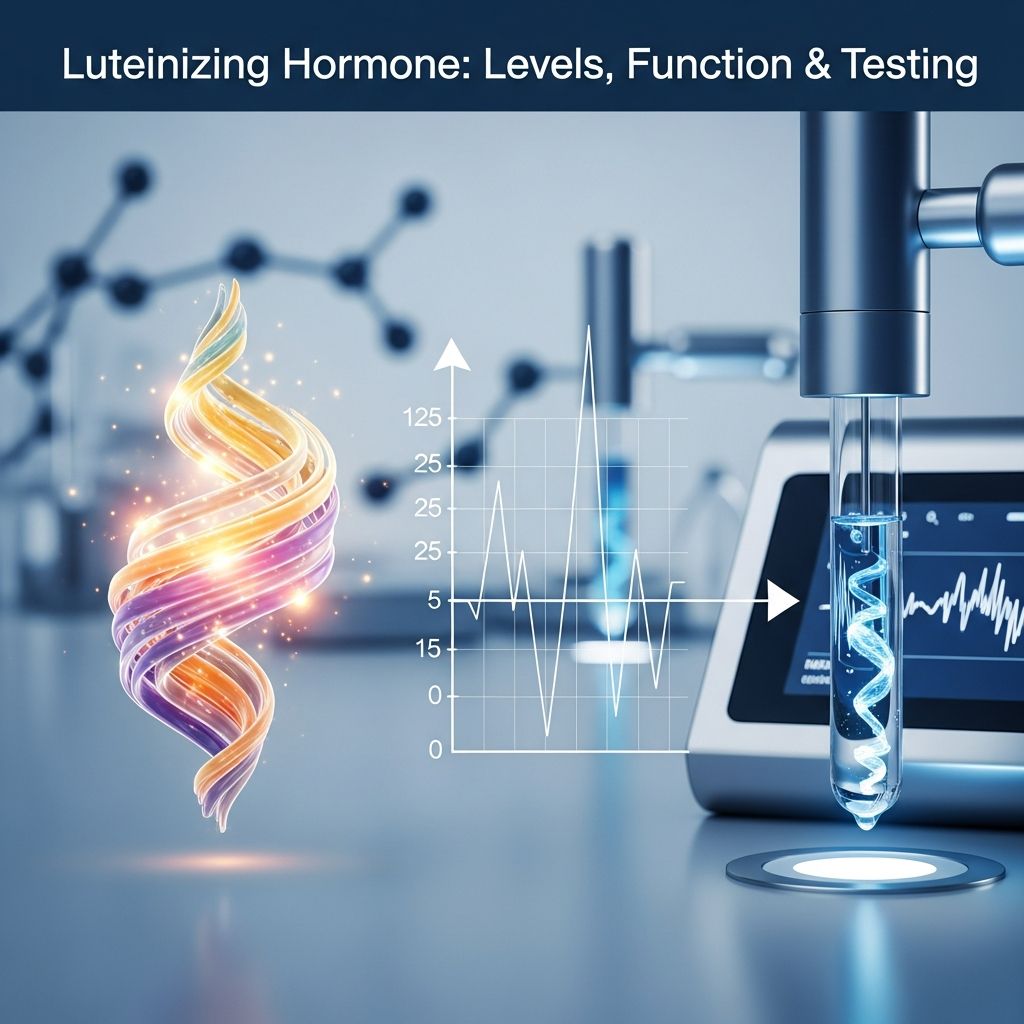
Luteinizing hormone (LH) is a chemical messenger in your body that triggers crucial processes in your reproductive system. This hormone is secreted by the pituitary gland, a small endocrine structure located at the base of your brain. LH works in coordination with follicle-stimulating hormone (FSH) to regulate essential reproductive functions including menstruation, puberty, sexual development, and sex drive.
Understanding your LH levels can provide valuable insights into how your sex organs and pituitary gland are functioning. When LH levels are too high or too low, it may indicate an underlying medical condition affecting your reproductive health. Your healthcare provider may order an LH test if you experience fertility issues, low libido, or irregular menstruation.
How LH Functions in Your Body
LH acts as a hormone that stimulates your reproductive system into action. This powerful hormone operates differently depending on your biological sex, affecting both your reproductive organs and overall sexual development. The pituitary gland carefully controls LH production, releasing it in specific patterns that change throughout your life.
LH in Women
In women, LH stimulates critical changes in the ovaries that maintain the menstrual cycle and support pregnancy. Throughout your menstrual cycle, LH levels fluctuate in a coordinated pattern with other hormones. During the middle of your cycle, LH levels surge dramatically, triggering ovulation—the release of an egg from your ovary. This surge is so distinctive that it can be detected in urine, which is why many home ovulation predictor kits work by measuring LH levels.
As women age and approach menopause, LH levels increase significantly as estrogen and progesterone levels decline. This hormonal shift represents a natural transition in your reproductive system as your ovaries produce fewer eggs and less hormone.
LH in Men
In men, LH stimulates the testes to produce testosterone, the primary male sex hormone essential for sperm production. Testosterone is also responsible for secondary sex characteristics, including a deeper voice, increased body hair, and greater muscle mass. Unlike in women, LH hormone levels in men remain relatively stable after puberty, maintaining consistent testosterone production throughout adulthood.
LH During Puberty and Childhood
In children, LH levels are normally low during early childhood. These levels begin to rise gradually in the years preceding puberty, typically between ages six and eight. As puberty progresses, LH continues to increase along with other hormones, triggering the physical transformations associated with sexual development in both girls and boys.
Normal LH Levels
LH levels vary significantly based on your sex and where you are in your menstrual cycle. Understanding what constitutes a normal range is important for interpreting test results. Here are the standard reference ranges for LH:
| Category | LH Level (IU/L) |
|---|---|
| Women, weeks one and two of menstrual cycle | 1.37 to 9 IU/L |
| Women, week two, before ovulation | 6.17 to 17.2 IU/L |
| Women, weeks three and four of menstrual cycle | 1.09 to 9.2 IU/L |
| Women, after menopause | 19.3 to 100.6 IU/L |
| Men | 1.42 to 15.4 IU/L |
Related Stories



It’s important to remember that a high or low LH level isn’t automatically good or bad. Context matters significantly. Your healthcare provider will consider your age, symptoms, menstrual history, and other hormone levels when interpreting your results.
High LH Levels: Causes and Implications
Elevated LH levels can indicate that your sex organs aren’t producing sufficient steroid hormones needed for reproductive processes. This occurs when your ovaries or testes can no longer manufacture adequate estrogen or testosterone. Several conditions and factors can cause high LH levels.
Genetic Conditions Associated with High LH
Genetic disorders frequently contribute to elevated LH levels. Turner syndrome in women and Klinefelter syndrome in men are chromosomal conditions associated with high LH. Fragile X syndrome in women can also result in elevated LH levels. These genetic conditions affect how your reproductive organs develop and function, prompting compensatory increases in LH.
Polycystic Ovary Syndrome (PCOS)
Polycystic ovary syndrome is a common endocrine disorder affecting women that can cause mildly elevated LH levels. PCOS is a significant cause of irregular periods and infertility, affecting hormone balance and ovarian function. The condition creates an imbalance between LH and FSH, which disrupts normal ovulation patterns.
Ovarian and Testicular Insufficiency
Primary ovarian insufficiency (POI) in women and testicular disorders in men can result in high LH levels. Autoimmune conditions, genetic disorders, and trauma during reproductive surgery can all damage your sex organs and reduce their hormone production, triggering elevated LH as your body attempts to compensate.
Other Causes of High LH
Additional conditions associated with high LH include thyroid diseases, adrenal gland disorders, and physical injury to the reproductive organs. In women over 45, high LH levels often indicate approaching menopause, a natural phase of life when reproductive hormone production declines significantly.
Low LH Levels: Causes and Implications
Lower-than-normal LH levels in adults typically signal a problem with the pituitary gland or hypothalamus—the brain structures responsible for producing and controlling LH release. When these areas don’t function properly, your body struggles to produce adequate amounts of LH and FSH.
Brain-Related Causes
Brain tumors, past brain injuries, and previous brain infections such as meningitis or encephalitis can all result in low LH levels. These conditions can damage the pituitary gland or hypothalamus, impairing their ability to produce and regulate LH.
Nutritional and Systemic Factors
Poor nutrition resulting from long-term illness or eating disorders can suppress LH production. Significant weight loss and malnutrition signal your body to conserve energy, reducing reproductive hormone output as a survival mechanism.
Hypogonadism
Hypogonadism, a condition where the ovaries or testicles produce little to no hormone, frequently results in low LH levels. This condition can stem from various causes including Kallmann syndrome, tumors in the brain or pituitary gland, Turner syndrome in girls, Klinefelter syndrome in boys, and certain autoimmune disorders. Cancer treatments including radiation therapy and chemotherapy can also damage reproductive organs and lead to hypogonadism.
Why LH Testing Matters
Understanding your LH levels reveals important information about how your sex organs and pituitary gland are functioning. LH testing helps healthcare providers diagnose reproductive health conditions and understand fertility issues. The hormone communication network between your brain, pituitary gland, and sex organs is complex, and abnormalities at any point can affect your reproductive health.
Your provider will consider multiple factors when diagnosing conditions involving LH, including your age, sex, menstrual history, and symptoms. For example, fertility issues might involve problems with sex hormone production or hormone production in your brain—both areas where LH testing provides diagnostic insight.
LH Testing in Children
LH levels tests can help providers diagnose early or delayed puberty in children. Abnormally high or low LH levels during childhood may indicate that puberty is starting too early or too late, prompting further investigation and potential treatment.
When to Get an LH Test
Your healthcare provider may recommend an LH test if you experience any of the following:
For Women:
- Irregular or absent menstrual periods
- Difficulty becoming pregnant (infertility)
- Symptoms that may be related to menopause but the cause isn’t clear
- Premature menopause (before age 40)
- Early menopause (before age 45)
For Men:
- Unable to get their partner pregnant after 12 months of trying
- Decreased interest in sex
- Low sperm count
- Loss of muscle and body hair
For Both Men and Women:
- Suspected pituitary disorder
- Fatigue and weakness without clear cause
- Decreased appetite and unexplained weight loss
Preparing for Your LH Test
Preparation for an LH test is relatively straightforward. You may need to stop taking certain medicines or supplements before your test, so inform your provider of all medications and supplements you take. However, don’t stop taking any prescription medicines unless your provider specifically instructs you to do so.
If you menstruate, you may need to have your test performed at a specific time during your menstrual cycle, as LH levels fluctuate throughout the month. Your provider will specify the optimal timing for your test based on your symptoms and what they’re trying to diagnose.
Frequently Asked Questions
Q: What does LH stand for?
A: LH stands for luteinizing hormone. It’s also called lutropin or interstitial cell stimulating hormone (ICSH).
Q: How do I know if my LH levels are abnormal?
A: Your healthcare provider will interpret your LH test results by comparing them to reference ranges for your age and sex. They’ll also consider your symptoms, medical history, and other hormone levels when determining if your LH is abnormal.
Q: Can stress affect my LH levels?
A: Yes, stress can affect hormone levels, including LH. Chronic stress may impact the hypothalamus and pituitary gland, which control LH production.
Q: How often do LH levels change?
A: LH levels fluctuate throughout the day and vary significantly during the menstrual cycle in women. In men, LH levels remain relatively stable after puberty.
Q: Is a single LH test enough to diagnose a condition?
A: Usually not. Your provider typically orders additional tests, including FSH levels and other hormone measurements, to get a complete picture of your reproductive health.
Q: What should I do if my LH levels are abnormal?
A: Contact your healthcare provider to discuss your results. They’ll explain what your levels mean, whether treatment is needed, and what your next steps should be.
References
- Luteinizing Hormone (LH) Levels Test — MedlinePlus, U.S. National Library of Medicine. 2024. https://medlineplus.gov/lab-tests/luteinizing-hormone-lh-levels-test/
- Luteinizing Hormone: Levels, Function & Testing — Cleveland Clinic. 2025. https://my.clevelandclinic.org/health/body/22255-luteinizing-hormone
- Menstrual Cycle (Normal Menstruation): Overview & Phases — Cleveland Clinic. 2024. https://my.clevelandclinic.org/health/articles/10132-menstrual-cycle
- Female Reproductive System: Structure & Function — Cleveland Clinic. 2024. https://my.clevelandclinic.org/health/articles/9118-female-reproductive-system
- Infertility: A practical framework — Cleveland Clinic Journal of Medicine, Vol. 86, No. 7. 2019. https://www.ccjm.org/content/86/7/473
Similar Articles








Read full bio of medha deb