Lyme Disease Rashes: 5 Types & 3 Stages To Spot Early Signs
Recognizing Lyme disease rashes: From bull's-eye to atypical presentations across stages for early detection and treatment.
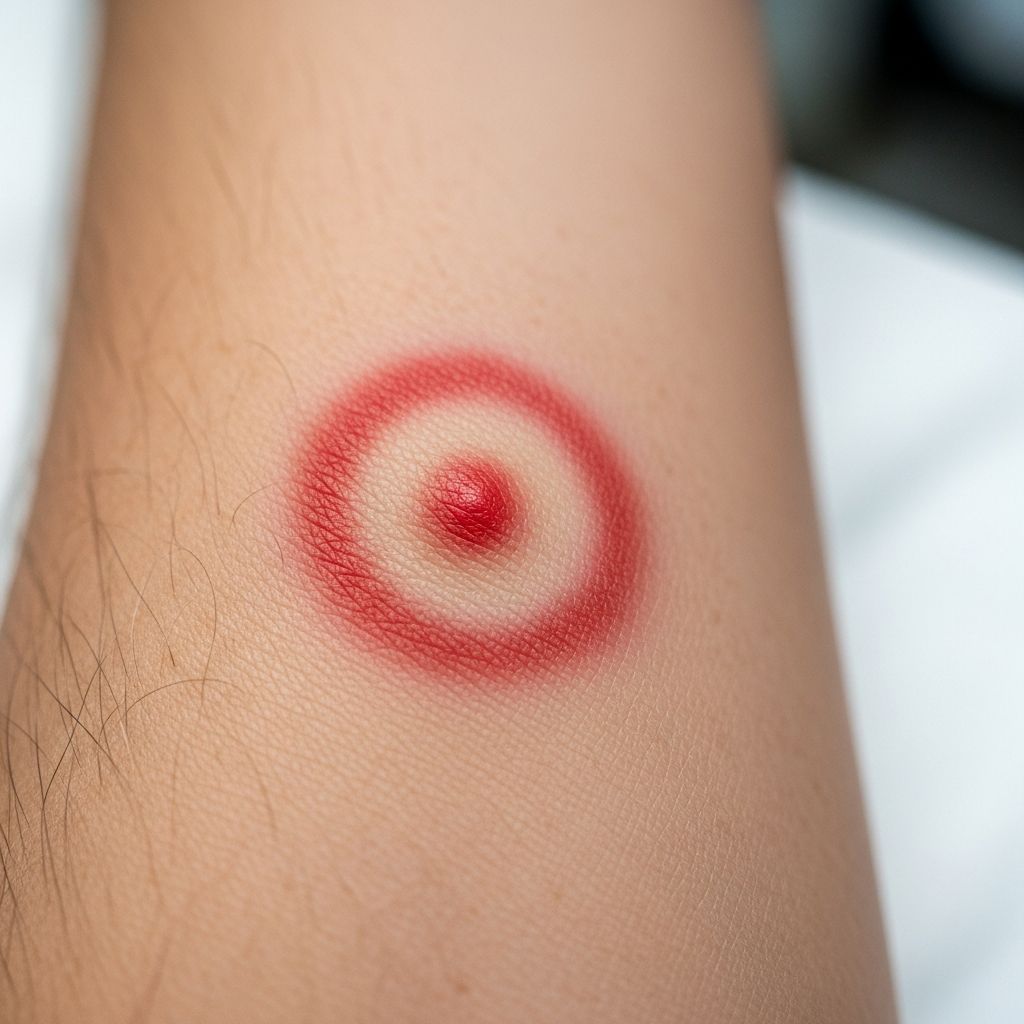
Lyme disease, caused by the bacterium Borrelia burgdorferi transmitted through black-legged tick bites, often presents with distinctive skin rashes known as erythema migrans (EM). These rashes appear in 70-80% of cases and are crucial for early diagnosis. Recognizing variations from the classic bull’s-eye to atypical forms can prevent progression to severe stages affecting joints, heart, and nerves.
What Is a Lyme Disease Rash?
The hallmark of early Lyme disease is the erythema migrans rash, which develops at the tick bite site 3-30 days post-bite, averaging 7 days. It expands gradually, often reaching 12 inches (30 cm) or more, feels warm but rarely itches or pains. While the bull’s-eye appearance—central clearing with a red ring—is iconic, most rashes are uniformly red without this pattern.
Not all cases show a rash; about 20-30% lack it, especially in darker skin tones where it may appear as bruising. Multiple rashes can emerge if untreated, signaling dissemination.
Types of Lyme Disease Rashes
Lyme rashes vary widely, leading to misdiagnosis. Key types include:
- Classic bull’s-eye (target lesion): Central clear ring expanding outward; seen in minority of cases.
- Uniformly red expanding rash: Solid red without clearing; most common.
- Oval or circular with crusty center: Scaly, warm edges.
- Bluish or dusky-centered lesions: In disseminated stage.
- Multiple secondary rashes: Smaller, oval on arms, legs, face.
These can appear anywhere on the body, including hidden areas like scalp or back. Early rashes grow quickly over days; later ones stabilize in size.
Stages of Lyme Disease and Associated Rashes
Lyme progresses in three overlapping stages if untreated. Rashes are prominent in early stages.
Stage 1: Early Localized (3-30 Days Post-Bite)
The primary EM rash emerges near the bite: small red spot expanding to large (over 2 inches), warm, smooth or scaly. Flu-like symptoms accompany: fever, chills, headache, fatigue, muscle aches, swollen lymph nodes. Prompt antibiotics cure most at this stage.
Stage 2: Early Disseminated (Weeks to Months)
Bacteria spread, causing multiple EM rashes (smaller, oval, dusky centers), Bell’s palsy, heart palpitations, joint pain, severe fatigue. Rashes remain stable-sized.
Stage 3: Late Disseminated (Months to Years)
Skin changes rare, mainly on extremities: discoloration, swelling, hardening (acrodermatitis chronica atrophicans, more in Europe), hair loss, thin/tearing skin. Arthritis, neurological issues dominate.
| Stage | Rash Features | Other Symptoms |
|---|---|---|
| Early Localized | Single expanding EM (bull’s-eye or solid red, up to 12″), warm | Fever, fatigue, headache, lymph nodes |
| Early Disseminated | Multiple smaller oval rashes, dusky centers | Bell’s palsy, heart issues, joint pain |
| Late Disseminated | Rare: skin hardening, discoloration on hands/feet | Arthritis, neuropathy, fatigue |
How to Identify a Lyme Disease Rash
Check for expansion over days/weeks, size >2 inches, warmth without itch/pain. Photos aid recognition:
Related Stories



- Uniform red circle on light skin.
- Purple/bruise-like on darker tones.
- Crusty-edged oval.
Differentiate from ringworm (scaly, itchy) or hives (transient). See a doctor for any post-tick-bite rash.
Other Early Symptoms of Lyme Disease
Beyond rash: fever, chills, extreme tiredness, joint/muscle pain, stiff neck, swollen nodes. These mimic flu, delaying diagnosis without rash.
Later Stage Symptoms If Untreated
Progression risks: arthritis, facial palsy, heart block, meningitis, neuropathy, cognitive issues, chronic fatigue. Early treatment prevents this.
Treatment for Lyme Disease Rashes
Oral doxycycline, amoxicillin, or cefuroxime for 10-21 days cures early Lyme. IV antibiotics for late stages. Post-treatment Lyme disease syndrome affects some with lingering symptoms.
When to See a Doctor
Seek care for any expanding rash post-tick exposure, flu-like symptoms in tick areas, or multiple rashes. Blood tests confirm, but early clinical diagnosis via rash is key.
Prevention of Lyme Disease
Avoid ticks: repellents (DEET), permethrin clothing, tick checks, prompt removal (<24 hours). Vaccines in development.
Frequently Asked Questions (FAQs)
Does every Lyme disease case have a rash?
No, 20-30% lack rash, but EM occurs in 70-80%.
Is the bull’s-eye rash always present?
No, most are solid red; bull’s-eye is minority.
How quickly does the rash appear?
3-30 days, average 7.
Can Lyme rash appear on dark skin?
Yes, often bruise-like, harder to spot.
What if untreated?
Leads to joint, heart, nerve damage.
References
- Signs and Symptoms of Untreated Lyme Disease — Centers for Disease Control and Prevention (CDC). 2023. https://www.cdc.gov/lyme/signs-symptoms/index.html
- Lyme Disease – Symptoms and causes — Mayo Clinic. 2024-01-12. https://www.mayoclinic.org/diseases-conditions/lyme-disease/symptoms-causes/syc-20374651
- Lyme disease rash: Symptoms, stages, and identification — Medical News Today. 2023-05-23. https://www.medicalnewstoday.com/articles/323457
- Lyme Disease Symptoms — Bay Area Lyme Foundation. 2024. https://www.bayarealyme.org/lyme-disease-prevention/lyme-disease-symptoms/
- Lyme Disease — Cleveland Clinic. 2023-07-11. https://my.clevelandclinic.org/health/diseases/11586-lyme-disease
Similar Articles








Read full bio of Sneha Tete