Lymphangioma Circumscriptum Pathology: 4 Key Histologic Findings
Detailed pathology of lymphangioma circumscriptum: clinical features, histopathology, diagnosis, and management strategies.
Lymphangioma circumscriptum is a benign congenital malformation of the superficial lymphatic vessels, presenting as clusters of translucent, thin-walled vesicles resembling frog spawn on the skin surface.
This condition, also known as superficial lymphatic malformation (SLM), affects approximately 4% of all vascular tumors and 25% of benign vascular growths in children. It arises from dilated lymphatic channels in the dermis and is characterized by grapelike groups of vesicles filled with lymph, which may occasionally contain blood due to hemorrhage, giving a red or black appearance.
Clinical features
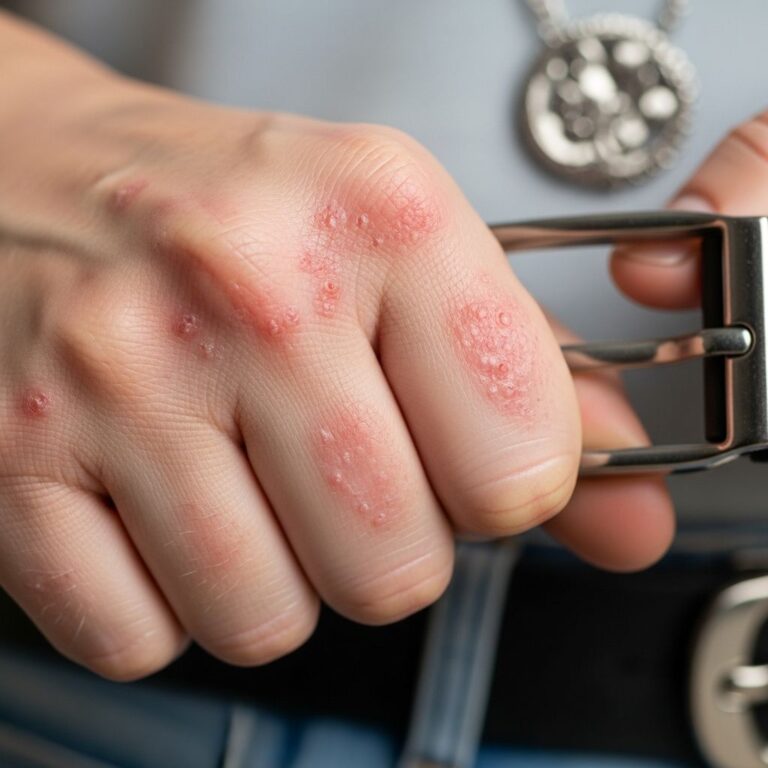
Lymphangioma circumscriptum typically manifests at birth or early childhood, though acquired forms can develop later. The lesions appear as groups of deep-seated, vesicle-like papules or translucent vesicles clustered together, often described as ‘frog spawn’ due to their appearance. Common sites include the proximal limbs (thighs, axillae), genitalia (labia majora, mons pubis), abdomen, mouth, and tongue.
The vesicles are thin-walled and filled with clear, serous lymph fluid, but hemorrhage can impart a deep red, violaceous, or black hue. Lesions may be asymptomatic but can cause oozing of fluid, crusting, swelling, pain, or secondary infection. In vulvar locations, they may lead to painful swelling. Sizes vary: classic congenital forms are often 21 cm on proximal limbs, while acquired forms are smaller (21 cm) and occur at various sites.
- Classic type: Proximal limbs, appears before age 30, larger lesions with symptoms like oozing and infection.
- Acquired type: Any site, any age, often smaller and less symptomatic.
Dermoscopically, lesions show yellow lacunae surrounded by pale septa, reddish-bluish lacunae from blood, and hypopyon-like features where blood sediments create a dark-to-light transition in vesicles, aiding differentiation from vascular lesions like hemangiomas.
Histopathology
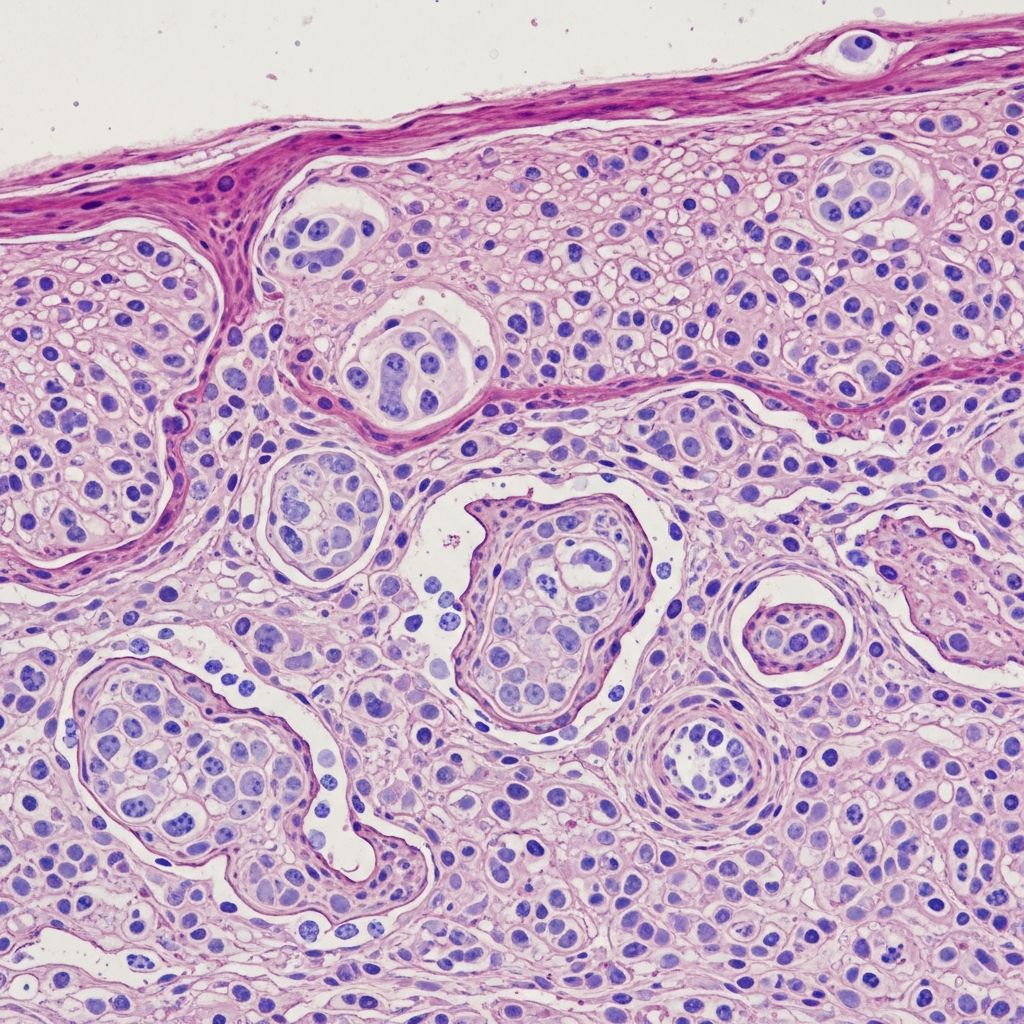
Histopathological examination is the gold standard for diagnosis. Skin biopsy reveals dilated lymphatic channels within the papillary and reticular dermis, extending into the epidermis. The epidermis often shows acanthosis (thickening) and hyperkeratosis. Lymphatic spaces contain eosinophilic proteinaceous material, lymph, and occasionally red and white blood cells if hemorrhage or inflammation is present.
Key microscopic features include:
- Dilated, thin-walled lymphatic vessels lined by flat endothelial cells.
- Stromal lymphocytic infiltrate.
- Acanthotic epidermis with possible extension of lymphatics into it.
- Absence of atypical cells, confirming benign nature.
| Feature | Lymphangioma Circumscriptum | Hemangioma | Angiokeratoma |
|---|---|---|---|
| Vessel Type | Lymphatic (thin-walled, empty/dilated) | Blood vessels (capillary proliferation) | Ectatic blood-filled spaces |
| Content | Lymph/proteinaceous material | Erythrocytes | Blood/thrombi |
| Epidermis | Acanthosis, hyperkeratosis | Normal/thinned | Hyperkeratosis, acanthosis |
| Location | Papillary/reticular dermis | Superficial dermis | Epidermis/dermis |
Immunohistochemistry with lymphatic markers like D2-40 (podoplanin) or LYVE-1 can confirm lymphatic endothelium, distinguishing from vascular lesions.
Dermoscopy
Dermoscopy enhances non-invasive diagnosis. Characteristic patterns include:
- Yellow lacunae with pale septa (lymph-filled).
- Reddish-bluish lacunae (hemorrhagic).
- Hypopyon-like opacity: Sedimentation of blood cells at the base of lacunae, creating a layered appearance similar to ocular hypopyon.
- Thin linear vessels and pink diffuse areas.
Related Stories



These correlate histologically with dilated lymphatics and blood content, aiding differentiation from warts, molluscum, or hemangiomas.
Diagnosis
Diagnosis combines clinical, dermoscopic, and histopathological findings. Biopsy (punch or shave) is recommended, especially with photographs for pathologists. Ultrasound or MRI may assess deeper cisterns if excision is considered, as deep components predict recurrence.
Differential diagnoses:
- Vascular: Hemangioma, angiokeratoma.
- Infectious: Warts, molluscum contagiosum.
- Neoplastic: Angiosarcoma, metastatic carcinoma (rare).
- Other: Lymphangiectasia, epidermal nevi.
Management
As a benign condition, treatment is optional unless symptomatic (pain, infection, cosmetics). Options include:
- Observation: Preferred for asymptomatic cases.
- Surgical excision: Most effective, but requires deep margins to include underlying cisterns; recurrence common if incomplete.
- Laser therapy: CO2 or Nd:YAG for superficial lesions; less invasive but may recur.
- Sclerotherapy, electrodessication, cryotherapy: For small lesions; high recurrence.
Post-treatment follow-up is essential due to recurrence risk.
Frequently Asked Questions (FAQs)
What causes lymphangioma circumscriptum?
It is a congenital malformation of superficial lymphatic vessels, possibly due to developmental arrest; acquired forms follow lymphatic damage.
Is lymphangioma circumscriptum cancerous?
No, it is entirely benign with no malignant potential.
Does it go away on its own?
No, lesions persist lifelong without treatment but remain stable if asymptomatic.
What is the best treatment?
Surgical excision for cure, though observation or laser suits many cases; choice depends on size, site, and symptoms.
Can it occur in adults?
Yes, acquired forms appear later, often on genitalia or after trauma.
References
- Cutaneous Lymphangioma circumscriptum – dermoscopic features — PMC/NCBI. 2015-03-15. https://pmc.ncbi.nlm.nih.gov/articles/PMC4371681/
- Lymphangioma circumscriptum pathology — DermNet NZ. 2023-01-01. https://dermnetnz.org/topics/lymphangioma-circumscriptum-pathology
- Lymphangioma circumscriptum — Contemporary OB/GYN. 2022-06-10. https://www.contemporaryobgyn.net/view/lymphangioma-circumscriptum
- Cutaneous lymphangioma circumscriptum: The relevance of clinical… — Wiley Online Library. 2020-05-12. https://onlinelibrary.wiley.com/doi/10.1002/ccr3.2007
- Review Article Lymphangioma circumscriptum of the skin — Medcom HK. 2006-01-01. https://medcomhk.com/hkdvb/pdf/2006v14n03-03.pdf
- Lymphangioma circumscriptum — Primary Care Dermatology Society (PCDS). 2024-01-01. https://www.pcds.org.uk/clinical-guidance/lymphangioma-circumscriptum
Similar Articles








Read full bio of medha deb