Macroglossia: Causes, Diagnosis, And Treatment Guide
Understanding the causes, symptoms, diagnosis, and treatment of abnormal tongue enlargement.
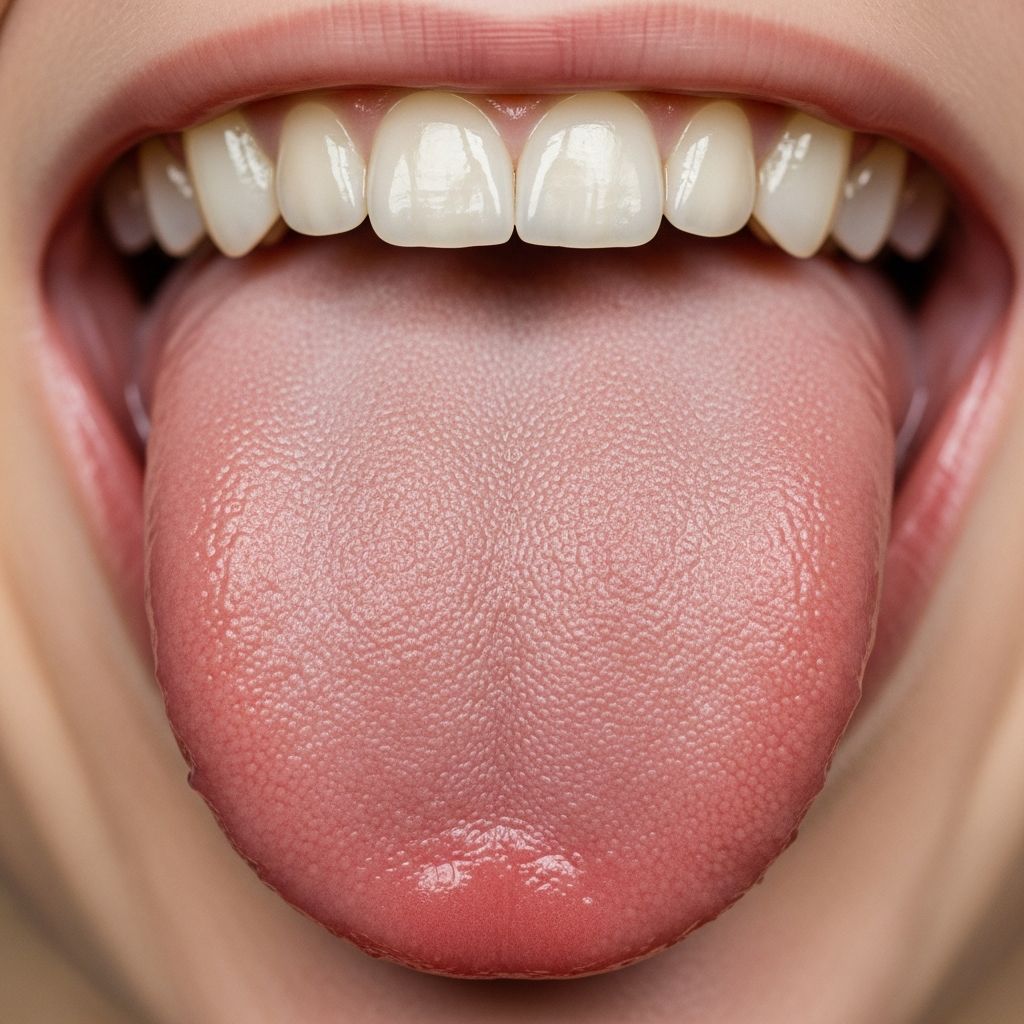
Macroglossia is an abnormal enlargement of the tongue. It is a clinical diagnosis defined as tongue protrusion beyond the teeth or alveolar ridge during resting posture. This condition can occur in isolation or as part of broader syndromes and may significantly impact oral function, speech, and breathing.
Introduction
Macroglossia refers to the pathological enlargement of the tongue, distinguishing it from normal variations in tongue size that occur with age. The tongue typically grows most rapidly in the first eight years of life, reaching full size by around 18 years. Clinically, it is identified when the tongue protrudes beyond the dental arches at rest, potentially leading to functional impairments.
Classification divides macroglossia into true macroglossia, involving actual tongue tissue hypertrophy or infiltration, and relative macroglossia, where the tongue appears enlarged due to smaller oral cavity structures. Both can be congenital (present at birth) or acquired later in life. Isolated macroglossia is rare and may follow an autosomal dominant inheritance pattern.
Demographics
Macroglossia is most frequently diagnosed in infants and children, with congenital forms reported at fewer than 5 per 100,000 births. It shows a higher prevalence in females (twice as common) and African Americans compared to those of European ancestry. In pediatric populations, it is a hallmark feature in overgrowth syndromes like Beckwith-Wiedemann syndrome (BWS), affecting nearly 90% of cases. Adult-onset cases are less common and often linked to metabolic or infiltrative disorders.
Causes
The etiology of macroglossia is diverse, stemming from genetic, metabolic, inflammatory, neoplastic, or depositional processes.
Congenital True Macroglossia
Congenital true macroglossia arises from tissue overgrowth, often due to lingual muscular hypertrophy or glandular hyperplasia. Key associated conditions include:
- Beckwith-Wiedemann syndrome (BWS): The most common cause, characterized by macrosomia, omphalocele, and hemihypertrophy.
- Down syndrome: Often relative macroglossia due to hypotonia and small oral cavity.
- Mucopolysaccharidoses (e.g., Hurler, Hunter, Morquio syndromes): Glycosaminoglycan deposition leads to tongue enlargement.
- Other syndromes: Simpson-Golabi-Behmel, Costello, and Beckwith-Wiedemann-like overgrowth syndromes.
Acquired True Macroglossia
Acquired forms result from metabolic, inflammatory, or infiltrative processes. Common causes include:
- Amyloidosis: Deposition of amyloid fibrils causes firm, painless enlargement; a classic sign in systemic amyloidosis. Tongue biopsy shows apple-green birefringence under polarized light.
- Acromegaly: Excess growth hormone leads to generalized tissue overgrowth, including the tongue, jaw, and extremities. Up to 50% of patients experience sleep apnea.
- Hypothyroidism: Mucopolysaccharide accumulation causes myxedematous enlargement.
- Glycogen storage diseases (e.g., Pompe disease): Glycogen deposition in tongue muscles.
- Tumours and vascular malformations: Hemangiomas, lymphangiomas, or neoplasms infiltrate tongue tissue.
Relative Macroglossia
This occurs when a normal-sized tongue appears disproportionately large due to oral cavity abnormalities. Prominent examples:
- Down syndrome (hypotonia, small midface).
- Tonsillar hypertrophy or peritonsillar abscess pushing the tongue forward.
- Micrognathia (e.g., Pierre Robin sequence).
- Low palatal vault or mandibular/maxillary abnormalities.
Clinical Features
Presentations vary by cause and severity, ranging from cosmetic concerns to life-threatening complications. Common signs include:
- Tongue protrusion beyond teeth or alveolar ridge at rest.
- Drooling, speech impediments (dysarthria), and feeding difficulties in infants.
- Open mouth posture, high-arched palate from chronic pressure.
- Firm, nodular tongue in infiltrative diseases like amyloidosis.
- Associated systemic features: coarse facies in acromegaly, short stature in hypothyroidism.
Related Stories



In severe congenital cases, infants may exhibit respiratory distress or failure to thrive.
Complications
Untreated macroglossia can lead to significant morbidity. Key complications:
- Airway obstruction: Sleep apnea, snoring, cor pulmonale.
- Dental malocclusion: Anterior open bite, proclined incisors.
- Speech and swallowing disorders: Dysphagia, aspiration risk.
- Ulcerations and pain: From trauma against teeth.
- Psychosocial impact: Appearance-related distress.
Diagnosis
Diagnosis is primarily clinical, based on history, examination, and exclusion of relative causes.
- Prenatal: Ultrasound may detect fetal macroglossia.
- Imaging: MRI/CT for tongue volume; lateral cephalogram or X-rays for relative macroglossia.
- Biopsy/FNA: For suspected infiltration (e.g., amyloid Congo red stain).
- Genetic testing: For syndromes like BWS (11p15 methylation analysis).
- Laboratory: IGF-1 for acromegaly, thyroid function, urine glycosaminoglycans.
Differential Diagnoses
Differentiating true from relative macroglossia is crucial. Other considerations:
| Condition | Key Features |
|---|---|
| Angioedema/Glossitis | Acute swelling, often allergic; resolves with treatment. |
| Pseudomacroglossia | Tongue normal size; due to tonsils, tumors, hypotonia. |
| Tongue tumors | Asymmetric growth, ulceration. |
| Myasthenia gravis | Flaccid protrusion, fatigability. |
Treatment
Management targets the underlying cause; many cases resolve spontaneously with growth.
- Conservative: Speech therapy, dental orthotics, monitoring (effective in 90% of BWS cases).
- Medical: Treat endocrinopathies (levothyroxine for hypothyroidism, somatostatin analogs for acromegaly).
- Surgical: Partial glossectomy for severe, symptomatic cases (10% of congenital). Techniques include keyhole contouring or radiofrequency ablation.
- Multidisciplinary: ENT, genetics, orthodontics, speech pathology.
Outcome
Prognosis depends on etiology and intervention timeliness. Most congenital cases improve with growth; acquired forms vary with primary disease control. Early surgery prevents complications in severe BWS. Long-term follow-up addresses dental/speech issues.
Frequently Asked Questions (FAQs)
Q: Is macroglossia always present at birth?
A: No, it can be congenital or acquired later due to conditions like amyloidosis or acromegaly.
Q: Can macroglossia resolve without surgery?
A: Yes, many pediatric cases, especially in BWS, improve as the oral cavity grows.
Q: What is the most common cause in children?
A: Beckwith-Wiedemann syndrome accounts for most congenital cases.
Q: Does macroglossia affect breathing?
A: Yes, severe cases can cause obstructive sleep apnea and respiratory distress.
Q: How is amyloidosis-related macroglossia diagnosed?
A: Tongue biopsy with Congo red staining confirms amyloid deposits.
References
- Macroglossia — DermNet NZ. 2023. https://dermnetnz.org/topics/macroglossia
- Macroglossia — StatPearls, NCBI Bookshelf. 2023-10-01. https://www.ncbi.nlm.nih.gov/books/NBK560545/
- Macroglossia — MD Searchlight. 2024. https://mdsearchlight.com/oral-health/macroglossia/
- Macroglossia — NORD (National Organization for Rare Disorders). 2023. https://rarediseases.org/rare-diseases/macroglossia/
- Macroglossia — MedlinePlus, U.S. National Library of Medicine. 2023. https://medlineplus.gov/ency/article/002250.htm
Similar Articles








Read full bio of Sneha Tete