Macrogol: Understanding This Common Laxative Treatment
Complete guide to macrogol use, benefits, and safety considerations
Constipation affects millions of people globally across all age groups, impacting quality of life and digestive health. Among the many treatment options available, macrogol has emerged as a leading pharmaceutical solution, recommended by healthcare professionals worldwide. This article provides comprehensive information about macrogol, how it works, its applications, and practical guidance for patients considering this medication.
What Is Macrogol and How Does It Work?
Macrogol is the international nonproprietary name for polyethylene glycol (PEG), a synthetic compound widely used in pharmaceutical formulations. The term “macrogol” is typically followed by a number—such as macrogol 3350 or macrogol 4000—which indicates the average molecular weight of the polymer chain.
As a medication, macrogol functions as an osmotic laxative, meaning it works through osmotic pressure rather than stimulating bowel muscles. The mechanism is elegantly simple: macrogol molecules cannot be absorbed by the intestinal wall or broken down by the body. Instead, they remain in the intestinal tract where they attract and bind water molecules through hydrogen bonds. This process increases the volume and water content of stool, making it softer and easier to pass while improving overall gut motility.
The result is relief from constipation without directly stimulating the bowel, making macrogol a gentler option compared to stimulant laxatives. Effects typically become apparent within 24 to 48 hours of initial administration, though some patients may experience relief within 3 days.
Clinical Applications and Medical Uses
Primary Indication: Constipation Management
Macrogol serves as a first-line treatment for chronic constipation in both children and adults. It is particularly valuable for individuals aged 6 months and older, though treatment duration in children should not exceed 3 months without medical reassessment. Healthcare providers often recommend macrogol for:
- Functional constipation (constipation without underlying organic disease)
- Constipation associated with neurological conditions such as multiple sclerosis and Parkinson’s disease
- Opioid-induced constipation, a common side effect of pain medications
- Anticholinergic medication-related constipation
- Fecal impaction management
- Neurogenic constipation in conditions like myelomeningocele
Before prescribing macrogol, physicians should rule out underlying organic causes of constipation to ensure appropriate treatment.
Bowel Preparation Procedures
Macrogol plays a crucial role in medical preparation protocols. Whole bowel irrigation using macrogol is standard practice before colonoscopy and surgical procedures requiring a clear colon. When used for bowel cleansing, the laxative effect occurs more rapidly—typically within one hour—making it ideal for pre-procedure preparation.
Pharmaceutical Applications Beyond Laxative Use
Beyond its role as a laxative, macrogol serves important functions in pharmaceutical manufacturing. It acts as an excipient (inactive ingredient) in numerous medications, serving as solvents in liquid formulations, bases for ointments, tablet binders, and film coatings. For example, PEG-2000 appears as an excipient in the Moderna COVID-19 vaccine.
Additionally, macrogol is employed in a process called PEGylation, where it is chemically attached to biopharmaceutical proteins to prolong their action in the body, reduce immune responses, and extend dosing intervals. This technique is used in medications treating hepatitis C, certain types of cancer-related neutropenia, and gout.
Related Stories



Comparative Effectiveness: How Macrogol Measures Against Alternatives
Multiple clinical trials have established macrogol’s superior effectiveness compared to other common laxative options.
| Laxative Comparison | Macrogol Performance | Key Findings |
|---|---|---|
| Macrogol vs. Lactulose | Significantly More Effective | Improved stool frequency and consistency within 1-2 weeks; less vomiting and flatulence |
| Macrogol vs. Magnesium Hydroxide | More or Equally Effective | Superior or comparable outcomes in treating chronic functional constipation |
| Macrogol vs. Psyllium (Bulk-forming) | At Least as Effective or Superior | Better results in chronic constipation management |
Current clinical treatment guidelines recommend high-molecular-weight macrogols (particularly macrogol 3350 and 4000) as first-line agents for symptomatic constipation treatment in both children and adults.
Dosage, Administration, and Usage Instructions
How to Take Macrogol
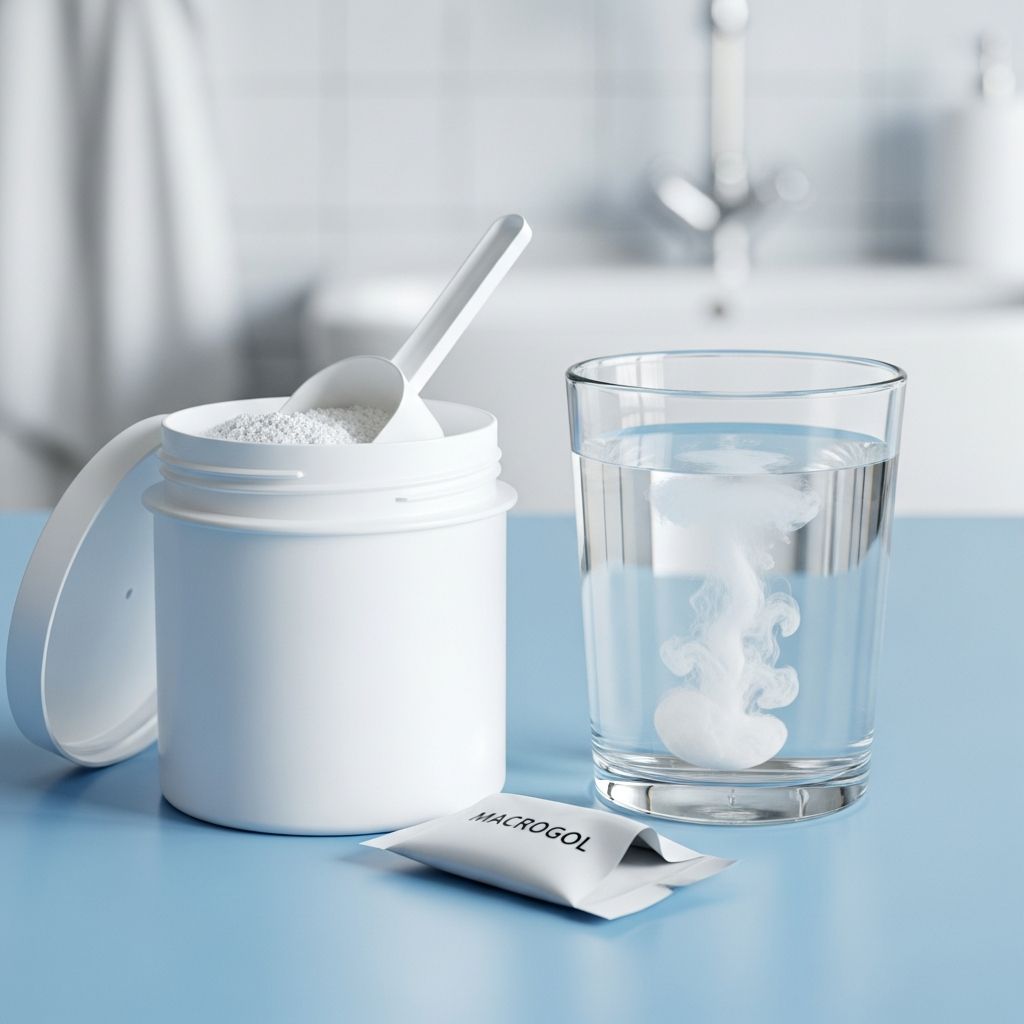
Macrogol is administered orally and comes in sachet form containing a powder that requires preparation. The standard preparation method involves dissolving one sachet in a full glass of water. Patients may consume the medication with or without food, providing flexibility in administration.
Dosage Considerations
Dosages vary based on individual age, weight, and severity of constipation. Healthcare providers typically determine appropriate dosing, and adjustments may be made to find the minimum effective dose for each patient. Treatment should be viewed as temporary, used alongside lifestyle modifications including increased dietary fiber and adequate fluid intake.
Timeline for Results
Patients should not expect immediate results. The medication may require one to two days to produce noticeable effects, though some individuals experience benefits within the first 24 hours. Consistency in administration supports optimal outcomes.
Safety Profile and Adverse Effects
Macrogol demonstrates a favorable safety profile, making it suitable for diverse patient populations including children and elderly individuals. The medication is available both as a generic formulation and over-the-counter, reflecting its established safety record.
Common side effects are generally mild and gastrointestinal in nature, including nausea, abdominal discomfort, and bloating. Notably, clinical evidence indicates that macrogol is associated with less vomiting and flatulence compared to lactulose, an older laxative option.
The non-absorbable nature of macrogol means it poses minimal risk of systemic side effects. However, patients with certain conditions or taking specific medications should consult healthcare providers before use. Additionally, medication should be discontinued if constipation persists or if new symptoms develop.
Emerging Research and Future Applications
Neurological Repair and Regeneration
Preliminary research has identified macrogol’s potential beyond gastrointestinal applications. In animal studies, macrogol has demonstrated benefits for spinal cord injury recovery. Subcutaneous injection of macrogol 2000 in experimental models produced rapid recovery through molecular repair of nerve membranes, though human efficacy remains unproven. Researchers are also investigating its role in motor neuron repair following crush or laceration injuries, with promising preliminary results in rats.
Cancer Prevention Potential
High-molecular-weight macrogol (such as macrogol 8000) has shown promise as a dietary preventive agent against colorectal cancer in animal models. The Chemoprevention Database identifies macrogol as the most effective known agent for suppressing chemical carcinogenesis in rats, though human clinical trials investigating cancer prevention applications have not yet been conducted.
Specialized Manufacturing Applications
Macrogol is employed in monoclonal antibody production, where it facilitates the fusion of B-cells with myeloma cells—a critical step in creating therapeutic antibodies.
Clinical Prevalence and Usage Statistics
The widespread medical acceptance of macrogol is reflected in prescription data. In 2023, macrogol was the 196th most commonly prescribed medication in the United States, with more than 2 million prescriptions filled. When formulated in combination with electrolytes—a formulation offering additional benefits—it ranked as the 273rd most commonly prescribed medication with over 800,000 prescriptions. Regulatory approval in the United States occurred in 1999, and the medication has been used as a bowel preparation agent since 1980.
Frequently Asked Questions
Is macrogol safe for children?
Yes, macrogol is approved for children aged 6 months and older. However, treatment duration in children should typically not exceed 3 months without medical reassessment to ensure continued appropriateness of therapy.
Can I take macrogol long-term?
Macrogol is indicated for both short-term relief and long-term management of chronic constipation. Long-term use should be determined by a healthcare provider, who will monitor effectiveness and adjust dosing as needed.
How quickly does macrogol work?
For standard constipation treatment, effects typically appear within 24 to 48 hours. When used for bowel cleansing before medical procedures, the laxative effect occurs more rapidly, usually within one hour.
Does macrogol cause cramping or discomfort?
Macrogol generally produces fewer side effects compared to older laxatives. Some patients experience mild abdominal discomfort, but severe cramping is uncommon. Individuals experiencing significant pain should consult their healthcare provider.
Can macrogol be taken with other medications?
While macrogol has a favorable interaction profile, patients should inform their healthcare provider of all medications and supplements. Certain medications may affect absorption or efficacy.
Should I continue taking macrogol if constipation improves?
Treatment decisions should be made in consultation with a healthcare provider. Macrogol can be discontinued when constipation resolves, though some patients benefit from continued use for prevention, particularly those with chronic conditions predisposing them to constipation.
Conclusion
Macrogol represents a well-established, evidence-based treatment option for constipation management across diverse patient populations. Its osmotic mechanism of action, favorable safety profile, and superior effectiveness compared to alternative laxatives have established it as a first-line therapeutic choice. From routine constipation management to specialized medical applications and emerging research into neurological repair and cancer prevention, macrogol continues to demonstrate clinical value. Patients considering this medication should consult healthcare providers to determine whether macrogol aligns with their individual health circumstances and treatment goals.
References
- Macrogol — Wikipedia. Retrieved February 2026. https://en.wikipedia.org/wiki/Macrogol
- Macrogol (polyethylene glycol) 4000 without electrolytes in the treatment of constipation — National Center for Biotechnology Information (NCBI), PubMed Central. https://pmc.ncbi.nlm.nih.gov/articles/PMC6267542/
- Macrogol — SingHealth. Retrieved February 2026. https://www.singhealth.com.sg/medicine/macrogol
- Polyethylene Glycol — StatPearls, National Center for Biotechnology Information (NCBI) Bookshelf. https://www.ncbi.nlm.nih.gov/books/NBK557652/
- Understanding Macrogol Laxatives — Bladder & Bowel UK. https://www.bbuk.org.uk/wp-content/uploads/2020/09/Understanding-Macrogol-Laxatives.pdf
Similar Articles








Read full bio of Sneha Tete