Macular Hole Treatment: 4 Stages, Surgery, Recovery
Discover effective treatments for macular holes, from surgical options to recovery tips for restoring central vision.
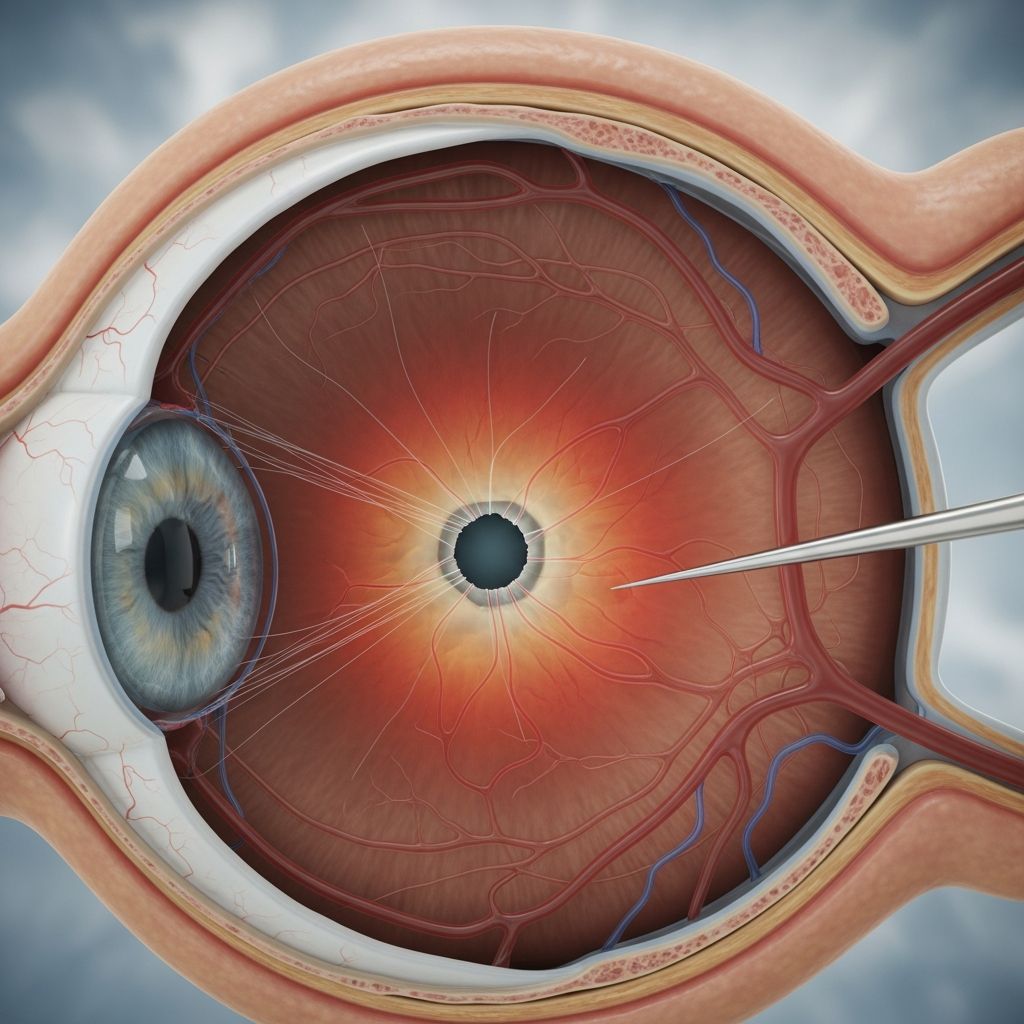
The macula, a vital region at the retina’s center, enables sharp central vision essential for tasks like reading and recognizing faces. A macular hole forms when this delicate tissue develops a full-thickness defect, often leading to blurred or distorted sight. Treatment primarily involves surgical intervention to close the hole and preserve vision, with success rates improving through modern techniques.
Understanding the Macula and Hole Formation
The retina lines the eye’s back wall, converting light into neural signals for the brain. The macula, its central oval-shaped area, contains densely packed photoreceptors for high-resolution vision. A macular hole disrupts this by creating an opening, typically from age-related changes where the vitreous gel shrinks and tugs on the macula.
This vitreous detachment is common after age 50, but firm attachments at the macula can cause tears. Fluid seeps into the gap, enlarging it and worsening vision. Unlike peripheral retinal issues, macular holes specifically impair straight-ahead sight while sparing peripheral fields.
Recognizing Symptoms Early
Early detection boosts treatment success. Initial signs include metamorphopsia, where straight lines appear wavy, and mild central blurriness, complicating fine tasks.
- Distorted vision: Printed text or grids look bent.
- Central blind spot: A dark patch grows in straight-ahead view.
- Reading difficulties: Small print becomes challenging.
- Blurring progression: Symptoms intensify over weeks.
Unlike macular degeneration, pain is absent, but prompt ophthalmologist consultation is crucial via dilated exams and optical coherence tomography (OCT) scans, which visualize hole depth and size.
Risk Factors and Prevalence
Macular holes affect about 1 in 1,000 over 60, more common in women. Primary risks include:
| Risk Factor | Description | Prevalence Impact |
|---|---|---|
| Aging | Vitreous shrinkage post-60 | Most common cause |
| High Myopia | Elongated eye stretches retina | Increases likelihood |
| Eye Trauma | Direct injury to macula | Rare but severe |
| Previous Surgery | Post-cataract complications | Contributes in some cases |
| Inflammation | Conditions like uveitis | Secondary factor |
Genetics play minimal roles; environmental factors like smoking may indirectly heighten risks via vascular changes.
Stages of Macular Hole Development
Classification by size and features guides treatment. Full-thickness macular holes (FTMH) span stages:
- Stage 1 (Impending): Pre-hole thickening without break; vision often 20/30-20/70; 50% resolve spontaneously.
- Stage 2 (Small Hole): <400µm diameter; posterior vitreous detachment begins; distortion prominent.
- Stage 3 (Medium Hole): ≥400µm; subretinal fluid cuff; vision drops to 20/200.
- Stage 4 (Large Hole): Full detachment with operculum; severe central loss.
OCT confirms staging, showing cystoid spaces and photoreceptor defects.
Non-Surgical Management Options
Early stages may not require immediate surgery. Observation suits stage 1 holes, with 10-50% closing naturally via vitreous release.
Emerging pharmacologic aids like ocriplasmin (Jetrea) dissolve vitreomacular adhesions non-invasively. Injected into the vitreous, it targets proteins binding gel to retina, closing ~40% of small holes. Suitable for non-surgical candidates, though side effects include floaters and rare retinal detachment. Monitoring every 4-6 weeks via OCT tracks progress.
Related Stories



Surgical Interventions: The Gold Standard
Vitrectomy surgery repairs 85-95% of holes, especially stages 2-4. Procedures include:
- Pars Plana Vitrectomy (PPV): Removes vitreous gel via tiny incisions, relieving traction.
- Internal Limiting Membrane (ILM) Peeling: Strips scar-like membrane to flatten retina; dye-assisted for precision.
- Gas Tamponade: Injects expansile gas (C3F8 or SF6) to press hole edges shut; patient postures face-down 1-2 weeks.
- Optional Cataract Surgery: Combined if lens opacities present.
Modern 25-27 gauge instruments minimize trauma, enabling outpatient recovery. Laser or cryotherapy seals edges rarely.
Comparing Treatment Approaches
| Approach | Success Rate | Recovery Time | Risks |
|---|---|---|---|
| Observation | 10-50% (Stage 1) | Weeks | Progression |
| Ocriplasmin Injection | ~40% | Days | Floaters, detachment (rare) |
| Vitrectomy + Gas | 85-95% | 4-8 weeks | Cataract, glaucoma |
Surgery yields best anatomical closure, with vision gains to 20/40 in many.
Post-Treatment Recovery and Care
Post-op, face-down positioning (50-75% wakeful hours) for 5-14 days ensures gas bubble seals hole. Vision stabilizes over months as gas absorbs.
- Avoid air travel until bubble gone (pressure risk).
- Use prescribed drops for inflammation.
- Follow-up OCT at 1-4 weeks assesses closure.
Final acuity depends on hole duration/size; prompt surgery optimizes outcomes.
Potential Complications and Risks
Surgery risks (5-10%):
- Cataract acceleration (90% post-vitrectomy).
- Retinal detachment (<5%).
- Endophthalmitis (infection, rare).
- Recurrent hole (2-5%).
Non-closure occurs in 5-15%, potentially needing reoperation.
Visual Prognosis and Long-Term Outlook
Closed holes restore photoreceptors partially; 70% achieve 20/40 or better if treated early. Untreated, permanent central scotoma persists. Regular monitoring prevents complications like epiretinal membranes.
FAQs
What is the first sign of a macular hole?
Wavy distortion in central vision, progressing to a blind spot.
Can macular holes heal without surgery?
Only stage 1; others require intervention.
How long is face-down after vitrectomy?
Typically 7-14 days, per surgeon.
Is surgery outpatient?
Yes, with same-day discharge.
Does insurance cover macular hole surgery?
Usually, as medically necessary.
Prevention Strategies
No guaranteed prevention, but:
- Annual eye exams post-50.
- Manage myopia/inflammation.
- Protect eyes from trauma.
UV protection and healthy diet support retinal health.
References
- Macular Hole: Symptoms, Causes, & Treatment — Cleveland Clinic. 2023-05-15. https://my.clevelandclinic.org/health/diseases/14208-macular-hole
- Macular Hole — EyeWiki (American Academy of Ophthalmology). 2024-01-10. https://eyewiki.org/Macular_Hole
- Macular Hole — American Society of Retina Specialists. 2023-08-20. https://www.asrs.org/patients/retinal-diseases/4/macular-hole
- Macular Hole — Macular Disease Foundation Australia. 2022-11-05. https://www.mdfoundation.com.au/about-macular-disease/other-macular-conditions/macular-hole/
- Macular Hole — National Eye Institute (NIH). 2024-02-12. https://www.nei.nih.gov/eye-health-information/eye-conditions-and-diseases/macular-hole
Similar Articles








Read full bio of Sneha Tete