Managing Macular Pucker: Complete Treatment Guide
Comprehensive overview of macular pucker causes, symptoms, and modern therapeutic approaches.
Understanding the Macular Pucker Condition
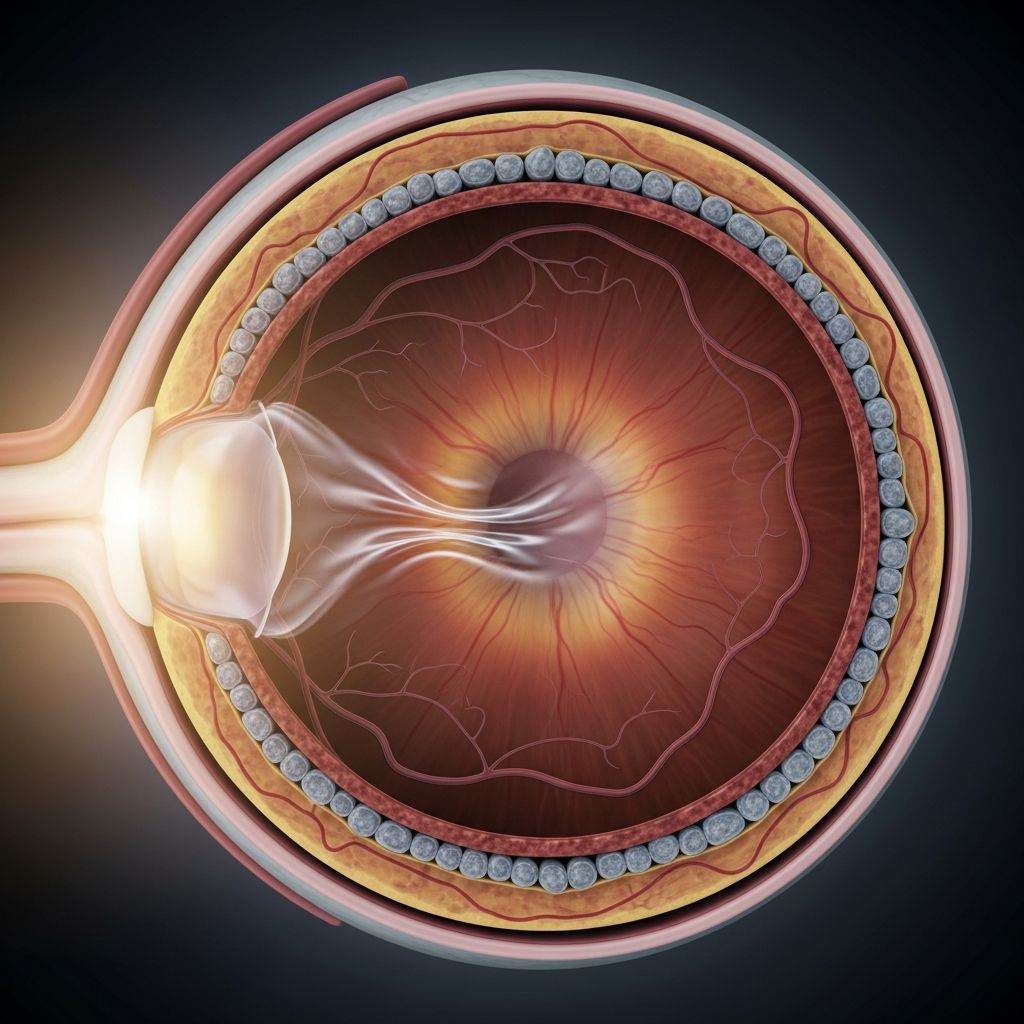
A macular pucker, medically known as an epiretinal membrane (ERM) or cellophane maculopathy, represents a progressive eye condition characterized by the formation of scar tissue on the macula—the central portion of the retina responsible for detailed vision. This thin, cellophane-like tissue layer develops on the retinal surface and gradually contracts, creating a wrinkling effect that distorts central vision. Understanding this condition is essential for patients experiencing vision changes, as early detection and appropriate management can help preserve visual function.
The prevalence of macular pucker is more common than many realize, with recent epidemiological data indicating that approximately 18.8% to 34.1% of Americans may have some degree of macular puckering. However, the majority of individuals with this condition experience minimal to no significant vision loss, making it a condition that requires careful monitoring rather than immediate intervention in most cases.
Anatomical Basis and Formation Mechanisms
The macula functions as the eye’s high-resolution imaging center, containing densely packed photoreceptor cells that enable sharp central vision, color perception, and fine detail recognition. When scar tissue forms over this delicate structure, it creates mechanical distortion that affects how light is processed and transmitted to the brain.
The development of macular pucker typically occurs through two primary mechanisms. First, an epiretinal membrane can form directly on the macular surface due to abnormal cell proliferation and contraction. This thin film adheres to the macula and progressively tightens, pulling the underlying retinal tissue into irregular patterns. Second, the posterior vitreous—the gel-like substance filling the eye’s interior—may fail to properly separate from the retina with age. When this separation is incomplete or adhesions develop, the vitreous exerts mechanical traction on the macular tissue, causing puckering and distortion.
Risk Factors and Causative Pathways
Age-Related Changes
The most significant risk factor for developing macular pucker is advancing age. As individuals enter their fifth decade and beyond, the vitreous gel naturally undergoes biochemical changes, shrinking and gradually detaching from the retinal surface. This age-related vitreous detachment (PVD) affects virtually everyone eventually, though not all experience complications. The mechanical stress from this process can cause microscopic retinal damage, triggering a healing response that generates scar tissue on the macular surface.
Ocular Trauma and Previous Surgery
Eyes that have experienced trauma, inflammation, or surgical intervention face elevated risk for membrane formation. Cataract extraction, one of the most common ocular procedures, can precipitate macular pucker development as the healing environment attracts cells to migrate toward the macula. Retinal procedures, whether performed for repair of tears or detachments, similarly create conditions favorable to epiretinal membrane formation. The retinal healing process, while biologically protective in the short term, may inadvertently set the stage for long-term scarring on the macular surface.
Underlying Retinal Pathology
Several specific eye conditions significantly increase macular pucker risk. These include:
- Diabetic retinopathy resulting from diabetes complications
- Retinal tears or complete detachment
- Retinal vein occlusions
- Uveitis and other inflammatory eye diseases
- High myopia (severe nearsightedness), which independently increases risk
These conditions create an inflammatory or mechanically disrupted retinal environment that promotes abnormal cell proliferation and scar tissue formation.
Clinical Presentation and Diagnostic Recognition
Primary Symptoms
The hallmark symptom of macular pucker is metamorphopsia—a distortion of straight lines that appear wavy, bent, or irregular. This symptom emerges because the wrinkled tissue disrupts the normal alignment of light rays as they reach the photoreceptor layer. Patients frequently describe seeing bent vertical lines (such as doorframes or printed text margins) or experiencing difficulty reading despite normal distance vision.
Related Stories



Additional common symptoms include:
- Blurred or cloudy central vision that persists regardless of focus distance
- Loss of visual acuity in detailed tasks despite clear peripheral vision
- Difficulty reading fine print or performing detailed work
- Gray or hazy clouding affecting the central visual field
- Double vision in rare cases
- Small blind spots developing in the central vision
Importantly, standard corrective lenses cannot improve vision distorted by macular pucker, as the problem lies in retinal architecture rather than the eye’s optical system. This distinction helps differentiate macular pucker from refractive errors.
Associated Indicators
While not directly caused by the macular pucker itself, floaters and flashes of light may accompany the condition and serve as important clinical indicators. These visual phenomena often signal associated complications such as retinal tears, posterior vitreous detachment, or other retinal pathology requiring prompt evaluation. Patients experiencing sudden onset of floaters, especially when accompanied by flashes or vision field changes, should seek immediate ophthalmologic assessment.
Diagnostic Evaluation
Ophthalmologists employ several diagnostic modalities to confirm macular pucker and assess severity. Dilated fundus examination allows direct visualization of the epiretinal membrane. Optical coherence tomography (OCT) imaging provides high-resolution cross-sectional views of the retina, precisely measuring membrane thickness and quantifying macular distortion. This imaging technology has revolutionized macular pucker assessment, enabling clinicians to document disease progression and inform treatment decisions based on objective measurements rather than subjective patient reports alone.
Treatment Approach: Watchful Waiting as First-Line Strategy
Rationale for Conservative Management
The majority of patients with macular pucker benefit from a conservative approach focused on careful observation rather than immediate surgical intervention. This strategy is justified by several clinical realities: most membranes remain stable or progress very slowly over time, spontaneous improvement without treatment is uncommon, and the natural history involves visual symptoms that stabilize rather than continuously worsen.
For patients with mild to moderate symptoms that do not significantly impact daily functioning or quality of life, watchful waiting represents the most prudent initial approach. This allows patients to maintain normal retinal anatomy while avoiding the small but real risks associated with surgical intervention.
Monitoring Protocol
Regular eye examinations at intervals determined by symptom severity and disease progression serve as the foundation of conservative management. During these visits, ophthalmologists assess visual acuity, perform dilated fundus examination, and typically obtain OCT imaging to document membrane characteristics and macular anatomy. Patients should report any sudden changes in vision, new or worsening distortion, or development of new symptoms between scheduled appointments.
Patient Education in Conservative Management
Effective conservative management requires clear communication about realistic expectations. Patients should understand that their condition is unlikely to spontaneously improve but may remain stable for many years. Some patients benefit from understanding that while their eyes have structural changes, these changes frequently remain compatible with functional vision adequate for most activities. Others may experience subtle, imperceptible progression over extended periods. Lifestyle modifications, such as optimizing lighting when reading or using magnification aids, can help patients maintain independence despite mild vision changes.
Surgical Treatment: Vitrectomy and Membrane Peeling
Indications for Surgical Intervention
Surgery becomes an appropriate consideration when macular pucker causes symptoms severe enough to meaningfully impact quality of life and restrict normal activities. Common indications include:
- Progressive vision loss that interferes with driving safety
- Severe metamorphopsia making reading or detailed work impossible
- Symptoms affecting patient’s ability to perform essential occupational or personal tasks
- Progressive membrane thickening or tightening on objective imaging
- Patient preference for intervention despite moderate symptoms
Vitrectomy Procedure Overview
Surgical management of macular pucker centers on vitrectomy—removal of the vitreous gel combined with careful peeling of the epiretinal membrane from the macular surface. During this procedure, a surgeon makes three small incisions (typically 23 to 25 gauge) to introduce microsurgical instruments into the eye. The vitreous is carefully removed using a specialized cutting instrument, providing improved visualization of the retinal surface.
The critical step involves gently peeling the epiretinal membrane using specialized forceps under operating microscope magnification. Surgeons must balance complete membrane removal against the risk of iatrogenic retinal damage during the peeling process. Modern surgical techniques emphasize careful, controlled membrane removal to minimize trauma to the underlying photoreceptor layer.
Surgical Outcomes and Expectations
Results from vitrectomy for macular pucker vary among patients. Many individuals experience improvement in metamorphopsia and visual acuity, though the degree of improvement cannot be predicted preoperatively with certainty. Some patients report substantial resolution of distortion and clearer vision, while others experience more modest improvements. The success rate depends on multiple factors including preoperative visual acuity, membrane thickness, degree of macular distortion, and surgeon experience.
Visual improvement may continue for several weeks to months following surgery as the retina heals and adjusts to the absence of mechanical distortion. Some patients require extended recovery periods before final visual stabilization occurs.
Risks and Complications
While vitrectomy is generally safe, potential complications warrant discussion with patients considering surgery. Cataract formation or acceleration occurs in a significant percentage of patients, particularly those over 55 years old, sometimes requiring subsequent cataract surgery. Retinal detachment, while uncommon, represents a more serious potential complication requiring immediate treatment. Intraocular infection (endophthalmitis) is rare but can occur. Some patients experience modest postoperative visual changes or mild inflammation requiring topical medication.
Importantly, not all patients experience vision improvement following surgery, and in rare instances, vision may remain unchanged or worsen. Patient selection and realistic preoperative counseling regarding expectations are essential components of successful surgical management.
Distinguishing Macular Pucker from Related Conditions
Macular pucker differs fundamentally from other macular pathology, particularly macular holes. While a pucker represents a surface wrinkling caused by adherent scar tissue, a macular hole involves an actual opening or defect in the retinal tissue itself. These conditions have distinct visual presentations, imaging findings, and treatment approaches. Macular pucker causes metamorphopsia and blurring, while holes typically cause central scotomas (blind spots) and more severe vision loss. Distinguishing between these conditions is essential, as they require different surgical approaches—membrane peeling for puckers versus internal limiting membrane removal and gas tamponade for holes.
Emerging Therapies and Future Directions
Ongoing research continues to explore novel approaches to macular pucker management. Investigations into pharmacologic agents that might inhibit epiretinal membrane formation or promote membrane dissolution represent one frontier. Advanced imaging techniques provide increasingly detailed understanding of membrane composition and biomechanical properties, potentially enabling more targeted interventions. Improvements in microsurgical instruments and techniques may eventually allow safer, more complete membrane removal with reduced risk of retinal damage.
Conclusion: Personalizing Management Strategy
Macular pucker management requires individualized decision-making that balances disease severity, symptom impact on daily life, and surgical risk tolerance. Most patients benefit from conservative observation combined with periodic monitoring, as the condition frequently remains stable and compatible with acceptable vision. However, selected patients experiencing significant symptoms and functional limitations may achieve meaningful vision improvement through carefully performed vitrectomy with membrane peeling. Close collaboration between patient and ophthalmologist, grounded in realistic expectations and thorough discussion of risks and benefits, provides the foundation for optimal outcomes in macular pucker care.
References
- Macular Pucker & Edema — Retina Specialists. Accessed February 2026. https://www.retinaspecialty.com/macular-pucker-edema/
- Macular Pucker: Causes, Symptoms, and Your Treatment Options — Louisiana Retina. Accessed February 2026. https://louisianaretina.com/macular-pucker-causes-symptoms-and-your-treatment-options/
- Macular Pucker Treatment — Wills Eye Hospital, Philadelphia PA. Accessed February 2026. https://www.willseye.org/macular-pucker/
- Macular Pucker: What It Is, Symptoms & Treatment — Cleveland Clinic. Accessed February 2026. https://my.clevelandclinic.org/health/diseases/14207-macular-pucker
- Macular Puckers — ReFocus Eye Health Camden. Accessed February 2026. https://camden.refocuseyedoctors.com/article/addressing-macular-puckers/
- Understanding the Signs of a Macular Pucker — The Eye Care Institute. Accessed February 2026. https://eyecareinstitute.com/eye-care-news/understanding-the-signs-of-a-macular-pucker/
- Macular Pucker — National Eye Institute, National Institutes of Health. Accessed February 2026. https://www.nei.nih.gov/eye-health-information/eye-conditions-and-diseases/macular-pucker
Similar Articles








Read full bio of Sneha Tete