Macular Telangiectasia: Guide To Causes, Symptoms, Treatments
Explore the causes, symptoms, diagnosis, and management strategies for macular telangiectasia, a rare retinal condition affecting central vision.
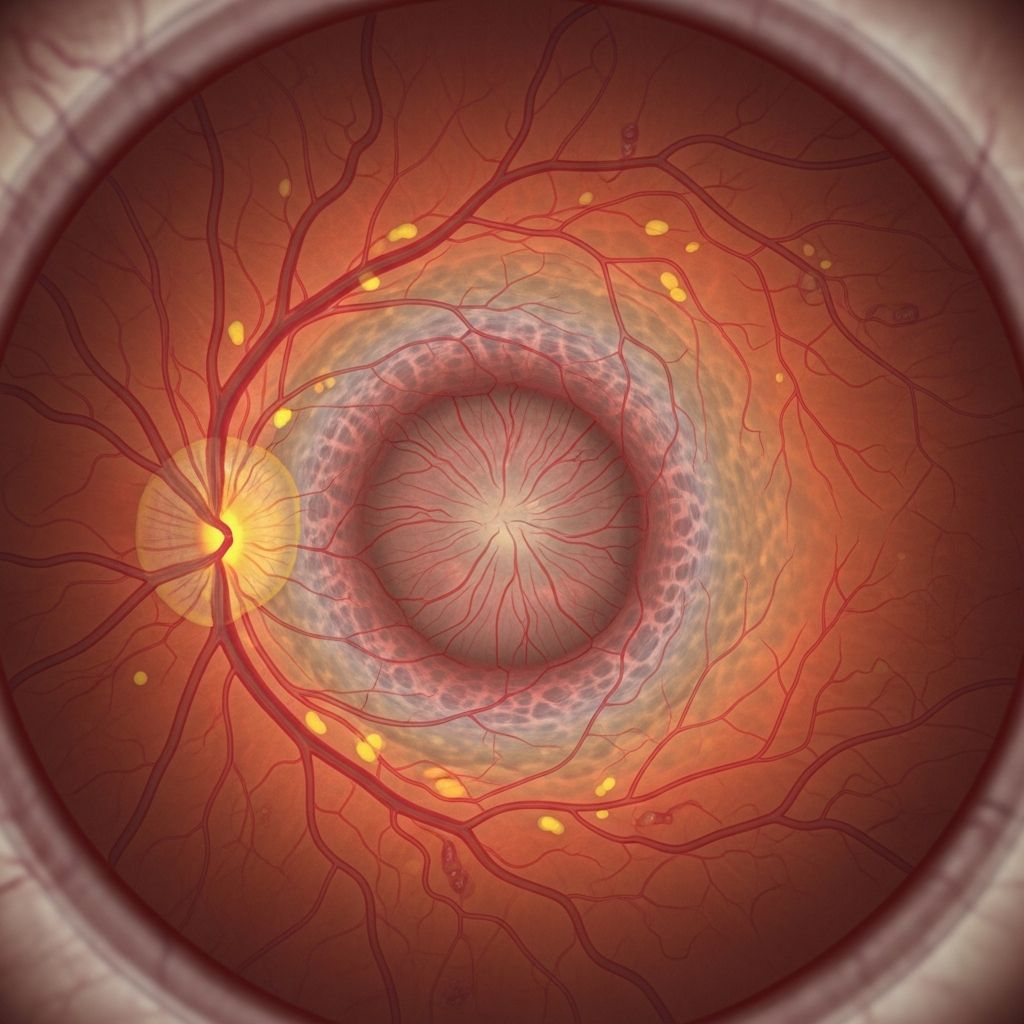
Macular telangiectasia, commonly known as MacTel, represents a group of rare retinal disorders characterized by dilation and leakage of small blood vessels surrounding the macula, the central part of the retina responsible for sharp, detailed vision. This condition primarily impacts central vision, making everyday activities like reading, driving, and recognizing faces increasingly challenging over time. Unlike peripheral vision, which remains largely unaffected, the progressive nature of MacTel demands early detection and vigilant monitoring.
Understanding the Macula and Its Critical Role
The macula is a small, oval-shaped area near the center of the retina, measuring about 5-6 millimeters in diameter. It contains a high concentration of photoreceptor cells called cones, which enable color perception and high-acuity vision. At its core lies the fovea, a tiny depression packed with the densest cone population, providing the clearest 20/20 vision. Any disruption in this delicate region, such as that caused by MacTel, can lead to significant visual impairment despite the eyes’ overall health.
MacTel specifically targets the perifoveal capillaries—tiny blood vessels around the fovea—that nourish retinal tissue. When these vessels become ectatic (dilated and twisted), they leak fluid, proteins, and sometimes lipids into surrounding layers, triggering inflammation, tissue thinning, and eventual cell death. Recent research highlights a neurodegenerative component, where supportive Müller glial cells in the retina degenerate first, destabilizing vascular integrity and photoreceptors.
Classifying MacTel: Types and Distinctions
Experts classify macular telangiectasia into three main types based on clinical presentation, age of onset, and underlying mechanisms. This categorization, pioneered by retinal specialist Dr. J. Donald Gass, aids in prognosis and treatment planning.
- Type 1 (Aneurysmal Telangiectasia): Often linked to conditions like Coats’ disease, this form features large aneurysms in retinal vessels, predominantly affecting younger males. Leakage causes extensive macular edema and lipid exudation.
- Type 2 (Perifoveal Telangiectasia): The most prevalent form, occurring bilaterally in adults aged 40-60. It involves subtle perifoveal vessel abnormalities without aneurysms, progressing slowly with neurodegenerative features.
- Type 3 (Occlusive Telangiectasia): Rare and aggressive, characterized by capillary non-perfusion and full-thickness retinal atrophy. It leads to rapid vision decline and is less responsive to interventions.
Type 2 accounts for over 90% of cases, emphasizing the need for awareness in middle-aged populations. While Type 1 may respond to laser therapy, Types 2 and 3 pose greater challenges due to their insidious progression.
Unraveling the Causes and Risk Factors
The precise etiology of MacTel remains elusive, but converging evidence points to a multifactorial process involving vascular stress, neurodegeneration, and metabolic influences. Studies from the MacTel Project, a landmark international collaboration, reveal that 28% of Type 2 patients have diabetes mellitus and 52% hypertension—rates far exceeding general populations. These comorbidities suggest chronic endothelial damage from hyperglycemia and elevated blood pressure compromises capillary walls.
At a cellular level, histopathology shows pericyte loss (cells stabilizing vessels), ectatic venules plunging orthogonally into deeper retina, and retinal pigment epithelium (RPE) hyperplasia migrating inward. Müller cell dysfunction is implicated as a primary event, disrupting retinal homeostasis and promoting cystoid spaces mistaken for fluid-filled cysts but actually representing tissue voids from glial atrophy.
Related Stories



Genetic factors play a minor role; familial clustering is rare, but polymorphisms in stress-response genes may heighten susceptibility. Environmental contributors like smoking and oxidative stress likely exacerbate progression. Unlike age-related macular degeneration (AMD), MacTel is not strongly tied to drusen or classic aging plaques.
Recognizing Early Symptoms and Progression Stages
MacTel advances stealthily, often asymptomatic in initial stages. Patients typically present in their 50s with subtle paracentral scotomas—blind spots temporal to fixation—detectable via microperimetry. Common complaints include:
- Metamorphopsia: Wavy distortion of straight lines, resembling early AMD.
- Reduced contrast sensitivity: Faded colors and poor low-light performance.
- Central blur: Gradual decline from 20/20 to 20/50+ over 10-20 years.
- Reading difficulties: Parafoveal involvement skips words or letters.
Progression unfolds in stages: early vascular telangiectasia, intermediate photoreceptor loss with ellipsoid zone disruption, and late neovascularization or full-thickness holes. Visual acuity stabilizes around 20/32 in 50% of Type 2 cases, but complications like subretinal neovascular membranes (SNVM) can plummet it to 20/200. Peripheral vision persists, preserving mobility.
| Stage | Key Features | Typical VA |
|---|---|---|
| Early | Perifoveal telangiectasia, subtle hypoautofluorescence | 20/20 – 20/40 |
| Intermediate | Outer retinal cavitation, RPE migration | 20/40 – 20/80 |
| Advanced | Neovascularization, macular hole | 20/100+ |
Advanced Diagnostic Approaches
Diagnosis hinges on multimodal imaging, as clinical exams often miss subtle changes. Funduscopy reveals crystalline deposits, temporal pigment clumping, or right-angle vessels—signs overlooked in routine checks.
- Optical Coherence Tomography (OCT): Gold standard, showing foveal pit widening, hyporeflective cavities spanning retinal layers, and ellipsoid zone loss.
- Fundus Fluorescein Angiography (FFA): Demonstrates late perifoveal leakage without mid-peripheral involvement, distinguishing from diabetic retinopathy.
- Autofluorescence (FAF): Characteristic perifoveal hypoautofluorescence from photoreceptor loss.
- Optical Coherence Tomography Angiography (OCTA): Non-invasive vessel mapping reveals deep telangiectatic loops.
Differential diagnoses include AMD, diabetic macular edema, and branch retinal vein occlusion. Microperimetry quantifies scotoma progression, guiding management.
Current Treatment Options and Management Strategies
No curative therapy exists for MacTel, focusing instead on symptom stabilization and complication prevention. Observation suffices for early non-neovascular stages.
Anti-VEGF Injections: For SNVM (10-15% of Type 2 cases), intravitreal bevacizumab or aflibercept halts leakage and proliferation, preserving acuity in responsive cases. Monthly dosing tapers with anatomic improvement.
Laser Photocoagulation: Rarely used in Type 2 due to foveal risk; reserved for extrafoveal aneurysms in Type 1.
Emerging therapies target neurodegeneration: ciliary neurotrophic factor (CNTF) implants showed modest VA gains in trials, while stem cell Müller glia transplants are preclinical. Metabolic control of hypertension/diabetes slows progression.
Lifestyle measures—smoking cessation, antioxidant-rich diets (lutein/zeaxanthin), UV protection—support retinal health. Low-vision aids like magnifiers aid adaptation.
Living with MacTel: Patient Support and Monitoring
Regular ophthalmology visits (every 6-12 months) track progression via serial OCT/FFA. Patient registries like the MacTel Project foster research and advocacy. Emotional support addresses anxiety from unpredictable vision loss; support groups connect affected individuals.
Prognosis varies: Type 2 median VA loss is 3 lines over 10 years, rarely reaching legal blindness without holes. Early intervention maximizes quality of life.
Frequently Asked Questions (FAQs)
What is the main difference between MacTel and AMD?
MacTel features vascular telangiectasia and neurodegeneration without drusen, progressing slower than wet AMD but mimicking its symptoms.
Can MacTel be prevented?
No, but managing vascular risk factors like hypertension and diabetes may delay onset.
Is MacTel hereditary?
Rarely; no strong genetic pattern, though family history slightly elevates risk.
How fast does vision loss occur?
Slowly over 10-20 years; sudden drops signal neovascularization needing urgent care.
Does MacTel affect both eyes?
Type 2 usually bilateral but asymmetrically; monitor both regardless.
References
- Macular Telangiectasia – EyeWiki — American Academy of Ophthalmology EyeWiki. 2023-10-15. https://eyewiki.org/Macular_Telangiectasia
- Macular Telangiectasia (MacTel) — Prevent Blindness. 2024-02-10. https://preventblindness.org/mactel/
- Macular Telangiectasia Type 2: Visual Acuity, Disease End Stage — PubMed Central (PMC). 2021-08-17. https://pmc.ncbi.nlm.nih.gov/articles/PMC8380038/
- Macular Telangiectasia (MacTel) — Retina Associates of Greater Philadelphia. 2023-05-22. https://retinaassociatesofgreaterphiladelphia.com/article/macular-telangiectasia/
- What Is Macular Telangiectasia? – WebMD — WebMD. 2024-01-08. https://www.webmd.com/eye-health/macular-telangiectasia-overview
Similar Articles








Read full bio of medha deb