Madarosis Images: 17 Clinical Cases For Accurate Diagnosis
Comprehensive visual guide to madarosis: Explore clinical images of eyelash and eyebrow loss from various causes including infections, autoimmune diseases, and trauma.
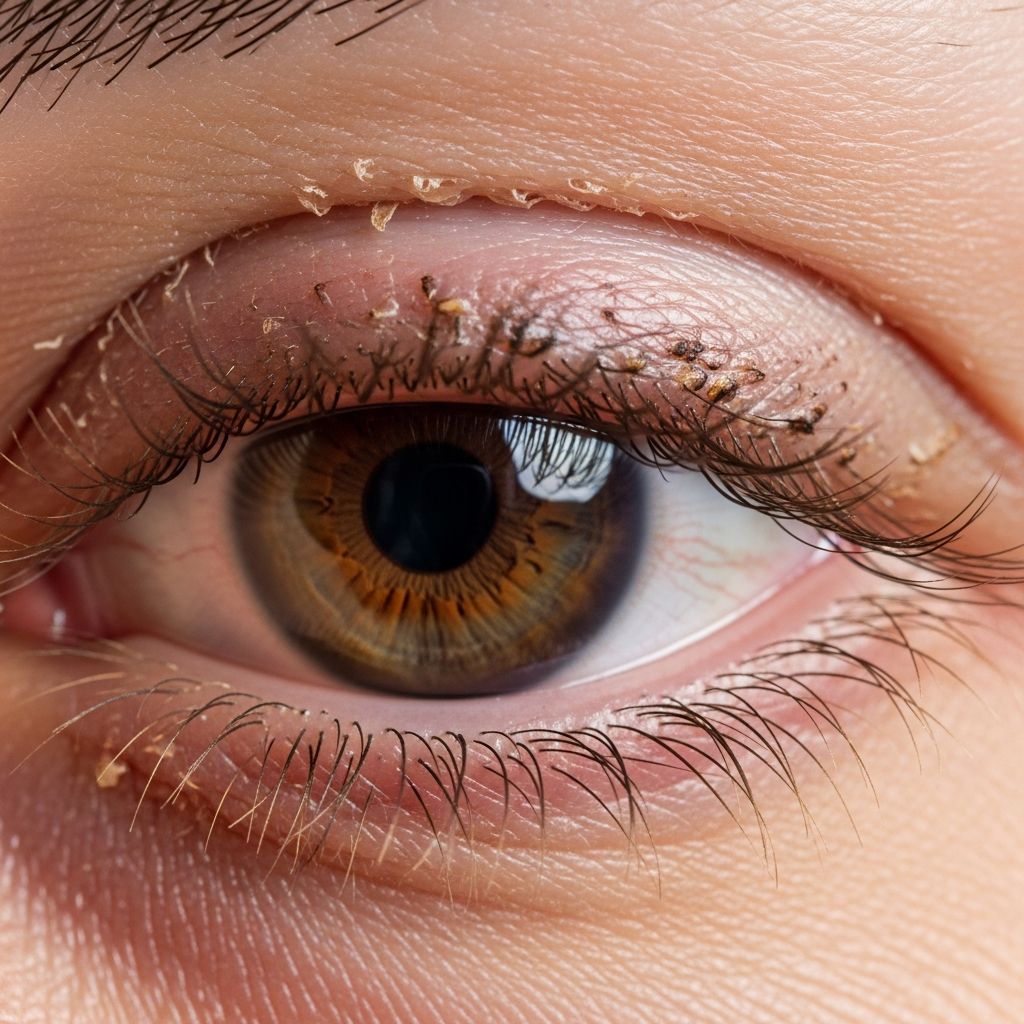
Madarosis refers to the loss of eyelashes (ciliary madarosis) or eyebrows (superciliary madarosis), which can be unilateral or bilateral, partial or complete, scarring or non-scarring. This condition often signals underlying dermatological, systemic, infectious, or autoimmune issues. Non-scarring madarosis preserves hair follicles and may reverse with treatment, while scarring types involve fibrosis and permanent loss.
This image gallery presents clinical photographs of madarosis from diverse etiologies, aiding in visual diagnosis. Each image is accompanied by a description of the presentation, likely cause, and key diagnostic features. These visuals are derived from peer-reviewed dermatological observations and highlight patterns for clinicians.
What is Madarosis?
Madarosis is a clinical sign characterized by the absence or reduction of eyelashes, eyebrows, or both. Derived from the Greek ‘madao’ meaning ‘to fall off,’ it affects hair follicles in the eyelid and brow regions. It can manifest as milphosis (isolated eyelash loss) and is classified into scarring (irreversible follicle destruction) and non-scarring (potentially reversible) types.
**Key Classifications:**
- Non-scarring: Follicles intact; causes include blepharitis, dermatitis, nutritional deficiencies, thyroid disorders.
- Scarring: Follicle destruction via inflammation or neoplasia; e.g., leprosy, lupus, tumors.
Symptoms often include thinning, patchy loss, or total alopecia, sometimes with redness, itching, or scaling depending on the cause.
Causes of Madarosis
Madarosis arises from local eyelid conditions, systemic diseases, infections, trauma, or behavioral factors. Common triggers span inflammatory, infectious, autoimmune, neoplastic, and iatrogenic origins.
| Type | Examples | Characteristics |
|---|---|---|
| Inflammatory | Blepharitis, seborrheic dermatitis, psoriasis | Redness, scaling, collarettes at lash base |
| Infectious | Leprosy, herpes zoster, syphilis, ringworm | Nodules, ulcers, madarosis with skin lesions |
| Autoimmune | Alopecia areata, lupus erythematosus | Patchy loss, associated scalp involvement |
| Neoplastic | Basal cell carcinoma, sebaceous carcinoma | Asymmetric loss, ulceration, bleeding |
| Other | Trichotillomania, drugs, nutritional deficiency | Broken hairs, regrowth at odd lengths |
Madarosis Image Gallery
Blepharitis
Image shows anterior blepharitis with collarettes (waxy debris) around eyelash bases, leading to madarosis. Cylindrical dandruff and telangiectasia of lid margins are visible. Caused by Demodex or staphylococcal overgrowth; non-scarring if treated early.
Seborrhoeic Dermatitis
Clinical photo depicts greasy scales on eyebrows and eyelashes with patchy hair loss. Greasy erythema extends to nasolabial folds. Common in seborrheic areas; responds to antifungals.
Psoriasis
Image illustrates well-demarcated erythematous plaques with silver scales on brows and lids, causing madarosis. Auspitz sign (pinpoint bleeding) may be present. Non-scarring.
Discoid Lupus Erythematosus
Scarring madarosis with atrophic, depigmented plaques on brows. Follicular plugging and perifollicular erythema noted. Biopsy confirms interface dermatitis.
Lichen Planopilaris
Perifollicular violaceous papules with brow madarosis. Scarring alopecia with burnt-out appearance. Itchy or painful.
Alopecia Areata
Smooth, non-scarring patches of brow loss without inflammation. ‘Exclamation mark’ hairs at edges. Autoimmune; may involve lashes.
Trichotillomania
Irregular, patchy lash loss with broken hairs of varying lengths. No scaling; psychosocial history key.
Herpes Zoster Ophthalmicus
Vesicles and madarosis in V1 dermatome post-zoster. Scarring possible if severe.
Hansen Disease (Leprosy)
Bilateral madarosis with leonine facies, nodules. Borderline tuberculoid type; nerve involvement.
Secondary Syphilis
Moth-eaten brow alopecia with ‘moth-bitten’ scalp. Non-scarring; resolves with antibiotics.
Tertiary Syphilis
Gummatous nodules causing scarring madarosis. Rare now.
Tinea Barbae (Ringworm)
Related Stories



Boggy, pustular beard area with brow involvement. Fungal hyphae on KOH.
Thyroid Disease (Hypothyroidism)
Diffuse, non-scarring madarosis with outer brow loss (Hertoghe sign). Systemic symptoms like fatigue.
Drug-Induced
Diffuse loss post-chemotherapy or retinoids. Reversible.
Basal Cell Carcinoma
Pearly nodule eroding lid margin, causing localized madarosis. Telangiectasia, rolled edges.
Sebaceous Carcinoma
Yellowish, irregular lid mass with madarosis. Mimics chalazion; high recurrence.
Trauma
Asymmetric loss post-burn or surgery. Scarring if deep.
Diagnosis
Madarosis is a clinical diagnosis, but history and exam guide etiology. Assess pattern (diffuse/localized), associated signs (scaling, tumors), systemic features. Investigations include biopsy, cultures, serology (syphilis, thyroid), Wood lamp.
- History: Onset, trauma, drugs, family hx, psychosocial.
- Exam: Lash breakage, blepharitis, lesions, scalp involvement.
- Tests: TSH, ANA, biopsy for scarring types.
Treatment
Treat underlying cause; supportive care for regrowth. Non-scarring: topical steroids, antibiotics. Scarring: may need grafts. Cosmetics or tattoos for permanent cases.
Frequently Asked Questions (FAQs)
What is madarosis?
Madarosis is loss of eyelashes or eyebrows due to various causes, classified as scarring or non-scarring.
Is madarosis reversible?
Yes, in non-scarring cases with prompt treatment of the cause; scarring types are often permanent.
When to see a doctor for madarosis?
Immediately if asymmetric, with lesions, pain, or systemic symptoms, as it may indicate serious disease like cancer or infection.
Can madarosis affect only one eye?
Yes, unilateral madarosis suggests local issues like tumors or zoster.
How is madarosis treated?
By addressing the underlying condition, e.g., antibiotics for infections, steroids for inflammation.
References
- Madarosis: Symptoms, Causes, Treatment, and More — Healthline. 2023-05-15. https://www.healthline.com/health/madarosis
- Madarosis — EyeWiki (American Academy of Ophthalmology). 2024-01-10. https://eyewiki.org/Madarosis
- Madarosis: Understanding the Symptoms, Causes, and Treatment — Apollo Hospitals. 2023-11-20. https://www.apollohospitals.com/symptoms/madarosis
- Madarosis — DermNet NZ. 2024-02-05. https://dermnetnz.org/topics/madarosis
- What is Madarosis? — All About Vision. 2023-08-12. https://www.allaboutvision.com/conditions/related/madarosis/
- Madarosis (Eyebrow & Eyelash Hair Loss) — Cleveland Clinic. 2024-03-18. https://my.clevelandclinic.org/health/symptoms/24820-madarosis
- Madarosis — DermNet NZ (Images reference). 2024-02-05. https://dermnetnz.org/topics/madarosis-images
Similar Articles








Read full bio of Sneha Tete