Magnetic Resonance Cholangiopancreatography (MRCP)
Complete guide to MRCP: A non-invasive imaging test for hepatobiliary and pancreatic disorders.
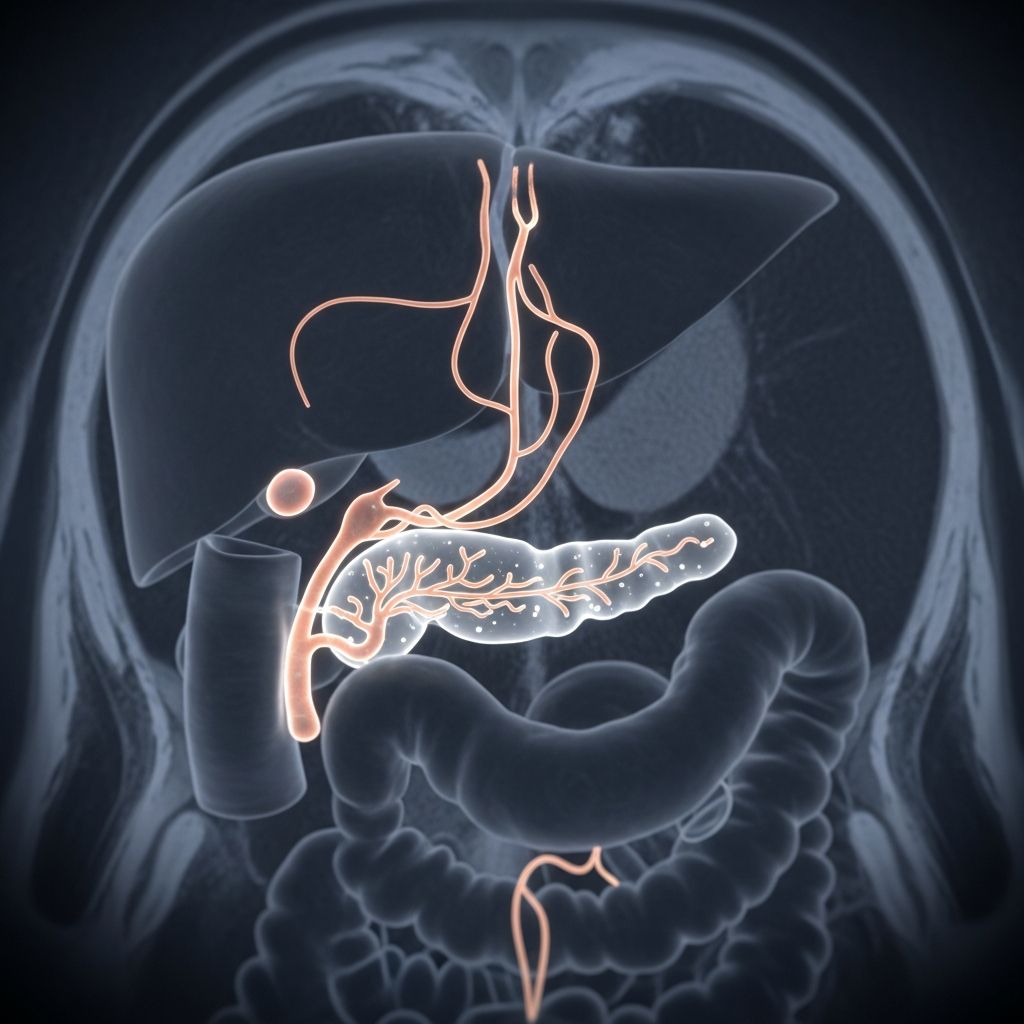
What is Magnetic Resonance Cholangiopancreatography (MRCP)?
Magnetic Resonance Cholangiopancreatography, commonly known as MRCP, is an advanced diagnostic imaging procedure that combines magnetic resonance imaging (MRI) technology with specialized techniques to produce detailed, high-quality images of the hepatobiliary and pancreatic systems. Unlike traditional imaging methods that rely on ionizing radiation, MRCP is a noninvasive procedure that uses radio waves and magnetic fields to create comprehensive visual representations of the bile ducts, gallbladder, pancreas, and related structures. This imaging modality has become an essential tool in modern medicine for diagnosing and evaluating various conditions affecting these vital organ systems.
The procedure is particularly valuable because it provides excellent visualization of the pancreatic and common bile ducts, allowing physicians to identify obstructions, stones, strictures, and other pathological conditions with remarkable clarity and precision. MRCP has largely replaced more invasive diagnostic methods in many clinical settings, offering patients a safer alternative while maintaining diagnostic accuracy and quality.
How Does MRCP Work?
MRCP operates on fundamentally different principles than conventional X-ray or CT imaging. The procedure utilizes a powerful magnetic field combined with radio waves rather than ionizing radiation. When the patient is positioned within the MRI scanner, the radio waves align hydrogen atoms that naturally exist within the body tissues. This process does not cause any chemical changes in the tissues. As the hydrogen atoms return to their natural alignment after the radio waves cease, they emit different amounts of energy depending on the tissue type they are located in. The MRI scanner captures this emitted energy and converts it into detailed images using sophisticated computer processing.
The specific sequences and protocols used in MRCP are designed to highlight the fluid-filled structures, particularly the bile ducts and pancreatic ducts. The technologist carefully plans imaging sequences including T2-weighted acquisitions, coronal and axial projections, and three-dimensional reconstructions to ensure comprehensive visualization of the entire hepatobiliary and pancreatic system. This technical sophistication allows for the detection of even subtle abnormalities that might be missed with other imaging modalities.
When Is MRCP Recommended?
Your healthcare provider may recommend an MRCP examination for several clinical indications related to hepatobiliary and pancreatic pathology. Common reasons for ordering this procedure include:
- Suspected bile duct obstruction or narrowing (strictures)
- Evaluation of recurrent pancreatitis
- Investigation of abdominal pain with suspected pancreatic or biliary involvement
- Detection and characterization of gallstones or bile duct stones
- Assessment of pancreatic masses or cystic lesions
- Evaluation of suspected cholangitis or biliary tract infections
- Post-surgical complications involving the bile ducts
- Investigation of jaundice or elevated liver function tests
- Assessment of pancreatic duct abnormalities
MRCP is particularly valuable in distinguishing between different causes of biliary obstruction and in providing detailed anatomical information that guides treatment decisions.
Preparation for Your MRCP Examination
Pre-Procedure Requirements
Proper preparation is essential for obtaining optimal MRCP images and ensuring patient safety and comfort during the procedure. Your healthcare provider will provide specific instructions tailored to your individual situation, but general preparation guidelines include the following:
- Fasting for 4-6 hours prior to the examination, including no food or beverages
- Completing all required medical history forms and questionnaires
- Informing your healthcare provider about any existing medical conditions, recent surgeries, or allergies
- Discussing any medications you are currently taking
- Arranging transportation, as you may experience some residual effects from contrast material or sedation
Related Stories



What to Bring and What to Expect
Plan to arrive at the imaging facility approximately 15-20 minutes before your scheduled examination time. Bring your insurance card, a valid form of identification, and any relevant medical records or previous imaging studies. You will be asked to complete additional consent forms and provide a detailed account of your medical history before proceeding with the examination. The MRI technologist will explain the procedure in detail, answer your questions, and address any concerns you may have.
The MRCP Procedure: Step-by-Step
Initial Setup and Safety Screening
Before entering the MRI scanner room, you will be asked to change into a hospital gown and remove all metallic items from your person. This is a critical safety measure because the powerful magnetic field can interact dangerously with metal objects. Items you must remove include keys, coins, credit cards with magnetic strips, wallets, jewelry such as necklaces and earrings, hairpins, and hearing aids if applicable. Your weight will be recorded, and the technologist will verify that no metallic implants or devices are present in your body.
Positioning and Comfort Measures
You will be positioned on a moveable exam table in a supine position, lying on your back with your head resting on a pillow and pointing toward the magnet. The technologist will secure you with straps and bolsters to maintain your position throughout the examination. Your legs will rest on cushions to maximize comfort. The body coil will be positioned over the upper abdomen, extending from the nipple line at the top to the iliac crest at the bottom, and secured with straps to prevent motion artifacts from breathing.
Breathing Technique Training
Before the actual scanning begins, the MRI technologist will practice proper breathing techniques with you two to three times. You will be instructed to hold your breath during specific breath-hold scans and breathe gently during gated scans. Proper breathing technique is essential for minimizing motion artifacts and obtaining high-quality images. The technologist will provide clear instructions via an intercom system that remains active throughout the procedure.
The Scanning Process
The actual MRCP examination typically takes approximately 10-15 minutes, though if performed as part of a comprehensive abdominal MRI study, the total examination time may extend to approximately 30-45 minutes. During the scanning process, you will hear various clicking and knocking sounds as different imaging sequences are acquired. If contrast material is used to enhance image quality, the technologist will inject it through an intravenous line after the initial series of scans. You will be able to communicate with the technologist throughout the procedure via the two-way intercom system.
What Happens After the Procedure?
Recovery and Results
After the MRCP examination is completed, you may resume normal activities immediately unless sedation was administered. If sedation was used, you will have a brief recovery period in the facility, and someone must drive you home. Your radiologist will carefully analyze all the acquired images and prepare a detailed report of the findings. This report will be sent to your referring healthcare provider, though it may take up to one or two weeks for results to be available.
Follow-Up Care
Your healthcare provider will review the MRCP results with you and discuss the findings in detail. Depending on what the imaging reveals, you may require additional testing, surgical intervention, or alternative treatments. You should contact your healthcare provider if you develop hives or other signs of allergic reaction after returning home, or if symptoms such as abdominal pain worsen.
Advantages of MRCP
MRCP offers numerous advantages over alternative diagnostic methods:
- No ionizing radiation: Unlike X-ray and CT imaging, MRCP does not expose patients to harmful radiation
- Non-invasive: The procedure does not require needles, catheters, or incisions into the body
- High diagnostic accuracy: Provides detailed visualization of bile ducts and pancreatic structures
- Comprehensive imaging: Evaluates multiple organ systems in a single procedure
- Safe contrast options: Uses gadolinium-based contrast agents that are generally well-tolerated
- No need for sedation: In most cases, sedation is not required, reducing procedural risks
- Excellent soft tissue differentiation: Superior visualization of subtle pathology compared to other modalities
Potential Risks and Considerations
While MRCP is generally a safe procedure, there are several important considerations and potential risks of which patients should be aware. Allergic reactions to contrast material, though rare, can occur in susceptible individuals. Patients with severe claustrophobia may experience anxiety in the MRI scanner environment. Individuals with certain metallic implants, such as pacemakers or ferromagnetic aneurysm clips, may not be suitable candidates for MRI. Gadolinium contrast agents may pose a risk to patients with severe kidney disease. Pregnant women should discuss MRI safety with their healthcare provider before undergoing the procedure, as the long-term effects on the fetus are not completely understood.
Frequently Asked Questions
Q: Is MRCP painful?
A: No, MRCP is not painful. You may experience some discomfort from lying still on the exam table for an extended period, but the procedure itself is painless. The loud noises from the scanner can be startling, but hearing protection is provided.
Q: How long does the entire MRCP procedure take?
A: The actual MRCP imaging typically takes 10-15 minutes, but when combined with a standard abdominal MRI, the total procedure time may be 30-45 minutes.
Q: Will I need sedation for MRCP?
A: In most cases, sedation is not necessary for MRCP in adults. However, children or patients with severe anxiety may be offered sedation to help them remain still during the procedure.
Q: Can I eat or drink before my MRCP?
A: No, you must fast for 4-6 hours before your MRCP examination. This means no food or beverages during this period.
Q: What should I wear to my MRCP appointment?
A: Wear comfortable, loose-fitting clothing without metal buttons, zippers, or snaps. You will change into a hospital gown before the procedure, so it is easier to wear clothes that are simple to remove and put back on.
Q: Are there any contraindications for MRCP?
A: Yes, certain conditions may contraindicate MRCP, including ferromagnetic metallic implants, severe claustrophobia, and severe kidney disease (if contrast is to be used). Always inform your healthcare provider about all medical implants and devices.
Q: How accurate is MRCP in detecting bile duct stones?
A: MRCP has high sensitivity and specificity for detecting bile duct stones and other biliary obstruction, making it an excellent diagnostic tool for these conditions.
Q: When will I get my MRCP results?
A: Your radiologist will typically complete the report within several days, though it may take up to one or two weeks for results to reach your healthcare provider.
Conclusion
Magnetic Resonance Cholangiopancreatography represents a significant advancement in diagnostic imaging, offering clinicians and patients a safe, effective, and noninvasive method for evaluating hepatobiliary and pancreatic pathology. By combining the power of magnetic resonance imaging with specialized imaging sequences, MRCP provides exceptional detail of the bile ducts, gallbladder, and pancreas without exposing patients to ionizing radiation. Whether investigating abdominal pain, evaluating recurrent pancreatitis, or assessing bile duct obstruction, MRCP has become an indispensable diagnostic tool in modern medicine. Understanding what to expect during the procedure, properly preparing according to your healthcare provider’s instructions, and maintaining open communication with the imaging team will help ensure a successful examination and accurate diagnosis.
References
- Magnetic Resonance Cholangiopancreatography (MRCP) — JAJ Gastroenterology & Hepatology Organization. 2024-10-03. https://jajgastrohepto.org/wp-content/uploads/2024/10/DOC-20241003-WA0000.pdf
- MRCP Protocol — Weill Cornell Medicine. 2024. https://pre.weill.cornell.edu/mri/MRI/Abdomen/MRCP_Dr.P_Protocol.htm
- MRCP (MR Cholangiopancreatography) — Radiology Info, American College of Radiology. 2024. https://www.radiologyinfo.org/en/info/mrcp
- Magnetic Resonance Cholangiopancreatography (MRCP) — Cleveland Clinic. 2024. https://my.clevelandclinic.org/health/diagnostics/24457-magnetic-resonance-cholangiopancreatography-mrcp
Similar Articles








Read full bio of Sneha Tete