Magnetic Resonance Imaging (MRI): Complete Guide
Comprehensive guide to MRI technology, procedure, benefits, and what to expect during your scan.
Understanding Magnetic Resonance Imaging (MRI)
Magnetic resonance imaging (MRI) is a powerful diagnostic tool that uses magnetic fields and radio waves to create detailed images of the body’s internal structures. Unlike X-rays or CT scans that use radiation, MRI technology generates images by manipulating the body’s natural magnetic properties, making it a non-invasive and non-radiating imaging technique. MRI scanners produce high-quality, three-dimensional images that allow physicians to visualize soft tissues, organs, and the nervous system with exceptional clarity, enabling early detection and accurate diagnosis of various medical conditions.
How MRI Technology Works
The fundamental principle behind MRI involves the interaction between magnetic fields and the body’s hydrogen atoms. When you undergo an MRI scan, your body is placed within a powerful magnetic field, typically ranging from 1.5 to 3 Tesla in strength, though some advanced systems operate at higher field strengths. Within this magnetic field, hydrogen protons in your body—particularly those in water and fat molecules—align in specific directions.
During the scanning process, radiofrequency pulses are transmitted into the body, which cause these aligned protons to absorb energy and move out of their original alignment. When the radiofrequency pulse stops, the protons gradually return to their original state, emitting signals that are detected by sensitive receiver coils surrounding the area being scanned. These signals are then processed by sophisticated computer algorithms to construct detailed cross-sectional images of the body. Different tissues recover at different rates, allowing the MRI system to distinguish between various tissue types and create clear, contrasting images.
Key Advantages of MRI Imaging
MRI technology offers several significant advantages that make it a preferred imaging modality for many diagnostic situations:
- No Ionizing Radiation: Unlike X-rays and CT scans, MRI does not expose patients to potentially harmful radiation, making it particularly suitable for pregnant women and children.
- Superior Soft Tissue Contrast: MRI excels at visualizing soft tissues including the brain, spinal cord, muscles, and organs with remarkable detail.
- Detailed 3D Images: Modern MRI systems can create comprehensive three-dimensional images and multiplanar views without repositioning the patient.
- No Contrast Required in Many Cases: While contrast agents can be used to enhance certain imaging studies, many MRI examinations provide diagnostic information without additional substances.
- Specialized Imaging Capabilities: Advanced techniques like functional MRI (fMRI), diffusion tensor imaging (DTI), and susceptibility tensor imaging (STI) enable evaluation of brain function and tissue microstructure.
Common Clinical Applications
MRI is utilized across numerous medical specialties for diverse diagnostic purposes. Neurological imaging represents one of the most common applications, with MRI being the gold standard for evaluating brain tumors, stroke, multiple sclerosis, Alzheimer’s disease, and other neurological conditions. In orthopedic medicine, MRI is extensively used to assess joint injuries, cartilage damage, ligament tears, and bone marrow abnormalities. Cardiac MRI provides detailed images of the heart’s structure and function, helping diagnose cardiomyopathies, valvular disease, and coronary artery abnormalities.
Abdominal and pelvic MRI can evaluate the liver, kidneys, pancreas, and reproductive organs. Breast MRI is increasingly used for screening high-risk patients and evaluating suspicious lesions. Additionally, MRI plays a crucial role in tumor detection, staging, and treatment planning across multiple cancer types, providing clinicians with essential information for developing comprehensive treatment strategies.
Preparation for Your MRI Examination
Proper preparation ensures optimal image quality and a comfortable scanning experience. Before your appointment, you should:
- Inform your healthcare provider about any metallic implants, including pacemakers, cochlear implants, metal clips, or orthopedic hardware
- Disclose any history of metallic foreign bodies or occupational metal exposure
- Remove all metallic objects including jewelry, watches, phones, keys, and electronic devices
- Wear comfortable, metal-free clothing or change into a provided hospital gown
- Inform the technician if you experience claustrophobia or anxiety
- Follow specific fasting or medication instructions provided with your appointment details
- Avoid applying cosmetics or lotions that might contain metallic particles
The MRI Scanning Process
Understanding what happens during your MRI examination can help reduce anxiety and ensure cooperation throughout the procedure. Upon arrival, you’ll complete screening questionnaires to identify any contraindications. The MRI technologist will review your medical history and answer questions about the scanning process.
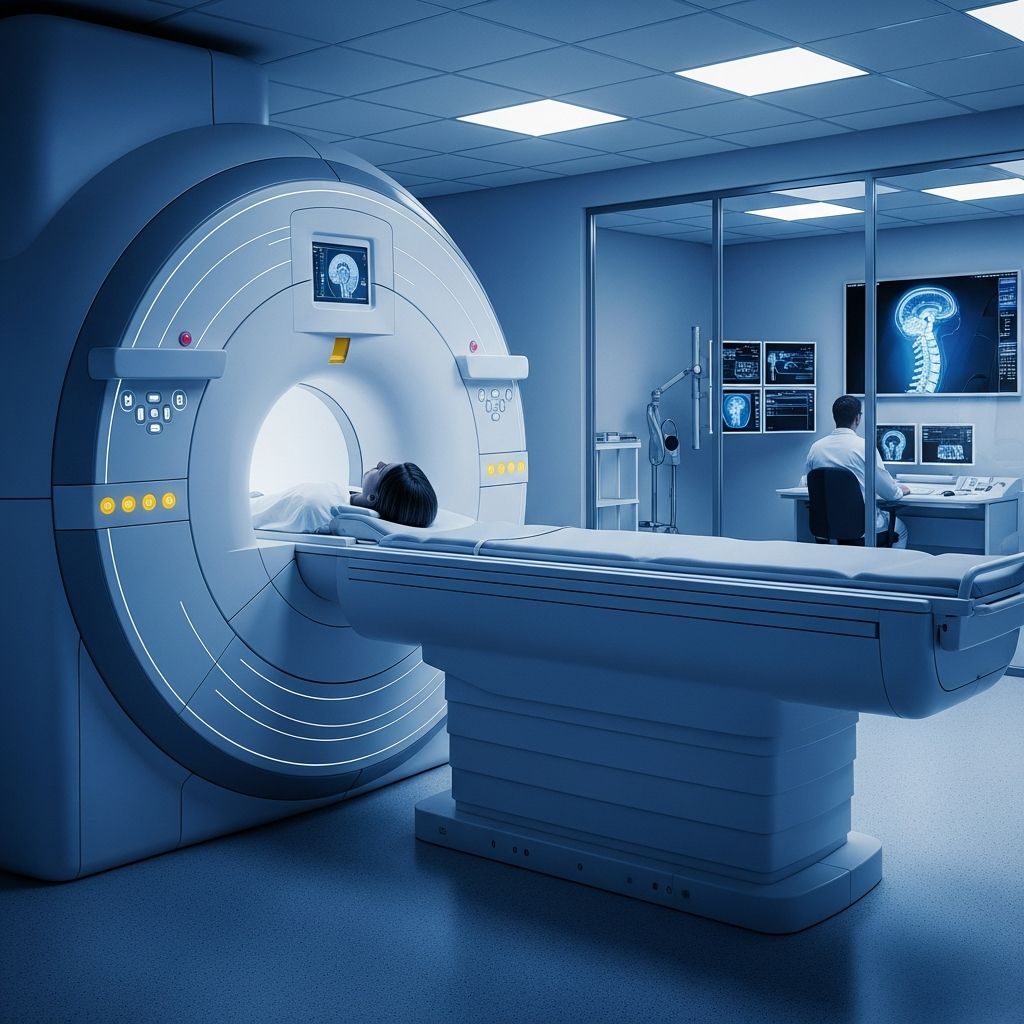
During the examination, you’ll be positioned on a comfortable table that slides into the MRI scanner’s bore—a cylindrical tunnel housing the magnetic field and radiofrequency coils. Once positioned, the table moves into the scanner, and the technologist monitors you from an adjacent control room via video and intercom systems. Throughout the scan, you’ll hear loud knocking and tapping sounds as the scanner’s gradient coils rapidly switch on and off, generating the radiofrequency pulses. Most examinations last 30 to 60 minutes, depending on the body area and specific sequences performed. The scanner remains stationary while capturing images from multiple angles and depths, eliminating the need for repositioning during the procedure.
Potential Risks and Contraindications
While MRI is generally considered safe, certain situations warrant caution or may contraindicate the procedure. Patients with ferromagnetic metallic implants, particularly those containing iron, present significant safety risks. Unshielded cardiac pacemakers and implantable cardioverter-defibrillators (ICDs) were traditionally absolute contraindications, though some newer devices are designated as MRI-conditional. Metallic foreign bodies embedded in the eyes pose serious risks of movement or perforation during scanning.
Severe claustrophobia may prevent some patients from tolerating the enclosed scanner environment, though open or wide-bore MRI systems provide alternatives for anxious patients. Gadolinium-based contrast agents used to enhance certain MRI studies carry minimal risk in patients with normal kidney function but require careful consideration in those with severe renal impairment due to the theoretical risk of nephrogenic systemic fibrosis. Patients should always disclose complete medical histories to ensure safe scanning and optimal diagnostic outcomes.
Advanced MRI Techniques
Contemporary MRI systems incorporate sophisticated specialized techniques that expand diagnostic capabilities beyond conventional imaging. Functional MRI (fMRI) measures blood oxygen level-dependent changes to map brain activity and connectivity, proving invaluable in research and preoperative planning for brain tumors near eloquent cortex. Diffusion tensor imaging evaluates white matter microstructure and neural connectivity, enabling assessment of stroke, traumatic brain injury, and neurodegenerative diseases.
Susceptibility tensor imaging (STI) represents an emerging advanced technique that measures tissue magnetic susceptibility to identify iron, myelin, and other tissue components. Recent innovations employing artificial intelligence and machine learning, such as the DeepSTI algorithm developed at Johns Hopkins, significantly reduce scanning time while improving image quality by reconstructing high-resolution tissue susceptibility maps from fewer acquisitions. These technological advances promise to make advanced imaging techniques more accessible to clinicians and patients by reducing examination duration and improving diagnostic accuracy.
Recent Innovations and Future Directions
The field of MRI continues evolving with technological advancements that enhance diagnostic precision and patient experience. Machine learning algorithms now optimize image reconstruction, reduce artifact, and enhance tissue characterization. Higher field strength magnets (7 Tesla and above) enable unprecedented anatomical detail, though they require careful optimization to manage technical challenges. Hybrid imaging systems combining MRI with positron emission tomography (PET) allow simultaneous functional and morphological assessment for oncology and neurology applications.
Research continues exploring MRI’s potential in personalized medicine and treatment monitoring. Radiomics—extracting quantitative imaging features through advanced computational methods—shows promise in predicting treatment response and patient outcomes. Additionally, improved understanding of MRI physics and tissue behavior enables development of novel contrast agents and imaging sequences targeting specific molecular and cellular processes.
Comparing MRI with Other Imaging Modalities
| Imaging Modality | Radiation Exposure | Soft Tissue Resolution | Speed | Best Uses |
|---|---|---|---|---|
| MRI | None | Excellent | Moderate (20-60 min) | Brain, spine, joints, organs |
| CT Scan | Moderate | Good | Very Fast (seconds) | Bone, lung, trauma |
| X-Ray | Minimal | Poor | Seconds | Bone fractures, chest |
| Ultrasound | None | Moderate | Real-time | Pregnancy, cardiac, vascular |
Frequently Asked Questions
Q: Is MRI safe for pregnant women?
A: MRI is generally considered safe during pregnancy, particularly after the first trimester, as it does not use ionizing radiation. However, contrast agents should be avoided unless medically necessary. Always inform your healthcare provider about pregnancy before undergoing MRI.
Q: Can I bring someone with me during the MRI?
A: Support persons may accompany you to the imaging facility but typically cannot remain in the scanning room due to the powerful magnetic field. They can usually wait in an adjacent area.
Q: How long does an MRI examination typically last?
A: Most MRI scans take between 30 and 60 minutes, depending on the body region being scanned and the specific sequences performed. You’ll receive time estimates during your appointment scheduling.
Q: What should I do if I feel claustrophobic during the scan?
A: Communicate with the technologist immediately using the intercom system. They can pause the examination, provide reassurance, or discuss alternative imaging options such as open MRI systems.
Q: Are there any medications I should avoid before my MRI?
A: Most medications don’t interfere with MRI, but inform your healthcare provider of all medications you take. Some specific medications may require adjustment or temporary discontinuation based on your individual circumstances.
Q: Can I eat or drink before my MRI?
A: Fasting requirements depend on the specific examination. Some studies require fasting, while others do not. Follow the specific instructions provided with your appointment appointment confirmation.
Q: Will I receive results immediately after my MRI?
A: Results are not immediately available. A radiologist must interpret the images, typically within 24 to 48 hours. Your physician will contact you with results and discuss findings.
Q: Is MRI covered by insurance?
A: Most insurance plans cover medically necessary MRI examinations. However, coverage varies based on your specific plan and the clinical indication. Contact your insurance provider for detailed coverage information.
References
- Brain imaging technique allows researchers to achieve more with less data — Johns Hopkins University Hub. 2023-12-14. https://hub.jhu.edu/2023/12/14/brain-imagining-less-data/
- MRI Physics | Magnetic Resonance and Spin Echo Sequences — Johns Hopkins Medicine. 2022-07-05. https://www.youtube.com/watch?v=jLnuPKhKXVM
- What to Expect During Your MRI Exam — Johns Hopkins Medicine. 2021-12-22. https://www.youtube.com/watch?v=J2Xt9ArSE0Q
Similar Articles








Read full bio of Sneha Tete