MRI (Magnetic Resonance Imaging): What It Is & Results
Comprehensive guide to MRI scans: understanding how they work, what to expect, and their diagnostic uses.
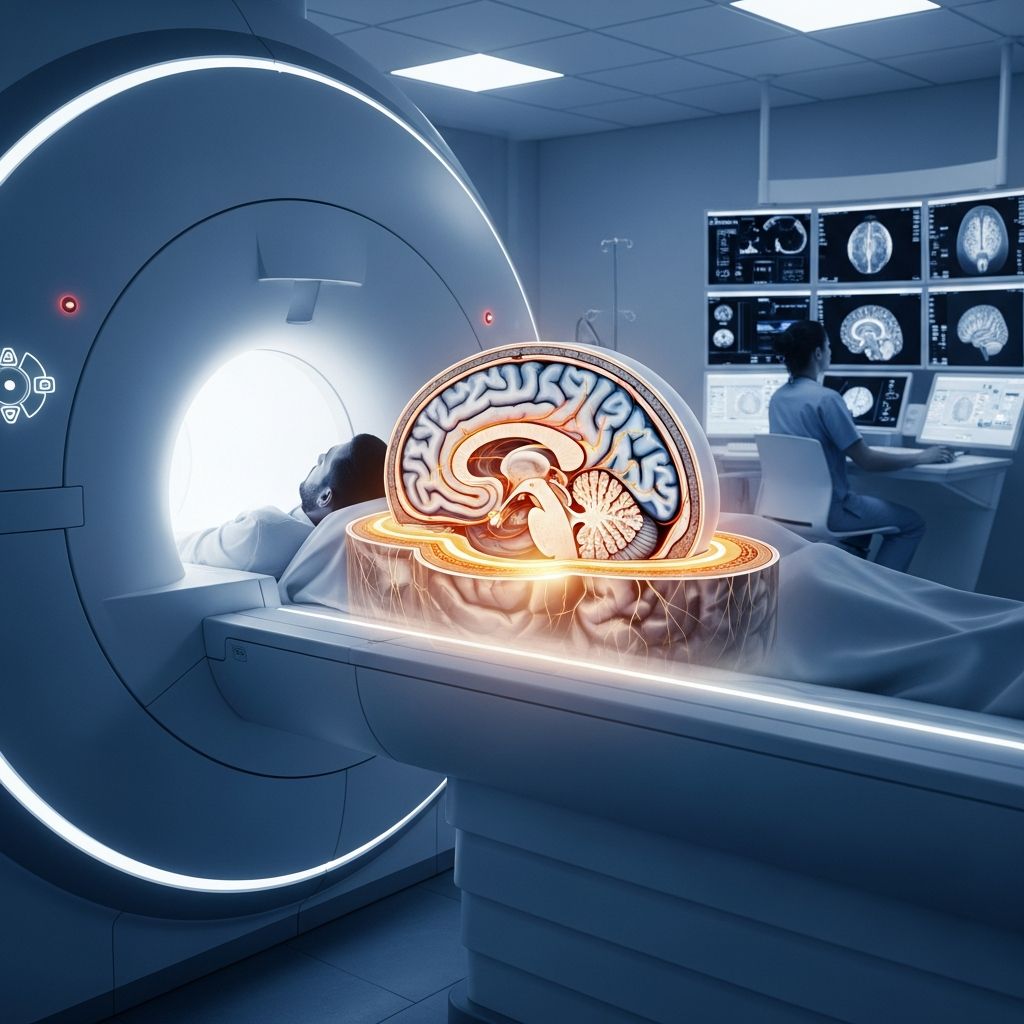
What Is MRI (Magnetic Resonance Imaging)?
Magnetic resonance imaging (MRI) is a sophisticated diagnostic imaging test that creates detailed, clear images of structures inside your body using a combination of a powerful magnetic field, radio waves, and advanced computer technology. Unlike X-rays or CT scans, MRI does not use ionizing radiation, making it a non-invasive and safe imaging method for most patients. The procedure produces exceptionally high-quality images that allow healthcare providers to visualize soft tissues, organs, blood vessels, and other internal structures with remarkable precision.
MRI technology has revolutionized medical diagnosis by providing physicians with detailed cross-sectional images of virtually any part of the body. The versatility of MRI makes it invaluable for detecting, diagnosing, and monitoring a wide range of medical conditions across multiple medical specialties.
How Does MRI Work?
MRI operates on the principles of nuclear magnetic resonance, a physical phenomenon that allows scientists and clinicians to visualize the body’s internal structures. The MRI machine contains a large cylindrical magnet that generates an extremely powerful magnetic field, typically ranging from 1.5 to 3 Tesla in strength, though some specialized machines reach even higher field strengths.
When you enter the MRI machine, the strong magnetic field aligns the hydrogen atoms present in your body’s water and fat molecules. The machine then transmits radiofrequency pulses that disturb these aligned atoms from their resting state. As the atoms return to their original alignment after the radiofrequency pulse stops, they emit signals that are detected by receiver coils within the MRI scanner. A sophisticated computer processes these signals and converts them into detailed cross-sectional images, creating a comprehensive three-dimensional map of the scanned area.
Different tissue types have different rates of signal recovery, which allows the computer to distinguish between various tissues and create images with exceptional contrast and detail. Technicians can adjust imaging parameters to highlight specific tissues or structures, making MRI remarkably versatile for different diagnostic purposes.
Common Uses of MRI Scans
MRI is employed across numerous medical fields for diagnosis, monitoring, and research purposes. Key applications include:
- Brain and Neurological Conditions: MRI is the gold standard for detecting brain tumors, stroke, multiple sclerosis, Alzheimer’s disease, epilepsy, and other neurological disorders.
- Spinal Cord Issues: MRI effectively visualizes the spinal cord and can identify herniated discs, spinal cord compression, and other spine-related conditions.
- Orthopedic Injuries: Ligament tears, cartilage damage, meniscus injuries, and other soft tissue injuries are clearly visible on MRI images.
- Cardiac Imaging: Advanced cardiac MRI can assess heart function, detect myocardial infarction, and evaluate structural heart disease.
- Abdominal and Pelvic Imaging: MRI helps diagnose liver disease, pancreatic disorders, kidney abnormalities, and reproductive system conditions.
- Breast Imaging: Breast MRI is valuable for detecting breast cancer, evaluating suspicious findings, and assessing treatment response.
- Musculoskeletal System: Joints, muscles, and soft tissues throughout the body can be comprehensively evaluated with MRI.
Preparing for Your MRI Scan
Proper preparation ensures optimal image quality and a smooth procedural experience. Before your MRI appointment, you should:
- Inform Your Healthcare Provider: Disclose all medical implants, metallic objects, tattoos with metallic ink, and any implanted electronic devices to your healthcare team.
- Remove Metal Objects: Take off all jewelry, watches, eyeglasses, hearing aids, and other metallic accessories before entering the MRI room.
- Wear Comfortable Clothing: Choose loose-fitting, comfortable clothing without metal zippers, buttons, or snaps. Hospital gowns are typically provided if needed.
- Eat and Drink Normally: For most MRI scans, you can eat and drink normally unless instructed otherwise by your healthcare provider.
- Arrive Early: Plan to arrive 10-15 minutes early to complete paperwork and safety screening questionnaires.
- Ask About Contrast: If contrast dye will be used, your healthcare provider will discuss potential allergies and kidney function beforehand.
Related Stories



What to Expect During the MRI Procedure
Understanding what happens during an MRI scan can help alleviate anxiety and ensure you’re fully prepared for the experience.
The Scan Environment
When you arrive at the imaging center, a radiology technologist will escort you to the MRI suite and explain the procedure in detail. The MRI machine is a large, cylindrical tube approximately 5-7 feet long and 2-3 feet in diameter. You will lie on a padded table that slides into the machine. The technologist will ensure your comfort by positioning pillows or foam pads as needed.
During the Scan
Once positioned inside the MRI machine, you must remain completely still to ensure clear images. The machine produces a series of loud knocking, buzzing, and humming sounds as it operates—these are completely normal and indicate the machine is functioning properly. Most facilities provide earplugs or headphones to minimize noise exposure.
The scan typically takes 20-60 minutes depending on the area being examined and the specific sequences required. The technologist communicates with you through an intercom system and can hear you at all times. If you experience discomfort or anxiety, you can press an emergency call button and the technologist will immediately stop the scan and check on you.
Contrast Administration
For some MRI scans, a gadolinium-based contrast agent may be administered intravenously to enhance visualization of specific tissues and structures. If contrast is used, a technician will insert an intravenous line, typically in your arm. The contrast is injected during the scan to improve image quality and diagnostic accuracy. Most patients tolerate contrast injections well with minimal side effects.
MRI Safety Considerations
While MRI is generally considered safe, certain precautions must be observed to prevent complications and ensure accurate imaging.
Contraindications and Metallic Implants
Some patients cannot safely undergo MRI due to metallic implants or medical devices. Absolute contraindications include certain types of pacemakers, defibrillators, and ferromagnetic aneurysm clips. However, many modern implants are MRI-compatible, and your healthcare provider can determine whether your specific implant is safe. It is crucial to disclose all implants, metallic fragments, and electronic devices before the scan.
Claustrophobia and Anxiety
The enclosed MRI environment may trigger claustrophobia in some patients. If you experience anxiety in confined spaces, inform your healthcare provider beforehand. Open-design MRI machines are available at some facilities for claustrophobic patients, though they may produce lower-quality images. Sedation may be an option for severely anxious patients.
Gadolinium Safety
Gadolinium-based contrast agents are generally safe for most patients. However, patients with severe kidney disease may require alternative imaging options or careful monitoring due to the small risk of gadolinium retention. Your healthcare team will assess your kidney function before administering contrast.
Understanding Your MRI Results
After your MRI scan, a radiologist will analyze the images and generate a detailed report describing findings and any abnormalities detected. Your healthcare provider will review the results with you and explain what the images show.
Normal vs. Abnormal Findings
Normal MRI results indicate that no significant abnormalities were detected in the scanned area. Abnormal findings may reveal tumors, inflammation, infection, structural abnormalities, or other pathology. The radiologist’s report will specifically describe any findings and their clinical significance.
Next Steps
Depending on your results, your healthcare provider may recommend follow-up imaging, additional diagnostic tests, specialist consultation, or treatment initiation. Some findings may require serial imaging to monitor changes over time, particularly in conditions like multiple sclerosis where MRI is essential for disease monitoring and prognostication.
Advantages of MRI Imaging
MRI offers numerous advantages compared to other imaging modalities:
- No Ionizing Radiation: Unlike X-rays and CT scans, MRI does not expose patients to harmful ionizing radiation.
- Exceptional Soft Tissue Contrast: MRI produces superior images of soft tissues, making it ideal for brain, spinal cord, and musculoskeletal imaging.
- Multi-planar Imaging: Images can be obtained in multiple planes (sagittal, coronal, axial) without repositioning the patient.
- Functional Imaging: Advanced MRI techniques can assess tissue function, blood flow, and metabolic activity.
- No Contrast Required: While contrast can enhance certain studies, many MRI scans provide diagnostic information without contrast administration.
- Three-Dimensional Reconstruction: Computer software can reconstruct images in three dimensions for surgical planning and visualization.
Limitations and Disadvantages
Despite its many advantages, MRI has certain limitations worth considering:
- Cost: MRI scans are relatively expensive compared to other imaging modalities.
- Time: MRI scans take longer than CT scans, typically 20-60 minutes depending on the protocol.
- Metallic Implants: Patients with certain metallic implants cannot undergo MRI safely.
- Claustrophobia: The enclosed environment may be uncomfortable for claustrophobic patients.
- Noise: MRI machines produce loud sounds that may be disturbing for sensitive patients.
- Limited in Emergency Settings: MRI is not suitable for unstable patients requiring continuous monitoring.
Specialized MRI Applications
Brain MRI
Brain MRI is the gold standard for evaluating neurological conditions and represents one of the most important applications of MRI technology. It can detect tumors, stroke, multiple sclerosis, Alzheimer’s disease, traumatic brain injury, and numerous other conditions affecting the central nervous system.
Spinal MRI
Spinal MRI effectively visualizes the spinal cord, vertebrae, and supporting structures. Initial cervical and thoracic spine MRI with and without contrast is particularly valuable in patients suspected of having multiple sclerosis, as it establishes disease burden and monitors for asymptomatic spinal cord lesions.
Cardiac MRI
Advanced cardiac MRI can assess cardiac function, myocardial perfusion, viability, and scarring. It provides unique functional information not available from other imaging modalities.
MRI for Multiple Sclerosis Diagnosis
MRI plays a crucial role in multiple sclerosis diagnosis, disease monitoring, prognostication, and research. According to the 2017 revised McDonald’s Criteria, brain and cervical spinal cord MRIs should be obtained in all MS cases unless specific contraindications exist. MRI helps confirm suspected MS diagnosis, evaluate for alternative diagnoses, and establish baseline disease burden for monitoring purposes.
The technical requirements for MS MRI are rigorous, typically including specific sequences like FLAIR, T2-weighted imaging, and post-contrast T1-weighted imaging to optimize lesion detection and characterization. For quantitative analysis such as tissue volume and lesion size, three-dimensional sequences are optimal, with volumetric analysis best accomplished using three-dimensional T2 FLAIR and T1 MPRAGE sequences.
Frequently Asked Questions
Q: Is MRI safe for everyone?
A: MRI is generally safe for most people; however, patients with certain metallic implants, pacemakers, or electronic devices may not be candidates. Always inform your healthcare provider about any implants, tattoos with metallic ink, or medical devices before undergoing MRI.
Q: How long does an MRI scan take?
A: Most MRI scans take 20-60 minutes, depending on the area being examined and the specific protocols used. You will receive exact timing information before your scan.
Q: Does MRI use radiation?
A: No, MRI does not use ionizing radiation. Instead, it uses a powerful magnetic field and radio waves to create images, making it safer than X-rays or CT scans in terms of radiation exposure.
Q: What should I wear during an MRI?
A: Wear comfortable, loose-fitting clothing without metal zippers, buttons, or snaps. Most facilities provide hospital gowns to ensure no metallic objects interfere with the scan.
Q: Can I eat before my MRI?
A: For most MRI scans, you can eat and drink normally unless your healthcare provider instructs otherwise. Always follow specific pre-appointment instructions provided by your imaging facility.
Q: What does MRI contrast do?
A: Gadolinium-based contrast agents enhance visualization of specific tissues and blood vessels, improving the diagnostic accuracy of MRI scans. Contrast-enhancing lesions assist in satisfying diagnostic criteria in patients suspected of having multiple sclerosis and help identify new inflammatory activity.
Q: Is MRI painful?
A: MRI is completely painless. You may experience loud noises from the machine and need to remain still for extended periods, but the procedure itself causes no discomfort.
Q: When will I get my results?
A: A radiologist will analyze your images and generate a report, typically available within 24-48 hours. Your healthcare provider will review the results with you and discuss next steps.
References
- The Role of MRI in the Diagnosis and Management of MS — Cleveland Clinic Mellen Center. 2024. https://my.clevelandclinic.org/departments/neurological/depts/multiple-sclerosis/ms-approaches/mri-imaging
- Brain MRI: What It Is, Purpose, Procedure & Results — Cleveland Clinic. 2024. https://my.clevelandclinic.org/health/diagnostics/22966-brain-mri
- MRI (Magnetic Resonance Imaging): What It Is & Results — Cleveland Clinic. 2024. https://my.clevelandclinic.org/health/diagnostics/4876-magnetic-resonance-imaging-mri
Similar Articles








Read full bio of Sneha Tete