Malaria Skin Signs: 8 Cutaneous Features To Spot Severe Cases
Exploring the rare cutaneous manifestations of malaria, from urticaria to purpura, and their clinical significance in diagnosis.
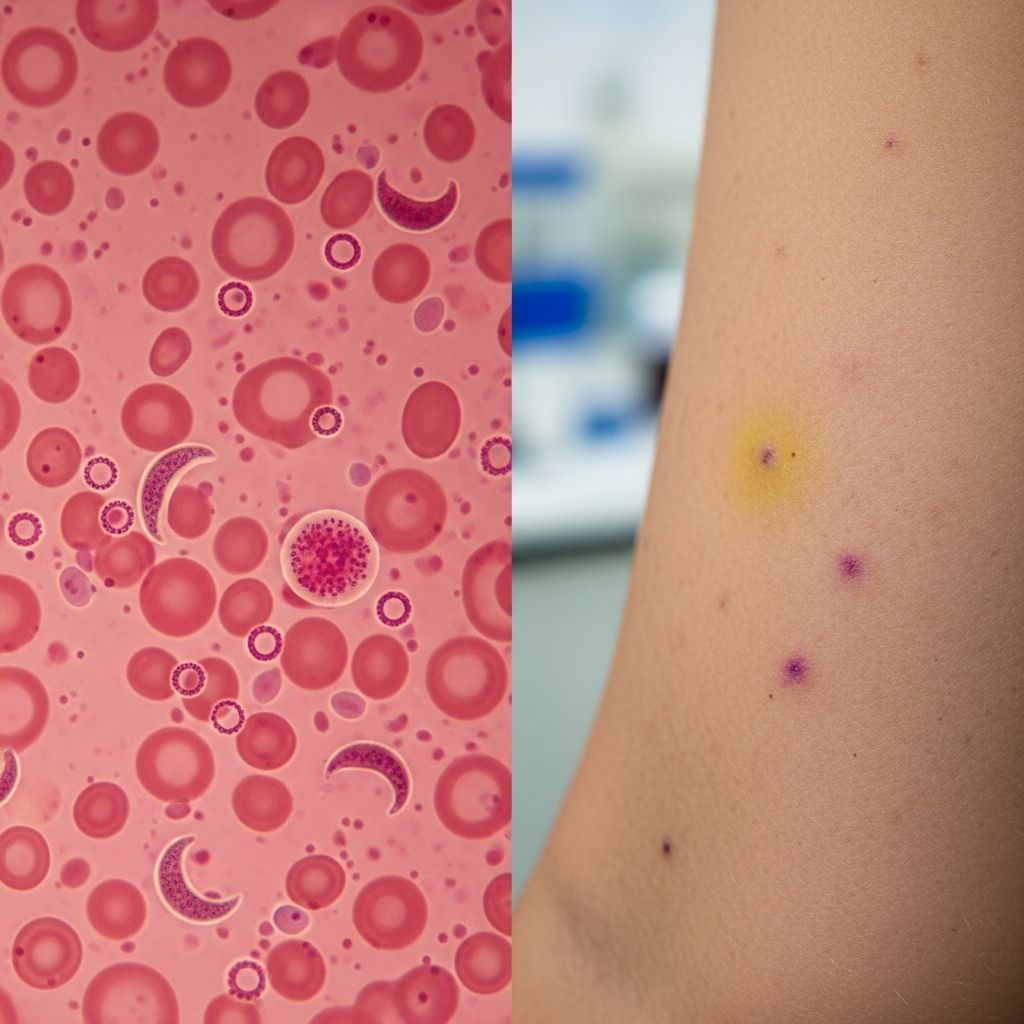
Malaria, caused by Plasmodium parasites transmitted via Anopheles mosquitoes, primarily affects internal organs but can rarely present with cutaneous manifestations. These skin signs, though uncommon and non-specific, provide valuable diagnostic clues, especially in severe cases involving P. falciparum or P. vivax. Understanding these features is crucial for dermatologists, infectious disease specialists, and travelers to endemic regions.
What are the cutaneous features of malaria?
Apart from visible mosquito bites, which are a common entry point for the parasite, skin findings in malaria are rare and typically non-specific. They have been documented primarily with Plasmodium falciparum and Plasmodium vivax infections. Reported cutaneous features include:
- Urticaria: Hives characterized by itchy, raised welts on the skin, often appearing suddenly.
- Angioedema: Deeper swelling, frequently affecting the face, lips, or eyelids, sometimes accompanying urticaria.
- Petechiae: Small, pinpoint red or purple spots due to minor hemorrhages under the skin.
- Purpura: Larger areas of purple discoloration from bleeding into the skin.
- Reticulate erythema over the limbs: Blotchy, net-like red patterns on the arms and legs, sparing palms and soles.
Mucosal involvement, such as lesions on the mouth or genitals, has not been reported in malaria-related skin signs. These manifestations often signal underlying complications like microvascular obstruction, thrombocytopenia, or disseminated intravascular coagulation (DIC).
Who gets malaria?
Malaria affects over 240 million people annually, predominantly in sub-Saharan Africa, Asia, and Latin America. Travelers from non-endemic areas, children under five, pregnant women, and individuals with HIV or sickle cell disease are at highest risk. P. falciparum causes the most severe disease, while P. vivax can lead to relapsing infections. Cutaneous signs are more likely in complicated cases with high parasitemia or organ dysfunction.
Clinical features of malaria skin signs
Skin manifestations typically coincide with systemic symptoms like cyclical fever, chills, headache, anemia, and splenomegaly. In severe malaria, they may indicate complications such as acute kidney injury, cerebral malaria, or hepatic failure.
Urticaria and angioedema
Urticaria presents as discrete erythematous, edematous papules or wheals, mildly to severely itchy, affecting the face, trunk, and proximal limbs. Angioedema adds swelling of eyelids, lips, or periorbital areas. Case reports describe a 16-year-old with facial and truncal papules resolving post-treatment, and a 43-year-old woman with hypotension, tachycardia, and eyelid swelling alongside trophozoites on smear. These may stem from immune complexes (IgE and IgG) or anaphylatoxins like C5a activating mast cells.
Petechiae and purpura
Petechiae appear as non-blanching spots from thrombocytopenia, common in severe malaria. Purpura indicates more extensive vascular damage, potentially progressing to DIC with widespread clotting and bleeding. These are prognostic markers of severity.
Reticulate erythema
This unique pattern involves diffuse, non-itchy blotchy erythema with petechiae on limbs, sparing acral areas. A 6-year-old case showed resolution within seven days of arteether therapy, highlighting its responsiveness to antimalarials.
Other rare signs
- Jaundice: Yellowing of skin and sclerae from hemolysis or liver involvement, a hallmark of severe disease.
- Gangrene or acral necrosis: Black necrotic patches on toes from microvascular thrombosis in hyperparasitemia.
- Purpura fulminans: Life-threatening purpura with skin necrosis linked to DIC.
Related Stories



Skin signs like these are non-specific, mimicking viral exanthems, drug reactions, or bacterial sepsis, necessitating lab confirmation via blood smears or rapid tests.
Complications indicated by skin signs
Skin findings often herald severe malaria:
| Skin Sign | Associated Complication | Prognostic Insight |
|---|---|---|
| Jaundice | Hepatic dysfunction, hemolysis | Requires urgent supportive care |
| Petechiae/Purpura | Thrombocytopenia, DIC | High mortality risk if untreated |
| Angioedema/Urticaria | Cytokine storm, immune complexes | May resolve with antimalarials |
| Reticulate erythema | Vasculopathy | Good response to therapy |
| Acral gangrene | Microvascular obstruction | Associated with multiorgan failure |
Severity indices from reviews score these manifestations high (e.g., 14-27/27), correlating with outcomes like time to resolution and functional recovery. Anemia and hypotension frequently accompany these.
Diagnosis of malaria via skin signs
Diagnosis relies on history (travel to endemic areas, fever patterns), thick/thin blood smears showing parasites, or antigen tests. Skin biopsy is rare but may reveal microvascular obstruction in suspected severe falciparum malaria. Differentiate from dengue (widespread rash), leptospirosis (conjunctival suffusion), or heat rash (miliaria), which lacks systemic features.
Treatment and prognosis
Artemisinin-based combination therapies (e.g., artemether-lumefantrine) are first-line for uncomplicated malaria; IV artesunate for severe cases. Skin signs generally resolve with parasite clearance, though jaundice or necrosis may need additional management. Post-malaria syndrome includes fatigue but rarely persistent dermatoses. Prevention via bed nets, repellents, and chemoprophylaxis (e.g., atovaquone-proguanil) is key.
Frequently Asked Questions (FAQs)
Q: Does malaria commonly cause a rash?
A: No, rashes are rare and non-specific in malaria, unlike hallmark symptoms like fever and chills. They occur in severe cases.
Q: Can skin discoloration occur in malaria?
A: Yes, jaundice causes yellowing from bilirubin elevation in severe infections affecting the liver.
Q: Are mosquito bites the only skin sign?
A: No, though common, bites are not diagnostic; urticaria, petechiae, and others indicate infection.
Q: How do you differentiate malaria skin signs from other conditions?
A: Use blood tests for parasites; skin signs alone are insufficient due to overlap with allergies or viruses.
Q: Is skin biopsy needed for malaria diagnosis?
A: Rarely, only in atypical severe cases to check for vascular changes.
Q: Do skin signs predict severe malaria?
A: Yes, petechiae, purpura, and gangrene signal high risk of complications like DIC.
Prevention for travelers
- Avoid dusk/dawn mosquito exposure.
- Use DEET repellents and permethrin-treated clothing.
- Sleep under insecticide-treated nets.
- Take appropriate prophylaxis based on itinerary.
- Seek prompt care for fever post-travel.
Early recognition of skin signs can expedite life-saving treatment in endemic or travel-related cases.
References
- Does Malaria Cause a Rash, Itch or Skin Discoloration? — Runway Health. 2023. https://runwayhealth.com/does-malaria-cause-rash-itch-or-skin-discoloration/
- Cutaneous findings in five cases of malaria — Indian Journal of Dermatology, Venereology and Leprology. 2012-06-28. https://ijdvl.com/cutaneous-findings-in-five-cases-of-malaria/
- Malaria and its skin signs — DermNet NZ. 2023. https://dermnetnz.org/topics/malaria-and-its-skin-signs
- Cutaneous Manifestations of Malaria and Their Prognostic Windows: A Narrative Review — Cureus. 2024. https://www.cureus.com/articles/164680-cutaneous-manifestations-of-malaria-and-their-prognostic-windows-a-narrative-review.pdf
- Malaria – Symptoms & causes — Mayo Clinic. 2023-10-25. https://www.mayoclinic.org/diseases-conditions/malaria/symptoms-causes/syc-20351184
Similar Articles








Read full bio of medha deb